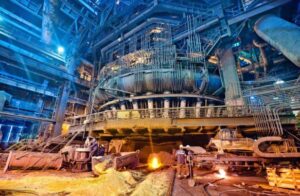
PJSC “Zaporizhzhia Metallurgical Plant ‘Zaporizhstal’” reported a net loss of 2 billion (307.873 million UAH) in January–September of this year, compared to a net profit of 1 billion 887.127 million UAH in the same period last year.
According to the company’s interim report, available to the Interfax-Ukraine news agency, the loss in the third quarter amounted to 1,247.146 million UAH.
During this period, revenue from ordinary operations decreased by 8.3% to 49,157.347 million UAH.
Retained earnings as of the end of September totaled 29 billion 799.280 million UAH.
The company’s management report specifically highlights logistical, regulatory, and energy risks. It also notes that a significant portion of PJSC “Zaporizhstal’s” products is sold for export. As of September 30, 2026, the Russian Federation’s military aggression and restrictions on shipping in the Black Sea region continue to pose significant logistical risks to the stability of supplies. In this regard, the company utilizes multimodal logistics routes, which are carried out both through ports on the Danube River and via rail and road transport. At the same time, there remains a risk of restrictions or complications in transportation across Ukraine’s western borders, particularly with the Republic of Poland, which could negatively impact both the import of raw materials and the export of finished products, leading to increased costs and longer contract fulfillment times.
One of the significant risks for the company is the European Commission’s introduction of the Carbon Border Adjustment Mechanism (CBAM), which gradually tightens financial and administrative requirements for imports of high-carbon-intensive metallurgical products, as well as increases the cost of greenhouse gas emissions. At the same time, the company’s assessment—which also takes into account the continued use of free allowances under the European Union Emissions Trading System (EU ETS)—indicates that the impact of CBAM on semi-finished steel products and finished goods will remain limited until 2030. An additional risk is the tightening of trade defense measures in the EU market. In particular, new restrictive quotas on imports of certain types of steel products into the EU took effect on July 1, 2026. Zaporizhstal continuously monitors changes in the regulatory environment and takes measures to adapt its export strategy to the new conditions governing foreign economic activity.
Zaporizhstal’s financial and operational activities are also subject to risks related to electricity supply. The energy-intensive nature of metallurgical production, combined with the consequences of damage to Ukraine’s energy infrastructure resulting from military hostilities, creates risks of unstable electricity supply, restrictions on electricity consumption, and rising costs. Since the plant’s production process depends on the power supply, in the event of any significant power outages, the company will be able to continue its operations at a reduced capacity. Such a scenario could negatively impact the plant’s operating results and financial condition in a manner that cannot currently be reliably assessed, including its ability to continue operations on a going-concern basis.
At the same time, the expansion of sales markets, the adaptation of logistics routes, and improvements in energy efficiency are positive factors that could partially mitigate the impact of these risks in the medium term.
In August–September 2026, the company’s production site was subjected to rocket attacks, which damaged certain energy infrastructure and blast furnace production facilities.
As reported, in the first quarter of 2026, Zaporizhstal’s net loss increased 2.1-fold compared to the same period in 2025—to 1 billion 373.955 million UAH from 660.923 million UAH. Its revenue from ordinary operations increased by 13.2%, to 19 billion 667.141 million UAH from 17 billion 376.525 million UAH.
In January–June of this year, the plant reported a net loss of 1 billion 60.727 million UAH, whereas in the same period last year it had a net profit of 1 billion 369.359 million UAH; revenue from ordinary operations increased by 7.6% to 38 billion 701.653 million UAH.
In 2025, Zaporizhstal doubled its net profit compared to 2024—to 1 billion 764.886 million UAH from 880.562 million UAH, and revenue from ordinary operations rose by 2.4%—to 72 billion 14.156 million UAH from 70 billion 307.933 million UAH. At the same time, consolidated profit in 2025 amounted to 1,328.605 million UAH, compared to 1,593.521 million UAH in 2024. Revenue remained unchanged—the same as in the unconsolidated report.
In 2024, Zaporizhstal reported a net profit of 1 billion 593.521 million UAH, compared to a net loss of 3 billion 899.537 million UAH the previous year. Revenue amounted to 70,307.933 million UAH, compared to 56,428.254 million UAH in 2023.
Zaporizhstal ended 2022 with a net loss of 4,864,684,828 thousand UAH, whereas in 2021 it reported a net profit of 16,809,158,412 thousand UAH.
Zaporizhstal is one of Ukraine’s largest industrial enterprises, whose products are in high demand among consumers both in the domestic market and in many countries around the world.
“Zaporizhstal” is a joint venture of the ‘Metinvest’ Group, whose main shareholders are PJSC “System Capital Management” (71.24%) and Smart Steel Limited (23.76%). LLC “Metinvest Holding” is the management company of the “Metinvest” Group.
The public joint-stock company’s authorized capital is 660,920,444.75 UAH, divided into 2,643,681,770 shares, with a par value of 0.25 UAH per share.
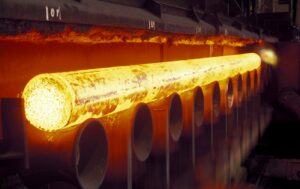
The Ukrainian steel industry is going through very difficult times, and the likelihood that the sector will survive to participate in post-war reconstruction is low—not only because of the war, but also due to restrictions imposed by the European Union, said Oleksandr Vodoviz, head of the office of the CEO of the Metinvest Group, according to a correspondent for Interfax-Ukraine.
“In the steel industry, half of the companies have gone bankrupt. And not because of the war… Is the steel industry ready to ensure recovery? Let’s hope we live to see that recovery, because the way things are going, we won’t make it. We need to take a sober look at the truth: the plants have been bombed; we’re not talking about millions of dollars in losses, but billions,” he said at the fourth “Economic Truth” export forum in Kyiv this week.
In addition to the need to rebuild metallurgical plants after the war, Vodoviz also highlighted a staffing problem that was already acute before the war, when European companies were poaching Ukrainian workers. According to him, despite the losses, Metinvest is currently retaining its staff, but this remains a pressing issue.
“Will we be able to ensure recovery? If we rebuild the plants and find the people,” he noted.
Vodoviz also stated that one of the main issues for the Ukrainian metallurgical industry right now is to secure the same level of export quotas to the EU as existed in 2025, at the very least.
According to him, Ukraine’s metallurgical sector does not question the strategic goal of integrating into the EU’s internal market, but recent actions by Brussels—the introduction of the CBAM carbon tax and restricted quotas, which, despite promises, in no way take into account the fact of the war in Ukraine and the losses incurred by the Ukrainian industry—cast doubt on the mutual progress toward this goal.
A Metinvest representative clarified that the quotas currently amount to 40% of last year’s exports.
“Our number one problem is, of course, the strikes on steel mills; all our steel enterprises have been destroyed, are in ruins, and are not operating. Four days ago, Zaporizhstal was struck again—seven missiles. And in this situation, we are trying to explain to the Europeans that they should grant us quota reductions,” Vodoviz described the situation.
As previously reported, “Ukrmetallurgprom” criticized the EU’s decision to restrict imports of Ukrainian steel products, which had been supplied to Europe duty-free for the first three years following Russia’s full-scale aggression. The association believes that Ukraine currently poses no threat to European producers because, due to the war, steel production in the country initially fell from 40 million metric tons to 7.5 million metric tons, and now almost all steel plants have been shut down due to shelling.
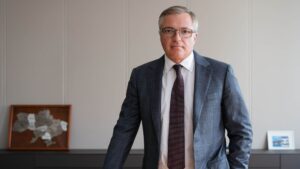
The mining and steel company Metinvest continues to hope for support from its global partners amid the war, but recently, the European Union and the European Commission have taken numerous measures that cast doubt on whether it is worth investing in the Ukrainian steel industry at all.
The company’s CEO, Yuriy Ryzhenkov, expressed this view in an interview with the Financial Times.
As an example, he cited the quotas imposed on Ukrainian steel in the EU, even though Ukraine’s agreements with the EU—in particular the Association Agreement and other agreements signed in recent years—effectively provided for free access to the European market. Despite the fact that Ukraine has exported significantly less steel to the EU over the past few years than before, the corresponding Ukrainian quotas have been reduced by more than 50%.
“In my view, this is a very strange move. If you want to support the country, it’s better to allow its industry to operate and pay taxes. These funds will strengthen the country’s defense capabilities and economy. This is more effective than grants or preferential loans. I hope our officials, together with their European colleagues, will be able to review this situation and rectify it,” said Ryzhenkov.
According to him, a much better approach would be to consider how the Ukrainian economy—particularly the metallurgical sector—can become part of the broader European market and the European economy, thereby making it stronger rather than weaker. “I also believe that it is very important right now for people in Brussels to understand the conditions under which we are working. We are forced to operate amid constant disruptions in logistics and staff shortages. Many people have left the country. More than 8,500 of our employees have been drafted into the army. We have an unstable energy supply and very high energy costs,” the CEO noted.
He emphasized that it is, to some extent, unfair and incorrect to treat the Ukrainian steel industry on par with that of other countries supplying products to the EU. The situation in Ukraine requires a special approach, greater understanding, and, perhaps, certain tools that will allow us to survive now and return to investment and growth in the future.
When asked whether the company had assessed the total amount of losses, the CEO noted that a comprehensive assessment has not yet been conducted. “As I’ve already said, we are currently clearing debris and assessing damage to infrastructure and production facilities. And this is not the first time since the Russian invasion that our facilities have come under attack, so we will be able to provide a more accurate assessment once the war is over. Only then will it be possible to discuss the cost of recovery from the damage.”
Ryzhenkov noted that all of the company’s international projects are linked to Ukrainian production and Ukrainian resources, and there is hope that this will continue to be the case. “Currently, our rolling mills in Europe and the United Kingdom are operating autonomously. At the same time, we already have plans in place and are taking steps to restore vertical integration with Ukrainian enterprises and return to our previous model. In short, we remain very active. We consider Europe, as well as the Mediterranean and Black Sea regions, to be our main markets. We want to continue to be present in these markets and remain open to new opportunities,” Ryzhenkov concluded.
Metinvest is a vertically integrated group consisting of mining and metallurgical enterprises. Its enterprises are located in Ukraine—in the Donetsk, Luhansk, Zaporizhzhia, and Dnipropetrovsk regions—as well as in European countries. The holding’s main shareholders are the SCM Group (71.24%) and Smart Holding (23.76%). Metinvest Holding LLC is the management company of the Metinvest Group.
Source: https://metinvestholding.com
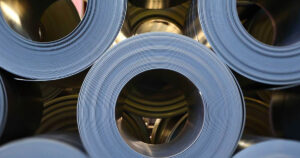
The situation in Ukraine’s metallurgical sector is currently catastrophic; in particular, shelling at Metinvest Group facilities has destroyed five furnaces, and two furnaces at ArcelorMittal Kryvyi Rih (AMKR, Dnipropetrovsk Oblast)—the plants are not operating, said the head of the office of Metinvest Group CEO
Oleksandr Vodovyz, at the Economic Resilience Forum organized by Forbes Ukraine in Kyiv on Wednesday.
“Absolutely all the plants have been destroyed. These include Arcelor, Metinvest, the Petrovsky Plant (Yaroslavsky DMZ), and Interpipe. They were hit several times. Many people were killed. We are not operating. I know that Arcelor is not operating. As far as I know, the Petrovsky Plant has also been shut down. And Interpipe, as far as I know, hasn’t repaired its transformer either,” said Vodoviz.
According to him, there was a week in September when Ukraine did not produce a single metric ton of steel for the first time in 100 years, and Metinvest’s facilities remain shut down.
“We’re at a standstill, assessing (the possibilities for resuming operations). We tried to restart production at Zaporizhstal: we fired up the furnace, it ran for 10 hours, and then—a second failure. Just so you understand, starting up the furnace costs $50 million, and the furnace itself costs $0.5 billion. Repairing it in any way would require enormous funds,” the top manager explained.
He added that the company had reached out to various ministries for help in this situation, but the assistance offered amounted to only 2–5 million hryvnias.
Vodoviz, while agreeing with the need to support small businesses, also emphasized that large businesses are the foundation upon which small businesses operate.
“They supply us with water, cables, and perform various services. We have 50,000 contractors. Unfortunately, there is currently no solution for large businesses. One respected individual asked the Ministry of Economy: ‘What’s the plan?’ Have any of you heard this plan? I haven’t. There is no plan right now. That’s why we’d like to hear what the plan is. What’s next? Should we lay off people or not? We’re all just waiting to see what happens,” said the head of the CEO’s office at Metinvest.
According to him, the group is currently planning its actions no more than a month in advance.
“No one is looking further than six months ahead. Everyone is sitting back and watching to see what happens. My view is this, and we see for ourselves that the economic situation is extraordinary. And extraordinary decisions are needed. You can’t live in an extraordinary situation and make decisions that are made as usual,” the expert believes.
When asked about the amount of investment needed for recovery, Vodoviz noted that the group has not yet calculated this.
“We haven’t calculated it yet, but as an example, I mentioned that one furnace costs $500 million if built from scratch, and all five of our furnaces are damaged. Arcelor has two damaged ones. That’s billions of dollars. But we’re assessing the situation. Right now, we definitely won’t be investing in reconstruction because we don’t understand how the situation will develop further,” the top manager explained.
He noted that if the situation changes in any way within a month or two, then appropriate decisions will be made, but for now, there are none. He clarified that at Metinvest, decision-making depends on three factors, and not all of them are military in nature. Although the main one—the first—is shelling and attacks on industrial facilities.
“The second is the ports. Right now, we’re not shipping out or exporting, even though we were the country’s largest exporter until 2026. And the third factor, strange as it may seem, is our European partners, who have completely blocked our exports of steel products. They imposed SWAM; they imposed quotas. And yet they promised us this wouldn’t happen. We held negotiations with both the Ministry of European Integration and the Ministry of Economy. But the EU implemented these measures anyway,” Vodoviz stated.
According to him, these are the three main major problems that need to be resolved.
Regarding state aid, the manager stated: “We don’t turn to the government; we don’t ask for any grants; we don’t want the government to finance us. We simply want a level playing field. There is, for example, the Ukraine Facility program. I know that some funds are being allocated through the Ukraine Facility. Unfortunately, we don’t have access to this program, although we would like to,” said the top executive.
As for ideas about raising taxes, in his opinion, “they won’t lead to anything good.”
“I’m sure any business would say here: don’t get in our way,” concluded Vodoviz.
“Metinvest” is a vertically integrated group consisting of mining and metallurgical enterprises. The group’s enterprises are located primarily in the Donetsk, Luhansk, Zaporizhzhia, and Dnipropetrovsk regions. The holding’s main shareholders are the SCM Group (71.24%) and Smart Holding (23.76%), which jointly manage it. Metinvest Holding LLC is the management company of the Metinvest Group.
MANUFACTURING, METALLURGY, METINVEST, mining and metallurgical complex, STEEL
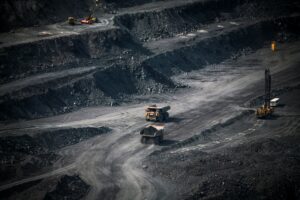
PJSC “Ingulets Mining and Processing Plant” (Ingulets Mining and Processing Plant, Kryvyi Rih, Dnipropetrovsk Oblast), which is part of the Metinvest Group and is currently temporarily idle, allocated 3.4 million UAH in January–June of this year to preventive measures and programs aimed at improving safety, occupational health, and the work environment.
According to information on the implementation of the collective bargaining agreement for the first half of 2026, despite martial law and the temporary suspension of the production cycle, the main priorities of the joint efforts between management and the labor union remain the people—their safety, employment, timely payment of wages, and the preservation of social guarantees.
At the same time, it is noted that 19 planned comprehensive measures have been implemented. As a result, working conditions have been improved for 217 employees, and sanitary and living conditions have been improved for 48 employees. Over 1.7 million hryvnias were allocated to provide employees with personal protective equipment and work clothing.
Under martial law, certain provisions of the collective bargaining agreement are being partially implemented due to the lack of organizational and technical conditions necessary for the plant’s full-scale operations. However, specific obligations were fulfilled for those employees involved in maintaining the plant’s essential functions and ensuring the rapid resumption of the production cycle. Specifically, in the first half of 2026, the average monthly salary exceeded 17,000 UAH—a 30.4% increase compared to the first half of 2025.
As reported by Oleksandr Myronenko, Chief Operating Officer (COO) of the Metinvest Group, the Ingulets Mining and Processing Plant has been shut down since 2024—production there is uneconomical due to high electricity prices. The facility has been properly mothballed, and production can be resumed if market conditions are favorable.
Ingulets GOK specializes in the extraction and processing of ferruginous quartzites from the Ingulets deposit, located in the southern part of the Kryvyi Rih iron ore basin. It produces iron ore concentrate. The company’s production capacity is 14 million metric tons of iron ore concentrate per year.
Ingulets Iron Ore Mine is part of the Metinvest Group, whose major shareholders are PJSC “System Capital Management” (SCM, Donetsk, 71.24%) and the “Smart-Holding” group of companies (23.76%). The management company of the Metinvest Group is Metinvest Holding LLC.
Metinvest B.V. (Netherlands), the parent company of the Metinvest mining and metallurgical group, ended January–June of this year with a net loss of $202 million, compared to a net loss of $58 million in the same period last year.
According to a press release issued by Metinvest B.V. on Monday regarding the first half of this year, revenue for the period increased by 3%, to $3.657 billion from $3.555 billion.
The company’s operating profit for the reporting period fell by 64% to $73 million.
In the first half of 2026, adjusted EBITDA decreased by 8.3% compared to the same period last year—to $311 million from $339 million. At the same time, EBITDA for the mining segment fell by 30%, to $119 million from $169 million, while EBITDA for the metallurgy segment rose by 17%, to $249 million from $213 million.
The financial results reflect the group’s performance prior to the port shutdowns and the subsequent shutdown of the Southern GOK, as well as before the shelling of Zaporizhstal and Kametstal, which caused those facilities to shut down as well.
It is noted, however, that Metinvest’s enterprises in Ukraine continued to operate at varying levels of capacity utilization due to constraints related to security, power supply, logistics, and economic factors. Despite all the challenges, the group demonstrated strong financial results, which enabled it to fully and timely repay $428 million in bonds in April. Since the start of the war, Metinvest, together with its joint ventures and associated companies, has allocated $328 million to support Ukraine.
Metinvest CEO Yuriy Ryzhenkov noted in his commentary that the first half of 2026 was generally characterized by stable operational and financial performance. A key achievement was the successful redemption in April of bonds maturing in 2026. This event demonstrates Metinvest’s financial discipline and resilience. Since 2022, the group has fully repaid three separate bond issues, with total payments exceeding $1 billion. Importantly, all these obligations were met without restructuring, despite the loss of control over certain assets and the unprecedented challenges facing Ukrainian businesses.
After the end of the reporting period, operating conditions in Ukraine became increasingly difficult: intensified missile attacks and drone strikes heightened security risks, disrupted commercial shipping through Black Sea ports, and further complicated export and import logistics. Against this backdrop, the “Pivdenny GZK” joint venture temporarily suspended production. In August and September 2026, missile strikes on the group’s enterprises—Zaporizhstal and Kametstal—resulted in the deaths and injuries of employees and caused significant damage to production and support infrastructure, leading to the temporary shutdown of the affected facilities.
“We plan to gradually resume operations at these facilities and bring the blast furnaces back online step by step. This demonstrates our commitment to preserving a competitive Ukrainian steel industry, which continues to support the country’s economy,” the CEO noted.
At the same time, external operating conditions are becoming more challenging. “We find ourselves in a fundamentally new regulatory landscape, driven by the EU’s introduction of the Carbon Border Adjustment Mechanism (CBAM) and changes to trade quotas. Although the group remains committed to decarbonization and integration into the EU’s economic space, these measures are placing additional pressure on Ukrainian industry at a time when the country continues to defend itself against military aggression and preserve its industrial potential,” Ryzhenkov emphasized.
Metinvest is a vertically integrated group of mining and metallurgical enterprises. Its facilities are located in Ukraine—in the Donetsk, Luhansk, Zaporizhzhia, and Dnipropetrovsk regions—as well as in the European Union, the United Kingdom, and the United States. The holding’s main shareholders are the SCM Group (71.24%) and Smart Holding (23.76%). Metinvest Holding LLC is the management company of the Metinvest Group.