
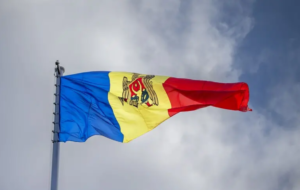
On Wednesday, the Moldovan government approved a draft law “On the admission, stay, and supervision of foreigners” developed by the Ministry of Internal Affairs. According to the press service of the Cabinet of Ministers, the document includes new concepts adapted to the legal framework of the European Union. According to the draft law, a residence card will now become a single document confirming the identity and legal status of foreigners.
To strengthen the admission process and ensure effective management of migration flows, foreigners will be required to justify the purpose of their stay in the republic by providing relevant documents (contracts, certificates, invitations, etc.).
In addition, mandatory confirmation of financial solvency during the period of stay in the country will be introduced.
“The criteria and level of means of subsistence will be established by subsequent regulations depending on the purpose of the stay,” the document notes.
A “flexible regime” will apply to short-term stays (up to 90 days). It is expected that the procedures for submitting applications, approvals, notifications, and reporting will be digitized.
The law is intended to stimulate “competitive advantages for sectors of the economy with labor shortages” and “support companies operating in sectors where the local workforce is insufficient by hiring third-country nationals for various purposes.” At the same time, however, there are plans to reduce illegal employment.
At the end of 2025, more than 21,500 foreigners and stateless persons from more than 130 countries were registered in Moldova. Of these, more than 5,600 were eligible for permanent residence, and about 16,000 were eligible for temporary residence.
http://relocation.com.ua/moldova-to-tighten-control-over-migrants-on-its-territory/
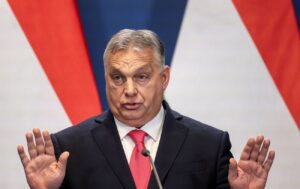
Hungarian Prime Minister Viktor Orbán announced that his government will not comply with the EU Migration and Asylum Pact and does not intend to accept migrants under relocation schemes. “As long as there is a patriotic government in Hungary, we will not implement the migration pact. We will not accept migrants and will not spend a cent on them,” Orbán wrote on Twitter on Wednesday.
The statement came amid the European Commission’s initiative to relocate asylum seekers from the countries under the most pressure — Spain, Italy, Greece, and Cyprus — to other EU states.
A number of countries, including Hungary, Poland, and Slovakia, have opposed participation in this scheme.
Orbán has repeatedly criticized pan-European mechanisms for distributing migrants and threatened to sue the European Commission if mandatory resettlement quotas are imposed.
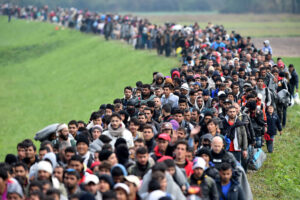
The Director-General of the International Organization for Migration (IOM), Amy Pope, said that Ukraine needs a plan to attract migrants to the country, even if a significant number of Ukrainian refugees return, she said at the Ukraine Recovery Conference (URC2025) in Rome, Italy.
“Ukraine needs a plan to attract migrants to the country.
Because even if we successfully convince Ukrainians to return home, I think we will still need millions of workers to rebuild Ukraine.
We need to provide legal and safe routes for migration into the country,” Pope said.
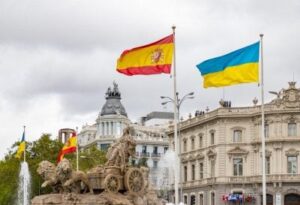
Spanish authorities intend to regularize up to 300,000 migrants a year to make up for the country’s labor shortage due to an aging population, Spanish Social Security and Migration Minister Elma Sais said Tuesday.
“Spain has a choice between an open prosperous country or a closed poor country. We have chosen the second,” Western media quoted her as saying.
According to her, the policy involving migrants will last three years. She specified that Spain needs 250 – 300 thousand foreign workers a year, able to pay taxes, in order to preserve the welfare state.
The new measures of the authorities provides for simplification of procedures for issuing immigrants residence and work permits, which will contribute to the receipt of foreign workers guaranteed labor rights. In addition, newcomers seeking work will be able to extend their visa from three to 12 months. Foreigners with study visas will be allowed to work up to 30 hours per week.
The media notes that the economy of Spain – a country with a population of 48.9 million – is the fastest growing in the EU. This trend is also facilitated by the influx of skilled migrants from Latin American countries. Fitch Ratings Inc. estimates that more migrants will enter Spain in 2022 than in the entire previous decade at one time.
However, October opinion polls conducted by Spanish media showed that 57% of respondents believe the current level of migration into the country is too high. 54% believe that the real number of immigrants is higher than the authorities declare.
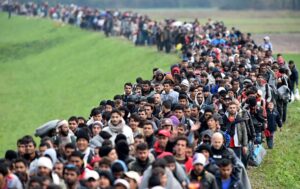
Fourteen EU countries, as well as Norway, Switzerland and Liechtenstein, have signed an appeal calling on the EU executive to propose new rules to strengthen return policies, Politico reports.
In their letter to the European Commission, 17 European countries ask for new rules that will allow governments to detain illegal migrants if they pose a threat to national security, force migrants to cooperate with authorities, and ensure that all EU countries use the same data management software.
The letter to the Commission states that migrants who do not have the right to stay in the EU “must be brought to justice.”
It is noted that Norway, Switzerland, and Liechtenstein have also signed the appeal, although they are not members of the EU, they are members of the Schengen area.
The publication notes that the push comes amid a right-wing and anti-immigration shift in many EU countries.

The number of migrants crossing the central Mediterranean towards Europe from January to April this year is unprecedented, much higher than during the same period in 2022, Le Figaro newspaper reported Friday.
From January to April, according to EU border agency Frontex, the number of illegal arrivals to the European Union through the central Mediterranean increased by almost 300 percent compared to last year, reaching a figure of 42,200.
This is slightly more than half of all illegal entries into the EU in all directions recorded this year.
Particularly many migrants arrived in Europe via Tunisia. Compared to 2022, their number increased by 1,100%.
The migrants cross the sea in small boats that are made for them right on shore at a cost of about 1,000 euros. Gangs of smugglers are becoming more and more organized, and this partly explains the increasing influx of illegals into the EU, Frontex said.



