

Passenger traffic across Ukraine’s western border fell by 9.3%—to 685,000—during the week of August 29 through September 4, coinciding with the start of the new school year, according to daily statistics from the State Border Guard Service monitored by the Interfax-Ukraine news agency.
According to the data, the number of outbound border crossings this week decreased to 344,000 from 364,000 the previous week, while the number of inbound crossings fell to 341,000 from 391,000.
The number of vehicles passing through border checkpoints also decreased to 137,000 from 145,000, while the number of vehicles carrying humanitarian cargo fell to 416 from 433.
The highest outbound traffic was recorded on Saturday (56,000 per day), and the highest inbound traffic on Sunday (68,000), while the lowest outbound traffic was on Tuesday (42,000), and the lowest inbound traffic was on Tuesday and Thursday (39,000 each).
According to the State Border Guard Service, as of 12:00 p.m. on Sunday, the largest number of passenger cars waiting to cross the border with Poland were at the “Ustyluh” border crossing point—50. Shorter lines were observed at the “Ugryniv” checkpoint—20 vehicles—and the “Krakivets” checkpoint—10 vehicles, where 4 buses had also accumulated.
At the border with Slovakia, the line at the “Maly Berezny” checkpoint consisted of 20 cars, and at the “Uzhhorod” checkpoint—30.
The largest number of passenger cars was waiting to exit at the border with Hungary: at the “Luzhanka” border crossing – 40, at the “Tisa” border crossing – 25, at “Kosyno” – 20, and at the “Dzvinkove” and “Vilok” border crossings – 10 each.
At the border with Romania, 15 cars had accumulated at the “Porubne” checkpoint, while there were no lines at the border with Moldova.
Last year, passenger traffic across the border during this week fell by 10%, but was slightly higher—692,000; however, outbound traffic significantly exceeded inbound traffic—by 32,000 compared to 3,000 this year.
The following week last year, passenger traffic fell by another 12.4%, and then remained at around 600,000 for two weeks.
As reported, starting May 10, 2022, the outflow of refugees from Ukraine—which began with the start of the war—was replaced by an inflow that lasted until September 23, 2022, totaling 409,000 people. However, starting in late September—possibly influenced by news of mobilization in Russia and “pseudo-referendums” in the occupied territories, followed by massive shelling of energy infrastructure—the number of people leaving exceeded the number of those entering. In total, from the end of September 2022 until the first anniversary of the full-scale war, this figure reached 223,000 people.
In the second year of the full-scale war, the number of border crossings out of Ukraine, according to the State Border Guard Service, exceeded the number of crossings into the country by 25,000; in the third year, by 187,000; in the fourth year, by 221,000; and by 44,000 since the start of the fifth year—31,000 of which have occurred since the beginning of summer.
In its July inflation report, the National Bank maintained its estimate of 0.3 million people migrating from Ukraine last year due to the deterioration of the security situation at the end of the year and the easing of exit rules for young people, but noted that this figure would be less than 0.5 million in 2024. The NBU continues to forecast a net outflow of 0.2 million in 2026, while net returns, according to its forecast, will begin in 2027 and amount to about 0.1 million people, increasing to 0.5 million people in 2028.
According to UNHCR data, the number of Ukrainian refugees in Europe as of June 30, 2026, stood at 5.159 million, and globally at 5.687 million, compared to 5.213 million and 5.687 million, respectively, as of April 30.
In Ukraine itself, according to the latest UN data for July 2026, there were 3.80 million internally displaced persons (IDPs), compared to 3.70 million in January of this year and 3.34 million in July 2025.
BORDER, MIGRATION, PASSENGER TRAFFIC, State Border Guard Service of Ukraine, UKRAINE
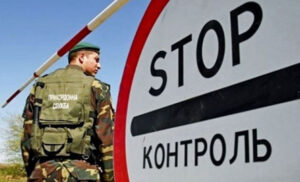
As the new school year approached, passenger traffic across Ukraine’s western border during the last full week of summer—August 22–28—fell by 4.6% from last week’s record high to 755,000, according to daily statistics from the State Border Guard Service, as tracked by the “Interfax-Ukraine” agency.
According to the State Border Service, the number of outbound border crossings this week fell to 364,000 from 391,000 the week before, while the number of inbound crossings fell to 391,000 from 400,000.
The number of vehicles passing through border crossing points remained at 145,000, while the number of vehicles carrying humanitarian cargo fell to 433 from 466.
The highest outbound traffic was recorded on Saturday (60,000 per day), and the highest inbound traffic on Sunday (62,000), while the lowest outbound traffic was on Monday (46,000) and the lowest inbound traffic on Thursday (50,000).
According to the State Border Guard Service, as of 6:00 p.m. on Saturday, the largest number of passenger cars were waiting to cross the border with Poland at the “Krakivets” border crossing point (BCP)—80—and the “Ustyluh” BCP—65. Smaller lines were observed at the “Shehyni” checkpoint (45 vehicles), the “Hrushiv” checkpoint (30), the “Nyzhankovychi” checkpoint (20), and the “Ugryniv” checkpoint (10).
In addition, 12 buses had accumulated at the “Krakivets” checkpoint, and at the “Shehyni” checkpoint, 170 pedestrians were also waiting in line, which is very rare.
At the border with Slovakia, there was a line of 20 cars at the “Maly Berezny” checkpoint, 15 cars and 2 buses at the “Uzhhorod” checkpoint.
At the border with Hungary, 20 passenger cars each were waiting to cross at the “Tisa” and “Vylok” border checkpoints, while 15 were waiting at the “Luzhanka” checkpoint and 10 at the “Kosyno” checkpoint.
At the border with Romania, 40 cars had accumulated at the “Dyakivtsi” checkpoint and another 6 at the “Krasnoilsk” checkpoint, while at the border with Moldova, there was a line of 25 cars at the “Mamalyga” checkpoint.
Last year, passenger traffic across the border during this week was still at its peak at the time—769,000—though the number of people entering the country significantly exceeded the number leaving—by 33,000 compared to 27,000 this year.
The following week last year, passenger traffic dropped immediately by 10%, and over the course of the week—by another 12.4%.
As previously reported, starting May 10, 2022, the outflow of refugees from Ukraine—which had begun with the start of the war—turned into an inflow that lasted until September 23, 2022, totaling 409,000 people. However, since the end of September—possibly influenced by news of mobilization in Russia and “pseudo-referendums” in the occupied territories, followed by massive shelling of energy infrastructure—the number of people leaving has exceeded the number of those entering. In total, from the end of September 2022 until the first anniversary of the full-scale war, this figure reached 223,000 people.
In the second year of the full-scale war, the number of border crossings out of Ukraine, according to the State Border Guard Service, exceeded the number of border crossings into the country by 25,000; in the third year—by 187,000; in the fourth year—by 221,000; and since the start of the fifth year by 44,000, of which 31,000 have occurred since the beginning of summer.
In its July inflation report, the National Bank maintained its estimate of 0.3 million people migrating from Ukraine last year due to the deterioration of the security situation at the end of the year and the easing of exit rules for young people, but noted that this figure will be less than 0.5 million in 2024. The NBU continues to forecast a net outflow of 0.2 million in 2026, while net returns, according to its forecast, will begin in 2027 and amount to about 0.1 million people, increasing to 0.5 million people in 2028.
According to UNHCR data, the number of Ukrainian refugees in Europe as of June 30, 2026, stood at 5.159 million, and globally at 5.687 million, compared to 5.213 million and 5.687 million, respectively, as of April 30.
In Ukraine itself, according to the latest UN data for July 2026, there were 3.80 million internally displaced persons (IDPs), compared to 3.70 million in January of this year and 3.34 million in July 2025.
BORDER, MIGRATION, PASSENGER TRAFFIC, State Border Guard Service, UKRAINE

The housing crisis in Spain continues to deepen amid a long-standing shortage of new construction, a rise in the number of households, and a record increase in population—a significant portion of which is due to migration. The structural housing shortage in the country is estimated at approximately 700,000–750,000 units, according to data from the Funcas analytical center.
The current situation should not be compared to the housing bubble of the 2000s. At that time, significantly more housing was being built in Spain, and market growth was fueled by lending. Now the problem is the opposite—supply consistently lags behind demand.
In recent years, approximately 100,000 new homes have been completed annually in Spain, while about 230,000 new households have been formed. The gap that has accumulated since 2020 has reached nearly 700,000 units.
As a result, both home purchase prices and rental rates are rising. The problem is particularly acute in Madrid, Barcelona, the Balearic Islands, Valencia, and popular coastal areas. At the same time, the shortage is gradually spreading from the largest cities to their suburbs and medium-sized cities. Funcas notes that rents have been rising faster than wages in recent years, and young renters spend an average of about 35% of their budget on housing and utilities.
Experts believe that some of the measures taken by the authorities can only temporarily curb prices but cannot eliminate the root cause of the crisis. Rent controls may lower housing costs for some current tenants, but at the same time reduce the number of apartments that landlords are willing to put on the market. Subsidies for buyers, given limited supply, may also lead to further price increases.
Among the long-term solutions, Funcas cites increasing the supply of land parcels, expediting the issuance of building permits, enhancing legal certainty for developers and property owners, and expanding the stock of affordable rental housing. Social rental housing in Spain accounts for only about 2–3% of the housing stock, which is significantly below the EU average.
Spain’s rapid population growth is placing additional pressure on the market. As of July 1, 2026, the country’s population stood at a record 49.80 million, an increase of 444,200 from the previous year. At the same time, Spain’s National Institute of Statistics (INE) explicitly states that the population increase is driven by people born abroad, while the number of residents born in Spain is declining.
The number of residents in Spain born abroad reached 10.29 million by mid-year, accounting for more than one-fifth of the country’s population. The number of residents with foreign citizenship stood at 7.44 million, having increased by 87,200 in the second quarter alone.
According to the latest comprehensive breakdown from the INE, the largest foreign communities consist of citizens of Morocco—about 969,000,
Colombia—677,000, Romania—609,000, Venezuela—378,000, Italy—346,000, and the United Kingdom—266,000. There are also significant communities of people from Peru, China, Ukraine, and Latin American countries.
The influx continues in 2026. In the second quarter alone, approximately 34,000 Colombian citizens, 23,300 Venezuelans, and 21,100 Moroccans arrived in Spain. In the first quarter, Ukrainians were among the largest groups of new arrivals—about 25,700 people.
Separate statistics from Spain’s Ministry of Migration show that as of the end of June 2026, 353,000 Ukrainian citizens already held valid residence permits, mainly thanks to the temporary protection mechanism.
The growth of the foreign population cannot be considered the sole cause of the housing crisis; experts attribute it primarily to a decade of insufficient construction. However, migration significantly increases the number of households and the demand for rentals, especially in large cities and economically active coastal regions. Given the construction of approximately 100,000 units per year, the additional population growth of hundreds of thousands of people becomes a significant factor in the further rise in housing costs.
Thus, the housing crisis in Spain is driven by several factors: a chronic shortage of new construction, an increase in the number of households, a limited supply of affordable rental housing, internal migration to major cities, foreign buyers, and the tourism sector. Rapid population growth due to immigration exacerbates the existing shortage, but is not its root cause.

Chernivtsi and Transcarpathian regions accounted for 67% of all reports for illegal crossings or attempted illegal crossings of Ukraine’s state border in the first half of 2026.
According to data from the State Border Guard Service cited by OpenDataBot, 2,834 reports were filed in Bukovina over the six-month period, or 38% of the total. Another 2,170 reports, or 29%, were filed in Zakarpattia Oblast.
The Odesa region ranks third, with 997 reports, or 13%.
Thus, the Chernivtsi, Zakarpattia, and Odesa regions alone account for 80% of all recorded violations.
The situation has changed particularly significantly in the Chernivtsi region. The number of reports there is now approximately 30 times higher than it was before the start of the full-scale war. For the past two years, Bukovina has ranked first in the country in terms of the number of such violations.
Until 2022, the Odesa and Zakarpattia regions were the main leaders in this regard.
A significant increase has also been recorded in the Ivano-Frankivsk region. Before the full-scale war, not a single such report was filed there; in 2022, there were only five, but by 2024, that number had risen to 1,209.
In 2025, 1,109 reports were filed in the Ivano-Frankivsk region, and in the first half of 2026 alone—there were already 377.
Across Ukraine, border guards filed 7,523 reports from January through June, which is about one-third fewer than during the same period last year.
Despite the decline, the frequency of such violations remains nearly ten times higher than pre-war levels. Before the full-scale war in Ukraine, approximately 2,700 reports were filed annually, whereas now an average of about 1,250 are filed per month.
However, the filing of a report does not automatically mean that a person is found guilty. Such cases are heard by the courts.
In 2025, the courts heard 24,519 cases under Article 204-1 of the Code of Ukraine on Administrative Offenses. Fines were imposed on 12,628 individuals, while 10,493 cases—or 43%—were dismissed due to the absence of an incident or the elements of an administrative offense.
The total amount of fines imposed was 85.97 million UAH, but only 24 million UAH—or 28%—was paid voluntarily.
Source: OpenDataBot, based on data from the State Border Guard Service and the State Judicial Administration, published on August 28, 2026.

According to Experts.news, the decline in the number of recorded attempts to illegally cross the state border has not yet been accompanied by a corresponding decrease in migration outflow from Ukraine through official border crossing points.
In the first half of 2026, border guards issued 7,523 citations for illegal border crossings or attempted illegal border crossings—approximately one-third fewer than a year earlier.
At the same time, official border statistics show that over the six-month period, Ukrainians left the country 7.13 million times and returned 6.89 million times.
Thus, the net difference between departures and returns amounted to 244,300 people. A year earlier, during the same period, it was comparable—about 251,000.
At first glance, these figures demonstrate a significant gap between illegal attempts to leave the country and the overall migration outflow. However, these are fundamentally different statistical categories.
244,300 is not the number of detected emigrants, but the arithmetic difference between official departures and arrivals of citizens during the first half of the year. Some of these people may return to Ukraine later.
Furthermore, this figure includes all citizens with legal grounds for crossing the border, specifically women, children, men in relevant categories, and other individuals.
The figure of 7,523, in turn, does not represent the number of Ukrainians who managed to leave the country illegally, but rather the number of administrative reports filed by border guards for detected illegal border crossings or attempts to do so.
However, the aggregate data show that the main demographic risk for Ukraine today is linked not only to illegal border crossings but also to the number of citizens who legally leave the country and subsequently do not return.
For the full year of 2025, the difference between the number of departures and returns of citizens amounted to 290,300 people. This was 1.5 times less than in 2024, when the negative balance reached nearly 443,000 people. Over the four years of full-scale war, according to OpenDataBot’s calculations, the cumulative difference between official departures and returns amounted to approximately 3.1 million citizens.
At the same time, in the first half of 2026 alone, the negative balance had already reached 244,300 people, which is about 84% of the figure for all of 2025.
June accounted for the bulk of this year’s difference: during that month, the number of people leaving Ukraine exceeded the number of returnees by 210,900. “OpenDataBot” attributes this, in part, to a seasonal increase in travel during the vacation period; therefore, final conclusions regarding annual migration can only be drawn based on the results for the whole of 2026.
Thus, the decline in the number of illegal attempts to cross the border represents a notable change compared to the peak year of 2024; however, this alone does not signify an end to the demographic outflow.

The administration of U.S. President Donald Trump is preparing to revoke up to 200,000 business and tourist visas held by foreign nationals who applied for asylum after entering the country. If the decision is carried out on the stated scale, it will be the largest single mass revocation of visas in U.S. history.
The Associated Press reported this on August 24, citing documents from the U.S. State Department and two U.S. officials.
The measure applies to nonimmigrant visas in the B1 and B2 categories, which are intended primarily for business and tourist travel, visiting relatives, and receiving medical treatment, respectively.
Visas issued between 2016 and 2026 may be subject to this new measure if their holders applied for asylum after arriving in the United States or are continuing the asylum process.
State Department spokesperson Tommy Pigott confirmed that the procedure is being prepared but did not specify its final scope.
“We are coordinating with the Department of Homeland Security to identify and revoke nonimmigrant visas held by foreign nationals who entered the United States as short-term visitors and subsequently applied for asylum in order to remain here permanently,” the State Department spokesperson said.
According to him, the process will be carried out gradually, so the number of revoked visas remains uncertain for now.
Thus, the figure of up to 200,000 visas is currently an AP estimate based on internal documents and information from U.S. officials, rather than an officially announced quota by the State Department.
The revocation of visas will not result in the immediate deportation of all affected foreign nationals from the U.S.
According to the AP, most people whose asylum applications are pending will be transferred to the appropriate immigration category; however, they will no longer be considered to be in the country as business or tourist visitors.
The administration’s main argument is that B1/B2 visas are issued to people who state that their trip is temporary and that they intend to leave the U.S. The authorities view the filing of an asylum application after entry as possible evidence that the original purpose of the trip may not have matched the stated one.
The large-scale revocation of visas is expected to face legal challenges. The AP notes that the decision could still be reviewed or challenged before it is fully implemented.
The new measure will be a continuation of the significant tightening of U.S. visa and immigration policies.
The State Department reported on August 10, 2026, that more than 175,000 visas for foreign nationals have already been revoked since Donald Trump’s return to the White House.
According to the department, the grounds for revocation included visa violations, criminal offenses, fraud, threats to national security, and other violations. Among the most common reasons cited by the State Department were assaults, driving under the influence, theft, and drug-related crimes.
However, the planned revocation of up to 200,000 visas is unique in that it targets a single specific category of visa holders and is part of a unified administrative campaign. This is precisely why the AP describes it as potentially the largest one-time mass revocation of visas in U.S. history.
In 2025–2026, the Trump administration also expanded social media screening of applicants, tightened requirements for several categories of foreign nationals, introduced or expanded visa restrictions for citizens of dozens of countries, and intensified scrutiny of visas that had already been issued.
The new measure applies to foreign nationals regardless of their specific nationality, provided they meet the specified criteria. Therefore, in theory, it could also affect Ukrainian citizens who entered the U.S. on valid B1/B2 visas and subsequently applied for asylum. At the same time, other mechanisms governing Ukrainians’ stay in
the U.S. are not, in and of themselves, the subject of the announced campaign.



