

Passenger traffic across Ukraine’s western border increased by 7.6% during the week of June 6–12, reaching 596,000: With the end of the school year and the onset of summer, the flow of travelers from Ukraine traditionally increases at this time, according to daily statistics from the State Border Service, which are monitored by the agency “Interfax-Ukraine.”
According to these statistics, the number of outbound border crossings rose to 340,000 from 292,000 the previous week, while the number of inbound crossings, conversely, decreased slightly—to 256,000 from 262,000.
The number of vehicles passing through checkpoints also rose this week—to 127,000 from 125,000 last week—while the number of vehicles carrying humanitarian cargo remained unchanged at 469.
According to the State Border Guard Service, as of 12:00 p.m. on Sunday, the largest number of passenger cars were waiting to cross the border with Poland at the “Ustyluh” and “Krakivets” checkpoints—40 and 35, respectively. Smaller lines were observed at the “Nizhankovychi” CP—15 vehicles, and at the ‘Ugryniv’ and “Rava-Ruska” CPs—10 each.
At the border with Hungary, 28–20 passenger cars were waiting to cross at the “Luzhanka,” “Kosino,” “Tisa,” and “Dzvinkove” checkpoints.
At the border with Slovakia, there was a line of 15 cars at the Maly Berezny checkpoint, while 10 cars were waiting to cross at the Uzhgorod checkpoint.
At the border with Romania, according to the State Border Guard Service, vehicles had accumulated at only one checkpoint, “Dyakivtsi” – 34, while there were no lines at the other checkpoints, as was the case at the border with Moldova.
Last year, passenger traffic across the border during this week was nearly the same—600,000—and was similarly driven by a seasonal increase in outbound crossings from Ukraine (334,000). The number of vehicles last year also matches this year’s figure—127,000. The following three weeks saw further growth, totaling an additional 25%.
As reported, starting May 10, 2022, the outflow of refugees from Ukraine, which began with the start of the war, shifted to an inflow that lasted until September 23, 2022, totaling 409,000 people. However, since late September—possibly influenced by news of mobilization in Russia and “pseudo-referendums” in the occupied territories, followed by massive shelling of energy infrastructure—the number of people leaving has exceeded the number of those entering. In total, from late September 2022 until the first anniversary of the full-scale war, this figure reached 223,000 people.
In the second year of the full-scale war, the number of border crossings out of Ukraine, according to the State Border Service, exceeded the number of crossings into the country by 25,000; in the third year, by 187,000; in the fourth, by 221,000; and since the start of the fifth year, by 125,000.
In its April inflation report, the National Bank maintained its estimate of 0.2 million people migrating from Ukraine last year due to the deterioration of the security situation at the end of the year and the easing of exit rules for young people, but noted that this figure would be less than 0.5 million in 2024. The NBU continues to forecast a net outflow of 0.2 million in 2026, while net returns, according to its forecast, will begin in 2027 and amount to about 0.1 million people, increasing to 0.5 million people in 2028.
At the same time, after a brief pause, the UNHCR announced new data on the number of Ukrainian refugees, according to which the figure in Europe as of April 30, 2026, had decreased to 5.213 million from 5.375 million on February 19, and globally to 5.762 million from 5.924 million.
In Ukraine itself, according to the latest UN data for January 2026, there were 3.70 million internally displaced persons (IDPs), compared to 3.34 million in July and 3.76 million in April 2025.

Ukrainian men of conscription age who are already under temporary protection in European Union countries should not lose their status under the current scheme. Any restrictions currently under discussion within the EU are likely to apply primarily to new applicants, should the temporary protection scheme be extended or amended after March 2027.
The discussion began following reports in the European media that some EU countries are considering restricting access to extended temporary protection for Ukrainian men of conscription or mobilisation age. This does not refer to the immediate withdrawal of status from those already in the EU, but to the possible parameters of the future regime once the current period of temporary protection expires.
The current temporary protection for Ukrainians in the EU has been extended until 4 March 2027. This mechanism was first activated in March 2022 and allows Ukrainians to live, work, and access education, healthcare and social support in EU countries without going through the standard asylum procedure.
The European Commission has previously emphasised that the current rules on temporary protection apply to all Ukrainians eligible for this status, with no specific exception for men of conscription age. Any potential changes must be discussed by EU member states and will require a separate political and legal decision.
According to Eurostat, as of the end of March 2026, 4.33 million people from Ukraine were under temporary protection in EU countries.
Germany remained the largest host country – around 1.275 million people, or 29.4% of all recipients of temporary protection in the EU. Poland was in second place – 961,400 people, or 22.2%, and the Czech Republic in third – 379,800, or 8.8%.
The composition of Ukrainians under temporary protection remains predominantly women and children. According to Eurostat, adult women accounted for 43.3% of all beneficiaries of temporary protection, minors for 30.1%, and adult men for 26.6%.
In absolute terms, this means that approximately 1.87 million adult women, around 1.30 million children and approximately 1.15 million adult men were under temporary protection in the EU.
A rough estimate suggests there are between 0.9 and 1.1 million Ukrainian men of working age and potentially conscriptionable age under temporary protection in the EU. This is an indicative estimate, not official statistics on those liable for military service.
The discussion of possible restrictions is linked to two parallel processes. On the one hand, the EU is seeking a long-term model for the millions of Ukrainians who have been under temporary protection for over four years. On the other hand, Ukraine has an acute need for human resources for defence and economic recovery.
At the same time, any changes within the EU will be legally sensitive. Restricting access to protection on the basis of gender, age or conscription status could spark debates about discrimination, human rights, the national powers of states and the alignment of EU policy with Ukraine.
Thus, the current status of Ukrainians in the EU will remain in place until at least March 2027. The question of whether there will be new restrictions for men of conscription age after that date is still under discussion and has not yet been decided.

Portuguese President Marcelo Rebelo de Sousa has signed a revised version of the citizenship law that significantly tightens naturalization requirements for foreigners. The law will take effect upon publication in the Diário da República.
The main change concerns the length of residence required to apply for citizenship. For most foreigners, it increases from 5 to 10 years, and for citizens of EU countries and Portuguese-speaking Commonwealth states, to 7 years. Additionally, the period will be calculated not from the date of application for a residence permit, but from the date the first residence card is issued.
The reform also introduces additional integration requirements. Applicants for citizenship will need to demonstrate proficiency in Portuguese at the A2 level, pass a test on culture, history, and the rights and responsibilities of citizens, confirm their commitment to democratic principles, prove sufficient means of support, and demonstrate no serious criminal convictions.
A separate part of the reform, concerning the possibility of losing citizenship in the event of serious crimes, remains under review by the Constitutional Court. Previously, the court had already ruled unconstitutional a number of provisions related to automatic denial of citizenship and vague grounds for its revocation.
For foreigners who viewed Portugal as one of the fastest EU jurisdictions for obtaining citizenship through legal residence, the reform means a significant lengthening of the planning horizon. This could have a particularly noticeable impact on residence permit holders and investors under the Golden Visa program: the residency program itself, according to available data, remains unchanged, but the path from residency to citizenship is becoming longer.
The tightening of rules comes amid rapid growth in the number of foreigners in Portugal. According to AIMA, as of the end of 2024, more than 1.5 million foreign citizens resided in the country, which is roughly double the number from three years earlier. The largest group consists of Brazilians—more than 450,000 legal residents.
According to available estimates, the largest groups of foreigners in Portugal also include citizens of India, Angola, Ukraine, Cape Verde, Nepal, Bangladesh, the United Kingdom, Guinea-Bissau, and Pakistan. According to data cited from preliminary AIMA statistics for 2024, the number of Ukrainians in Portugal was estimated at approximately 79,200 people. Separately, regarding temporary protection, according to the Prague Process, as of February 2025, approximately 56,700 Ukrainians with temporary protection status were residing in Portugal. According to some estimates, the number of Ukrainians in Portugal could reach 300,000.
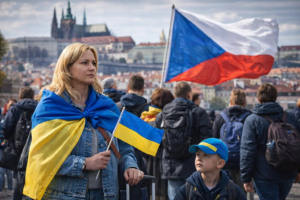
As of December 31, 2025, 1,131,197 foreigners were registered in the Czech Republic – 37,108 more than the previous year (+3.4%), according to data from the Ministry of the Interior and the statistical unit of the Czech Statistical Office, as cited by the information and analytical center Experts Club.
According to the Ministry of the Interior’s estimate, foreigners account for 10.38% of the country’s population (the calculation used a population figure of 10,897,178 as of September 30, 2025). This means that the “native population” (residents without foreign citizenship) amounts to about 9.766 million people (an estimate based on the difference between the figures).
The structure of legal residence at the end of 2025 included 343,876 people with temporary residence, 394,265 with permanent residence, and 393,056 registered under the temporary protection regime. The highest concentration of foreigners is recorded in Prague (32.4% of all registered foreigners) and in the Central Bohemian Region (14.5%).
Ranking: Top 10 nationalities among foreigners in the Czech Republic (31.12.2025)
| Rank | Country | Number of people |
|---|---|---|
| 1 | Ukraine | 612,953 |
| 2 | Slovakia | 125,280 |
| 3 | Vietnam | 69,685 |
| 4 | Russia | 37,524 |
| 5 | Romania | 21,287 |
| 6 | Poland | 17,631 |
| 7 | Bulgaria | 17,562 |
| 8 | Mongolia | 14,908 |
| 9 | Philippines | 14,530 |
| 10 | Hungary | 12,111 |

If current demographic trends continue, the EU population will age and begin to decline after the middle of the decade, and in a scenario of zero net migration, the decline could be sharp, to approximately 294 million by 2100, according to calculations based on Eurostat projections (EUROPOP2023).
According to Eurostat’s baseline scenario, which assumes continued positive net migration, the EU population will grow from 446.7 million in 2022 to a peak of 453.3 million in 2026, after which it will gradually decline to 419.5 million by 2100 (down 6.1% from 2022).
At the same time, Eurostat also publishes alternative scenarios (sensitivity tests), including a zero net migration option. In this scenario, the total population of the EU by the end of the century is significantly lower – estimated at around 294 million people, which means a reduction of about one-third from mid-2020s levels. These differences are also highlighted in visualizations based on Eurostat data, as cited by regional media.
The key driver of population decline is negative natural growth. According to Eurostat estimates, between 2022 and 2100, approximately 291.3 million people could be born in the EU, with 416.6 million deaths (a net reduction due to natural movement of approximately 125.3 million), while cumulative net migration in the baseline scenario will partially offset the losses, adding about 98.1 million people.
At the country level, the differences are even more noticeable. In Eurostat’s baseline scenario, the largest population declines by 2100 are expected in Latvia and Lithuania (more than a third), as well as in Greece. At the same time, a number of countries, on the contrary, show population growth due to migration, including Luxembourg and Ireland.
It is noted separately that for Croatia, Eurostat’s baseline scenario predicts a decline in population from about 3.86 million in 2022 to about 2.82 million in 2100, while in scenarios with stricter migration assumptions, the final figures may be lower.
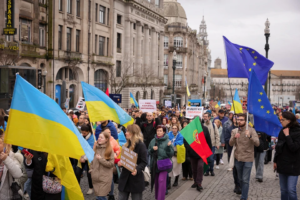
According to Eurostat, as of the end of July 2025 there are 4,373,455 citizens of Ukraine under temporary protection in EU countries. Over the month their number increased by 30,980 people, that is approximately by 0.71% compared to the June level — the dynamics are moderate but stable, indicating a continuing, though not surging, movement of people in search of safety. The overwhelming majority of beneficiaries of this regime — about 98.4% — are Ukrainians, which makes the group of aid recipients extremely homogeneous and requires focused integration measures.
The distribution by countries remains concentrated: the key burden is borne by Germany, Poland, and the Czech Republic. In Germany there are about 1,196,645 people — roughly 27.8% of the total; in Poland — about 992,505 people (around 23%); in the Czech Republic — about 378,420 people (about 8.8%). Taken together this is almost three-fifths of all recipients of protection, therefore it is precisely these economies and their social systems that first react to any changes in inflow: in large agglomerations the issues of housing affordability become acute, the need for school places and language courses grows, and municipal budgets face continuous obligations.
In such conditions, reception policy inevitably shifts to an integration agenda. Coming to the fore are the accelerated recognition of qualifications, intensive language programs, access to kindergartens and schools, as well as reskilling instruments. The labor market becomes the main shock absorber: the faster people move into formal employment, the lower the budgetary burden and the more noticeable the multiplier effect for domestic demand. At the same time, the housing issue remains the key risk: concentration in capital and industrial regions pushes rental rates upward and increases social tension. Effective responses appear to be targeted rent subsidies, accelerated renovation and construction of social housing, as well as a more even distribution of placements among municipalities.
Finally, the predictability of financing and interagency coordination at the EU and national government levels becomes critically important. Even with the current “soft” monthly increase, unreliable sources of funds quickly turn a manageable situation into a problem for local budgets. On the horizon of the coming months, the key indicators of resilience will be the growth rates of protection beneficiaries, the share of those employed, indicators of school and preschool integration, the dynamics of rental rates in concentration regions, and the speed of transition from emergency measures to long-term programs. Overall, the picture of stable but continuing growth with high concentration in Germany, Poland, and the Czech Republic requires shifting efforts from short-term aid to systemic integration — precisely this will make it possible to reduce budgetary costs and turn the humanitarian response into a sustainable socio-economic result.
EU, GERMANY, HOUSING, Labor market, MIGRATION, POLAND, REFUGEES, SOCIAL POLICY, TEMPORARY PROTECTION, UKRAINIANS



