

In Nepal, 53 Ukrainian citizens are currently listed as missing following the natural disaster, including 46 tourists with whom contact was lost on Wednesday morning, the press service of the Ukrainian Ministry of Foreign Affairs told reporters.
According to the Nepal Tourism Police, a total of 53 Ukrainian citizens are currently considered missing as a result of the natural disaster. Thus, the 46 tourists are included in the total number of missing persons.
“The Ministry of Foreign Affairs received a report regarding the loss of contact this morning with a group of 46 Ukrainian tourists in the disaster zone. Overall, according to the Nepal Tourism Police, 53 Ukrainian citizens are currently considered missing as a result of the disaster,” the statement reads.
The Ukrainian embassies in India and China are in contact with the relevant authorities in those countries regarding search operations that could help locate the Ukrainian citizens.
“At the same time, as of now, there is no information regarding the presence of Ukrainian citizens among the dead or injured,” the Ministry of Foreign Affairs noted.
According to information released by the ministry on Wednesday evening, at the personal instruction of Ukrainian Foreign Minister Andriy Sibiga, the Ukrainian embassies in India and China are using the known personal data of the missing citizens to take steps to establish contact with them and carry out other necessary actions.
In addition, the Ministry of Foreign Affairs’ “hotline” has received eight reports from relatives regarding the loss of contact with individuals on the aforementioned list. These reports are part of the total of 53 Ukrainian citizens who are currently considered missing.
The Honorary Consul of Ukraine in Nepal has also been involved on the ground.
The Ministry of Foreign Affairs, the Department of Consular Service, and the Ukrainian embassies in India and China are working to gather additional information, coordinate with foreign authorities to locate the Ukrainians, and provide information and assistance to their relatives.
As previously reported, as of Wednesday evening, at least 16 people had died as a result of flooding in Nepal’s Rasuwa District on the border with China, and at least 384 tourists are considered missing. Among them are 93 Nepalese residents and 291 foreigners, including citizens of the United Kingdom, the United States, Australia, the Netherlands, Malaysia, and India. The citizenship of 111 people is still being determined.
Nine police officers who were on duty along the Nepal-China border are missing.
The nationalities of the deceased have not been specified.
During the search and rescue operations, security forces managed to rescue 25 people. Operations are ongoing.
The flooding was caused by rising water levels in the Bhote Koshi River, which originates in Tibet and flows through Nepal. The settlements located near the river were hit the hardest, particularly Timure and Syaaprubesi. The water flooded marketplaces and residential neighborhoods, caused serious damage to police stations and hydroelectric facilities, and destroyed bridges and roads.
According to preliminary data, the rise in the river’s water level may have been caused by a landslide in Tibet.
The Ukrainian embassies in India and China promptly contacted the relevant authorities to inquire whether any Ukrainian citizens were among those affected by the landslides on the border between Tibet and Nepal.
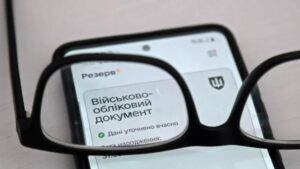
The Ukrainian government has changed the procedure for verifying military registration documents when obtaining consular services abroad: men aged 18–60 are no longer required to specifically generate an electronic military registration document no earlier than 72 hours before visiting an embassy or consulate.
Now, to receive consular services, it is sufficient to present an electronic military registration document that is valid at the time of the visit to the diplomatic mission, according to the Consular Service Department of the Ministry of Foreign Affairs of Ukraine. The new rules are already being implemented by Ukrainian diplomatic missions abroad.
The electronic military registration document, or e-MRD, is generated via the “Reserve+” mobile app and is used by the consul to verify a citizen’s military registration data.
Previously, men aged 18 to 60 were required to present an e-VOD—generated no earlier than 72 hours before visiting a diplomatic mission—when applying for virtually any consular service. The 72-hour requirement has now been abolished. The main condition is that the document must remain valid, and the personal data it contains must be up to date.
In what cases may the consulate refuse service
A consular service may be denied if the e-VOD is invalid or if verification reveals that the data needs to be updated, if the applicant has not presented a valid document at all, or if the document lacks confirmation that the personal data is current.
However, the requirement to present a military registration document does not apply to all consular services.
An e-VOD is not required when applying for an identity certificate to return to Ukraine. An exception also applies when performing consular services for children of Ukrainian citizens if the other parent is a foreign national or a stateless person, as well as for applications from Ukrainians who are under arrest, detained, or imprisoned abroad.
What Should Ukrainians Do If They Cannot Log In to “Reserve+”?
The Ministry of Foreign Affairs has also announced additional simplifications for citizens abroad who are unable to log in to “Reserve+.”
In the near future, they plan to allow these citizens to update their military registration data through Ukrainian embassies and consulates. By the end of 2026, the Ministry of Foreign Affairs, in cooperation with the Ministry of Defense, intends to introduce a mechanism for updating data through consular registration.
To do this, a citizen will need to register with the consulate if they have not already done so, or update their information at a diplomatic mission if they are already registered with the consulate.
A separate procedure is provided for Ukrainians who cannot update their information through “Reserve+” due to the lack of a taxpayer identification number. Such citizens may personally contact the nearest Ukrainian embassy or consulate to obtain a taxpayer identification number using the “e-Consul” system.
Thus, the changes do not eliminate the requirement for men aged 18–60 to have a valid military registration document for most consular services, but they significantly simplify the procedure: it is no longer necessary to regenerate the e-VOD specifically within 72 hours before each visit to the consulate.
The Ministry of Foreign Affairs recommends checking “Reserve+” before your visit to ensure that your e-VOD is valid and that your personal information is up to date.
Official clarification from the Ministry of Foreign Affairs of Ukraine: procedure for verifying military registration documents at Ukrainian consulates and embassies abroad. A similar clarification has been published by Ukrainian embassies and consulates in other countries.
CONSULATE, military registration, MINISTRY OF FOREIGN AFFAIRS, reserve, е-ВОД
The Ministry of Foreign Affairs of Ukraine, in cooperation with the State Tax Service of Ukraine, is expanding access for Ukrainian citizens residing abroad to the service for registering individuals in the State Register of Individual Taxpayers, which includes issuing an electronic taxpayer identification card (RNUKPN).
According to the MFA’s press service, a pilot version of the service was launched earlier this year—issuing RNUKPN cards to children under 18 upon application by a parent, submitted via the “e-Consul” system’s online portal or through a Ukrainian embassy or consulate.
As of July 30, the service became available to any Ukrainian citizen residing abroad who holds a valid identity document.
Ukrainian citizens aged 14 and older may apply for the service. To submit an application, you must visit the nearest Ukrainian embassy or consulate in person; through a representative acting on the basis of a notarized power of attorney or a corresponding document confirming the authority of the person’s legal representative (guardians, custodians, adoptive parents, foster parents at family-type children’s homes, foster caregivers, heads of relevant institutions, etc.). The application can be submitted either online through your personal account in the “e-Consul” system or in person at an embassy or consulate.
Submitting the application independently through your personal account in the “e-Consul” system is free of charge; if the application is submitted through a Ukrainian embassy or consulate, a consular fee for automated data processing is charged ($40 / EUR37).
Detailed information on how to apply for the service and the required documents is available on the Ministry of Foreign Affairs portal.
The ministry emphasized that the RNUKPN serves as a link between government registries, and its existence provides access to an ever-increasing number of digital government services, even abroad.
The launch of these new service features was made possible through cooperation between the Ministry of Foreign Affairs of Ukraine and the State Tax Service of Ukraine, with support from the IOM, UNDP, and UNHCR.
“We are continuing our work to digitize and simplify access to government services for Ukrainian citizens abroad. Every such reform is a demonstration of the state’s respect for its citizens. And when there is a sense of respect, there is motivation to maintain ties with Ukraine and the unity of our people both in our homeland and across all continents,” said Foreign Minister Andriy Sibiga.
CITIZEN, e-Consul, MINISTRY OF FOREIGN AFFAIRS, TAX, РНУКПН, Сибига
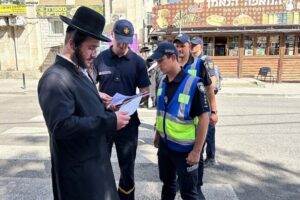
The Ukrainian Ministry of Foreign Affairs recommends that Hasidic pilgrims refrain from traveling to Uman to celebrate Rosh Hashanah.
“Russia’s full-scale aggression against Ukraine, which has been ongoing for more than four years, along with constant, massive rocket attacks on Ukrainian cities and communities, civilian and transportation infrastructure, and ongoing Russian terror, sabotage, and provocations, pose real threats to people’s lives and safety. Under these circumstances, the Ministry of Foreign Affairs of Ukraine urges Hasidic pilgrims planning to make a pilgrimage to Uman to celebrate Rosh Hashanah to take into account that it is impossible to guarantee full security for foreign citizens on Ukrainian territory,” reads a statement released by the ministry’s press service.
The Ministry of Foreign Affairs also noted that a legal regime of martial law is in effect in Ukraine. If pilgrims visit Uman despite the warnings from Ukrainian authorities, they should be aware of restrictions on freedom of movement, curfews, increased patrolling, and a ban on mass gatherings; violators may face enforcement measures.
In addition, other significant risks should be taken into account when planning a trip. Land transportation links with Ukraine remain overloaded, and significant delays are possible due to shelling. In Uman itself, there are not enough civil defense shelters to accommodate large numbers of pilgrims, and there is a shortage of medical personnel and facilities capable of providing qualified medical care.
For further clarification, the Ministry of Foreign Affairs advises contacting the National Police, the State Emergency Service, the Border Guard Service, and the Customs Service, as well as the Cherkasy Regional State Administration and the Uman City Council. Pilgrims who do decide to travel to the city are advised to familiarize themselves in advance with the rules for paying the tourist tax.
Every year on the Jewish New Year, Rosh Hashanah, tens of thousands of Hasidic pilgrims arrive in Uman, Cherkasy Oblast, to visit the grave of Rabbi Nachman, the founder of Bratslav Hasidism. Despite Russia’s full-scale war against Ukraine, the pilgrimage continues, although Ukrainian authorities regularly urge foreigners to consider the security risks. In 2025, more than 35,000 pilgrims arrived in Uman for the Rosh Hashanah celebrations.
Hasid, MINISTRY OF FOREIGN AFFAIRS, pilgrimage, SECURITY, UMAN

“Zalizna Zmina,” a project by JSC “Ukrzaliznytsia” aimed at developing and supporting talented Ukrainian youth, in collaboration with the Ministry of Foreign Affairs of Ukraine, presented the HOMECOMING PROGRAM 2026 for Ukrainian youth temporarily residing abroad, according to the Embassy of Ukraine in the Republic of Slovenia.
As part of the program, the “Iron Change” International Summit will be held, bringing together over 250 young people from Ukraine, European countries, Turkey, and North America. The event is scheduled for September 1–7, 2026, in Bukovel, in the Ukrainian Carpathians.
The program is aimed at Ukrainian youth abroad and seeks to support their connection to Ukraine, its culture, and professional community. Participants will have the opportunity to meet with politicians, entrepreneurs, athletes, artists, and thought leaders, as well as take part in educational, cultural, and team-building activities.
The program places special emphasis on opportunities for education, internships, and professional development in Ukraine. The organizers position HOMECOMING as an opportunity for young Ukrainians living abroad to reconnect with their roots, experience modern Ukraine, and join the global community of Ukrainian youth.
To participate, you must register on the website ironsquad.org.ua and upload a motivational video by August 1, 2026. The “Iron Change” project website also features up-to-date announcements about programs and registration campaigns for young people.
The HOMECOMING PROGRAM 2026 is part of “Iron Change’s” broader work with Ukrainian youth abroad. In May 2026, Ukraine hosted the fifth edition of the international HOMECOMING summit, which, according to the project, brought together about 200 Ukrainian teenagers from abroad.
“Zalizna Zmina” is a project aimed at developing and supporting Ukraine’s talented youth, implemented in partnership with JSC “Ukrzaliznytsia” and other partners. The project conducts educational, motivational, and communication programs for teenagers and young adults, particularly for Ukrainians who are temporarily residing outside Ukraine due to the war or other circumstances.
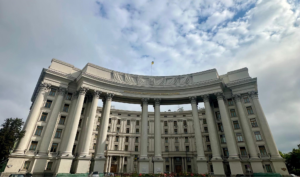
Foreign Minister Andriy Sibiga called Kazakhstan a key regional partner of Ukraine and spoke in favor of deepening cooperation in the fields of logistics, energy, and post-war reconstruction, also announcing his intention to launch the “Ukraine + Central Asia” platform.
“It is important for Kazakhstan to remain one of the key suppliers of energy resources in Eurasia, while simultaneously diversifying and modernizing its energy sector. Kazakhstan is also one of the world’s leading producers of uranium, which is a critically important resource for nuclear energy production. This plays an important role in global energy security,” the minister said in an interview with The Times of Central Asia.
Sibiga noted that Ukraine is interested in the participation of Kazakhstani businesses and investors in the country’s reconstruction, as well as in the development of the Middle Corridor as an alternative transport route between Asia and Europe involving Ukrainian Black Sea ports.
Separately, the foreign minister touched on the topic of historical memory and the shared experience of Ukraine and Kazakhstan related to policies of repression and the suppression of national identity.
According to Sibiga, Russia’s strategic goal is to continue a policy that, in his assessment, dates back to the times of the Russian Empire and the Soviet period.
“Russia’s strategic goal is to complete what the Russian Empire began and the Soviet regime failed to finish: the eradication of national identity and the destruction of the very foundation of our existence as a separate nation,” he emphasized.
The minister also noted that Ukraine and Kazakhstan share a common historical memory of language and cultural bans, repression, deportations, and famines.
“Ukraine and Kazakhstan alike remember the tragic chapters of their history: the banning of language and culture, the destruction of the intelligentsia, deportations, repression, and famines. We cannot allow this to happen again,” the foreign minister concluded.
Central Asia, KAZAKHSTAN, MINISTRY OF FOREIGN AFFAIRS, PARTNER



