
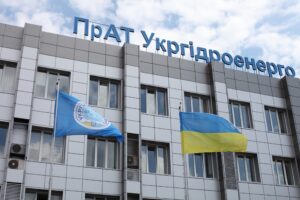
On April 9, 2026, PJSC “Ukrhydroenergo” signed its first agreement since the launch of the “Electricity Import-Export” section on the Ukrainian Energy Exchange (UEEX), the company announced on its Telegram channel on Friday.
“It was Ukrhydroenergo that initiated the auction and sold electricity across the Ukraine-Moldova border,” the company noted.
As explained by the company, this agreement marks an important step in the development of exchange-based electricity trading and the expansion of the organized market’s capabilities. The agreement also has practical significance for the entire power system: a separate exchange section for import-export operations makes such transactions more predictable and transparent, allows for better system balancing amid fluctuating demand and generation, and opens up additional opportunities for attracting external resources or selling surplus electricity. As a result, the system gains greater flexibility, and the market gains clear rules of the game for all participants.
“For Ukrhydroenergo, this agreement is the result of the work of an entire team of specialists, as well as a strategic step toward developing a transparent, competitive electricity market integrated with European practices,” noted Bogdan Sukhetsky, Acting CEO of Ukrhydroenergo.
According to him, by initiating such mechanisms, the company is opening up new opportunities for efficient exports, increasing the liquidity of exchange trading, and strengthening energy cooperation with neighboring countries.
As reported, Ukraine reduced electricity imports by 25% in March compared to the previous month—to 942,100 MWh—and resumed electricity exports, which had last taken place on November 10, 2025. Export volumes in March totaled 30,200 MWh.

Ukrainian President Volodymyr Zelenskyy presided over a ceremony to receive the credentials of new diplomatic representatives from foreign countries and discussed issues of international security and support for Ukraine.
The newly appointed ambassadors who presented their credentials to Zelenskyy are Ahmed Ouail of Algeria, Alan Deniega of the Philippines, Jeff Bowan of Australia, and Victor Kirile of Moldova. The President congratulated them on the start of their diplomatic missions and thanked them for supporting Ukraine’s independence.
During the meeting, they discussed Russia’s war against Ukraine, the protection of citizens, as well as the situation in the Middle East and the Gulf region. According to Zelenskyy, partners emphasize the importance of Ukraine’s security mission and cooperation with countries currently under attack by the Iranian regime.
“Our goal is absolutely clear: we must enhance security everywhere and do everything possible to end the war and ensure reliable protection. We are counting heavily on coordination and mutual support. Ukraine is open to cooperation with everyone who truly values peace,” the president emphasized.
ALGERIA, AMBASSADOR, AUSTRALIA, MOLDOVA, PHILIPPINES, ZELENSKYY
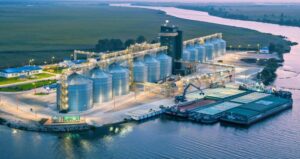
One of Ukraine’s largest grain market operators, Nibulon Joint Venture LLC (Mykolaiv), has expanded the scope of its river fleet cargo transportation on the Danube and opened a new logistics route involving Moldovan ports, the company announced on its Facebook page.
“After entering the markets of the Middle and Upper Danube in 2025, Nibulon opened a new route involving Moldovan ports. The first operation involved the implementation of a comprehensive logistics scheme: a voyage was completed along the route Izmail (Ukraine) – Galați (Romania), transporting 3,600 tons of metallurgical slag,” the statement noted.
According to the company, after unloading, the vessel proceeded to the port of Giurgiulești (Moldova), where it loaded 5,000 tons of rapeseed for further transport to Constanța, Romania. The total volume of cargo transported on the voyage exceeded 8,600 tons.
In addition, Nibulon implemented a two-way logistics scheme involving the delivery of grain from Izmail to Bulgarian ports, with a return load of mineral fertilizers in Serbia for transport to Moldova.
“This format allows us to minimize empty voyages and increase the efficiency of fleet utilization,” the company emphasized.
In total, by the end of 2025, Nibulon had transported over 110,000 tons of cargo via river transport. Its own fleet enables the agricultural holding to transport various types of goods, including agricultural products, fertilizers, slag, and metal, and to adapt routes to market needs.
Before the war, Nibulon cultivated 82,000 hectares of land across 12 regions of Ukraine and exported agricultural products to over 70 countries worldwide. In 2021, the grain trader exported a record 5.64 million tons of agricultural products. After the war began, the company was forced to relocate its headquarters from Mykolaiv to Kyiv. In addition to 23 grain storage complexes, Nibulon has its own road and rail transport capabilities, as well as a fleet built at its own shipyard. During wartime, this fleet continues to carry out river transport operations.
Nibulon is actively developing its own humanitarian demining unit to restore safety on leased lands and assist Ukraine’s agricultural sector. The company is a certified operator of mine action activities.
In July–March of the 2025–2026 marketing year (MY), Ukraine exported 48,300 tons of wheat flour, which is 3% less than in the same period of the previous season, when shipments totaled 49,800 tons, the Ukrainian Flour Millers Association reported on Facebook.
The industry association noted that EU countries accounted for about 35% of exports, although in the previous season the European market’s share was significantly higher, reaching 44%.
The top five consumers of Ukrainian flour for the first nine months of the 2025/26 marketing year included Moldova, which imported 14,900 tons, Palestine – 9.2 thousand tons, the Czech Republic – 7.4 thousand tons, Israel – 4.4 thousand tons, and Spain – 4.2 thousand tons.
“Flour Millers of Ukraine” also pointed to an increase in wheat flour imports to Ukraine. Thus, during the reporting period, nearly 2.3 thousand tons of the product were purchased on foreign markets, which is 21% higher than the figure for the same period last year, when 1.9 thousand tons were imported.
CZECH REPUBLIC, FLOUR, ISRAEL, MOLDOVA, PALESTINE, SPAIN, Ukrainian Flour Millers

The Moldovan government will propose to parliament that a state of emergency be declared in the energy sector for a period of 60 days, starting March 25, 2026, following the disconnection of the main Vulcănești–Isaccea power line as a result of Russian strikes on Ukraine’s civilian energy infrastructure. This was reported on the Moldovan government’s official website.
The Vulcănești–Isaccea line is the main artery for electricity imports and supplies 60–70% of the consumption on the right bank of Moldova. Authorities estimate a potential power deficit during peak hours at up to 350–400 MW starting March 25.
The Moldovan government stated that the state of emergency will allow for the rapid procurement of energy resources and emergency equipment, faster distribution of necessary resources, and, if necessary, the implementation of measures to restrict consumption and special operating rules for economic operators to protect critical infrastructure and social institutions.
At the same time, officials in Chisinau emphasize that consumers are currently being supplied with electricity from domestic sources and imports via alternative routes, including four 110 kV interconnection lines with Romania. These schemes have been used before, notably during the blackouts on January 31, 2026.
According to the Moldovan state agency Moldpres, citing the National Crisis Management Center, downed drones were discovered near the Isaccea-Vulcănești line, limiting access for technical crews and requiring demining before repair work can begin. Inspections are being conducted in coordination with transmission system operators from Moldova, Romania, and Ukraine.

Ukrainian manufacturer of passive fire protection systems Kovlar Group is expanding its presence in the Moldovan market and expects to make this direction one of the first stable export channels for its products.
According to the company, it has been supplying fire protection products for engineering communications to Moldova for the past two years. Kovlar Group notes that there is virtually no domestic production of passive fire protection materials on the Moldovan market, so local partners are showing interest in Ukrainian systems.
The company specifies that regular technical meetings are held with Moldovan specialists to introduce the products, during which issues of fire protection system design, national regulatory requirements, and features of material application are discussed. According to preliminary agreements, the Moldovan side plans to purchase a significant part of Ammokote products.
The presence of Ammokote products on the Moldovan market is also confirmed by open specialized resources: in particular, the specialized platform Antikor.md features Ammokote products for fire protection of engineering communications with technical documentation and certificates.
Kovlar Group LLC was founded in 2015 in Kyiv and is the largest manufacturer of passive fire protection products in Ukraine. According to OpenDataBot, the company’s authorized capital is UAH 1.2 million, and its ultimate beneficiaries are Kostyantyn Kalafat (40%), Andrii Ozeychuk (35%), and Liubov Vakhitova (25%). The company’s revenue for 2024 amounted to UAH 91.37 million, which is twice as much as a year earlier, and its net profit was UAH 13.4 million, which is 1.7 times higher than in 2023. In the first quarter of 2025, the company’s revenue amounted to UAH 13.5 million, with a net profit of UAH 1.983 million.



