

In January–June 2026, Ukrainian insurance companies increased commission payments to insurance intermediaries under mandatory auto liability insurance (OSCPV) policies by 58.6% compared to the same period in 2025—to 2.589 billion UAH, and for comprehensive auto insurance (CASCO) by 26.2%, to 2.330 billion UAH.
According to the website of the National Bank of Ukraine (NBU), commissions paid to intermediaries for “Green Card” insurance decreased by 20.9%, to 642.751 million UAH, while those for property insurance increased by 4.8%, to 516.8 million UAH, while commissions for voluntary medical insurance (VMI) rose by 18.1%, to 423.9 million UAH; commissions for assistance services increased by 36.4%, to 324.5 million UAH; and commissions for financial risk insurance rose by 4.3%, to 368.3 million UAH.
In addition, according to the regulator, expenses for marketing and advertising activities related to MTPL insurance products rose by 4% in the first half of 2026, to 14.5 million UAH; for the “Green Card,” they rose by 1.4%, to 2.3 million UAH; and for comprehensive auto insurance (CASCO)—by 16.8%, to 15.7 million UAH.
At the same time, expenses for maintaining and operating the insurer’s office under MTPL contracts increased significantly—by 61.7%, to 81.8 million UAH; for CASCO—by 11.6%, to 64 million UAH; “Green Card” insurance—decreased by 11.1%, to 12.7 million UAH; property insurance—increased by 36.6%, to 12.6 million UAH; and voluntary medical insurance (VMI)—by 3.1%, to 16.06 million UAH.

Since the beginning of 2026 through August 22, the National Bank of Ukraine has imposed fines on dozens of participants in the non-bank financial market totaling about UAH 374 million, and has also forcibly revoked the licenses of at least 20 financial companies, insurers and pawnshops, according to calculations by the Experts Club analytical center based on the regulator’s decisions.
The calculation does not include banks, credit unions, or cases in which companies voluntarily surrendered their licenses.
The largest amount of fines was imposed in May. At that time, LLC FC Kontraktovyi Dim, operating under the EasyPay brand, and LLC Swift Garant, associated with the City24 service, were each fined UAH 135.15 million. Insurance company VUSO was fined UAH 40.7 million, while LLC 1 Safe Agency of Necessary Loans, known under the MyCredit brand, was fined UAH 6.13 million.
Other major sanctions since the beginning of the year include a UAH 11.64 million fine for Smartiway Ukraine, more than UAH 9 million for Fard Standard, and around UAH 8 million in total for NovaPay.
In August, the NBU fined LLC FC Atlana UAH 198.88 thousand, LLC FC Finstyle UAH 182.81 thousand, and LLC FC Groway UAH 216.18 thousand. The regulator also revoked the license of the latter company for failure to comply with a requirement to remedy a violation related to the non-submission of reporting for 2025.
Since the beginning of the year, the entities that have been forcibly deprived of their licenses include, in particular, FC Takelau, Vash Lombard, FC Asap, FC Liberty Finance, Credit Partners, Skhid Finance, FC Svarog Finance, City Fin Alliance, Lombard Platinum Skarb, FC Solid Group, Gold Split, FC Royal Finance 1, Sent Pro, Leasing Company Aton-XXI, FC Alkor Capital, Prosto Leasing, FC Online Finance, insurers Asko DS and Peremoha, as well as FC Groway.
The main reasons for the NBU’s sanctions in 2026 were violations of financial monitoring requirements, reporting and internal control requirements, non-compliance with capital adequacy standards, problems with ownership structures, as well as refusal or inability to undergo inspection checks.
Separately, in August, the NBU prohibited the provision of a number of financial and payment services through Money24/7 services and branches without the required authorization. This case is not included in the license revocation statistics, since the regulator classified the activity as the provision of services without the relevant authorization.
Source: decisions and statements of the National Bank of Ukraine for January-August 2026, calculations by Experts Club.
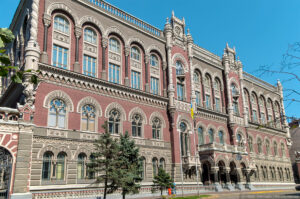
The National Bank of Ukraine has banned the provision of financial and payment services through online services, branches, and other resources operating under the Money24/7 brand, as it has identified evidence of a number of transactions being conducted without the required licenses.
According to the NBU, the decision applies to Money24.7 Agency LLC, Legion 1913 LLC, VAT 1913 LLC, “Trikotazhna Mosaika” LLC, “FU ‘GGLA’” LLC, Andriy Smirnov—whom the regulator identifies as the ultimate beneficial owner—as well as other individuals who operate through Money24/7 or are under its significant or decisive influence.
During its supervisory review, the NBU identified indications that the Money24/7 network was being used to provide services involving the trading of foreign currency in cash, the raising of funds and bank metals subject to return, as well as the transfer of funds without opening an account.
According to the regulator, the listed companies do not hold the necessary licenses to provide these services.
The exception is LLC “FU ‘GGLA’,” which holds a license to trade in foreign currency in cash and may continue to carry out this specific type of activity. The ban applies to other financial and payment services for which the necessary authorization is lacking.
The decision applies to the website money24.kiev.ua, the Money24/7 trademarks, Telegram channels and bots associated with the brand, other online resources, as well as a network of branded branches.
The NBU reported that, during its supervisory review, it identified legal and economic indicators of a connection between the companies and services. As a result, individuals operating through Money24/7 were classified by the regulator as providers of financial and payment services without the required authorization.
The NBU Board’s decision was adopted on August 17, 2026, upon the recommendation of the Committee on the Supervision and Regulation of Banking Activities and Oversight of Payment Infrastructure.
Money24/7 was already under the scrutiny of law enforcement agencies. In August, law enforcement officials notified the alleged organizer of the network—whose activities were investigated as part of a special operation in July—of their suspicion.
According to the Office of the Prosecutor General, the service positioned itself as a network of currency exchange points and a platform for transactions involving cryptoassets. Investigators claim that in some cases, after receiving funds from customers, the participants in the scheme failed to fulfill their obligations. These circumstances represent the investigators’ version of events and are subject to legal assessment by the court.
During more than 40 searches, law enforcement officials, according to the prosecutor’s office, seized cash in various currencies totaling more than 20 million hryvnias.
At the same time, the NBU’s current decision is a separate regulatory measure: it specifically concerns the provision of financial and payment services without licenses or authorization, rather than establishing the guilt of the network’s participants in the crimes alleged by law enforcement agencies.
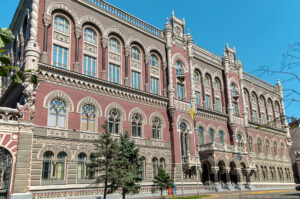
The National Bank of Ukraine has suspended FC “Esayment” LLC’s operations involving the provision of funds to other parties under repayable financial assistance agreements until August 17, 2027.
This decision was made based on the results of an off-site supervision of the company’s activities.
According to the regulator, the NBU determined that the company was engaging in risky activities that could threaten the interests of its clients or creditors. Among the violations identified by the regulator was the conduct of transactions that lacked economic rationality.
The enforcement measure applies to a specific type of transaction and does not constitute a full revocation of the financial company’s license.
The decision to impose the restriction was adopted on August 17, 2026, by the NBU’s Committee on Supervision and Regulation of Non-Bank Financial Services Markets.
The National Bank of Ukraine has suspended, until August 17, 2027, “Profit Finance” LLC’s operations involving the provision of funds to other parties under the terms of a repayable financial assistance agreement.
This enforcement measure was imposed following an on-site inspection.
According to the NBU, the company’s activities included transactions that the regulator classified as risky activities threatening the interests of clients or creditors. In particular, the National Bank identified transactions that lacked economic justification.
This does not involve the revocation of the company’s license as a whole, but rather a temporary ban on a specific type of transaction—providing funds to third parties under the terms of a repayable financial assistance agreement.
The decision was adopted on August 17, 2026, by the NBU’s Committee on Supervision and Regulation of Non-Bank Financial Services Markets.
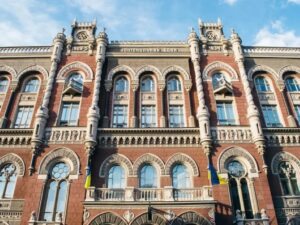
The National Bank of Ukraine fined FC “Finstyle” LLC 182,810 UAH and issued the company a written warning due to violations and shortcomings in its reporting.
According to the regulator, the company violated the requirements for the preparation and submission of financial statements. The NBU also identified a lack of necessary automation in record-keeping and deficiencies in the system for verifying the completeness and accuracy of reported data.
“Finstyle” must pay the fine within one month from the date the decision takes effect and must remedy the violations and deficiencies listed in the NBU’s written warning by September 8, 2026.
The decision to impose these measures was adopted by the Committee on Supervision and Regulation of Non-Bank Financial Services Markets on August 17.



