

The National Bank of Ukraine (NBU) revoked the insurance operating licenses of PJSC “Insurance Company ‘ASKO DS’” (Kyiv) and PJSC “Insurance Company ‘Peremoha’” (Kyiv).
According to the regulator’s website, the reason for this decision regarding ASKO DS was the company’s failure to submit a business recovery plan and a financing plan to the NBU, as revealed by the results of off-site supervision of the company’s activities.
The business recovery plan was intended to ensure the insurer’s financial recovery and compliance with solvency capital requirements within no more than 180 days from the date the violation of such requirements was identified, while the financing plan was to be implemented within no more than 90 days. Failure to fulfill these obligations led to the National Bank’s repeated rejection of the insurer’s business recovery plan and financing plan.
As for IC “Peremoha,” the results of off-site supervision of the company’s activities revealed that the insurer was engaging in risky activities that threatened the interests of its policyholders and/or other creditors.
Evidence of such activities included the omission and misrepresentation in the insurer’s information systems of data contained in contracts and other source documents, on the basis of which reporting data for the relevant reporting period are calculated or generated. The extent of the omissions and distortions exceeded 10% of the reporting data and the data contained in the insurer’s information systems, and more than 20% of the minimum absolute value of the minimum capital.
The decisions to impose sanctions on ASKO-DS Insurance Company and Peremoha Insurance Company take effect on July 24, 2026. As of that date, the companies lose the right to enter into contracts or make changes (such as extending the terms of existing contracts) regarding the provision of insurance services.
ASKO-DS Insurance Company was registered in November 1991. It has been a member of the Motor (Transport) Insurance Bureau of Ukraine since 1994 and a member of the “Insurance Business” Association since 2015.
According to the National Bank of Ukraine (NBU), the company ranks 30th among Ukraine’s non-life insurers in terms of premiums collected in 2025.
As previously reported, ASKO-DS Insurance Company (formerly Mir Insurance Company, Kyiv) was registered in 1992 and specializes in risk insurance.
According to the National Securities and Stock Market Commission (NSSMC), as of the first quarter of 2026, the shareholders of this insurance company were ABC Finance LLC—79.920% of the shares—and Anastasia Kolesnik—9%.
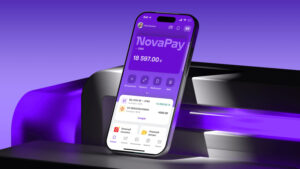
The volume of transfers via the international financial service “NovaPay” (TM NovaPay) in the first half of 2026 increased by 41% compared to the same period in 2025, reaching 391 billion hryvnia, according to a company statement released on Friday.
According to the statement, the number of transfers increased by 12% to 258 million.
The press release, citing NovaPay’s acting CEO Ihor Prykhodko, notes that over the first six months of this year, the financial service paid 19% more in taxes and fees compared to the same period last year—905 million hryvnias.
As previously reported, in the first quarter of 2026, NovaPay increased the volume of transfers by 53% compared to the same period in 2025—to over 200 billion UAH—while the number of transactions rose by 12%—to 126 million.
From January through March 2026, the company transferred approximately 540 million UAH to the state budget, which is 32% more than during the same period in 2025.
In 2025, NovaPay increased its revenue by 10.4% to 10.01 billion UAH, while its net profit decreased by 22% to 2.58 billion UAH.
NovaPay was founded in 2001 as an international financial service provider, part of the Nova Group (“Nova Poshta”), and provides financial services both online and offline at “Nova Poshta” branches. In 2023, the company became the first non-bank financial institution in Ukraine to receive an expanded license from the NBU, which allowed it to open accounts and issue cards; it was also the first non-bank to launch its own financial app with a wide range of financial services at the end of last year.
According to the National Bank of Ukraine, the company accounts for approximately 22.7% of the total volume of domestic money transfers.

Over the most recent available period—from October 2025 to March 2026—approximately 15,800 housing purchase and sale agreements were concluded in Kyiv, according to data from the National Bank of Ukraine, citing the National Information Systems. This is the highest figure among the country’s regions.
By comparison, approximately 19,100 transactions were registered in the capital from January through September 2025. In the Kyiv region, 17,000 contracts were signed during this period; in the Dnipropetrovsk region, 16,800; and in the Kharkiv region, 14,000.
The NBU notes that in the fourth quarter of 2025, overall activity in Ukraine’s housing market was the highest since 2022; however, in the first quarter of 2026, the number of transactions declined significantly. Cumulatively over the last four quarters, housing sales increased by 11% year-over-year.
The NBU’s figures cover housing purchase and sale agreements in both the primary and secondary markets; therefore, they should not be equated solely with sales of apartments in new construction projects.

The National Bank of Ukraine has revoked the license of Prosto Leasing LLC to operate as a financial company authorized to engage in financial leasing, according to a statement on the regulator’s website.
The basis for this decision was the second violation within a single year of the mandatory requirement for “Prosto Leasing” to submit to the NBU an assurance report on its annual financial statements (reporting data), namely, a violation of the requirements of the Regulation on the Authorization of Financial Service Providers and the Conditions for Their Operation, approved by NBU Resolution No. 199.
As previously reported, on July 7, 2025, a corrective measure was imposed on the company in the form of a requirement to take steps to eliminate (correct) the violations identified during the supervisory review. The violation was rectified.
In 2026, “Prosto Leasing” committed a repeat violation (its second within a single year): it failed to submit to the National Bank an assurance report on its annual financial statements for 2025.
The decision to impose a corrective measure in the form of license revocation was adopted by the National Bank’s Committee on Supervision and Regulation of Non-Bank Financial Services Markets on July 20, 2026. It takes effect on the date the company is notified of the decision.
Prosto Leasing LLC is a Ukrainian financial company that has been operating in the operating and financial leasing market since August 2021. On February 19, 2024, the National Bank of Ukraine renewed the company’s license to provide financial leasing services and made the corresponding changes to the Register of Financial Institutions.
FUIB respects the decisions of the National Bank of Ukraine and prioritizes compliance with financial monitoring legislation.
The bank has taken into account the NBU’s comments to further improve and fine-tune its processes and procedures to meet the requirements of financial monitoring legislation. At the same time, the identified violations are not systemic and do not indicate a lack of an adequate risk management system or proper organization and conduct of initial financial monitoring at PUMB.
To date, PUMB has already developed an action plan to address the identified shortcomings and further improve internal procedures and controls in the area of financial monitoring. The bank systematically invests in the development of technological solutions and process automation aimed at enhancing the effectiveness of its financial monitoring system.
FUIB continues to engage constructively with the National Bank of Ukraine and is consistently working to improve the effectiveness of its financial monitoring system.
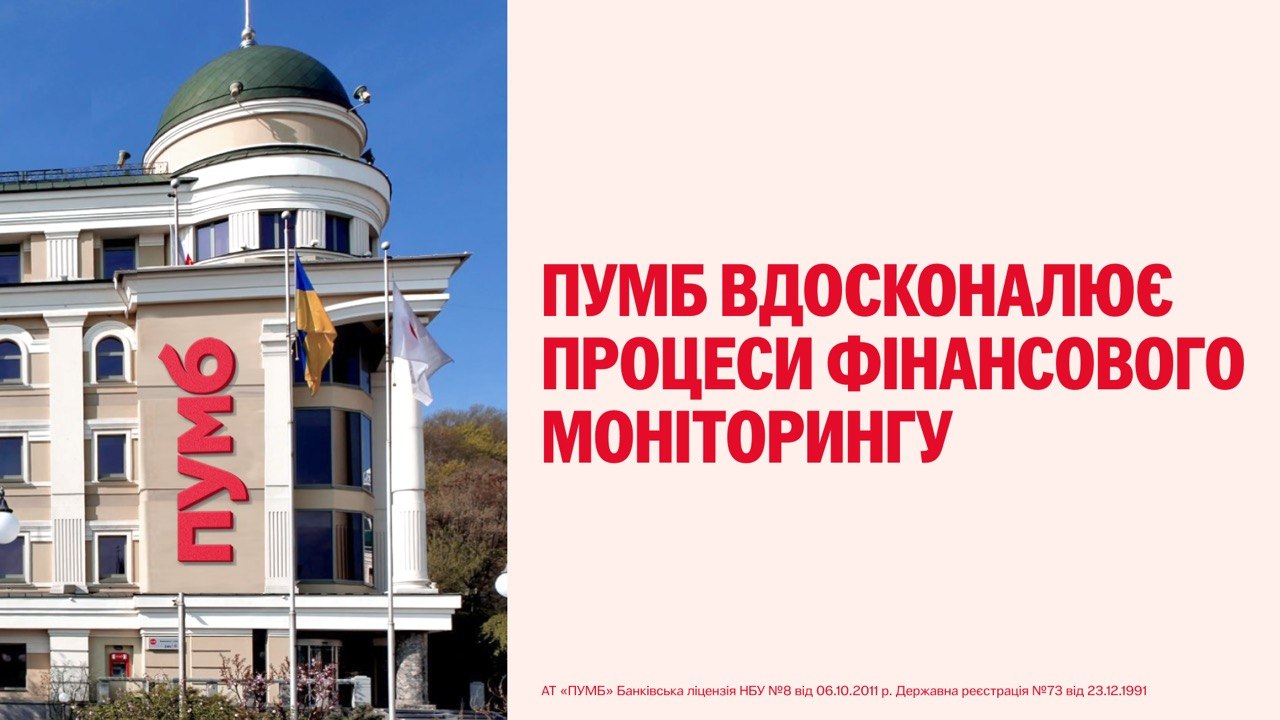
It should be noted that FUIB is one of the largest taxpayers in Ukraine. Since 2022, the bank has paid 20.4 billion UAH in taxes to budgets at all levels. At the same time, PUMB actively supports Ukraine and its defense forces: the bank’s investments in social projects since 2022 have exceeded 1.4 billion UAH, of which more than 544 million UAH has been allocated to support the Armed Forces of Ukraine, the Territorial Defense Forces, the State Emergency Service, the National Police, the National Guard, the Main Intelligence Directorate, and the Security Service of Ukraine.

In June 2026, the National Bank of Ukraine imposed sanctions on “I Lombard” LLC for violations of financial monitoring and foreign exchange laws, the regulator announced on July 7. The total amount of the fines was 4.196 million UAH.
The company received the main fine—4.096 million UAH—for improper organization and conduct of initial financial monitoring.
According to the NBU, the violations concerned the development and implementation of internal documents, customer verification, the application of a risk-based approach, additional measures regarding politically exposed persons, as well as the provision of information and documents upon request by the National Bank.
“I Lombard” was fined an additional 100,000 UAH for violating the procedures for conducting currency exchange transactions. In particular, the NBU noted the absence in internal documents of procedures for coordination between separate divisions when conducting currency exchange transactions, as well as the failure to collect remaining foreign currency balances from the cash register of a structural division.
In addition, the company received written warnings for improper maintenance of customer records and for conducting foreign exchange transactions with non-resident individuals involving the granting and repayment of loans, as well as the payment of interest in hryvnia, without the appropriate license from the NBU.
“I Lombard” LLC is a non-bank financial institution registered in Ukraine. The NBU included the company in the State Register of Financial Institutions and issued it a license to provide financial services in October 2023.



