
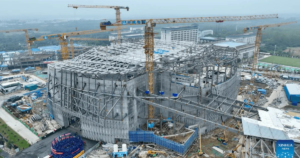
The development of controlled nuclear fusion is gradually moving from individual laboratory records to the creation of full-scale magnets, vacuum chambers, cooling systems, and experimental facilities designed to test the possibility of stable energy production.
The most notable achievement of recent months belongs to China. In June 2026, Chinese specialists completed the manufacture and testing of the world’s largest superconducting magnet for a future fusion reactor. At the same time, the United States is advancing laser fusion and private projects involving compact facilities, Russia continues experiments on the T-15MD tokamak and supplies equipment for the international ITER reactor, while European and Asian research centers are working on long-duration plasma confinement and materials for future power plants.
Despite the acceleration of research, no country has yet built a fusion facility that continuously generates more electricity than its entire equipment complex consumes. Most announced dates for the launch of the first power plants in the 2030s remain targets rather than guaranteed deadlines.
How Nuclear Fusion Energy Is Produced
Nuclear fusion is the process that powers the Sun and other stars. During the reaction, light atomic nuclei combine into a heavier nucleus, while part of their mass is converted into energy.
On Earth, the reaction between two hydrogen isotopes—deuterium and tritium—is considered the most promising. When they combine, a helium nucleus and a fast neutron are produced. Approximately 80% of the released energy is carried away by the neutron, which is then expected to heat the blanket surrounding the reactor. The resulting heat is intended to produce steam and drive a conventional turbine, as at a thermal or nuclear power plant.
To initiate the reaction, the fuel must be converted into plasma and heated to approximately 150 million degrees Celsius—about ten times the temperature at the center of the Sun. On the Sun, matter is compressed by immense gravity. In a terrestrial facility, gravity must be replaced by a magnetic field or an extremely powerful laser pulse.
Sustainable fusion requires three conditions to be met simultaneously: a high temperature must be reached, sufficient particle density must be created, and the plasma must be confined for long enough. It is the combination of these parameters, rather than a single temperature record, that determines the actual progress of a facility.
Two principal approaches are currently used
With magnetic confinement, plasma is held inside a ring-shaped vacuum chamber. Powerful superconducting magnets prevent it from coming into contact with the walls. The most common facility of this type is the tokamak. An alternative is the stellarator, which has a more complex magnetic-field configuration but is potentially better suited to continuous operation.
With inertial fusion, a small fuel capsule is simultaneously irradiated by lasers. The capsule’s outer layer evaporates, the fuel is rapidly compressed, and for a brief period it reaches the conditions under which a fusion reaction begins.
China Built the Largest Superconducting Magnet
In June 2026, the Institute of Plasma Physics at the Chinese Academy of Sciences announced the successful completion of tests on a D-shaped toroidal-field magnet for future fusion facilities.
The magnet is 21 meters long, 12 meters wide, and 3.3 meters high, and weighs 582 tonnes. According to its developers, its volume is 1.3 times greater than that of a comparable component of the international ITER reactor, while its stored magnetic energy is three times greater.
Toroidal magnets generate the primary field around a tokamak’s vacuum chamber. The stronger and more stable the field, the higher the plasma pressure and temperature that can potentially be maintained inside the facility.
The creation of such a magnet means that China has mastered the production of large-scale superconducting coils, special steel, low-temperature insulation, protection systems, and ultra-low-resistance joints. However, a magnet alone is not a reactor. An energy-producing facility will require a complete set of coils, a vacuum chamber, a cryogenic system, plasma heating, neutron protection, and equipment for tritium breeding.
China is simultaneously developing several interconnected projects. In January 2025, the EAST tokamak maintained plasma in high-confinement mode for 1,066 seconds, significantly exceeding the previous result of 403 seconds. The experiment did not involve industrial energy production, but it demonstrated the possibility of prolonged operation of a superconducting tokamak.
The next stage is expected to be the BEST facility, which is under construction in Hefei. It is scheduled for completion by the end of 2027. Unlike EAST, BEST is being designed for experiments with burning deuterium-tritium plasma and is expected to produce between 20 and 200 MW of fusion power. Chinese developers intend to demonstrate a positive energy balance and the possibility of electricity generation by approximately 2030. For now, these are stated project objectives that must be confirmed experimentally.
The United States Achieved Repeatable Laser Ignition
The main government-funded achievement of the United States remains the work of the National Ignition Facility, or NIF, at Lawrence Livermore National Laboratory.
In December 2022, NIF obtained more energy from a fusion reaction for the first time than the lasers directly delivered to the fuel target. Ignition was subsequently repeated several times.
In an April 2025 experiment, the lasers delivered 2.08 megajoules to the capsule, while the reaction produced a record 8.6 megajoules of fusion energy. The target-level gain exceeded four, and the experiment became the eighth successful ignition at NIF. The results were presented in detail by the laboratory in April 2026.
However, this does not yet mean that NIF has become a power plant with a positive energy balance. The laser complex requires significantly more electricity to operate than reaches the fuel capsule. In addition, NIF produces individual pulses and was created primarily for scientific and defense research, whereas an industrial power plant would have to repeat shots many times per second, manufacture high-precision capsules inexpensively, and efficiently convert heat into electricity.
The private sector is developing in parallel in the United States. The Department of Energy reported that total private investment in US fusion projects had exceeded $10 billion. The government roadmap approved on June 9, 2026, provides for support for experimental facilities and an attempt to bring commercial fusion generation to the market in the mid-2030s. At the same time, the department acknowledges that implementation of the program depends on future funding and public partnerships.
Commonwealth Fusion Systems is building the compact SPARC tokamak in Massachusetts, using magnets made from high-temperature superconductors. In April 2026, the company estimated that the project was approximately 75% complete. SPARC will not be a full-scale power plant: its purpose is to demonstrate that the energy produced by reactions within the plasma can exceed the energy directly expended on heating it.
Another US developer, Helion, uses a pulsed magnetic system that directly converts plasma expansion into electricity. In February 2026, the company stated that its Polaris facility had conducted a reaction using deuterium and tritium and heated the plasma to 150 million degrees. These figures were published by the company itself and are not yet equivalent to demonstrating a positive energy balance for the entire facility.
In June, Helion obtained licenses in Washington State to use radioactive materials and release emissions for the Orion complex under construction. The regulatory approval allows the company to continue developing the facility, but it does not confirm that the announced energy characteristics of the future installation have already been achieved.
ITER Is Assembling the Largest International Tokamak
The international ITER reactor is under construction in southern France with the participation of the European Union, China, India, Japan, South Korea, Russia, and the United States.
ITER is expected to produce 500 MW of fusion power in the plasma with 50 MW of external heating, thereby achieving a gain factor of Q=10. However, the facility will not supply electricity to the grid. Its purpose is to demonstrate the sustained operation of burning deuterium-tritium plasma and test the technologies required for subsequent demonstration power plants.
In June 2026, assembly of the central solenoid, consisting of six modules, was completed at the site. In July, the sixth sector of the vacuum vessel was installed in the tokamak pit, after which approximately two-thirds of the future reactor ring had been assembled.
The project is significantly behind its original schedule. According to the updated plan, research operations are expected to begin in 2034, operation at full magnetic power in 2036, and the first deuterium-tritium experiments in 2039.
ITER’s delays demonstrate the scale of the engineering challenge. Even with international funding, the manufacture of unique magnets, vacuum modules, and cooling systems takes decades.
Russia Retains Access to ITER Despite the War and Sanctions Risks
The Soviet Union played a significant role in the development of controlled nuclear fusion research. The first tokamak was created at the Kurchatov Institute in 1954, and the term itself later emerged from the phrase “toroidal chamber with magnetic coils.”
The principal operational Russian experimental facility in this field is the T-15MD tokamak, commissioned in 2021. It is used to study stable plasma-confinement regimes, plasma interaction with reactor walls, divertor operation, auxiliary heating, and control of the plasma column. The results are intended to be used in developing a fusion neutron source and a hybrid reactor combining fusion and fission technologies.
Thus, the Russian program is currently focused not on building a commercial fusion power plant but on conducting physics experiments, preserving its scientific expertise, developing reactor technologies, and creating hybrid facilities. At the same time, the operation of T-15MD allows Russian specialists to participate in research related to the International Thermonuclear Experimental Reactor, ITER.
Russia remains one of ITER’s seven members. Its share of the initially agreed construction cost is approximately 9.1%. A significant part of its contribution is provided in kind, in the form of equipment and technologies. Russian organizations participate in supplying superconducting conductors, vacuum-vessel and divertor components, gyrotrons for plasma heating, diagnostic components, and power-supply equipment.
Following the beginning of Russia’s full-scale war against Ukraine, the question of Moscow’s continued participation in the international project acquired not only a political but also an ethical and security dimension. However, the current ITER Agreement does not provide a mechanism for the compulsory exclusion of a participant or the suspension of its rights. It permits only a state’s voluntary withdrawal from the project, the European Commission noted. At the same time, Russia did not perform the functions of the rotating chair of the ITER Council for two years, while bilateral contacts with it were reduced to a minimum, according to Brussels. The European Commission also stated that the reactor’s further development and operation would not depend on Russian intellectual property rights. In this situation, it is advisable for Ukraine, within the framework of the existing EU sanctions mechanisms, to strengthen monitoring and auditing of supplies involving sanctioned organizations from the Russian Federation.
Germany Is Testing an Alternative to Tokamaks
Germany is developing Wendelstein 7-X, the world’s largest stellarator. Unlike a tokamak, a stellarator creates the required magnetic-field configuration primarily through external coils and does not depend on a strong electric current within the plasma.
This makes the magnets more difficult to manufacture, but potentially allows the facility to operate continuously and reduces the risk of certain types of plasma disruptions.
In May 2025, Wendelstein 7-X set a record for the triple product—the combination of temperature, density, and confinement time—for long pulses lasting more than 30 seconds. In one experiment, the high value was maintained for approximately 43 seconds.
Following modernization, the facility is expected to resume experiments in August 2026. Germany has also begun developing 2 MW gyrotrons for more efficient microwave plasma heating.
The United Kingdom Is Preparing the STEP Prototype
Following the completion of experiments on the European JET tokamak, the United Kingdom focused on its national STEP program.
A prototype spherical tokamak is planned for construction at the site of the former West Burton coal-fired power station. The project is intended to combine plasma, magnets, tritium production, heat removal, equipment maintenance, and electricity generation within a single facility.
In April 2026, the UK Atomic Energy Authority presented its roadmap for 2026–2030. At this stage, the country is establishing industrial cooperation, developing reactor materials, and selecting partners to implement STEP. Before electricity can actually be generated, the project must still undergo design, licensing, and construction.
Japan and the European Union Are Preparing a New Stage of JT-60SA
Japan, jointly with the European Union, operates JT-60SA, officially recognized as the world’s largest operational tokamak. The facility is intended to help develop operating regimes for ITER and future demonstration reactors.
After the first stage of experiments, the tokamak was upgraded with new heating and diagnostic systems and divertor components. The second experimental phase, OP2, began in April 2026.
JT-60SA will not use deuterium-tritium fuel and is not intended to produce electricity. Its main task is to learn how to create stable plasma with the parameters required for future reactors.
South Korea Focuses on Long-Duration Plasma and Tungsten Walls
The South Korean KSTAR tokamak is used to study prolonged high-temperature regimes and control plasma instabilities.
South Korea is gradually replacing carbon components on the facility’s inner surface with tungsten ones. Tungsten is considered one of the principal materials for the divertors of future reactors because it withstands high temperatures, although its entry into the plasma can sharply degrade plasma performance.
In 2025, the Korea Institute of Fusion Energy reached an agreement with France’s CEA research center to conduct joint experiments on the KSTAR and WEST tokamaks under tungsten-wall conditions. This area of research is intended to help solve one of the principal problems facing future power plants: removing heat and particles from the plasma without destroying the equipment.
Why Fusion Energy Is Important
The principal advantage of fusion is the enormous energy density of its fuel. Deuterium is found in ordinary water, while tritium is expected to be produced directly inside the reactor through the interaction of neutrons with lithium.
According to ITER estimates, a power plant with a capacity of approximately 1 GW would consume about 250 kg of deuterium and tritium annually, whereas a coal-fired power plant of comparable capacity requires millions of tonnes of fuel.
The reaction itself does not produce carbon dioxide. Its main product is helium. A fusion facility also does not sustain a self-accelerating chain reaction: if magnetic confinement or the fuel supply is disrupted, the plasma rapidly cools and the reaction stops.
The amount of fuel inside the chamber at any given moment is extremely small, making an accident similar to the runaway of a conventional nuclear reactor physically impossible.
At the same time, it would be incorrect to describe fusion energy as entirely waste-free. Fast neutrons activate the chamber materials, meaning that certain metal components will become radioactive and require special handling. However, developers expect to use materials whose radioactivity declines considerably faster than that of some waste from conventional fission reactors.
If the technology proves economically viable, fusion power plants could provide stable, low-carbon generation regardless of weather conditions. This would allow them to complement solar and wind power plants, reduce the use of gas and coal, and produce energy for industry, hydrogen plants, water desalination, and large data centers.
What Obstacles Still Have to Be Overcome
The first problem remains the energy balance. Researchers distinguish between the energy released inside the plasma or target and the balance of the entire facility. A positive result at the fuel-capsule level, as at NIF, does not mean that the laboratory generated more electricity than it consumed.
A future power plant must cover the electricity required by magnets, cryogenic facilities, pumps, heaters, lasers, purification systems, and fuel-production systems. The resulting heat must then be converted into electricity, with a sufficient amount remaining for sale to the grid.
The second obstacle is operating duration. Many facilities can create extremely hot plasma for seconds or minutes, but a power plant must operate for months with high availability and minimal interruptions.
The third problem is neutron damage to materials. Neutrons from the fusion reaction displace atoms from the crystal structure of metals, make them brittle, and induce radioactivity. The divertor, toward which the heat and reaction waste are directed, is subjected to particularly high loads.
The fourth challenge concerns tritium. Its natural reserves are extremely limited. A future facility must produce at least as much tritium as it consumes, extract it from the lithium blanket, and return it to the plasma. ITER will be the first large facility to test various tritium-breeding modules, but a complete closed fuel cycle has not yet been demonstrated anywhere.
The fifth problem is cost. Superconducting materials, cryogenic systems, complex robotic equipment, and neutron-resistant alloys remain expensive. Even a physically functional reactor will not become a mass source of energy if the cost of its construction, repair, and fuel exceeds that of the alternatives.
When the First Power Plant May Appear
China intends to demonstrate energy production at BEST by approximately 2030. Several US companies cite the early 2030s. The US Department of Energy is targeting the middle of the next decade. The United Kingdom and European programs envisage a longer transition to prototypes and industrial reactors.
These timelines should be treated cautiously. China’s BEST, the US SPARC and Polaris projects, the UK’s STEP, and the international ITER project use different technologies and define success differently. Some are expected to demonstrate a positive energy balance in the plasma, others to produce an electrical pulse, and still others to demonstrate the complete operating cycle of a power plant.
The principal change in recent years has not been the resolution of every physics problem, but the transition to an engineering competition. Countries and private companies are already building large magnets, reactor buildings, vacuum chambers, and licensable sites.
Chinese superconducting magnets confirm that equipment on the scale of a future reactor can be manufactured. US laser experiments have demonstrated the repeatability of target-level ignition. Germany has brought stellarators closer to long-duration operation, while ITER is combining the technologies of the leading scientific powers in the world’s largest magnetic-confinement facility.
The next decisive stage will come when one of the programs does more than simply create hot plasma and simultaneously confirms sustained operation, fuel breeding, material durability, and a positive energy balance for the entire power plant. Only then will nuclear fusion be able to move from the category of promising scientific projects into a real energy industry.
Ukraine Studies Plasma and Materials for Future Reactors
Ukraine also participates in international controlled nuclear fusion research, although its program is considerably smaller than those of China, the United States, or Europe and does not envisage the construction of its own fusion power plant.
Ukraine’s principal center is the Institute of Plasma Physics at the National Science Center “Kharkiv Institute of Physics and Technology.” It is part of the European EUROfusion consortium and coordinates a Ukrainian research group comprising six scientific organizations. The institute employs approximately 135 researchers, engineers, technical specialists, and postgraduate students.
Ukrainian scientists operate the Uragan-2M and Uragan-3M stellarators. Unlike the more widespread tokamak, a stellarator confines plasma using a complex magnetic-field configuration and is potentially better suited to prolonged continuous operation. Uragan-2M supplies experimental data to the EUROfusion program.
Another important area concerns the interaction of hot plasma with reactor walls. The QSPA Kh-50 and QSPA-M facilities in Kharkiv produce powerful plasma streams that simulate brief extreme loads inside future fusion facilities.
QSPA Kh-50 is one of the most powerful facilities of its type. Researchers use it to test how tungsten, special alloys, and protective coatings withstand plasma disruptions and thermal pulses. Solving this problem is critically important because the materials of the reactor’s inner chamber must withstand high temperatures and intense neutron irradiation.
Ukraine has been associated with the Euratom Research and Training Programme since 2021. Ukrainian organizations can participate in its competitions and projects under the same conditions as institutions from EU member states. Under the previous Euratom program for 2014–2020, Ukrainian participants received approximately EUR4.9 million for nuclear fission and fusion projects.
Following the beginning of the full-scale war, EUROfusion allocated EUR2.5 million to support the Kharkiv Institute of Physics and Technology and affiliated Ukrainian organizations. The funds were intended for equipment, the preservation of scientific teams, and grants for young researchers and engineers.
At the same time, Ukraine is not an independent member of ITER. The parties to the project are the European Union, China, India, Japan, South Korea, Russia, and the United States. Ukraine therefore does not have a separate national quota for supplying equipment or financing the reactor, unlike the states participating in the agreement.



