
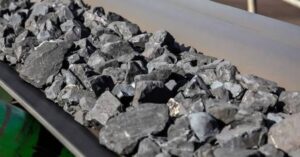
In August of this year, Ukraine increased its manganese ore exports by 30% compared to the previous month—to 3,511 thousand metric tons from 2,701 thousand metric tons.
According to statistics released by the State Customs Service (SCS), a total of 28,158 thousand metric tons of manganese ore were exported over the first eight months of this year, compared to 8,014 thousand metric tons during the same period last year.
In July of this year, Ukraine increased its manganese ore exports by 14.9% compared to the previous month—to 2,701 thousand metric tons from 2,350 thousand metric tons; in June, exports rose by 36.6% compared to May—to 2,350 thousand metric tons from 1,720 thousand metric tons; in May, it reduced exports by a factor of 3.1 compared to April—to 1,720 metric tons from 5,319 metric tons; in April, it increased exports by a factor of 2.8 compared to March—to 5,319 metric tons from 1,932 metric tons; in March, exports fell by a factor of 3.1 compared to the previous month—to 1,932 thousand metric tons from 6,072 thousand metric tons—and by a factor of 2.4 compared to January, when 4,553 thousand metric tons were exported.
In monetary terms, exports of this raw material amounted to $4.843 million in January–August (for the first 8 months of 2025 – $1.329 million).
In January–August 2026, Ukraine imported 23,099 thousand metric tons of ore worth $3.578 million, whereas there were no imports last year.
As previously reported, Ukraine reduced its manganese ore exports by 50.4% in 2025 compared to the same period last year—to 22,281 thousand metric tons—but stepped up shipments in August–December. While shipments totaled 2,977 thousand metric tons over the first seven months of 2025, exports more than doubled in August, when 5,037 thousand metric tons were shipped; in September, they amounted to 1,725 thousand metric tons; in October—3,993 thousand metric tons; in November—3,860 thousand metric tons, and in December—4,689 thousand metric tons.
In monetary terms, exports for the entire year 2025 fell by 45.2% compared to 2024—to $3,599 million. The majority of exports went to Slovakia (99.22% of shipments in monetary terms) and Poland (0.78%). Over the course of the year, the country imported 37,006 thousand metric tons from Ghana worth $5.546 million. All shipments took place in November. In 2024, 84,293 thousand metric tons of ore worth $18.302 million were imported.
The Pokrovsk Mining and Processing Plant (PGZK, formerly the Ordzhonikidze Mining and Processing Plant) and the Marganetsk Mining and Processing Plant (MGZK, both located in Dnipropetrovsk Oblast), which are part of the “Privat” Group, ceased the extraction and processing of raw manganese ore in late October–early November 2023, while the NZF and ZZF plants halted the smelting of ferroalloys. In the summer of 2024, the ferroalloy plants resumed production.
PGZK and MGZK did not produce any output in 2024, whereas in 2023, PGZK produced 160.31 thousand metric tons of manganese concentrate, while MGZK was idle.
In 2025, PGZK produced 63.9 thousand metric tons of manganese concentrate worth 342.138 million UAH and sold 25.4 thousand metric tons worth 216.309 million UAH. In 2026, the plant plans to increase manganese concentrate production by 3.44 times compared to the previous year—to 220 thousand metric tons.
In Ukraine, manganese ore is mined and processed by the Pokrovsk and Marganets Mining and Processing Plants.
The consumers of manganese ore are ferroalloy plants.
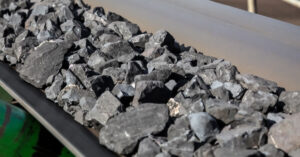
In January–July 2026, Ukraine imported approximately 10.9 thousand metric tons of manganese ore, whereas there were no imports of this product during the same period last year.
According to data from the State Customs Service, virtually the entire volume of shipments came from Ghana—10,896 metric tons worth $1.677 million. An additional 5 metric tons, worth $3,000, were imported from China.
Thus, Ghana accounted for 99.82% of the value of Ukraine’s manganese ore imports in January–July.
The resumption of imports coincides with the recovery of foreign trade in manganese ore overall. Over the seven-month period, Ukraine exported 24,647 metric tons of such products worth $4.227 million.
The average estimated price of exported ore was approximately $171 per metric ton, while that of ore imported from Ghana was approximately $154 per metric ton. These figures are estimates based on customs value and physical shipment volumes and do not reflect differences in the quality and characteristics of the raw material.
Manganese ore imports into Ukraine have fluctuated significantly in recent years. In 2024, the country imported 84,293 thousand metric tons worth $18.302 million.
In 2025, imports fell to 37,006 thousand metric tons, valued at $5.546 million. Notably, the entire volume was shipped from Ghana in November alone, while imports were virtually nonexistent from January through October.
The resumption of shipments as early as the first half of 2026 may indicate growing demand for raw materials in the ferroalloy industry amid a gradual recovery in production.
The main consumers of manganese ore in Ukraine are enterprises in the ferroalloy industry. The Nikopol and Zaporizhzhia Ferroalloy Plants halted smelting after Ukrainian mining companies ceased extraction of raw manganese ore in the fall of 2023; however, ferroalloy production was partially resumed in the summer of 2024.
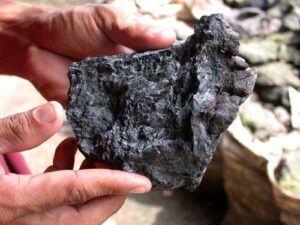
From January through July 2026, Ukraine exported 24,647 thousand metric tons of manganese ore, which is already 10.6% more than the volume shipped in all of 2025, when 22,281 thousand metric tons were sent abroad.
According to data from the State Customs Service of Ukraine, in monetary terms, exports for the seven-month period totaled $4.227 million, compared to $3.599 million for all of last year. Thus, foreign exchange earnings have already exceeded the 2025 figure by approximately 17.4%.
Compared to January–July of last year, manganese ore exports have increased more than eightfold. In the first seven months of 2025, Ukraine exported only 2,977 thousand metric tons of ore worth $491 thousand, whereas this year, the volume of shipments reached 24,647 thousand metric tons, with revenue totaling $4.227 million.
Slovakia remains the main market for Ukrainian manganese ore in 2026, accounting for 77.79% of export revenue. Shipments to Georgia accounted for another 22.21%.
In July, Ukraine exported 2,701 thousand metric tons of manganese ore, which is 14.9% more than in June (2,350 thousand metric tons). Thus, exports have been growing for the second consecutive month: in June, growth stood at 36.6% compared to May.
However, monthly trends since the beginning of the year have remained quite volatile. In January, Ukraine exported 4,553 thousand metric tons of ore; in February, approximately 6,072 thousand metric tons; in March, the volume fell to 1,932 thousand metric tons; in April, it rose to 5,319 thousand metric tons; and in May, it fell again to 1,720 thousand metric tons.
In 2025, however, manganese ore exports fell by 50.4% compared to 2024—to 22,281 thousand metric tons.
However, starting in August of last year, exports picked up significantly: 5,037 thousand metric tons were exported in August, 3,993 thousand metric tons in October, 3,860 thousand metric tons in November, and 4,689 thousand metric tons in December.
Ukraine has its own raw material base of manganese ores. The main enterprises involved in their mining and processing are the Pokrovsk and Marganets Mining and Processing Plants in the Dnipropetrovsk region.
EXPORT, MANGANESE, MINING AND PROCESSING PLANT, ORE, SLOVAKIA
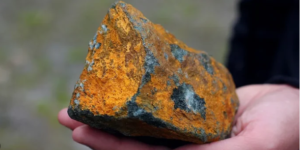
The “Sukha Balka” mine (Kryvyi Rih, Dnipropetrovsk Oblast), part of Oleksandr Yaroslavskyi’s DCH Group, reduced its net loss by 68.5% in January–June of this year compared to the same period last year, down to 77.849 million UAH.
According to the company’s interim report, available to the Interfax-Ukraine news agency, revenue from ordinary operations during this period decreased by 1.7% to 1,359.399 million UAH.
Retained earnings as of the end of June 2026 amounted to 1,771.898 million UAH.
As previously reported, in January–March 2026, the Sukha Balka mine reduced its net loss by 28.4% compared to the same period in 2025—to 91.534 million UAH from 127.857 million UAH. Revenue from ordinary activities decreased by 9.1%—to 616.301 million UAH from 678.241 million UAH.
In 2025, the mine reported a loss of 420.199 million UAH on revenue from ordinary activities of 2 billion 690.771 million UAH. It ended 2024 with a net loss of 333.856 million UAH, while 2023 closed with a net profit of 114.837 million UAH. In 2022, net profit fell by a factor of 2.7 compared to 2021—to 487.878 million UAH from 1 billion 326.460 million UAH.
The “Sukha Balka” Mine is one of the leading enterprises in Ukraine’s mining industry. It extracts iron ore using underground mining methods. The mine complex includes the Yuvileina Mine and the Frunze Mine. Frunze.
The average number of full-time employees at the enterprise is 1,172.
In May 2017, the DCH Group acquired the mine from the Evraz Group.
According to the National Securities and Stock Market Commission’s data for the first quarter of 2026, Yaroslavsky directly owns 77.4193% of the mine’s shares, while Artem Aleksandrov, a resident individual, owns 15.4938%.
The authorized capital of PrJSC “Sukha Balka” is 41.869 million UAH, and the par value of a share is 0.05 UAH.
LOSS, Mine, ORE, REVENUE, SUKHA BALKA
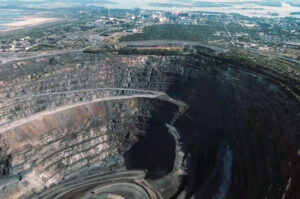
Yeristovsky Mining and Processing Plant LLC (YMPP, Horishni Plavni, Poltava Oblast), a subsidiary of the mining company Ferrexpo, whose majority shareholder is Konstantin Zhevago, reduced its net loss by 21.9% in January–June of this year compared to the same period last year—to 629.283 million UAH from 805.243 million UAH.
According to the company’s interim report, which is available to the Interfax-Ukraine news agency, revenue from ordinary operations for this period fell by a factor of 5.5—to 1,326.967 million UAH from 7,274.247 million UAH.
The uncovered loss as of the end of June 2026 amounted to 1,190,199 million UAH.
As previously reported, in January–March of this year, YEGZK reduced its net loss by 11.7% compared to the same period last year—to 330,780 million UAH from 374,477 million UAH; while revenue from ordinary operations for this period fell by a factor of 14.7—to 400.753 million UAH from 5 billion 898.156 million UAH.
The official report for 2025 has not yet been published. At the same time, YEGZK reported a net loss of 879.341 million UAH for January–September 2025, whereas in the same period of 2024, it had reported a profit of 514.369 million UAH. Revenue for this period decreased by 45.3%—to 8 billion 124.766 million UAH. Retained earnings as of the end of September 2025 amounted to 171.842 million UAH.
According to YouControl, YEGZK’s net loss in 2025 totaled 1 billion 488.580 million UAH, while revenue amounted to 8 billion 773.725 million UAH.
In 2024, the LLC reported a net profit of 1 billion 84.107 million UAH, compared to 1 billion 832.538 million UAH in 2023.
Yeristivsky Mining and Processing Plant LLC extracts both high- and low-grade iron ore. The LLC was registered on July 14, 2008. As of December 31, 2024, the company had 1,797 employees (compared to 1,789 in 2023).
According to the annual report, as of December 31, 2024, Ferrexpo AG (Switzerland) held a 99.999% stake in Yeristivsky GZK LLC, while Ferrexpo Service LLC (Ukraine) held a 0.001% stake.
It is noted that Ferrexpo AG, which is wholly owned by Ferrexpo plc (the ultimate parent company), exercises control over Ferrexpo Service LLC. A stake of less than 50% in Ferrexpo plc is ultimately held by Minso Trust, whose beneficiaries are Konstantin Zhevago and his immediate family members, and which was established to manage the stake in the Ferrexpo group of companies.
The authorized capital of YEGOK LLC is 8 billion 263.698 million UAH.
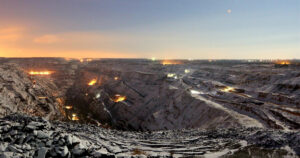
PJSC “Central Mining and Processing Plant” (CMPP, Dnipropetrovsk Oblast), a member of the Metinvest Group, reported a 17.8% reduction in its net loss for January–June of this year—to 940.865 million UAH from 1 billion 144.522 million UAH in the same period last year.
According to the company’s interim report, which is available to the “Interfax-Ukraine” agency, revenue from ordinary operations for this period increased by 11.8% to 9 billion 4.528 million UAH.
Retained earnings as of the end of June amounted to 2 billion 161.850 million UAH.
As previously reported, TsGZK’s net loss for the first three months of 2026 increased by 20.9%—to 468.466 million UAH from 387.594 million UAH in the same period last year. Revenue from ordinary operations for this period decreased by 3%—to 4.406260 billion UAH.
In 2025, TsGZK saw its net loss increase 5.3-fold, to 3,428.076 million UAH from 648.004 million UAH in 2024. At the same time, revenue from ordinary operations for the past year rose by 1%—to 15,988.004 million UAH.
The plant ended 2024 with a net loss of 648.004 million UAH, whereas in 2023 it amounted to 1 billion 326.661 million UAH. In 2022, the company saw its net profit drop by more than four times, to 2,117.831 million UAH from 8,919.978 million UAH in 2021. In 2020, TsGZK increased its net profit by 8.7% compared to the previous year, reaching 1.601 billion UAH.
TsGZK is one of Ukraine’s five largest producers of mining raw materials and specializes in the extraction and production of iron ore (concentrate and pellets). The average number of full-time employees is 3,360.
Metinvest B.V. owns 100% of the shares in TsGZK.
The authorized capital of PrJSC “TsGZK” is 296.635 million UAH, and the par value of each share is 0.25 UAH.
TsGZK is part of the Metinvest Group, whose major shareholders are PJSC “System Capital Management” (SCM, Donetsk) (71.24%) and the “Smart-Holding” group of companies (23.76%). The management company of the Metinvest Group is Metinvest Holding LLC.



