
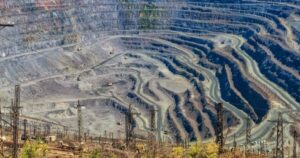
Pivdenny Mining and Processing Plant, PJSC (Pivdenny Mining and Processing Plant, Kryvyi Rih, Dnipropetrovsk Oblast) increased its net profit by 73.5% in January–June of this year compared to the same period last year—to 199.318 million UAH from 114.912 million UAH.
According to the mining and processing plant’s interim report, available to the agency “Interfax-Ukraine,” revenue from ordinary activities for this period decreased to 8,931.263 million UAH from 12,693.475 million UAH.
Retained earnings as of the end of June 2026 amounted to 25,836.844 million UAH.
Iron ore concentrate production for the second quarter of 2026 totaled 1,913.7 thousand metric tons, while sales for this period amounted to 1,906.8 thousand metric tons.
As previously reported, in the first quarter of 2026, Pivdenny GOK saw its net loss increase 8.5-fold compared to the same period in 2025—rising to 866.813 million UAH from 100.859 million UAH. During this period, revenue from ordinary activities decreased to 3,987.535 million UAH from 6,350.714 million UAH.
In January–September 2025, Southern GOK reported a net profit of 389.930 million UAH, whereas in the same period of 2024 it amounted to 2,476.267 million UAH; revenue from ordinary activities increased by 41.3% to 19,020.077 million UAH.
The annual report for 2025 has not yet been published.
Pivdenny GOK is one of Ukraine’s leading producers of iron ore concentrate. It is engaged in the mining and beneficiation of low-grade iron-bearing quartzites to produce iron ore concentrate. The plant’s raw material base consists of quartzites from the Skelevatsky deposit, located in the central part of the Kryvyi Rih iron ore basin.
At the start of the war, Pivdenny GZK was controlled by the Metinvest Group and Lanebrook Ltd. (formerly the majority shareholder of Evraz Group, which withdrew from the group’s shareholder structure in 2018), which acquired a 50% stake in PGZK from the Privat Group (Dnipro) in late 2007.
According to the National Securities and Stock Market Commission’s data for the first quarter of 2026, Zantest Limited holds 29.8815% of the company’s shares, and Jetere Limited (both based in Cyprus and registered at the same address) holds 59.7630%.
The company’s authorized capital is 535.915 million UAH, and the par value of each share is 0.25 UAH.
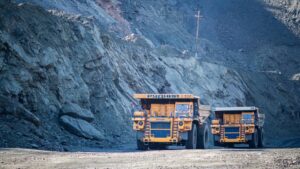
The Central, Ingulets, and Northern Mining and Processing Plants (MPPs) of the Metinvest Mining and Metallurgical Group, which were reorganized into the United Mining and Processing Plant (UMPP), produced 16.7 million metric tons of ore, 7.8 million metric tons of concentrate, and 2.8 million metric tons of pellets during the January–June period of this year.
According to the company, the United Mining and Processing Plant exceeded its operational efficiency targets in the first half of the year.
It is noted that the first six months of 2026 served as a true test of resilience for the United Mining and Processing Plant. The enterprises operated under conditions of power supply restrictions, a shortage of railcars, technological challenges, and hostile attacks on production infrastructure. Despite this, thanks to the coordinated efforts of all departments, the company managed to ensure stable production, promptly repair damaged equipment, and exceed its operational efficiency targets.
“This result was driven by three key factors: the implementation of investment decisions—with the development of gas-fired power generation and measures to reduce the stripping ratio yielding the greatest impact—and the adoption of effective production practices. In particular, conducting blasting operations in-house at two open-pit mines and the systematic efforts of teams to reduce production costs,” the statement notes.
As previously reported, the United Iron Ore Mining and Processing Plant has iron ore reserves totaling 2.3 billion metric tons. According to Eduard Bespoyasko, chief geologist and head of the group’s mining department, even at 100% of the plants’ design capacity, reserves will last for at least half a century.
Metinvest is a vertically integrated group of mining and metallurgical enterprises. Its facilities are located in Ukraine—in the Donetsk, Luhansk, Zaporizhzhia, and Dnipropetrovsk regions—as well as in the European Union, the United Kingdom, and the United States.
The holding company’s main shareholders are the SCM Group (71.24%) and Smart Holding (23.76%). Metinvest Holding LLC is the management company of the Metinvest Group.
CONCENTRATE, METINVEST, mining and processing plants, ORE, PELLETS
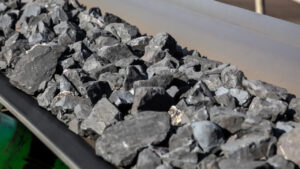
In June of this year, Ukraine increased its manganese ore exports by 36.6% compared to the previous month—from 1,720 thousand metric tons to 2,350 thousand metric tons.
According to statistics released by the State Customs Service (SCS), a total of 21,946 thousand metric tons of manganese ore were exported during the first six months of this year, whereas exports during the same period last year amounted to 2,218 thousand metric tons, valued at $366 thousand.
At the same time, Ukraine reduced its manganese ore exports in May of this year by a factor of 3.1 compared to April—to 1,720 thousand metric tons from 5,319 thousand metric tons; in April, exports increased by a factor of 2.8 compared to March—to 5,319 thousand metric tons from 1,932 thousand metric tons; in March, exports fell by a factor of 3.1 compared to the previous month—to 1,932 thousand metric tons from 6,072 thousand metric tons—and by a factor of 2.4 compared to January, when 4,553 thousand metric tons were exported.
In monetary terms, $3.729 million worth of this raw material was exported in January–June (for the first six months of 2025 – $366 thousand). Exports were shipped to Slovakia (74.83% of shipments in monetary terms) and Georgia (25.17%).
In January–June of this year, Ukraine imported 5 metric tons of manganese ore from China worth $3,000, whereas there were no imports last year.
As previously reported, Ukraine reduced its manganese ore exports by 50.4% in 2025 compared to the same period last year—to 22,281 metric tons—but ramped up shipments in August–December. While shipments totaled 2,977 thousand metric tons over the first seven months of 2025, exports more than doubled in August, when 5,037 thousand metric tons were shipped; in September, they amounted to 1,725 thousand metric tons; in October, 3,993 thousand metric tons; in November—3,860 thousand metric tons, and in December—4,689 thousand metric tons.
In monetary terms, exports for the entire year of 2025 fell by 45.2% compared to 2024—to $3,599 million. The bulk of exports went to Slovakia (99.22% of shipments in monetary terms) and Poland (0.78%). Over the course of the year, the country imported 37,006 thousand metric tons from Ghana, valued at $5.546 million. All shipments took place in November. In 2024, 84,293 thousand metric tons of ore were imported, valued at $18.302 million.
The Pokrovsk Mining and Processing Plant (PGZK, formerly the Ordzhonikidze Mining and Processing Plant) and the Marganetsk Mining and Processing Plant (MGZK, both located in Dnipropetrovsk Oblast), which are part of the Privat Group, ceased the extraction and processing of raw manganese ore in late October–early November 2023, while the NZF and ZZF plants halted ferroalloy smelting. In the summer of 2024, the ferroalloy plants resumed production.
PGZK and MGZK did not produce any output in 2024, whereas in 2023, PGZK produced 160.31 thousand metric tons of manganese concentrate, and MGZK was idle.
In 2025, PGZK produced 63.9 thousand metric tons of manganese concentrate worth 342.138 million UAH and sold 25.4 thousand metric tons for 216.309 million UAH. In 2026, the plant plans to increase manganese concentrate production by a factor of 3.44 compared to the previous year—to 220 thousand metric tons.
In Ukraine, manganese ore is mined and processed by the Pokrovsk and Marganets Mining and Processing Plants.
The consumers of manganese ore are ferroalloy enterprises.
EXPORT, MANGANESE, MINING AND PROCESSING PLANT, ORE, SLOVAKIA
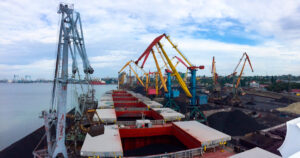
In January–June of this year, Ukraine’s mining companies reduced their exports of iron ore raw materials (IORM) by 25.4% in volume terms compared to the same period last year—down to 12 million 33.825 thousand metric tons from 16 million 137.809 thousand metric tons.
According to statistics released by the State Customs Service (SCS), 2,021,299 metric tons of iron ore were exported in June, 2,239,167 metric tons in May, 2,163,837 metric tons in April, in March—2,300,467 thousand metric tons, in February—1,254,516 thousand metric tons, and in January—2,054,539 thousand metric tons.
During the first six months of the year, foreign exchange earnings from raw material exports decreased by 26.3% to $935.258 million.
Mineral resources were exported primarily to China (42.36% of shipments in monetary terms), Slovakia (18.50%), and Poland (14.13%).
In addition, in January–June 2026, Ukraine imported 224 metric tons of raw materials worth $62,000 from the Netherlands (38.71%), Poland (32.26%), and Italy (29.03%), whereas in January–June 2025, it imported 75,000 metric tons worth $52,000.
As previously reported, Ukraine’s mining companies reduced ore exports in physical terms by 8% in 2025 compared to the previous year—to 30,995,363 metric tons from 33,699,722 metric tons, and foreign exchange revenue decreased by 16.6%—to $2 billion 337.765 million from $2 billion 803.223 million. Exports were primarily shipped to China (44.98% of shipments by value), Slovakia (17.15%), and Poland (16.09%).
In addition, in 2025, Ukraine imported 130 metric tons of raw materials worth $95 thousand from the Netherlands (46.32%), Italy (36.84%), and Norway (13.68%), whereas the previous year it imported 2,042 thousand metric tons worth $414 thousand

In 2025, Ukraine sharply reduced its exports of titanium-containing ores and concentrates: according to the State Customs Service, shipments fell by 96.2% in physical terms, to 277 tons, and revenues fell by 95.7%, to $496,000.
The most significant change was in geography: Uzbekistan became the key buyer in terms of value with a share of 35.61% (approximately $176,600), followed closely by Turkey with 35.01% (approximately $173,600), followed by Egypt with 29.38% (approximately $145,700). For comparison, in 2024, Turkey remained the main market, while Uzbekistan’s share was not highlighted as key in public statistics.
Imports of titanium-containing ore to Ukraine in 2025 were small — 78 tons worth $118,000, almost entirely from China (about $116,000) and a small portion from Kazakhstan (about $2,000).
In parallel with its position in titanium, Ukraine maintained exports of a group of critical ores and concentrates — niobium, tantalum, vanadium, and zirconium: in 2025, 2,466 tons worth $3.954 million were exported. The main markets were Spain (48.90%, about $1.93 million), Germany (24.53%, about $0.97 million), and Italy (17.19%, about $0.68 million). At the same time, imports of this group to Ukraine amounted to 469 tons worth $1.194 million, with Spain dominating (72.86%).
A special feature of the statistics is the factor of confidentiality and export control. A number of specialized publications and the customs service itself have previously indicated that some transactions involving titanium raw materials may be reflected in more aggregated categories due to restrictions on military and dual-use goods, so public data under code 2614 does not always coincide with industry estimates.
At the beginning of 2026, the trend continued: in January, according to the data provided by the State Customs Service, Ukraine did not export or import titanium-containing ore and concentrate, nor did it export niobium, tantalum, vanadium, and zirconium ores (while there were small imports of this group).
In 2025, the Kryvyi Rih plant increased its production of 6% moisture coke by 16.4% to 1 million 460.3 thousand tonnes. This allows it to meet its own needs for main production.
At the same time, the mining department, whose work depends on a stable power supply, showed a decline:
– Iron ore concentrate production fell by 3.3% to 7.56 million tonnes.
– Iron ore mining decreased by 4.2% to 18.4 million tonnes.
Management explained this as a direct result of energy supply restrictions caused by attacks on infrastructure, which caused the mining complex to operate below pre-war levels.
ArcelorMittal Kryvyi Rih is the largest producer of rolled steel in Ukraine. It specialises in the production of long products, in particular, rebar and wire rod. The company has a full production cycle, with production capacities designed for an annual output of over 6 million tonnes of steel, more than 5 million tonnes of rolled products and over 5.5 million tonnes of pig iron.
ArcelorMittal owns Ukraine’s largest mining and metallurgical complex, ArcelorMittal Kryvyi Rih, and a number of small companies, including ArcelorMittal Beryslav.



