

In January–June 2026, PJSC “Poltava Poultry Farm” increased its net profit by 82.9% compared to the same period in 2025, reaching 19.07 million UAH.
According to the company’s disclosure in the National Securities and Stock Market Commission (NSSMC) disclosure system, its net revenue from product sales rose by 20.9% to 545.9 million UAH.
According to the financial statements, the company’s gross profit for the first half of the year increased by 12.9% to 190.2 million UAH, while operating profit rose by 82.9% to 23.3 million UAH.
As of June 30, 2026, the assets of Poltava Poultry Farm PJSC totaled 1.079 billion UAH, compared to 1.068 billion UAH at the beginning of the year. Equity rose to UAH 1.035 billion from UAH 1.016 billion, while current liabilities decreased to UAH 44.5 million from UAH 51.7 million.
In its interim management report, the company noted that during the reporting period it maintained a stable level of production, fulfilled its obligations to partners, and no significant adverse events that could affect its financial or operational stability were recorded. Among the main risks, the company cites the continuation of the war, logistical difficulties, inflationary pressure, exchange rate fluctuations, and rising energy prices.
Poltava Poultry Farm PJSC was registered in August 1998. Its primary activity is poultry farming. The company is also engaged in the production of poultry meat and meat products, as well as the cultivation of grain and oilseed crops. Its production facilities are located in the village of Stasi, Poltava Oblast. According to the Unified State Register, the company’s ultimate beneficial owners are Ruslan Urdzik, Bohdan Yesipov, Volodymyr Troyan, Serhiy Semenyachenko, Andriy Milovanov, and Mykhailo Zhikharev.
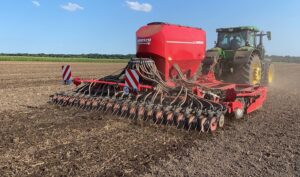
Astarta, Ukraine’s largest sugar producer, has begun its 2026 spring planting campaign, starting with sugar beet sowing in the Poltava region, the company announced on its Facebook page on Wednesday.
According to the report, 32,000 hectares have been allocated for sugar beets this year, which is 5.9% less than last year’s 34,000 hectares. At the same time, the area planted with sunflowers will decrease by 21%—to 23,000 hectares—and the area planted with winter wheat will decrease by 15%—to 39,000 hectares. The largest increases are planned for grain corn—by 43%, to 20,000 hectares—and winter rapeseed—by 36%, to 15,000 hectares. Soybean acreage remains unchanged at 56,000 hectares, as does the area under organic farming at 2,000 hectares.
“This year’s planting season is taking place under challenging conditions: increased moisture caused by abnormal frosts and frozen soil requires special attention from agronomists. They are adapting cultivation technologies and carefully monitoring field operations to improve production efficiency. Operational control is ensured by innovative solutions from AgriChain Machinery, AgriChain Scout, and AgriChain Barn. Combined with an updated fleet of equipment, this allows for a rapid response to weather and technological challenges, ensuring the stability and quality of the planting campaign,” said Vasyl Khmeliuk, Chief Operating Officer of Astarta, as quoted in the statement.
The holding noted that the final crop structure will be determined based on the results of the campaign. The use of digital ecosystems and an updated fleet of machinery allows the company to maintain a high pace of work despite challenging weather conditions.
Astarta is a vertically integrated agro-industrial holding operating in eight regions of Ukraine. It comprises six sugar factories, agricultural enterprises with a land bank of 220,000 hectares and dairy farms with 22,000 head of cattle, an oil extraction plant in Hlobine (Poltava region), seven grain elevators, and a biogas complex.
According to the results for 2025, Astarta reduced its total revenue from sales of key product categories by 15.6% compared to 2024—to UAH 21.05 billion, while physical sales volumes of its main products fell by 23.5%—to 1.21 million tons.
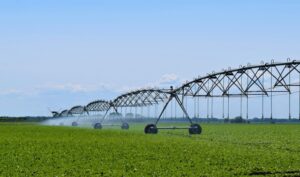
Investment and Industrial Company Poltavazernoprodukt, part of Astarta, Ukraine’s largest sugar producer, has increased its irrigated area to 1,100 hectares, the company’s press service said on Facebook on Wednesday.
Serhiy Cherevik, regional director of Poltavazernoprodukt, quoted in the post, noted that irrigation has become a key factor in stable yields.
“This allows us to make the most efficient use of every millimeter of moisture. This year, we are growing hybrid corn and commercial soybeans on irrigated land.
Irrigation is an investment not only in this year’s harvest, but also in the stability and development of agricultural production in our region. We have ambitious plans to expand the irrigated area, because the future of Ukrainian agribusiness lies in sustainable and efficient technologies,” he emphasized.
The company specified that before the next production season, Poltavazernoprodukt specialists restored and repaired communications and water supply stations, cleaned water channels, graded the lines for sprinkler machines, serviced the sprinkler machines themselves, and concluded water supply contracts.
“Eight sprinkler machines are operating at full capacity, serviced by 14 hydraulic engineers in several shifts,” the company said.
Astarta is a vertically integrated agro-industrial holding operating in eight regions of Ukraine and the largest sugar producer in Ukraine.
It comprises six sugar factories, agricultural enterprises with a land bank of 220,000 hectares, dairy farms with 22,000 head of cattle, an oil extraction plant in Hlobyn (Poltava region), seven elevators, and a biogas complex.
In 2024, Astarta increased its net profit by 34.5% to EUR83.25 million, while its consolidated revenue decreased by 1.1% to EUR612.15 million.
In the first quarter of this year, the agricultural holding’s revenue fell by 24.9% to EUR124.58 million, while net profit fell by 28.8% to EUR6.42 million.
On June 12 this year, the shareholders’ meeting approved the payment of dividends for 2024 in the amount of EUR0.5 per share for a total of EUR12.5 million, which is in line with the figures for the previous two years.

An earthquake with a magnitude of 2.7 was recorded in the Poltava region on May 26 at 21:38, the epicenter was in the Reshitilovsky district, the website of the Main Special Control Center of the National System of Seismic Observations reported.
“In the Poltava region recorded an earthquake with a magnitude of 2.7. The epicenter of the earthquake is located in Reshitilovsky district, Poltava region, to the west of Poltava, at a depth of 7 km. According to the classification of earthquakes is classified as barely perceptible. Fluctuations can be felt only by individuals who are in a quiet state inside, especially on the upper floors”, – stated in the message.
It is noted that similar in strength earthquakes in the Poltava region have been previously recorded, in particular, the last of them was on January 14, 2023 with a magnitude of 2.7, and on October 3, 2022 with a magnitude of 3.4.
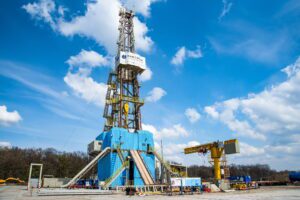
JSC Ukrgazvydobuvannia has resumed the work of two previously stopped wells in Poltava region with a production capacity of 250,000 cubic meters per day, the company said in the Telegram channel on Monday.
“Specialists of Ukrgazvydobuvannia resumed the life of two wells that had previously stopped producing gas due to the depletion of gas-bearing horizons. Now, after an overhaul, we are extracting about 250,000 cubic meters of gas per day from them,” it informed.
As the company explained, in order to resume the work of wells, the specialists of Ukrgazvydobuvannia decided to use other promising horizons, for which they replaced old worn-out pipes and perforated them.
Both workover operations were performed by the internal service contractor UGV-Service.
“Despite the danger and difficulties with logistics and the provision of necessary materials, the employees of the branch continue to perform both basic repairs and highly complex operations to remove emergency equipment, prepare for hydraulic fracturing operations and test wells after development and exploratory drilling,” Ukrgazvydobuvannia said.
Thanks to an overhaul at one of the mentioned wells, an opportunity has also opened up to increase gas reserves that were not previously taken into account.
As reported, in January-June 2022 Ukrgazvydobuvannia reduced the supply of commercial gas by 1.5% compared to the same period in 2021, to 6.31 billion cubic meters.

A manufacturer of grain processing and grain cleaning equipment, Olis LLC (Odesa), has built and put into operation a grain workshop of its production Optimatic K-15 in Poltava region.
“Good news not only for Olis as a manufacturer and supplier of grain processing equipment, but also for the region, where, thanks to a quality grain workshop, there will be no shortage of cereals. After all, local food production is very important today,” the machine-building company wrote on Facebook on Wednesday.
According to it, Optimatik K-15 is an aggregate universal grain mill designed for production of wheat, barley, pearl barley, peas, corn and millet.
A unit with a rated power of 30 kW/h can process 400-600 kg of millet, pearl barley or corn, or 700-800 kg of wheat, barley or peas per hour.
As reported, Olis resumed the work of its plant in Odesa region at the end of March and resumed the manufacture of equipment under new and previously concluded contracts.
Olis produces about 200 items of equipment for the grain processing industry. The enterprise is able to produce grain cleaning complexes, mills and grain workshops from the stage of technology development to commissioning of facilities.
The company’s products are exported to more than 25 countries around the world.



