
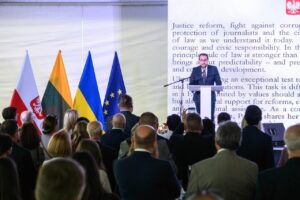
The Embassy of the Republic of Poland in Ukraine held a formal reception at the St. Sophia of Kyiv National Reserve to mark the anniversary of the adoption of the Constitution on May 3—one of the key documents in the history of Polish statehood and European constitutionalism.
Speaking at the reception, the Polish Ambassador to Ukraine Piotr Łukasiewicz emphasized that the May 3 Constitution was “an act of courage and foresight” and an attempt to create a state “in which laws define the limits of power, not the other way around; where the common good prevails over private ambitions.”
According to him, these ideals resonate particularly strongly today in Ukraine, which is fighting for its sovereignty, freedom, and place in the European community of nations.
“Since the beginning of Russia’s aggression against Ukraine, Poland has supported its independence and its right to choose its own path. We see before us not only a neighbor but also a European partner with whom we are united by shared civilizational values: human dignity, respect for human rights, and faith in a future based on law, not force,” the ambassador noted.
He emphasized that Poland supports Ukraine’s aspiration to join the European Union, calling this goal realistic but one that requires consistent work.
“Membership in the European Union is not just a flag and equal status in relations with EU institutions. Above all, it is a system of values and institutions that protect citizens from the arbitrariness of power,” the diplomat said.
The ambassador emphasized that institutional independence, transparency, accountability, effective public administration, and the equal application of laws to all citizens regardless of position or influence remain crucial for European integration.
He also highlighted the importance of judicial reform, the fight against corruption, transparency in public finances, and the protection of journalists and civil society.
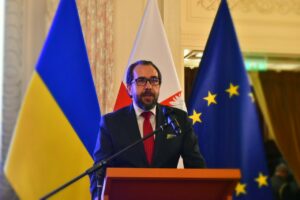
“I want to emphasize one key principle: the rule of law is stronger than any political power. The law curbs abuse and ensures predictability, and predictability is a prerequisite for security and economic development,” the ambassador stated.
He noted that Ukraine is currently undergoing an extraordinary test, simultaneously defending its territory and building institutions. Poland, he said, supports these efforts not only politically but also through the exchange of experience, training, and technical and institutional assistance.
“Poland, having gone through its own transformation, shares its experience and supports Ukraine on its path to EU membership,” the diplomat emphasized.
The ambassador also noted the development of economic cooperation between the countries even amid a full-scale war. According to him, Poland and Ukraine are working to create a “Polish model” of defense cooperation, through which the armed forces of both countries will receive modern, battle-tested, and jointly produced equipment.
He also mentioned the work of Polish companies in Ukraine. In particular, the gas and fuel supplied by Orlen, according to the ambassador, not only meet the transportation needs of Ukrainian citizens but also support Ukraine’s defense. PZU is implementing the largest foreign investment project in its history on the Ukrainian insurance market, while Kredobank is expanding its presence in Ukraine and is set to become one of the sources of funding for the reconstruction of cities.
“I am grateful to these companies for their activities in Ukraine, for their worthy representation of the Polish economic miracle, and for their generous support of today’s reception,” said the ambassador.
The diplomat emphasized that joining the international community does not mean a loss of sovereignty, but rather is a way to strengthen it. According to him, the implementation of standards of the rule of law, transparency, and accountability strengthens the state, increases investor confidence, protects the rights of minorities, and enriches public life.
“Standing here today, I think of the courage of the men and women defending Ukraine on the front lines, but also of the courage of the reformers, members of the Verkhovna Rada, judges, journalists, and citizens who participate daily in building the rule of law and institutions. Poland recognizes and highly values these efforts,” the ambassador stated.
He emphasized that Ukraine’s victory—both “military and institutional”—is a victory for all of Europe.
“Freedom and the rule of law cannot be taken for granted—they require care, renewal, and protection. That is why we stand with Ukraine—as a partner, ally, and friend—in its pursuit of security, prosperity, and full membership in the family of European nations,” the diplomat concluded.
The Constitution of May 3 was adopted in 1791 by the Polish-Lithuanian Commonwealth and is considered the first modern constitution in Europe and one of the first in the world.
Poland became the first country in the world to recognize Ukraine’s independence following the all-Ukrainian referendum on December 1, 1991: Warsaw did so on December 2, 1991.
The Embassy of the Republic of Poland in Kyiv was opened in 1992, and the Embassy of Ukraine in the Republic of Poland in Warsaw resumed operations in June 1992 following the establishment of diplomatic relations between the two independent states.
CONSTITUTION DAY, EMBASSY, POLAND, reception, St. Sophia Cathedral
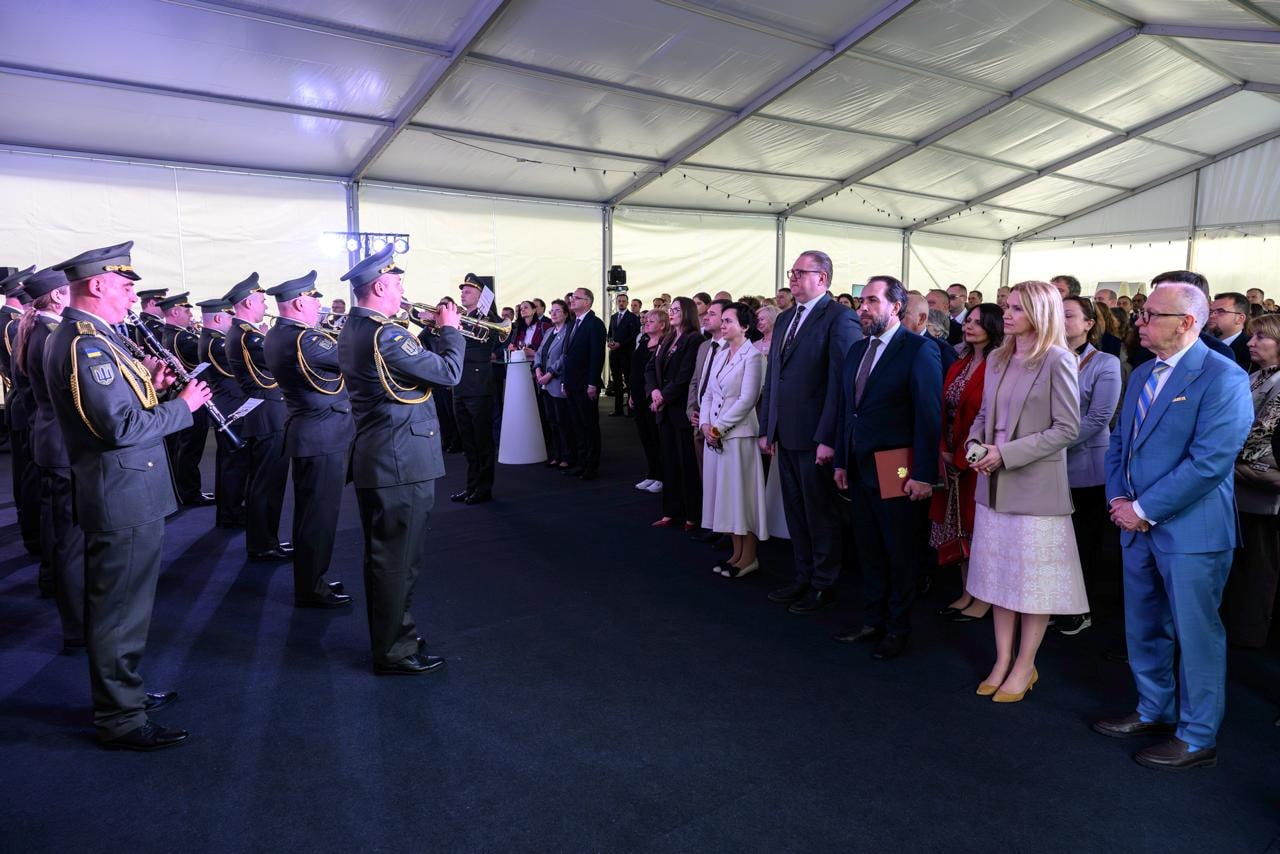
A formal reception was held in Kyiv to mark the Independence Day of the Republic of Poland, during which the Ambassador of the Republic of Poland to Ukraine, Piotr Lukashevich, gave a speech on the importance of independence, national unity, and solidarity with Ukraine.
In his address, Ambassador Łukaszewicz emphasized that this holiday is not only the most important national day for Poles, but also a profound reminder of the path that Poland has traveled and continues to build. He stressed that Poles honor the generations who dreamed, fought, and ultimately restored the sovereign Polish state.
The ambassador recalled the words of Polish Prime Minister Donald Tusk, who said this year in Gdańsk: “Niepodległość to wspólna sprawa” (Independence is a common cause). “It is not only a personal achievement, but a shared responsibility, res publica. We celebrate the miracle of unity, when, after many years of division, Poles from different regions and with different views united and rebuilt their state,” the diplomat said.
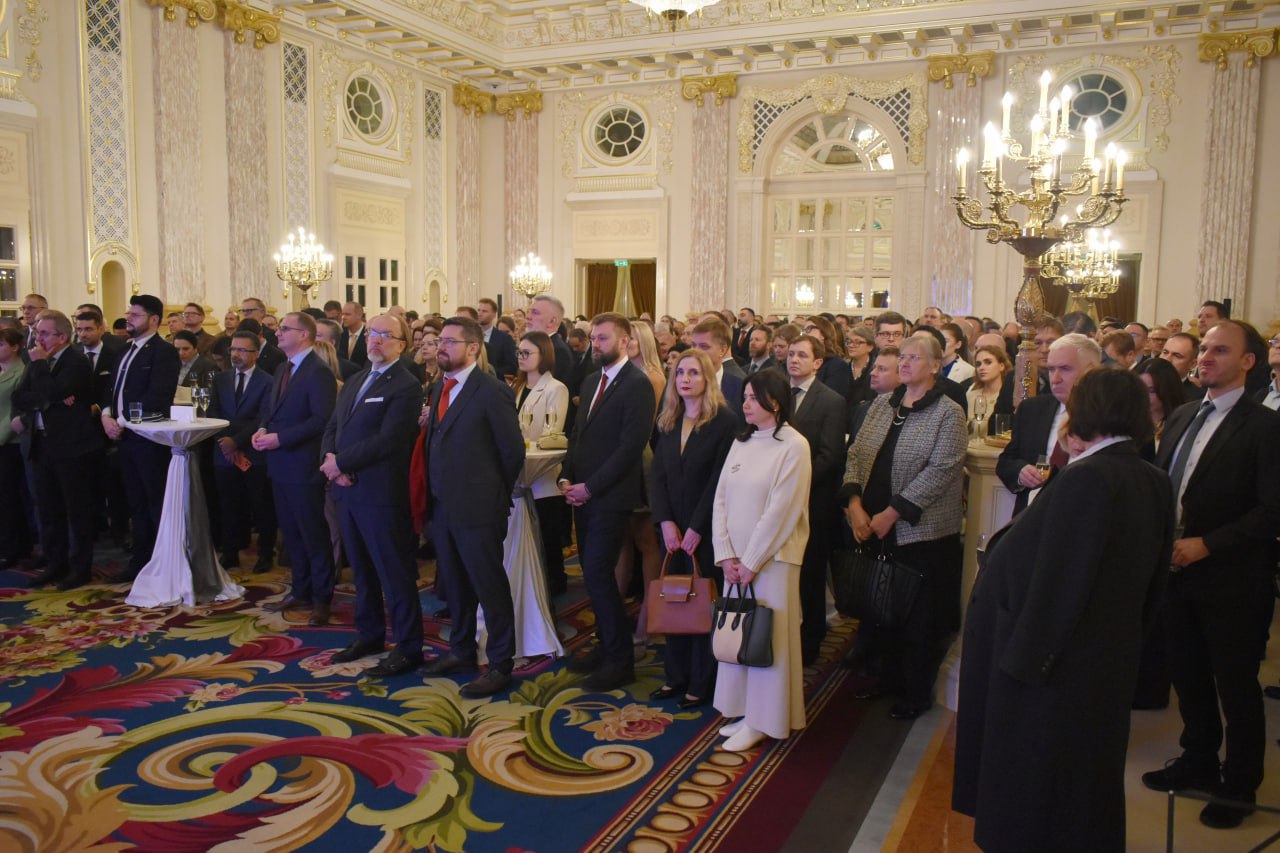
He stressed that Poland’s greatest triumphs were never the result of unanimity, but rather the result of solidarity. According to the ambassador, patriotism does not mean pitting one Pole against another, but rather unity and the joint construction of something greater.
Drawing parallels with Polish history, Lukaszewicz said that Poles’ thoughts naturally turn to the Ukrainian people, who are now fighting for the same thing that Poles fought for not so long ago: the right to live in freedom, dignity, and sovereignty.
The ambassador emphasized that today Poland is a strong and free state, a modern democratic country, an active member of the EU and NATO, and a stable partner in a changing world. He mentioned Poland’s economic achievements, as well as the launch of the first Polish military satellite, emphasizing that the country’s strength comes not only from economic or political successes, but above all from the unity of society and the willingness of each generation to take responsibility.
Lukasevich noted that independence does not exist in isolation and that freedom in the modern world is interdependent, so the security of one nation strengthens the security of all.
He commented separately on the recent attack on the Polish railway, which Warsaw considers an act of sabotage. According to him, Poland is well aware of terrorists and opponents, and these threats will not break its resolve.
At the same time, the ambassador thanked Poland’s allies and partners, in particular Ukraine, NATO and EU countries, as well as states whose military contingents are stationed on Polish territory. “You are with us, and we are with you,” he said.
Poland was the first country in the world to recognize Ukraine’s independence on December 2, 1991. Diplomatic relations between Ukraine and the Republic of Poland were established on January 4, 1992, after which the Polish Embassy in Kyiv and the Ukrainian Embassy in Warsaw began operating in 1992.
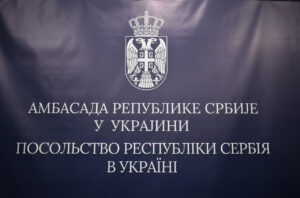
The Embassy of the Republic of Serbia held a reception to mark the return of the diplomatic mission to Kyiv and the opening of new premises at 48 Bohdan Khmelnytsky Street. The event brought together diplomats, representatives of government agencies, business and academic circles of Ukraine.
During his speech, Serbian Ambassador to Ukraine Andon Sapundzi emphasized that the opening of the embassy symbolizes “Serbia’s return to Kyiv” and the resumption of active cooperation between the two countries.
“Our workspace is not yet complete, but I wanted to share this joy with you right now — Serbia is back!” he said, addressing the guests.
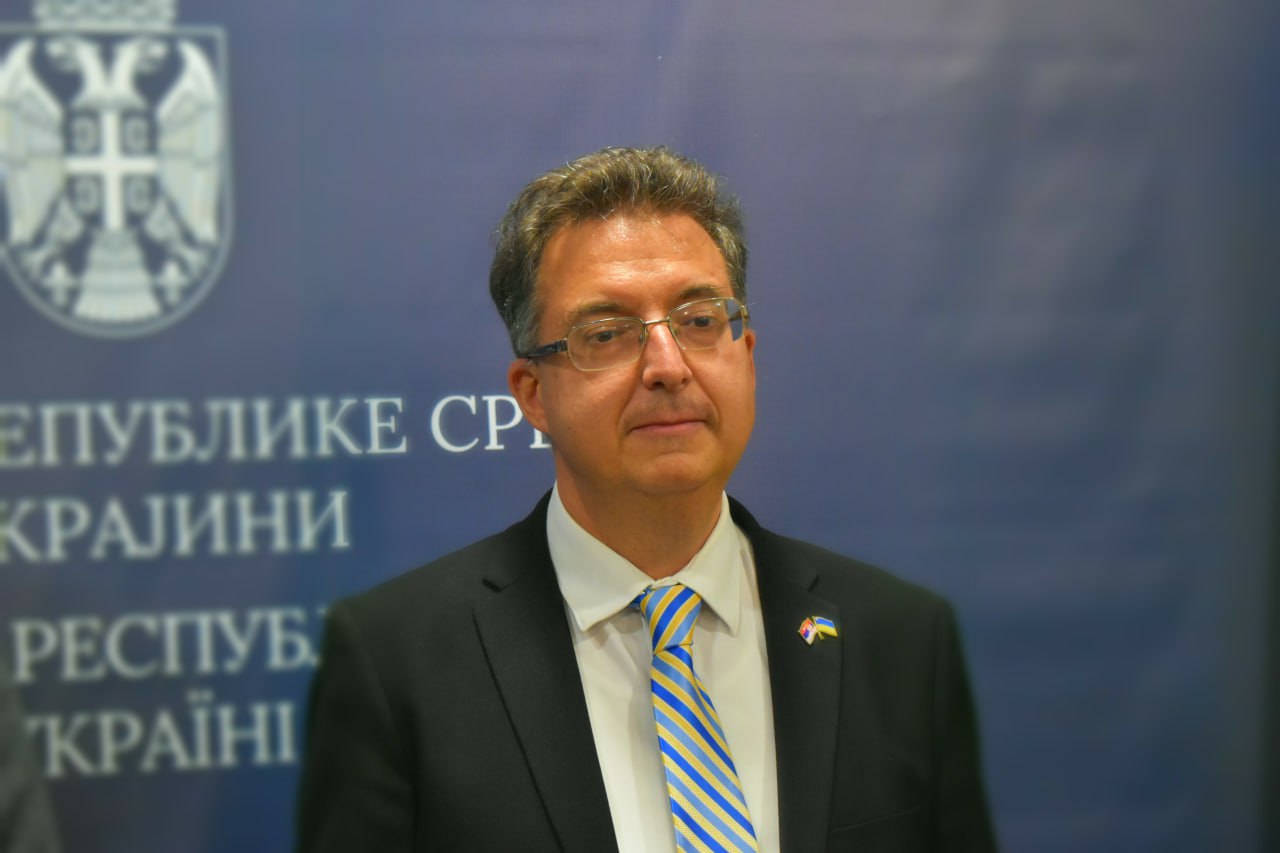
In his speech, the diplomat emphasized the deep historical ties between the Ukrainian and Serbian peoples. In particular, in the 18th century, more than 50,000 Serbs settled in the territory of modern Ukraine — near Bakhmut and in the Kirovohrad region, founding Slavianoserbia and New Serbia. At the same time, as early as the 17th century, Ukrainians migrated to Serbia, mainly to Vojvodina.
The ambassador also noted that since the start of the full-scale invasion, more than 100,000 Ukrainians have found refuge in Serbia, set up companies there, and their children have begun to learn Serbian.
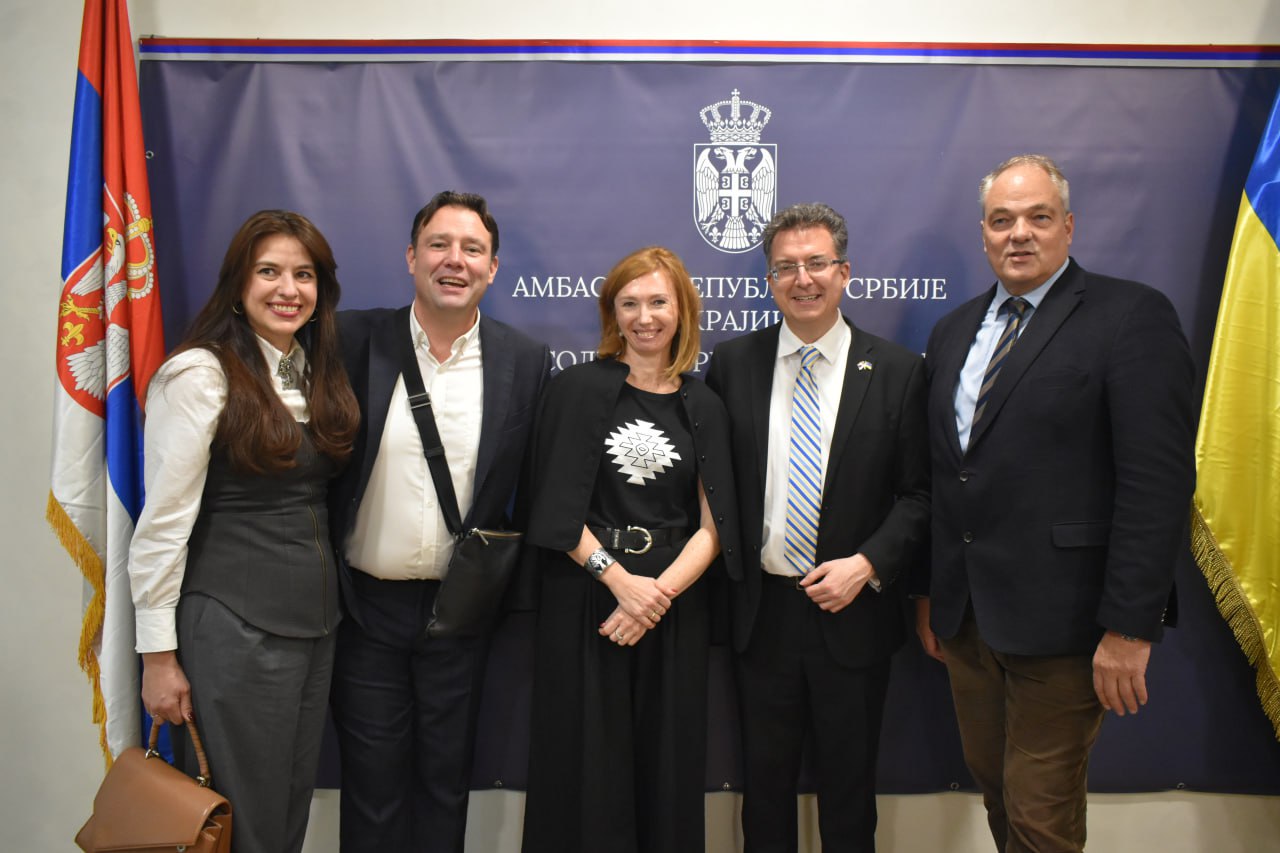
Serbia provides humanitarian aid to Ukraine, including projects to build underground kindergartens near the front line, supplies equipment for energy infrastructure, and organizes educational programs for children from Sumy and Kharkiv.
Special mention was made of Serbian language teachers and students who maintained scientific and cultural ties between the countries even during the most difficult years of the war.
“We are here to live, work, and share everything with you, our dear Ukrainian friends,” the ambassador concluded his speech.
Ukraine and Serbia (then SFRY) established diplomatic relations on April 15, 1994. The Serbian Embassy in Kyiv began operating in 1995, but in 2022 it temporarily suspended its activities due to the security situation. In the fall of 2025, the diplomatic mission officially resumed its work in Kyiv at 48 Bohdan Khmelnytsky Street. The Ukrainian Embassy in Belgrade has been operating since 1995.

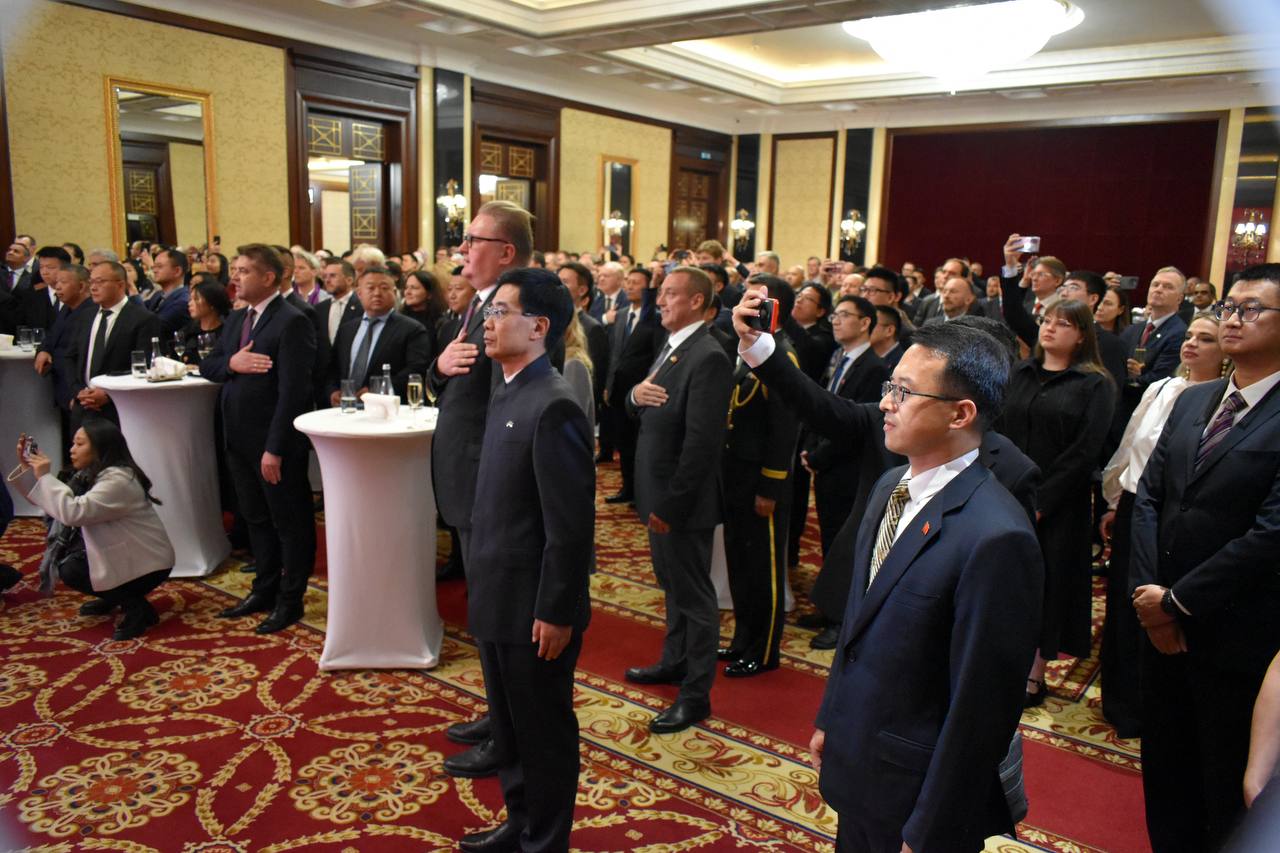
The Embassy of the People’s Republic of China in Ukraine organized a formal reception in Kyiv to mark the 76th anniversary of the founding of the PRC. The event was attended by representatives of the diplomatic corps, Ukrainian authorities, business circles, and the Chinese diaspora.
In his welcoming speech, Chinese Ambassador to Ukraine Ma Shengkun emphasized that China has gone from being a post-conflict state to the world’s second largest economy, and today strives for “high-quality development” and global cooperation. “We have built a society of universal prosperity, lifted 800 million people out of poverty, and created the world’s largest education, healthcare, and social security systems,” he said.
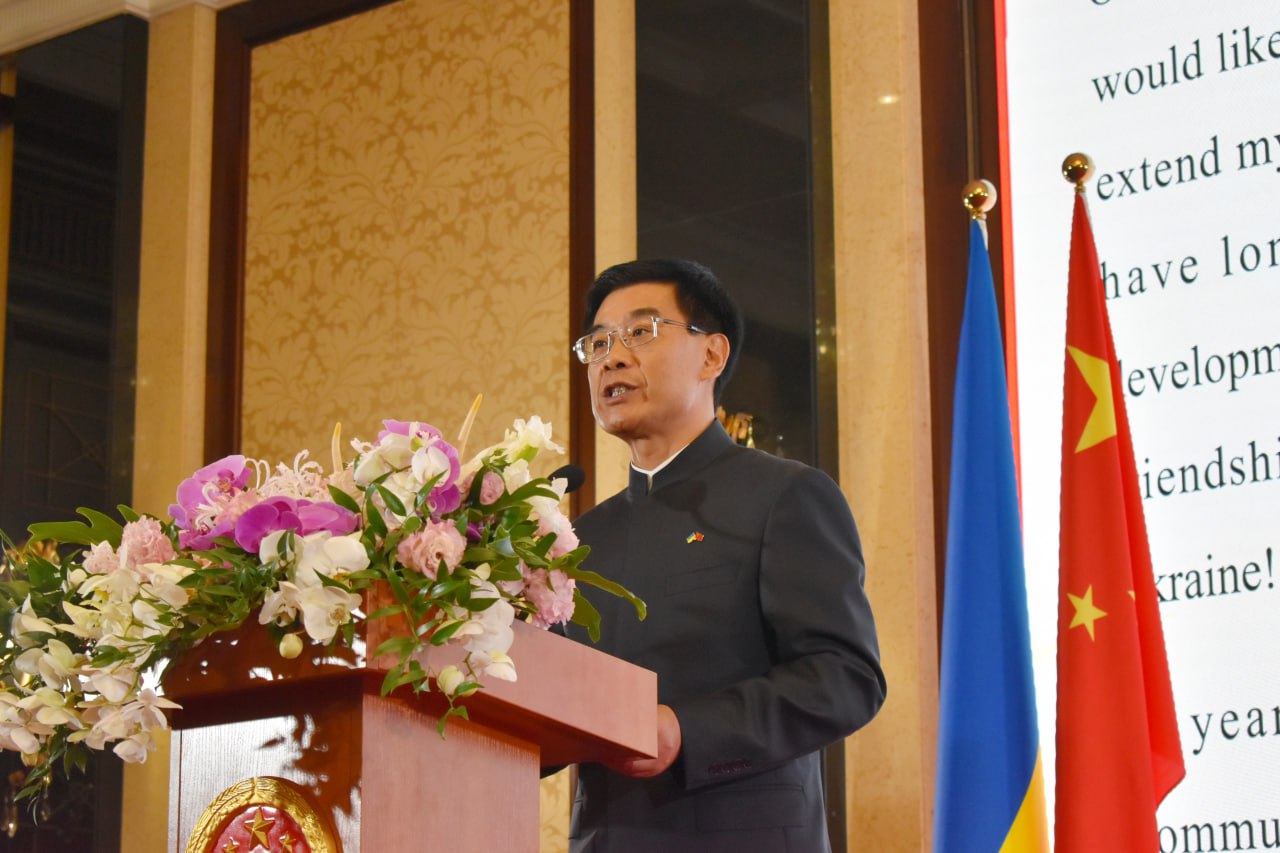
The diplomat noted that between 2021 and 2024, China’s GDP grew by an average of 5.5% per year, and China’s economy is expected to exceed US$19.5 trillion in 2025. Ma Shenkun also mentioned successes in the field of high technology: the development of 5G infrastructure, electric vehicles, space and quantum projects.
He stressed that China and Ukraine are strategic partners: “Our cooperation is based on the principles of mutual respect, mutual benefit and sustainable development. In 2025, we have already signed two protocols on the export of Ukrainian peas and water resources to China.”
In addition, the ambassador expressed understanding for the challenges Ukraine faces today and assured that China will continue to advocate for a ceasefire and the promotion of a peaceful settlement.
During the reception, toasts were made to strengthen Sino-Ukrainian friendship, and cultural performances and exhibitions reflecting the cultural heritage of both countries were presented.
Ma Shengkun took office as Ambassador Extraordinary and Plenipotentiary of the People’s Republic of China to Ukraine on November 26, 2024.
Diplomatic relations between Ukraine and China were established on January 4, 1992. The Chinese Embassy in Kyiv began operating in December 1992.



