

In the first half of 2026, Ukrainians registered 30,488 thousand marriages online, or about 38% of the total, OpenDataBot reported on July 31, citing data from the Ministry of Justice. Thus, nearly four out of ten couples used the remote marriage registration procedure. In total, 79,516 thousand marriages were registered in Ukraine from January through June.
Digital offices for civil status registration are currently operating in Kyiv, Dnipro, and Lviv. These cities and their respective regions showed the largest increase in the number of registered marriages.
In Kyiv, the number increased by 38% compared to the first half of 2025; in the Dnipropetrovsk region, it increased 2.7-fold; and in the Lviv region, it increased 1.9-fold. OpenDataBot suggests that this trend is largely due to the spread of online registration.
The remote format is particularly important for military personnel, couples living in different cities or countries, and Ukrainians who are unable to visit a Civil Registry Office in person.
At the same time, in most other regions, the number of registered marriages decreased compared to the same period last year.
Civil Registry Office, marriage, ONLINE, REGISTRATION, UKRAINE

In Ukraine, 79,516 thousand marriages were registered from January through June 2026, which is 16% more than during the same period last year, OpenDataBot reported on July 31, citing data from the Ministry of Justice.
On average, about 13,300 couples got married each month in Ukraine during the first half of the year. At the same time, the total number of marriages for the year may turn out to be significantly higher, as Ukrainians traditionally tend to register their marriages more often in the second half of the year. In 2025, the difference between the two halves of the year was 41%.
The most popular date in the first half of the year was June 26, 2026. On the palindromic date of 06/26/2026, 2,528 thousand couples registered their marriages. Another 1,248 thousand couples got married on February 14, Valentine’s Day.
The increase in the total number of marriages was largely driven by Kyiv, Dnipropetrovsk, and Lviv regions. These three regions accounted for more than half of all marriages registered in the country.
One of the main factors was the expansion of remote civil registration: four out of ten marriages in the first half of the year were registered online.

Initial registrations of new domestically produced passenger car trailers in April–June of this year rose by 35% compared to the first quarter of 2026—to 6,753 units, which is also 6.8% higher than the figure for the first quarter of last year, according to the Automotive Market Research Institute (AMRI).
“The passenger car trailer segment (gross vehicle weight not exceeding 3,500 kg) is unique to the Ukrainian auto market. It is perhaps the only vehicle sector where imports have completely lost out to local manufacturers, who control 80% of the market, providing private owners, farmers, and small businesses with affordable trailer equipment,” the IDA’s website states.
According to their data, the remaining 20% of the market is divided among domestic resales of used trailers (16.2%), imports of used trailers (3.4%), while the share of new imports amounted to only 0.4%.
“Imports of new trailers are virtually nonexistent, as high logistics costs and customs duties make importing foreign equivalents economically unfeasible given the robust and affordable domestic supply,” experts note.
The most popular models in the second quarter were classic flatbed trailers, trailers for transporting boats and motorboats, platforms (car carriers) for transporting cars, construction materials, and oversized cargo, as well as flatbed-tented trailers and special-purpose trailers for motor vehicles (for ATVs, buggies, and motorcycles).
Trailers with a gross weight of up to 750 kg account for the lion’s share of domestic production (94%).
Experts attribute the popularity of this category to the simplicity of the paperwork (a basic Category B driver’s license is sufficient to tow a trailer), affordability and reliability (they do not require the installation of a complex and expensive braking system), and versatility (they cover 90% of private and small business needs).
In turn, the heavier class (from 750 kg to 3,500 kg), which accounted for 6% of the market, requires an inertia brake and a BE license—these are primarily commercial flatbed trailers for transporting vehicles and heavy specialized equipment.
The leader among Ukrainian manufacturers of passenger car trailers in April–June 2026 is MP “Trailer Plant” (Hlukhiv, Sumy Oblast), with sales of 1,868 thousand units, or more than 27% of the domestic trailer market.
Kyiv-based “NVP-Palych” ranks second with 1,185 thousand units, thanks to its broad model lineup and well-developed sales network.
According to IDA data, third place goes to LLC “Agromotorservice” (Starokostiantyniv, Khmelnytskyi Oblast), known for its “Starkon” models, with 751 trailers.
The top ten also includes manufacturers from Zaporizhzhia, Kremenchuk, Irpin (Kyiv Oblast), Lutsk, and the Vinnytsia and Chernihiv regions.
“The passenger trailer market in the second quarter of 2026 demonstrated complete independence from imports. Ukrainian companies provide consumers with products that are fully adapted to local operating conditions and outperform foreign counterparts in terms of price-to-durability ratio,” the post concludes.

In Ukraine, 19,758 thousand new companies were registered from January through June 2026, an 8% increase compared to the same period last year, according to Opendatabot, citing data from the Unified State Register.
The number of newly established legal entities was the highest in the last three years. In the first half of 2025, 18,277 thousand companies were registered in Ukraine, compared to 18,414 thousand during the corresponding period in 2024.
At the same time, the number of business closures increased. Over the six-month period, 6,563 thousand companies were dissolved or began the dissolution process—a 28% increase compared to January–June 2025.
The net increase in the number of legal entities in the first half of the year was 13,195 thousand companies.
The dissolution statistics include companies with the statuses “Dissolved” and “In the process of dissolution.” However, companies for which the procedure has not yet been completed may subsequently regain their registered status.
The most common reason for dissolution was liquidation—3,479 thousand cases, or more than half of the total. As a result of reorganization, 1,410 thousand companies ceased operations, and 651 companies were dissolved due to bankruptcy proceedings.
Another 574 companies were dissolved based on court decisions unrelated to bankruptcy. In 440 cases, the reason for dissolution was not specified.
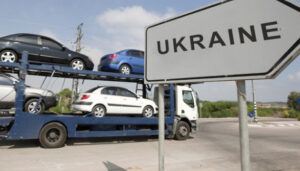
In the first half of 2026, Ukrainians purchased 111,500 used passenger cars imported from abroad, which is 2% less than in the same period of 2025, according to a report by “Ukravtoprom” on its Telegram channel.
Gasoline-powered cars accounted for the largest share of this segment of the auto market, increasing their share by 11 percentage points compared to January–June 2025, to 58%.
Next came diesel cars at 20% (22%), while the share of electric vehicles fell to 11% from 22%, though they still outpaced hybrids, which accounted for 8% (5%). The share of cars with LPG systems was 3% (4%).
The average age of imported used cars was 9.7 years.
The Volkswagen Golf confidently tops the list of the ten most popular imported used models with 5,143 units. Next are the VW Tiguan with 4,549 units, the Audi Q5 with 3,962 units, the Nissan Rogue—3,896 units, the Skoda Octavia—3,688 units, the Renault Megane—3,435 units, the Volkswagen Passat—2,477 units, the Ford Escape—2,446 units, the Nissan Qashqai—2,166 units, and the Audi A4—2,144 units.
As reported by “Ukravtoprom,” in 2025, Ukrainians purchased 274,300 used passenger cars imported from abroad, which is 24% more than in 2024; the top three most popular models after the Volkswagen Golf included two Tesla electric vehicles—the Model Y and Model 3.
This year, the market showed a 22% increase in January compared to January 2025, but began to decline starting in February.

Initial registrations of new and imported used buses (including minibuses) in Ukraine in June 2026 rose by 19% compared to the same month in 2025—to 183 units, according to a report by Ukravtoprom on its Telegram channel.
At the same time, compared to May of this year, demand for buses fell by 16%.
According to Ukravtoprom, the share of new vehicles in total bus sales in June continued to decline, reaching only 28%, compared to 48% last year and 31% in May of this year.
Last month, the most frequently registered new buses were Ataman models from the Cherkasy Bus plant (12 units), Ford (12 units), and ZAZ (11 units).
Among used buses, the top three were Mercedes-Benz (66 units), Volkswagen (12 units), and Van Hool (11 units).
In total, during the first half of 2026, Ukraine’s bus fleet was expanded by 1,230 buses (+4% compared to the same period in 2025). Of these: new buses – 500 units (-6%); used buses – 730 units (+12%).
As reported, citing data from “Ukravtoprom,” Ukraine’s bus fleet was expanded by 2,700 buses in 2025—21% more than in 2024—including 1,343 new buses (+4%) and 1,364 imported used buses (+44%).



