

Noble Capital RSD LLC has filed a lawsuit in the US District Court for the District of Columbia against the Russian Federation, the Russian Ministry of Finance, the Bank of Russia, and the Russian National Welfare Fund, demanding recognition of obligations under sovereign bonds of the Russian Empire placed with investors in the US and recovery of at least $225.8 billion from the defendants. The court documents are available here: https://ia800707.us.archive.org/35/items/gov.uscourts.dcd.281398/gov.uscourts.dcd.281398.1.0.pdf
According to the text of the complaint, the plaintiff is asking the court to issue a declaratory judgment on the principal debt and interest (adjusted for gold), as well as to recognize the possibility of “set-off” of this amount against “blocked sovereign assets of the Russian Federation” in accounts with financial institutions where such assets may be located. Claims for interim measures have also been filed – a ban on the transfer or “mobilization” of blocked assets and the appointment of an equitable receiver for the purposes of enforcement.
The case materials show that the defendants were notified of the lawsuit on October 1, 2025, and the court granted the Russian side an extension to respond to the lawsuit until January 29, 2026.
This construction (settlement through a private law dispute) can be seen as an attempt to shift the discussion of frozen assets from the realm of political confiscation to the realm of civil law mechanisms.
After February 24, 2022, some countries froze significant amounts of Russian sovereign assets. The European Union froze €210 billion, with Euroclear holding approximately €193 billion of these funds.
https://ia800707.us.archive.org/35/items/gov.uscourts.dcd.281398/gov.uscourts.dcd.281398.1.0.pdf
Noble Capital RSD LLC is a private company in the form of an LLC registered in the state of Delaware (USA). In court documents, it is described as the assignee and legal owner of a block of “sovereign bonds” placed in the United States during the Russian Empire.
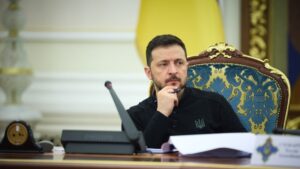
President of Ukraine Volodymyr Zelensky signed a decree enacting the decision of the National Security and Defense Council to impose sanctions against 95 individuals and 70 legal entities, most of whom are citizens and residents of the Russian Federation.
The relevant decree of the President of Ukraine No. 8/2026 of January 3, 2026, was published on the website of the Office of the President.
It is noted that the individuals and companies against whom sanctions have been imposed are associated with servicing Russia’s state defense orders and the activities of its defense-industrial complex. Among them are enterprises and their managers who manufacture and supply products in the fields of communications, electronic warfare, and microelectronics for the Russian defense-industrial complex and security forces.
Sanctions have been imposed on industrial enterprises in the chemical, mining, metallurgical, and fuel and energy sectors of the Russian Federation.
“The restrictions imposed should complicate the servicing of the Russian military-industrial complex and limit its capabilities in the production of weapons and military equipment used in the war against Ukraine. Our country will continue to work with partners to synchronize Ukrainian sanctions in the jurisdictions of partner countries. Some of the items will be included in the 20th package of EU sanctions, which is currently being prepared,” the statement said.
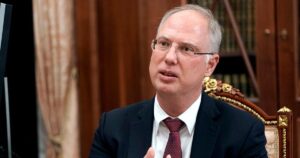
Ukrainian President Volodymyr Zelensky signed two decrees on the implementation of decisions by the National Security and Defense Council of Ukraine regarding the application of personal special economic and other restrictive measures, his press service reported.
“Russia is trying to drag out the war, expanding its attempts to justify its aggression and ‘normalize’ the occupation of Ukrainian territories. Russia has also recently made a demonstrative political decision to impose ‘sanctions’ against Ukrainian officials, in particular against the Prime Minister of Ukraine. Such behaviour by Russia deserves much greater pressure from the world and an expansion of the scope of this pressure,” the president said.
The first decree introduces sanctions against eight individuals who are participants in crimes against Ukraine and Ukrainians, have appropriated property in the agricultural sector, grain crops, cultural heritage sites, conduct information operations against our state, and implement Russian educational standards with anti-Ukrainian narratives in the temporarily occupied territories of Ukraine.
From now on, Russian officials, an FSB agent involved in information sabotage, a representative of the Russian General Staff’s information management department, as well as Kirill Dmitriev, a financier close to the Russian president who is involved in attracting Russian investments to key sectors of foreign economies, and individuals who justify the Russian Federation’s armed aggression are subject to sanctions.
The head of state stressed that Ukraine will submit our proposals for new sanctions to the relevant partners.
The second decree introduces sanctions against five legal entities – Russian publishing houses that work to justify aggression, spread Russian propaganda around the world, and instill anti-Ukrainian sentiments in the temporarily occupied territories of Donetsk, Luhansk, Zaporizhzhia, and Kherson regions.
“We will work to ensure that these publishers cannot participate in international book fairs and that their products are removed from online sales platforms around the world,” said Vladislav Vlasyuk, the president’s adviser on sanctions policy.
decree, RUSSIAN FEDERATION, SANCTION, ZELENSKY, Кирилл Дмитриев
As part of its 19th package of sanctions, the European Union will impose a ban on transactions with five Russian credit institutions from November 12: Alfa Bank, MTS Bank, Absolut Bank, Zemsky Bank, and NKO Istina, according to an EU statement.
In addition, Belarusian Alfa Bank, Sberbank, VTB, Belgazprombank, BelVEB, as well as VTB’s subsidiary in Kazakhstan and VTB’s branch in Shanghai have been added to the EU sanctions list.
BAN, BANK, BELARUS, EUROPEAN UNION, RUSSIAN FEDERATION, SANCTION, TRANSACTION
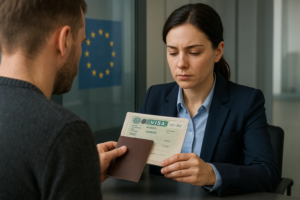
The European Commission is considering tightening the conditions for Russian citizens to obtain Schengen tourist visas. At present, short-term visas continue to be issued to Russians in 17 Schengen countries, including Austria, Germany, Italy, Spain, and France.
Among the measures under consideration are:
– increasing the processing time for visa applications from the current 10 to 15 days, with the possibility of extending it to 45 days,
– introducing stricter controls on document compliance and strengthening measures against abuse.
As part of the preparation of a new, 19th package of sanctions against Russia, a clause on a complete ban on the issuance of Schengen tourist visas is being discussed — the proposed option may be included in the package, which is expected to be presented on September 12.
The main impetus for this initiative is the sharp increase in the number of tourist trips by Russians to Schengen countries in the summer months of 2025, which raises concerns about the possible use of tourist trips to prepare malicious actions within the EU.
In 2024, Russians submitted about 606,600 applications for Schengen visas and received about 552,600 visas, an increase of 16-21% compared to the previous year.
Russia ranked fifth in the world in terms of the number of Schengen visas obtained, behind only China, Turkey, India, and Morocco.
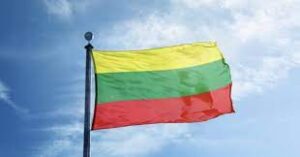
Four EU countries – Lithuania, the Czech Republic, Latvia and Estonia – propose to Brussels to ban the import of waste and scrap ferrous metals, copper and aluminum from Russia.
Such a proposal was presented at a meeting of the European Union Environment Council held on March 25, the Lithuanian Environment Ministry said.
“Lithuania proposes that the European Commission assess all possibilities at EU level and make a proposal to suspend waste imports from Russia to the EU or allow Member States to adopt unilateral restrictive measures. We believe that such imports contribute to financing Russia’s war against Ukraine and should be stopped,” Lithuania’s deputy permanent representative to the EU, Ambassador Jurga Kasputene, said at the council meeting.
According to the Environment Ministry, more than 118 million euros worth of waste and scrap ferrous metals, copper and aluminum were imported from Russia to the EU in 2022-2023. Most of these imports go through Lithuania.
According to the ministry, cross-border transportation of waste is regulated by the Basel Convention and the Waste Transportation Regulation, so individual member states cannot unilaterally ban or restrict such imports.
ALUMINUM, BRUSSELS, COPPER, FERROUS METAL, IMPORTS, RUSSIAN FEDERATION, SCRAP



