

The National Securities and Stock Market Commission of Ukraine (NSSMC) sees opportunities for the revival of the municipal bond market in Ukraine, is actively working toward this goal, and supports a bill on preferential taxation of individual income from these instruments, said Commission Chairman Oleksiy Semenyuk.
“I believe this is possible (the revival of the municipal bond market). Moreover, this process is already underway on a fairly large scale,” he said during a discussion on the prospects of the stock market in Ukraine, organized by the Kyiv International Economic Forum last week.
Semenyuk clarified that a meeting is tentatively scheduled for October 2 with representatives of cities with populations of 100,000 or more—which will also include representatives from the Ministry of Finance—to discuss the main issues hindering the progress of this process.
“The main problems there are clear and have been identified… I want to note that I believe in municipal bonds,” emphasized the Commission chairman.
According to him, cities have development budgets, and they currently have significant needs for a rapid transition to energy independence, so bonds are an attractive instrument for them.
Semenyuk believes that municipal bonds could also be of interest to investment funds and local revenue-generating enterprises.
At the same time, Serhiy Fursa, deputy director of securities trading at the investment firm Dragon Capital, expressed doubt that municipal bonds would attract investors under current conditions, when the Ministry of Finance is placing domestic government bonds on the market, the income from which is tax-exempt.
“This would be a good instrument, but, again, we have domestic government bonds and their yields, as well as the need to provide a risk premium. By the way, I don’t quite understand—and this is a question for analysts—how to assess the solvency of cities in Ukraine. At the moment, I don’t really see much demand for this,” the expert noted.
According to him, the main buyers right now are individuals who are focused on returns and tax benefits.
The head of the National Securities and Stock Market Commission (NSSMC) reported that two bills on tax incentives are currently being considered for passage through the Verkhovna Rada. He clarified that the first concerns investment accounts exempt from personal income tax provided the investment term is at least three years, while the second concerns the “5+5” scheme: a 5% personal income tax rate and a 5% military levy instead of the current 18% + 5%. Semenyuk added that discussions regarding the latter bill are ongoing with the Ministry of Finance.
bond, city, INVESTMENT, NSSMC, TAX

According to Fixygen, Siroko Finance LLC, which provides factoring services and extends loans to individuals—and in which Serhiy Tihipko, one of the largest shareholders in the Ukrainian financial market, indirectly controls 20% of the shares—has fully placed a UAH 50 million Series C bond issue without conducting a public offering.
As indicated in information on the website of the National Securities and Stock Market Commission (NSSMC), the commission registered the report on the results of the issuance on August 18 of this year, although the issuance had originally been registered on July 17 of this year.
The face value of each bond is 1,000 UAH. Information on other parameters of the Series “C” issue is not yet available.
In July 2025, the NSSMC registered a report on the issuance of the debut series of five-year Series “A” bonds “Siroko Finance” Series “A” bonds totaling 20 million UAH with a six-month offer period and an interest rate of 17% per annum during the first six months of circulation, with quarterly interest payments. The list of 141 participants in the bond offering included 132 individuals, among them: Oleksandr Bandurko, Serhiy Belashov, Ihor Voronin, Anatoliy Holubchenko, Andriy Gubskyi, Rajiv Gupta, Oles Dovgyi, Volodymyr Dubey, Volodymyr Zhmak, Volodymyr Zagoriy, Vyacheslav Kapustin, Oleksandr Katsuba, Serhiy Koretskyi, Ihor Nikonov, Lev Partskhaladze, Illia Rybchych, Serhiy Tihipko, Heorhiy Tsagareishvili, Pavlo Tsaruk, Oleksandr Shlapak, and Mykhailo Shelemba.
In February 2026, the National Securities and Stock Market Commission (NSSMC) registered a report on the issuance of “Siroko Finance” Series B five-year bonds in the amount of 30 million hryvnias, also with a six-month maturity and an interest rate of 17% per annum for the first six months of circulation, with quarterly interest payments. Several companies were listed among the participants in the placement, including those from the “TAS” group.
The resolutions on the issuance of these two series stated that the funds raised were to be used to provide loans, including on the terms of a financial loan. For subsequent periods, the rate was maintained at 17% per annum.
According to data from YouControl, in the first half of 2026, “Siroko Finance” increased its revenue 2.5-fold compared to the same period in 2025—to 138.01 million UAH—and its net profit grew by 49.9%—to 10.09 million UAH.
As of the end of August this year, Natalia Gordienko held a 49.96% stake in the company, while Roman Katerynchyk held 30.04%. Tihipko indirectly controlled 20%.
According to Fixygen, USDT and USDC reserves are largely invested in short-term U.S. Treasury bonds (US Treasuries) and repo transactions backed by them.
The market capitalization of USDT reached approximately $183 billion, while the amount of USDC in circulation in the second quarter totaled $73.3 billion.
Circle explicitly states that USDC reserves include short-term Treasury bonds and overnight repos backed by Treasury bonds, notably through a BlackRock fund.
As a result, the growing use of digital dollars automatically increases demand for U.S. government debt.
This is precisely why the U.S. administration views the proliferation of stablecoins not only as a fintech project but also as a way to boost international demand for the dollar and Treasury bonds.
BIS Chairman Pablo Hernández de Cos also acknowledged that stablecoins have the potential to lower the cost of U.S. government financing, although they may simultaneously increase the cost of bank financing.
bond, DOLLAR, stablecoin, U.S., USDT
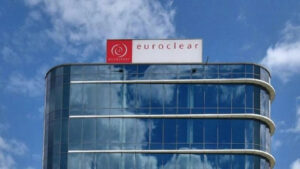
According to the “Serbian Economist,” as of September 1, 2026, Serbia’s long-term government bonds denominated in dinars have become available to international investors through the Euroclear Bank system, which is expected to simplify global funds’ access to the Serbian debt securities market and increase its liquidity.
The Serbian Ministry of Finance announced this on August 31. At the same time, the National Bank of Serbia announced that Euroclear Bank has become a participant in its RTGS payment system and in the securities settlement system of the Central Registry, Depository, and Clearing House of Serbia.
In the first phase, transactions involving five long-term issues of Serbian government bonds denominated in dinars, which are already in circulation, can be conducted through Euroclear. In the future, the system will also be available for certain new issues of government securities.
International investors can now hold and settle Serbian dinar-denominated bonds through their existing Euroclear accounts, without having to set up a separate infrastructure directly in the Serbian market.
For large investment funds, this significantly reduces operational barriers. Banks, pension and investment funds, insurance companies, and asset management firms that already operate through Euroclear will find it easier to include Serbian dinar-denominated securities in their portfolios.
Serbian Finance Minister Sinisa Mali called the connection to Euroclear an important step toward transitioning from a domestic to an internationally integrated government securities market.
The project to integrate the Serbian market with the international settlement infrastructure has been underway since 2019, with the participation of the Ministry of Finance, the National Bank of Serbia, the Central Securities Register, and international partners.
The country’s credit rating has served as an additional factor in attracting international capital. Back in October 2024, S&P Global Ratings upgraded Serbia’s sovereign rating to investment grade BBB- with a stable outlook for the first time. In July 2026, Fitch maintained Serbia’s rating at BB+ with a positive outlook.
The issuance of dinar-denominated infrastructure bonds through Euroclear also has longer-term significance for Serbia. Expanding the pool of foreign buyers could increase trading volume in the secondary market and help establish a more liquid yield curve in dinars.
Euroclear Bank is one of the largest international clearing and depository institutions, enabling institutional investors to hold and settle securities from various countries through a single infrastructure.

The National Securities and Stock Market Commission (NSSMC) has registered the 16th issue of Series “P” bonds by the international financial service NovaPay (TM NovaPay), part of the Nova Group, issued by its subsidiary “NovaPay Credit,” with a face value of 200 million hryvnia, according to the bond prospectus.
It is noted that the issue involves the placement of 200,000 registered, interest-bearing, unsecured bonds with a par value of 1,000 UAH each. The interest rate on these bonds will be 18% per annum.
The public offering of the bonds is scheduled to run from September 4, 2026, to August 3, 2027, provided the prospectus remains in effect. The bonds will be offered for listing on the “Perspektiva” stock exchange. “Univer Capital” LLC has been appointed as the administrator for the “R” series issue.
The company plans to use the proceeds from the offering for lending: 80% to individuals and 20% to legal entities.
Redemption of the bonds is scheduled for September 4–10, 2029.
As previously reported, in July, the National Securities and Stock Market Commission (NSSMC) registered NovaPay’s 15th Series “O” bond issue with a face value of 200 million UAH. In early June, the company announced the full placement of its 14th Series “N” issue of the same volume.
Based on the results for the first half of 2026, NovaPay Credit increased its net profit 3.2-fold compared to the same period in 2025—to 172.01 million UAH—and its revenue 2.2-fold, to 586.42 million UAH.
The company’s equity as of the end of June stood at 688.5 million UAH, compared to 516.5 million UAH at the beginning of the year, while liabilities totaled 1.69 billion UAH, compared to 1.37 billion UAH.
The company’s proceeds from bond sales during this period rose to 693 million UAH from 355.63 million UAH a year earlier, while expenses related to their redemption increased to 578.80 million UAH from 244.92 million UAH, respectively.

According to Fixygen, Ukrainian Investment and Analytical Company LLC (UIAK, TM PlanetAvto), a member of the non-bank financial group “PLANETGROUP,” began the initial offering of its debut Series A corporate bond issue totaling 50 million UAH on August 25.
Under the terms of the issue, investors are being offered 50,000 bonds with a par value of 1,000 UAH each. The interest rate for the first four interest periods—that is, the first year of circulation—is set at 25% per annum in UAH, with the coupon paid quarterly.
The initial offering will run from August 25 to September 8, 2026. The total term of the bonds is five years, with an annual offer allowing holders to present the securities to the issuer for redemption at par value.
After the first four interest periods, the rate will be determined in accordance with the terms of the prospectus and may range from 5% to 35% per annum.
The investment firm “UNIVER Capital” is acting as the organizer and underwriter of the offering. Individuals and legal entities may submit applications to purchase bonds via the UNIVER app or the investor’s account. Settlements during the initial offering are conducted on a DvP (“delivery versus payment”) basis.
Following the completion of the initial offering, “UNIVER Capital” plans to maintain two-way quotes for the bonds on the secondary market.
UIAC states that it plans to allocate 100% of the funds raised toward expanding its automotive financial leasing portfolio. The company has been operating in the market since 2013 and holds a license to provide financial leasing services.
As reported by Open4Business, in 2025, UIAK’s revenue grew nearly 2.9-fold—to 40.68 million UAH, with net income totaling approximately 3.02 million UAH. According to the offering prospectus, the company forecasts revenue of 50 million UAH and net income of approximately 5 million UAH for 2026.
According to data provided by the group, UIAK’s assets as of the end of 2025 totaled approximately 27.2 million UAH, and its equity was approximately 21 million UAH.
The company’s main areas of activity are financial leasing and automobile sales. UIAK is integrated into the infrastructure of the PlanetAvto automotive marketplace.
Andriy Kovtun and Tetiana Yagupova are co-owners of the company on an equal basis. Kovtun is also the controlling shareholder of the non-bank financial group “PLANETGROUP.”
The group is simultaneously developing its fundraising efforts through the corporate bond market and other participants in the ecosystem. In August, Avtokredit Plus LLC (PlanetAvto) began placing Series C bonds totaling 100 million UAH with an interest rate of 24% per annum for the first four interest periods. The proceeds from this issuance are also being directed toward the development of auto financial leasing.
Thus, the total volume of the two current bond programs of PlanetAvto Group companies amounts to 150 million UAH.
Open4Business previously reported on August 17, 2026, that UIAK had registered its debut five-year bond issue worth 50 million UAH.



