
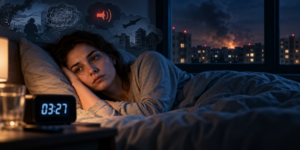
Chronic stress, air raid alerts, and the constant anticipation of danger disrupt the quality of sleep among Ukrainians. Even after a relatively quiet night, a person may wake up feeling tired. A regular routine, reduced evening activity, and timely diagnosis of sleep disorders can help restore proper rest.
Getting a full night’s sleep has become a serious problem for many Ukrainians amid the ongoing war. Air raid alerts, explosions, and the need to constantly monitor the situation disrupt normal rest patterns. At the same time, difficulties may persist even on nights when there is no immediate threat.
According to a sociological survey conducted in June 2026, cited by the ADONIS Medical Center, 38% of Ukrainians surveyed reported a deterioration in their sleep quality compared with the beginning of the year, with 14% reporting a significant deterioration. Another study on the impact of the war on sleep showed that signs of insomnia were observed in 44% of participants, while clinically significant insomnia was found in 27%.
Why the body cannot relax even at night
Sleep is an important physiological process necessary for the body’s recovery, the functioning of the nervous system, memory, and the ability to regulate emotions. Regular awakenings caused by air raid alerts and explosions disrupt its structure, reducing the quality of rest even when a person manages to fall asleep again.
However, external circumstances are not the only cause of these problems. Under prolonged stress, the nervous system may remain in a state of heightened alertness even when there is no immediate danger.
As Valerii Kozlov, a leading neurologist of the highest qualification category at the ADONIS Medical Center, explains, a person may go to bed in silence, but internal tension continues to interfere with relaxation, falling asleep, and maintaining uninterrupted sleep.
As a result, even after spending seven to eight hours in bed, a person does not always feel rested. Sleep may be shallow and fragmented, and its restorative function may be reduced.
Therefore, the absence of nighttime attacks does not in itself guarantee proper rest: the body needs time to emerge from a state of constant readiness for danger.
Why insomnia and frequent nighttime awakenings occur
Brief awakenings are part of normal sleep, and people often do not even remember them. A problem arises when they become frequent, when it is difficult to fall asleep again afterward, and when fatigue and a feeling of exhaustion persist in the morning.
The causes may vary: chronic stress, anxiety, an irregular daily routine, or medical conditions that affect sleep quality.
Obstructive sleep apnea syndrome deserves particular attention. In this condition, breathing during sleep periodically stops or becomes significantly restricted. The body responds with brief awakenings that the person may not be aware of. As a result, sleep becomes less restorative despite being of sufficient duration.
Another common situation is severe fatigue during the day combined with an inability to fall asleep in the evening. This is because physical and emotional exhaustion are not always accompanied by sleepiness. Internal tension and anxious thoughts can keep the nervous system in a state of arousal.
Excessive caffeine consumption, especially in the afternoon, becomes an additional factor.
Thus, not all sleep disorders can be explained solely by psychological causes. If problems persist, it is important to identify their source.
How chronic sleep deprivation affects health and work performance
Lack of sleep affects more than just how a person feels in the morning. With systematic sleep deprivation, it becomes more difficult to concentrate, remember information, respond quickly to changes in circumstances, and make decisions.
Irritability and emotional instability may also increase, the number of everyday mistakes may rise, and work performance may decline.
Pronounced daytime sleepiness poses a particular danger to drivers and people whose work requires constant concentration.
At the same time, attempting to compensate for sleep deprivation with a single long night’s sleep does not always produce the desired result. After an extended period of insufficient sleep, the body may need more time to recover.
Therefore, not only the duration of an individual night’s rest but also the overall regularity of sleep is of key importance.
How to restore a sleep routine during wartime
According to Valerii Kozlov, under conditions of constant external threats, it is not always possible to fully control the duration and quality of nighttime rest. Nevertheless, following several recommendations may help stabilize the routine.
First, it is important to maintain a regular wake-up time. Whenever possible, people should get up at approximately the same time each day to establish a more stable circadian rhythm.
Second, it is necessary to get enough natural light and maintain moderate physical activity during the day. This helps support a normal sleep-wake cycle.
Third, it is advisable to gradually reduce activity in the evening. It is worth limiting intensive news consumption immediately before bedtime and avoiding activities that increase emotional tension.
Fourth, caffeine consumption should be monitored. Coffee and other beverages containing caffeine in the afternoon may make it more difficult to fall asleep.
Fifth, a short daytime nap is acceptable after a particularly difficult night. However, prolonged rest closer to the evening may make it harder to fall asleep the following night.
At the same time, any recommendations for improving sleep must take safety requirements into account. During an air raid alert, it is necessary to follow established safety rules and proceed to a shelter, even if this means forcibly interrupting nighttime rest.
It is also important not to place excessive demands on oneself: during wartime, restoring a normal routine may be a gradual process.
When sleep disorders require medical attention
If difficulty falling asleep, frequent nighttime awakenings, or a feeling of unrefreshing sleep recur regularly, affect everyday life, and prevent proper recovery, it is advisable to consult a specialist.
Loud snoring, pauses in breathing during sleep noticed by others, waking up with a feeling of insufficient air, and pronounced daytime sleepiness require particular attention. These signs may indicate sleep-related breathing disorders that require specialized diagnosis.
Sleep disorders may also accompany neurological, cardiovascular, endocrine, and other diseases. Therefore, persistent fatigue should not automatically be attributed solely to stress.
One method of objectively assessing sleep is polysomnography. During this overnight study, equipment records sleep structure, breathing, heart rhythm, blood oxygen saturation, and other physiological indicators.
Such an examination is particularly important when sleep apnea is suspected. However, polysomnography is not necessary for everyone with insomnia: the appropriate diagnostic method is determined individually after consultation with a doctor.
Sleep diagnostics: capabilities of the ADONIS Medical Center
For the examination of patients with suspected sleep disorders, the ADONIS Medical Center offers two diagnostic options: polysomnography performed at the clinic under the supervision of medical personnel and home monitoring using portable equipment.
The choice of method depends on the patient’s complaints, the suspected cause of the disorder, and medical indications.
Timely diagnosis makes it possible to go beyond addressing individual symptoms and determine why sleep has stopped providing the body with adequate recovery.
During wartime, quality sleep remains an important factor in maintaining physical health, emotional resilience, and work performance.
If persistent fatigue and nighttime awakenings become habitual, they should not be considered an inevitable part of everyday life: it is necessary to assess one’s health and select an individualized approach to restoring sleep.
Source: ADONIS Medical Center. This material was prepared based on recommendations from neurologist Valerii Kozlov.



