

According to Experts Club, elevated air temperatures in the bedroom can significantly impair the quality of nighttime rest, increase wakefulness, and reduce the duration of deep sleep. When the room temperature rises from 25 to 30 degrees Celsius, sleep efficiency in older adults decreases by 5–10%, according to the results of a scientific study published in the journal *Science of The Total Environment*.
Scientists studied the effect of bedroom temperature on the duration, quality, and restlessness of sleep among older adults living in their own homes. The study included 50 participants with an average age of about 79 years. The observations lasted 18 months. The researchers used portable sleep monitors and environmental sensors to measure air temperature and humidity.
The results showed that participants experienced the most restful and effective sleep at air temperatures between 20 and 25 degrees. When the temperature rose to 30 degrees, sleep efficiency decreased by 5–10%.
At the same time, the researchers identified significant individual differences, so the temperature values obtained cannot be considered a universal standard for people of any age.
An additional experimental study, published in the journal *Building and Environment*, also demonstrated the negative impact of high temperatures on the sleep of older adults.
During the experiment, raising the bedroom temperature from 27 to 30 degrees resulted in a 26.3-minute reduction in total sleep duration. Sleep efficiency decreased by 5.5%, the duration of rapid eye movement (REM) sleep decreased by 5.3 minutes, and nighttime wakefulness increased by 27 minutes.
The researchers also found that improved ventilation led to an increase in deep sleep duration by 10.3 minutes and in REM sleep duration by 3.7 minutes.
Experts attribute the effect of temperature to the body’s thermoregulatory mechanisms. Before falling asleep, the body’s core temperature naturally begins to drop. To achieve this, the body redistributes heat to the skin’s surface and releases it into the environment.
If the air temperature is too high, the cooling process becomes more difficult. This can delay the onset of sleep, disrupt the sleep cycle, and increase the number of nighttime awakenings.
According to the scientific review “Thermoregulation in Sleep Disorders,” published on April 12, 2026, in the Journal of Clinical Medicine, disruptions to the natural drop in body temperature are associated with sleep fragmentation and the onset of daytime symptoms, including fatigue and reduced alertness.
Poor-quality sleep can negatively affect concentration, memory, emotional stability, and work performance the following day. At the same time, the severity of these effects depends on the duration and severity of the sleep disturbance, the person’s age, and other factors.
A separate problem during the heating season is the decrease in relative humidity indoors.
Heating cold outdoor air without additional humidification leads to a decrease in its relative humidity. Dry air can cause discomfort in the nose and throat, as well as dryness of the mucous membranes and skin. For some people, this can exacerbate nasal congestion and further interfere with restful sleep.
The U.S. Environmental Protection Agency (EPA) recommends monitoring indoor humidity and ensuring it does not exceed 50% when using household humidifiers. Excessive humidity can promote the growth of mold and other biological contaminants.
According to the Sleep Foundation’s recommendations, for many adults, a comfortable bedroom temperature falls within the range of 16–20 degrees Celsius. However, choosing the optimal setting depends on individual characteristics, age, sleepwear, and the blankets used.
In particular, studies of older adults suggest that in some cases, higher temperatures—around 20–25 degrees—may be most beneficial.
To improve sleep conditions, experts recommend avoiding overheating the bedroom, regularly ventilating the room, using seasonally appropriate bedding, and controlling humidity levels.
https://www.experts.news/posts/vysoka-temperatura-u-spalni-znyzhuye-yakist-snu-na-510-doslidzhennya
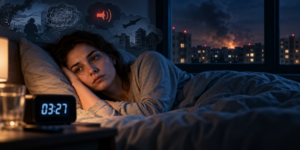
Chronic stress, air raid alerts, and the constant anticipation of danger disrupt the quality of sleep among Ukrainians. Even after a relatively quiet night, a person may wake up feeling tired. A regular routine, reduced evening activity, and timely diagnosis of sleep disorders can help restore proper rest.
Getting a full night’s sleep has become a serious problem for many Ukrainians amid the ongoing war. Air raid alerts, explosions, and the need to constantly monitor the situation disrupt normal rest patterns. At the same time, difficulties may persist even on nights when there is no immediate threat.
According to a sociological survey conducted in June 2026, cited by the ADONIS Medical Center, 38% of Ukrainians surveyed reported a deterioration in their sleep quality compared with the beginning of the year, with 14% reporting a significant deterioration. Another study on the impact of the war on sleep showed that signs of insomnia were observed in 44% of participants, while clinically significant insomnia was found in 27%.
Why the body cannot relax even at night
Sleep is an important physiological process necessary for the body’s recovery, the functioning of the nervous system, memory, and the ability to regulate emotions. Regular awakenings caused by air raid alerts and explosions disrupt its structure, reducing the quality of rest even when a person manages to fall asleep again.
However, external circumstances are not the only cause of these problems. Under prolonged stress, the nervous system may remain in a state of heightened alertness even when there is no immediate danger.
As Valerii Kozlov, a leading neurologist of the highest qualification category at the ADONIS Medical Center, explains, a person may go to bed in silence, but internal tension continues to interfere with relaxation, falling asleep, and maintaining uninterrupted sleep.
As a result, even after spending seven to eight hours in bed, a person does not always feel rested. Sleep may be shallow and fragmented, and its restorative function may be reduced.
Therefore, the absence of nighttime attacks does not in itself guarantee proper rest: the body needs time to emerge from a state of constant readiness for danger.
Why insomnia and frequent nighttime awakenings occur
Brief awakenings are part of normal sleep, and people often do not even remember them. A problem arises when they become frequent, when it is difficult to fall asleep again afterward, and when fatigue and a feeling of exhaustion persist in the morning.
The causes may vary: chronic stress, anxiety, an irregular daily routine, or medical conditions that affect sleep quality.
Obstructive sleep apnea syndrome deserves particular attention. In this condition, breathing during sleep periodically stops or becomes significantly restricted. The body responds with brief awakenings that the person may not be aware of. As a result, sleep becomes less restorative despite being of sufficient duration.
Another common situation is severe fatigue during the day combined with an inability to fall asleep in the evening. This is because physical and emotional exhaustion are not always accompanied by sleepiness. Internal tension and anxious thoughts can keep the nervous system in a state of arousal.
Excessive caffeine consumption, especially in the afternoon, becomes an additional factor.
Thus, not all sleep disorders can be explained solely by psychological causes. If problems persist, it is important to identify their source.
How chronic sleep deprivation affects health and work performance
Lack of sleep affects more than just how a person feels in the morning. With systematic sleep deprivation, it becomes more difficult to concentrate, remember information, respond quickly to changes in circumstances, and make decisions.
Irritability and emotional instability may also increase, the number of everyday mistakes may rise, and work performance may decline.
Pronounced daytime sleepiness poses a particular danger to drivers and people whose work requires constant concentration.
At the same time, attempting to compensate for sleep deprivation with a single long night’s sleep does not always produce the desired result. After an extended period of insufficient sleep, the body may need more time to recover.
Therefore, not only the duration of an individual night’s rest but also the overall regularity of sleep is of key importance.
How to restore a sleep routine during wartime
According to Valerii Kozlov, under conditions of constant external threats, it is not always possible to fully control the duration and quality of nighttime rest. Nevertheless, following several recommendations may help stabilize the routine.
First, it is important to maintain a regular wake-up time. Whenever possible, people should get up at approximately the same time each day to establish a more stable circadian rhythm.
Second, it is necessary to get enough natural light and maintain moderate physical activity during the day. This helps support a normal sleep-wake cycle.
Third, it is advisable to gradually reduce activity in the evening. It is worth limiting intensive news consumption immediately before bedtime and avoiding activities that increase emotional tension.
Fourth, caffeine consumption should be monitored. Coffee and other beverages containing caffeine in the afternoon may make it more difficult to fall asleep.
Fifth, a short daytime nap is acceptable after a particularly difficult night. However, prolonged rest closer to the evening may make it harder to fall asleep the following night.
At the same time, any recommendations for improving sleep must take safety requirements into account. During an air raid alert, it is necessary to follow established safety rules and proceed to a shelter, even if this means forcibly interrupting nighttime rest.
It is also important not to place excessive demands on oneself: during wartime, restoring a normal routine may be a gradual process.
When sleep disorders require medical attention
If difficulty falling asleep, frequent nighttime awakenings, or a feeling of unrefreshing sleep recur regularly, affect everyday life, and prevent proper recovery, it is advisable to consult a specialist.
Loud snoring, pauses in breathing during sleep noticed by others, waking up with a feeling of insufficient air, and pronounced daytime sleepiness require particular attention. These signs may indicate sleep-related breathing disorders that require specialized diagnosis.
Sleep disorders may also accompany neurological, cardiovascular, endocrine, and other diseases. Therefore, persistent fatigue should not automatically be attributed solely to stress.
One method of objectively assessing sleep is polysomnography. During this overnight study, equipment records sleep structure, breathing, heart rhythm, blood oxygen saturation, and other physiological indicators.
Such an examination is particularly important when sleep apnea is suspected. However, polysomnography is not necessary for everyone with insomnia: the appropriate diagnostic method is determined individually after consultation with a doctor.
Sleep diagnostics: capabilities of the ADONIS Medical Center
For the examination of patients with suspected sleep disorders, the ADONIS Medical Center offers two diagnostic options: polysomnography performed at the clinic under the supervision of medical personnel and home monitoring using portable equipment.
The choice of method depends on the patient’s complaints, the suspected cause of the disorder, and medical indications.
Timely diagnosis makes it possible to go beyond addressing individual symptoms and determine why sleep has stopped providing the body with adequate recovery.
During wartime, quality sleep remains an important factor in maintaining physical health, emotional resilience, and work performance.
If persistent fatigue and nighttime awakenings become habitual, they should not be considered an inevitable part of everyday life: it is necessary to assess one’s health and select an individualized approach to restoring sleep.
Source: ADONIS Medical Center. This material was prepared based on recommendations from neurologist Valerii Kozlov.

ADONIS Medical Center launched its sleep lab on October 26, 2026; the facility will specialize in the diagnosis and treatment of sleep disorders, according to the medical network’s press office.
The lab offers patients two types of testing: overnight polysomnography in a specially equipped clinic room and at-home sleep studies using portable diagnostic equipment.
Polysomnography allows for a comprehensive assessment of physiological processes during sleep, including sleep structure, breathing, heart rate, and blood oxygen saturation levels. During overnight testing at the clinic, medical staff monitor the equipment’s operation and the quality of the recorded data.
According to the medical center, the room for overnight studies is located directly within the clinic’s shelter, which ensures that the examination is not interrupted during air raid alerts.
For at-home testing, the patient receives a portable device and instructions on how to use it. After the procedure is complete, the equipment is returned to the clinic for analysis of the collected data.
A medical report is prepared within 2–3 business days. Afterward, the patient can consult with a neurologist, who will explain the test results and provide recommendations for further treatment.
If necessary, specialists from various fields—including cardiologists, neurologists, endocrinologists, and psychotherapists—will be involved in the diagnosis and treatment.
ADONIS notes that this specialized examination may be relevant for people who experience regular loud snoring, sleep apnea, frequent nighttime awakenings, morning headaches, constant fatigue upon waking, or excessive daytime sleepiness. Such symptoms may indicate, among other things, obstructive sleep apnea.
The opening of the laboratory comes amid a decline in sleep quality among some Ukrainians due to the full-scale war, constant stress, and nighttime air raid alerts.
The ADONIS Sleep Laboratory is located at: Kyiv Oblast, Sofiivska Borshchahivka village, 90 Akademika Shalimova St.
ADONIS is a Ukrainian network of multidisciplinary medical centers for adults and children, founded in Kyiv in 1997. The network provides medical services across numerous specialties, including diagnostics, outpatient care, and surgical treatment. According to the company, its network includes medical centers in Kyiv and the Kyiv region.

According to Experts Club, American researchers have found a link between frequent daytime napping and an increased risk of developing dementia in people aged 65 and older. According to a study by the Johns Hopkins Bloomberg School of Public Health, people who napped almost every day had a 48% higher relative risk of developing dementia compared to those who rarely napped.
The study’s findings were published in the scientific journal The Journals of Gerontology: Series A. The final version of the article was published on October 5, 2026, and on October 13, the university released a separate press release announcing the results.
The study included 995 Americans aged 65 and older who were covered by Medicare. At the start of the study in 2013, none of the participants showed signs of probable or possible dementia according to the classification used by the researchers.
The researchers followed the participants for up to ten years, using data from the National Health and Aging Trends Study (NHATS), a nationwide study on aging. They analyzed not only the duration of nighttime sleep but also the frequency of daytime naps, their duration, and the circumstances under which participants fell asleep.
The researchers paid particular attention to the difference between planned daytime naps and instances when a person fell asleep involuntarily, such as while watching TV, reading, or relaxing in a chair.
According to the results of the statistical analysis, frequent daytime napping was associated with a 48% increase in the relative risk of dementia, while unplanned falling asleep was associated with a 39% increase.
In their analysis, the researchers accounted for age, gender, education, the presence of chronic diseases, body mass index, symptoms of depression and anxiety, as well as characteristics of nighttime sleep and the risk of obstructive sleep apnea.
The association remained significant even after adjusting for these factors, suggesting a potential independent role of daytime napping patterns as an indicator of risk for cognitive impairment.
The researchers also found that daytime naps lasting up to 30 minutes were associated with a 40% increase in the relative risk of dementia. At the same time, for naps lasting more than 30 minutes, the statistical association weakened after accounting for characteristics of nighttime sleep.
However, irregular or intentionally scheduled daytime naps did not show a statistically significant increase in risk after adjusting for all major factors.
Overall, during the follow-up period, 417 participants—or 41.9% of the sample—showed signs of possible or probable dementia. Among people who did not nap during the day, this outcome was observed in 37.8%, and among those who regularly napped during the day, in 51.1%. However, the duration of follow-up varied across the different groups, so these percentages should not be interpreted as a direct predictor of individual risk.
In addition to dementia, the researchers found a link between frequent daytime napping and subsequent deterioration in memory and certain executive brain functions, particularly the ability to plan and control complex actions.
However, the researchers emphasize that the results do not prove a cause-and-effect relationship between daytime napping and dementia.
“More frequent daytime napping may be a sign of changes in the brain, rather than the cause of the changes that lead to dementia,” noted the study’s senior author, Adam Spira, a professor in the Department of Mental Health at Johns Hopkins University.
According to the researchers, neurodegenerative processes can begin long before the onset of clinical symptoms of dementia. Among the first areas to change may be those parts of the brain that regulate wakefulness and sleep. As a result, a person may fall asleep more often during the day even before a diagnosis is made.
To test this hypothesis, the researchers conducted an additional analysis, excluding cases of dementia identified during the first five years of follow-up. The association between frequent daytime napping and the subsequent development of dementia persisted. For unplanned sleep episodes, the direction of the association also remained similar, although the statistical uncertainty of the result increased.
The study’s first author, Kenin Jiang, noted that monitoring changes in daytime sleep could be a relatively simple way to identify people at increased risk of dementia early on.
Researchers believe that doctors should pay attention not only to patients’ complaints about nighttime sleep but also to an increase in the frequency of daytime sleepiness, especially if such changes occur for no apparent reason.
At the same time, the authors caution against drawing hasty practical conclusions. The study was observational in nature: the researchers did not alter the participants’ sleep patterns and did not test whether avoiding daytime naps could prevent dementia.
Furthermore, information about daytime napping was collected primarily from the participants themselves, and signs of dementia were identified using a validated algorithm rather than through clinical diagnosis of each individual case.
Therefore, the results do not mean that a short daytime nap is inherently harmful to the brain or that it should be avoided. Instead, new or increasingly frequent episodes of involuntary sleepiness in older adults may be a reason to discuss their health, the quality of their nighttime sleep, and possible cognitive changes with a doctor.
To definitively establish a causal link, additional long-term studies are needed that objectively measure sleep using specialized devices.
Johns Hopkins University, founded in 1876 in Baltimore, is one of the leading research universities in the United States. Its Johns Hopkins Bloomberg School of Public Health, founded in 1916, specializes in epidemiology, disease prevention, mental health, population aging, and the study of risk factors for chronic diseases. The study on daytime napping and dementia was conducted with partial funding from the U.S. National Institute on Aging.
Sources: Johns Hopkins Bloomberg School of Public Health, press release dated October 13, 2026; original research article in The Journals of Gerontology: Series A, DOI: 10.1093/gerona/glag208.

Watching short videos before bed may not only impair sleep quality but also contribute to daytime fatigue. This is the conclusion reached by researchers in China who studied the link between problematic short-video consumption and symptoms of insomnia among college students, according to a study published in the journal Personality and Individual Differences.
The authors analyzed data from 6,691 students in central China. The survey was conducted twice at three-month intervals: participants answered questions about their short-video viewing habits, sleep difficulties, daytime fatigue, mood, and reduced productivity.
The study revealed a bidirectional relationship: excessive use of short-form video platforms predicted an increase in sleep problems three months later, but the reverse effect was even stronger. People who felt tired, lethargic, or had a worsened mood during the day due to poor sleep were more likely to lose control over their video viewing and use it as a way to quickly relieve tension or boredom.
According to the researchers, daytime fatigue acts as a kind of “bridge” between insomnia and problematic use of digital platforms. Lack of sleep reduces self-control and the ability to resist instant gratification, while short videos offer a simple and almost effortless form of emotional release. As a result, a person may start watching videos again in the evening, fall asleep later, and feel even more tired the next day.
The authors note that short-video platform algorithms reinforce this cycle: a personalized feed holds the user’s attention, and the user often underestimates how much time they have already spent watching. Difficulty falling asleep proved to be a particularly significant factor, as it can trigger a persistent habit of delaying sleep.
For businesses and the digital services market, this study is important because it highlights not only the power of engaging algorithms but also the growing demand for digital well-being. Apps, educational platforms, employers, and healthcare services will increasingly take into account the impact of nighttime screen time on users’ productivity, mental health, and quality of life.
The researchers emphasize that the problem is not simply a matter of “weak willpower.” When a person sleeps poorly and feels tired during the day, their ability to control impulses decreases, and digital entertainment becomes the most accessible way to achieve short-term relief.



