
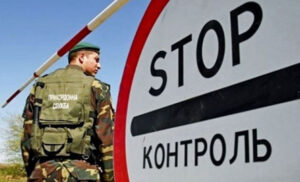
As the new school year approached, passenger traffic across Ukraine’s western border during the last full week of summer—August 22–28—fell by 4.6% from last week’s record high to 755,000, according to daily statistics from the State Border Guard Service, as tracked by the “Interfax-Ukraine” agency.
According to the State Border Service, the number of outbound border crossings this week fell to 364,000 from 391,000 the week before, while the number of inbound crossings fell to 391,000 from 400,000.
The number of vehicles passing through border crossing points remained at 145,000, while the number of vehicles carrying humanitarian cargo fell to 433 from 466.
The highest outbound traffic was recorded on Saturday (60,000 per day), and the highest inbound traffic on Sunday (62,000), while the lowest outbound traffic was on Monday (46,000) and the lowest inbound traffic on Thursday (50,000).
According to the State Border Guard Service, as of 6:00 p.m. on Saturday, the largest number of passenger cars were waiting to cross the border with Poland at the “Krakivets” border crossing point (BCP)—80—and the “Ustyluh” BCP—65. Smaller lines were observed at the “Shehyni” checkpoint (45 vehicles), the “Hrushiv” checkpoint (30), the “Nyzhankovychi” checkpoint (20), and the “Ugryniv” checkpoint (10).
In addition, 12 buses had accumulated at the “Krakivets” checkpoint, and at the “Shehyni” checkpoint, 170 pedestrians were also waiting in line, which is very rare.
At the border with Slovakia, there was a line of 20 cars at the “Maly Berezny” checkpoint, 15 cars and 2 buses at the “Uzhhorod” checkpoint.
At the border with Hungary, 20 passenger cars each were waiting to cross at the “Tisa” and “Vylok” border checkpoints, while 15 were waiting at the “Luzhanka” checkpoint and 10 at the “Kosyno” checkpoint.
At the border with Romania, 40 cars had accumulated at the “Dyakivtsi” checkpoint and another 6 at the “Krasnoilsk” checkpoint, while at the border with Moldova, there was a line of 25 cars at the “Mamalyga” checkpoint.
Last year, passenger traffic across the border during this week was still at its peak at the time—769,000—though the number of people entering the country significantly exceeded the number leaving—by 33,000 compared to 27,000 this year.
The following week last year, passenger traffic dropped immediately by 10%, and over the course of the week—by another 12.4%.
As previously reported, starting May 10, 2022, the outflow of refugees from Ukraine—which had begun with the start of the war—turned into an inflow that lasted until September 23, 2022, totaling 409,000 people. However, since the end of September—possibly influenced by news of mobilization in Russia and “pseudo-referendums” in the occupied territories, followed by massive shelling of energy infrastructure—the number of people leaving has exceeded the number of those entering. In total, from the end of September 2022 until the first anniversary of the full-scale war, this figure reached 223,000 people.
In the second year of the full-scale war, the number of border crossings out of Ukraine, according to the State Border Guard Service, exceeded the number of border crossings into the country by 25,000; in the third year—by 187,000; in the fourth year—by 221,000; and since the start of the fifth year by 44,000, of which 31,000 have occurred since the beginning of summer.
In its July inflation report, the National Bank maintained its estimate of 0.3 million people migrating from Ukraine last year due to the deterioration of the security situation at the end of the year and the easing of exit rules for young people, but noted that this figure will be less than 0.5 million in 2024. The NBU continues to forecast a net outflow of 0.2 million in 2026, while net returns, according to its forecast, will begin in 2027 and amount to about 0.1 million people, increasing to 0.5 million people in 2028.
According to UNHCR data, the number of Ukrainian refugees in Europe as of June 30, 2026, stood at 5.159 million, and globally at 5.687 million, compared to 5.213 million and 5.687 million, respectively, as of April 30.
In Ukraine itself, according to the latest UN data for July 2026, there were 3.80 million internally displaced persons (IDPs), compared to 3.70 million in January of this year and 3.34 million in July 2025.
BORDER, MIGRATION, PASSENGER TRAFFIC, State Border Guard Service, UKRAINE
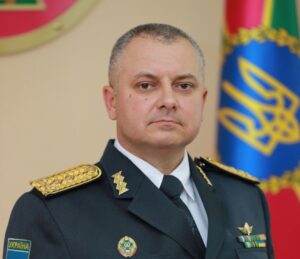
Ukrainian President Volodymyr Zelensky has appointed Valery Vavrynyuk, first deputy head of the State Border Service of Ukraine, as acting head of the SBU.
The corresponding decree No. 10/2026 of January 4, 2026, was published on the website of the President of Ukraine.
Valery Vavrynyuk was appointed first deputy head of the State Border Guard Service on October 20, 2025, according to his biography on the State Border Guard Service website.
In 2023, he was appointed head of the Western Regional Administration, and in 2019, head of the Eastern Regional Administration of the State Border Guard Service.
Until October 2019, he was appointed to the positions of head of border detachments in the Eastern and Western Regional Administrations and to positions in the Eastern Regional Administration of the State Border Guard Service.
From December 2014 to July 2015, he was deputy head of the regional administration and head of the operational and military department of the Eastern Regional Administration of the State Border Guard Service.
From 2008 to 2014, he held management positions in border guard units in the Northern and Southern Regional Administrations of the State Border Guard Service.

How many Ukrainians have not returned home since the beginning of the year
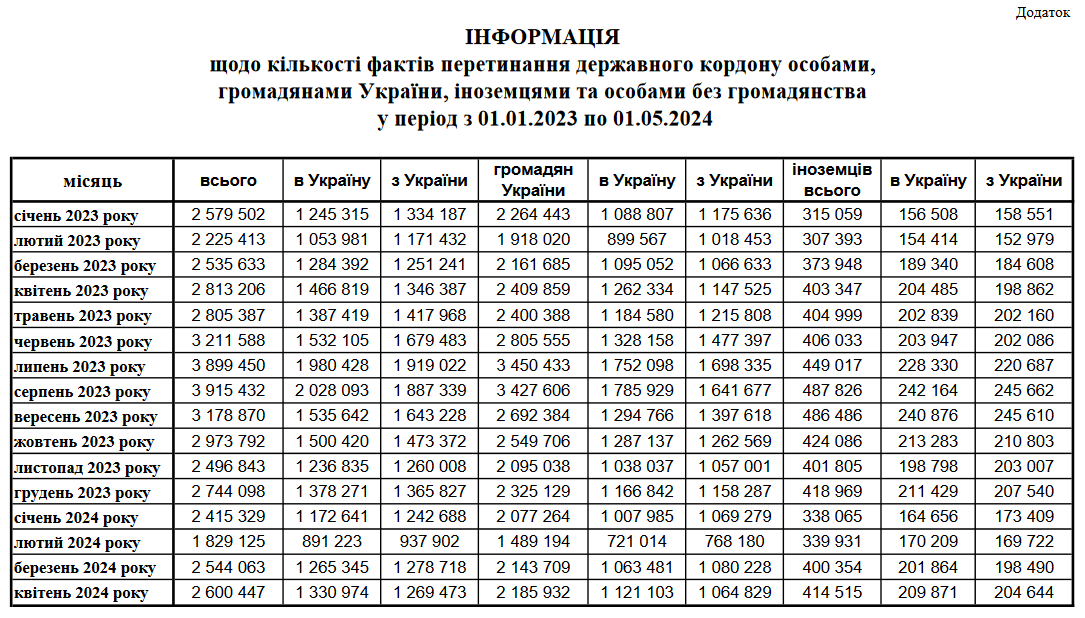
The State Border Guard Service recorded more than 7.8 million border crossings by Ukrainians in the first 4 months of 2024. This is significantly less than in the same period last year. About 69 thousand people left and did not return.
Ukrainians crossed the border 7.8 million times in the first months of this year. Overall, citizens began to travel abroad 10% less often.
Almost 69 thousand citizens – 1.5% of the total number of people who left the country – have not returned to the country since the beginning of the year. In April, for the first time since the beginning of the year, more citizens returned home than left – by 56 thousand. Overall, this year the number of those who have not returned has slightly increased compared to last year – 62 thousand Ukrainians did not return.
For comparison, 14.1 million Ukrainians left Ukraine last year. Of these, only 142 thousand remained abroad. This is 15 times less than in the first year of the full-scale war.
It is worth noting that the difference between those who left and entered Ukraine does not give an accurate understanding of the number of people who emigrated.
https://opendatabot.ua/analytics/emigration-trend-2024-4

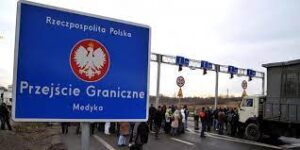
On Sunday morning, Polish farmers ended their protest in front of the Medyka-Shehyni checkpoint, and truck traffic has resumed, the State Border Guard Service (SBGS) reports.
“According to the Border Guard of the Republic of Poland, today at 09:30 the protest in front of the Medyka-Shehyni checkpoint ended. Registration and crossing of trucks entering Ukraine is carried out as usual. Border guards, together with employees of the control services, are working to ensure the passage of the maximum number of trucks,” the message posted on the telegram channel reads.
On December 23, Vice Minister of the Ministry of Agrarian Policy of Poland Michal Kolodziejczak said that Polish farmers had suspended protests at the Shehyni-Medica checkpoint with Ukraine.
Medyka-Shehyni, Polish farmers, SBGS, State Border Guard Service
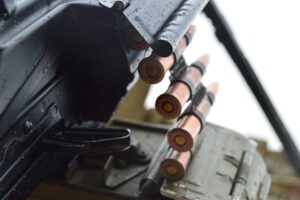
The Cabinet of Ministers of Ukraine has allocated 7bn hryvnias for the purchase of weapons and ammunition for the State Border Guard Service.
The Cabinet’s representative in the Verkhovna Rada, Taras Melnychuk, said in Telegram that the relevant decision was made at a government meeting on Friday.
In particular, allocated to the Ministry of Internal Affairs (for the Administration of the State Border Service) on an irrevocable basis at the expense of the reserve fund of the state budget 7 billion UAH for the implementation of measures related to strengthening the defense capacity of the state, in particular, for the purchase of weapons and ammunition.



