

In 2025, companies belonging to the Smart Holding investment group paid UAH 860 million to the state budget, which is 28.3% less than in 2024 and 4.3 times less than in 2022, according to a press release from the holding company.
“(This) became an anti-record since 2016 in terms of filling the state budget of Ukraine. Such a significant reduction was the result of forced downtime of Smart Energy gas production enterprises due to the systematic blocking of licenses since 2023,” the company explained.
The group recalled that in 2023, Smart Energy’s gas production enterprises in the Kharkiv region were initially blocked for 1.5 years due to sanctions imposed on the group’s owners, and now gas production in the Poltava region has been suspended for a year.
The release does not contain data on the volume of consolidated revenue for 2025 and its dynamics, but it is stated that “due to the reduction in operating activities, UAH 3.2 billion in planned investments in Ukrainian subsoil resources were suspended, and the mark of UAH 3.1 billion in aid to protect Ukraine in 2025 has not changed.”
Smart Holding specified that in 2022, its enterprises paid UAH 3.7 billion to the state budget, in 2023 – UAH 1.6 billion, and in 2024 – UAH 1.2 billion.
The group for the restoration of gas production once again proposes to specify the type of sanctions imposed by the NSDC decision of October 8, 2024, and recalls that a similar instrument, without lifting the sanctions against the ultimate beneficiaries, has already been used in Ukraine.
Smart Energy, part of the Smart Holding investment group, implements projects for the exploration and industrial development of hydrocarbon deposits and was one of the five largest private gas producers in Ukraine, producing a total of over 1 million cubic meters of gas per day at the start of full-scale Russian military aggression.
Before the war, the hydrocarbon reserves at Smart Energy’s gas production assets were estimated at C1+C2 categories in the amount of 22.633 billion cubic meters of gas and 3.722 million tons of condensate.

The Kametstal plant, part of the Metinvest mining and metallurgical group, was established on the premises of the Dniprovsky Metallurgical Plant (Kamensk, Dnipropetrovsk region), reduced its tax and fee payments by 30.5% compared to 2024, to UAH 1.957 billion from UAH 2.815 billion.
According to a press release, for the fourth year in a row, amid military threats and energy challenges, Kametstal remains a solid foundation of the Ukrainian economy and the main contributor to the city budget.
In 2025, the city budget of Kamensk received more than UAH 744 million from Kametstal, which is UAH 105 million more than in 2024. More than UAH 1 billion 213 million was transferred to the regional and state budgets.
It should be noted that the lion’s share of tax revenues to local and state coffers from the company in 2025 was provided by a single social contribution, which amounted to almost UAH 588 million (+28% compared to 2024), personal income tax – almost UAH 502 million (+27% compared to 2024), as well as land tax, which increased by almost UAH 44 million compared to 2024 and actually amounted to almost UAH 430 million (+11% compared to 2024).
Environmental tax deductions for the 12 months of 2025 amounted to over UAH 146 million.
The plant’s financial director, Yevgeniya Zhamashvili, noted that last year, Kametstal’s deductions to the city budget increased by 16% compared to 2024 and account for a significant portion of all local revenues.
“For the city, this means stable operation of hospitals, functioning of public utilities, and implementation of priority programs,” she said.
According to Kametstal’s interim report for the fourth quarter of 2025, the main important events, risks, and uncertainties that occurred during the reporting period and affected the interim financial statements include, in particular, disruptions in production and logistics routes, destruction of infrastructure, limited stocks and import and export opportunities due to the escalation of military operations in the region, the energy crisis, staff shortages, economic and legal risks, significant currency fluctuations, etc.
The company is also affected by credit risk, capital management risk, liquidity risk, market risk, and the impact of martial law, the document says.
The plant’s press release also reports that in 2025, the coke shop produced 201,700 tons of coke for the enterprise’s blast furnace production. Last year was a period of real endurance testing and, at the same time, high efficiency for coke chemists: the total economic effect of the coke chemical division (CCD) amounted to $1.203 million, of which the lion’s share ($959 thousand) fell on the coke shop.
As reported, in 2024, Kametstal increased its tax and fee payments by 30% compared to 2023, to almost UAH 2.815 billion. The budget of the city of Kamyanske received almost UAH 639 million, which is UAH 34 million more than in 2023. Almost UAH 2.176 billion was transferred to the regional and state budgets. The largest contributions to budgets at various levels were: social security contributions – almost UAH 457 million (+14% compared to 2023), land payments to the local budget increased by UAH 21.5 million compared to 2023 – amounting to over UAH 386 million (+6% compared to 2023). There was also a significant personal income tax – almost UAH 394 million (+12% compared to 2023), and a military tax of UAH 37 million (+28% compared to 2023).
The environmental tax increased by 17.5% compared to 2023, to UAH 181 million.
In 2023, Kametstal increased its tax and fee payments by 34.8% compared to 2022, to UAH 2.154 billion. In 2022, Kametstal paid UAH 1.598 billion in taxes and fees, which is higher than in 2021.
Kametstal was established on the basis of PJSC Dniprovsky Coke Chemical Plant (DKHP) and PJSC Dniprovsky Metallurgical Plant (DMP).

Tax revenues from Kyrgyzstan’s virtual asset market in 2025 exceeded the fees from the country’s largest commodity market Dordoi (Bishkek), according to data and comments published by regional media with reference to official statistics and industry participants.
According to the Financial Market Regulation and Supervision Service, in 2025, the budget from the market of virtual assets received almost 1.7 billion soms in taxes, with virtual asset service providers (exchangers and exchanges) providing 1.48 billion soms, and mining companies – 206.17 million soms.
The regulator also records a sharp increase in the scale of operations: the total turnover of virtual asset service providers in 2025 amounted to 2.735 trillion KGS with more than 2.12 million transactions, with over 94% of the turnover formed by exchange operations. The report indicates that 82 exchange operators and 5 crypto exchanges were registered in 2025, while mining activities, according to the finnadzor, have been effectively suspended since December 2025 and companies submit zero reporting.

In Cyprus from January 1, 2026, changes affecting the processing of real estate transactions and taxation on the sale of assets came into force, according to the explanations to the reform.
The key simplification for new transactions is the complete abolition of stamp duty (Stamp Duty) for sale and purchase agreements signed from January 1, 2026. Previously the levy was calculated on the value of the transaction and required separate procedures, it is now zero-rated for new contracts.
Lifetime capital gains tax deductions (CGT) have also been revised, which may reduce the taxable base for real estate sales by individuals. In particular, the limits of the personal deduction, the exemption for agricultural land and the deduction for a principal residence (subject to fulfillment of conditions and proof of documentation) have been increased. These parameters apply to contracts entered into starting in 2026.
A separate block of the reform relates to transactions involving shares in real estate companies. The threshold at which the sale of shares/shares qualifies as a real estate transaction for CGT purposes has been lowered – this increases the tax due diligence requirements for purchases of corporate shells with properties on the balance sheet.
In addition, exemptions for real estate exchange and barter schemes in development (e.g., when land is transferred to a developer in exchange for finished objects) have been extended, and control over compliance with tax procedures has been strengthened: if the parties are in arrears, transfer of ownership rights may be blocked, and Tax Clearance checks have become tougher.
According to the Department of Land and Cadastre of Cyprus (DLS), in 2025, foreign buyers (excluding Cypriot citizens) registered 7,255 sale contracts (sale contracts), of which 4,809 – buyers from outside the EU; the number of transferred objects (transfers/sales) amounted to 4,195 (2,234 – buyers outside the EU).
The top nationalities that most often appear in the “top ten” are: Russians, British, Israelis, Greeks, Romanians, Chinese, Ukrainians, Germans, Americans and Lebanese (Australians and Bulgarians are also found in Nicosia).
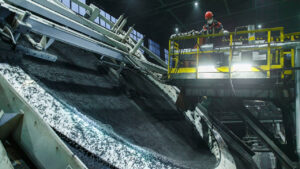
The Central, Ingulets, and Northern mining and processing plants (M&P plants) of the Metinvest mining and metallurgical group, transformed into the United Mining and Processing Plant, paid UAH 5.2 billion in taxes in 2025, which is 8.8% less than in 2024 (UAH 5.7 billion).
According to the company’s press release on Thursday, the main source of budget revenue in 2025 was subsoil use fees, which amounted to UAH 2.4 billion.
A significant portion of the United Mining and Processing Plant’s contributions came from a single social contribution, which amounted to almost UAH 756 million. Personal income tax amounted to UAH 646 million for the year. Environmental tax and land fees also contributed to the state and local treasuries.
“We continue to be a pillar of Ukraine’s economy despite all the challenges facing the mining industry. Today, Metinvest’s mining and processing plants remain among the largest taxpayers. These funds help to strengthen the country’s defense capabilities and support the social sector, which is extremely important during armed aggression. We are changing our approaches, learning to work in extremely difficult conditions, and consistently investing all our efforts in a peaceful future for Ukraine,” said Igor Tonev, CEO of OGZK.
As reported, the group’s mining companies increased their tax payments 2.6 times to UAH 5.7 billion in 2024.
Earlier, Metinvest CFO Yulia Dankova, explaining the group’s financial performance, noted that the dynamics were not positive mainly due to the shutdown of production facilities, in particular in Pokrovsk. The Ingulets Mining and Processing Plant is also idle.
Metinvest is a vertically integrated group of mining and metallurgical enterprises. Its enterprises are located in Ukraine – in the Donetsk, Luhansk, Zaporizhzhia, and Dnipropetrovsk regions – as well as in the European Union, the United Kingdom, and the United States.
The main shareholders of the holding are SCM Group (71.24%) and Smart Holding (23.76%). Metinvest Holding LLC is the managing company of the Metinvest Group.

The fixed Internet provider market paid 48.5% more taxes to the state budget in January-November 2025 than in 2024—UAH 6.1 billion, according to Danylo Getmantsev, head of the parliamentary committee on finance, tax, and customs policy, in a Telegram post on Friday.
According to his data, personal income tax (PIT) and military tax (MT) increased by 61% to UAH 1.9 billion, income tax by 25.8% to UAH 0.6 billion, and value added tax (VAT) amounted to UAH 3.27 billion, which is 58.1% more than last year.
The VAT payment rate also increased by 1.1% to 9.71%.
The average salary in the fixed Internet sector increased by 26.9% and amounted to UAH 17,900 in October 2025, Getmantsev noted.
“At the same time, some operators have not stopped fragmentation, and the work of the BEB to stop crimes in this area and bring those responsible to justice has not yet become systematic,” said the head of the parliamentary committee on finance, tax, and customs policy.
According to the National Commission for the Regulation of Electronic Communications and Postal Services (NCCEC), revenues in the fixed Internet market grew by 3% in the first half of 2025, to UAH 12.1 billion, average revenue per user (ARPU) increased by 3.5% to UAH 237.8, and the number of lines decreased by 0.5% to 8.4 million. There were 2.5 million lines in rural areas, which is 7.1% more, and fixed Internet access increased to 17,000 settlements (excluding TOT).



