

According to Experts.news, DLS became the largest company in Ukraine’s tobacco sector by revenue in the first half of 2026, generating 61.08 billion UAH, according to data from OpenDataBot.
The company is part of the DL Solution financial and industrial group.
Philip Morris Sales and Distribution took second place with revenue of 32.15 billion UAH, while JT International Company Ukraine came in third with 23.6 billion UAH. The company represents brands such as Winston, Camel, Sobranie, LD, Monte Carlo, and Winchester on the Ukrainian market.
In fourth place is British American Tobacco Sales and Marketing Ukraine, with revenue of 19.94 billion UAH. The company works with brands such as Kent, Dunhill, glo, Vuse, and Velo.
Rounding out the top five is the distributor Global Tobacco, which generated 11.69 billion UAH in revenue.
The top ten also includes DK “Mirana” — 10.65 billion UAH, Imperial Brands Ukraine—10 billion UAH, JT International Ukraine—4.96 billion UAH, Philip Morris Ukraine—4.41 billion UAH, and Halychyna-Tabak—4.26 billion UAH.
The combined revenue of the ten largest companies reached approximately 182.7 billion UAH, accounting for about 92% of the total revenue of the companies included in OpenDataBot’s comparative sample.
At the same time, the five largest companies alone accounted for about 148.5 billion UAH, or approximately three-quarters of the combined revenue of the analyzed companies.
In total, 41 tobacco companies that filed financial reports for both the first half of 2025 and for 2026 generated 198.18 billion UAH in revenue, which is 10% more than in the previous year.
Source: OpenDataBot.

As of September 2026, 1,101 active tobacco industry companies were registered in Ukraine, according to data from the Unified State Register cited by Opendatabot.
During the first eight months of 2026, 39 new companies were registered, while eight enterprises ceased operations. Thus, the net increase amounted to 31 companies.
During the same period last year, the number of companies increased by 35.
Despite the continued growth, the current pace remains significantly below the pre-war level. In 2021, the net increase in the number of enterprises in the tobacco sector amounted to 82 companies.
The industry’s financial indicators also demonstrate growth in turnover. The 41 companies that provided comparable financial statements for the first half of 2025 and 2026 increased their combined revenue by 10% to UAH 198.18 billion.
At the same time, net profit decreased by 8% and amounted to UAH 6.5 billion.
Meanwhile, the share of profitable enterprises increased. In the first half of 2026, 29 out of 41 companies, or 71%, reported a positive financial result, compared with 63% a year earlier.
In total, 50 companies in the industry submitted financial statements for the first half of the current year. A year earlier, there were 13 more such enterprises.
Source: Opendatabot.
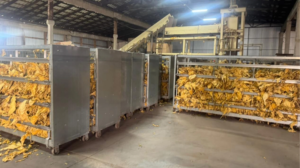
The combined revenue of Ukrainian tobacco companies that reported for the first half of both 2025 and 2026 increased by 10% and reached UAH 198.18 billion, according to Opendatabot.
The analysis included 41 companies that presented comparable financial statements for both periods. In absolute terms, their combined revenue increased by UAH 18.16 billion. Revenues grew at 26 companies, while they declined at 14 market participants.
At the same time, the increase in turnover did not lead to higher net profit. The companies’ combined net financial result decreased by approximately 8% compared with the first half of 2025, to UAH 6.5 billion.
At the same time, the structure of the industry in terms of profitability improved. In the first half of 2026, 29 out of 41 companies, or about 71% of the companies in the sample, made a profit. A year earlier, the share of profitable enterprises stood at 63%.
The number of loss-making companies declined from 14 to 11 over the year.
In total, 50 tobacco industry companies submitted financial statements for the first half of 2026, which is 13 fewer than in the same period last year. The comparison was conducted only among enterprises that submitted reports for both periods.
As of September 2026, 1,101 active companies operating in the tobacco sector were registered in Ukraine.

PJSC “Tobacco Company ‘V. A.T. – Pryluky” (Chernihiv Oblast), a subsidiary of British American Tobacco (BAT), increased its revenue by 3.8% in January–June 2026 compared to the same period in 2025, reaching 2.813 billion UAH.
As reported by the company in the National Securities and Stock Market Commission’s (NSSMC) disclosure system, its net profit rose by 28.2% to 374.5 million UAH.
According to the financial statements, the company’s gross profit for the first half of the year increased by 7.3% to 525.9 million UAH, while operating profit rose by 22.6% to 372.9 million UAH.
As of June 30, 2026, the assets of PJSC “A/T Tobacco Company ‘V.A.T.-Pryluky’” totaled 17.439 billion UAH, compared to 14.986 billion UAH at the beginning of the year.
Compared to the first quarter, the number of employees at the company decreased by 10 and currently stands at 374.
The company’s equity increased to UAH 13.639 billion from UAH 13.579 billion, while current liabilities rose to UAH 3.687 billion from UAH 1.296 billion.
According to the report, “V.A.T. Pryluky” is one of the largest manufacturers and exporters of tobacco products in Ukraine. It produces cigarettes under international brands and a national local brand, as well as TVEN.
According to the National Securities and Stock Market Commission (NSSMC), 100% of the shares are owned by Precis (1814) Limited (United Kingdom).
As previously reported, in 2025, the company’s net profit fell by 37.3% compared to 2024—to 413.6 million UAH—amid an 11.8% decline in net revenue to 5.04 billion UAH.
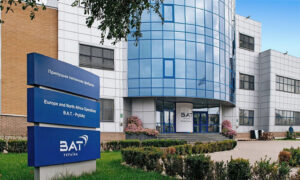
PJSC “Tobacco Company V.A.T. – Pryluky” (Chernihiv Oblast), a subsidiary of the international British American Tobacco (BAT), will pay 52 million hryvnias in dividends to a shareholder between July 14 and July 31 of this year.
According to the company’s filing with the National Securities and Stock Market Commission (NSSMC) disclosure system, the shareholder approved the decision on July 14.
The dividends will be paid in U.S. dollars directly to the shareholder via a bank transfer. According to the NSSMC, 100% of the company’s shares are owned by Precis (1814) Limited.
According to information in the disclosure system, the company continues its regular practice of paying dividends. Specifically, in 2026, on June 18, the shareholder decided to pay 54 million UAH in dividends from June 18 to 30; on May 19, to pay 52 million UAH from May 19 to 31; on April 9, to pay the same amount of dividends from April 9 to 30; in March, the same amount from March 17 to 31, and similarly in February and January. At the same time, the total amount of dividends to be paid this year has not been specified.
As previously reported, the National Bank of Ukraine has limited the transfer of dividends abroad to no more than EUR1 million per month.
According to the company’s information, “V.A.T. Pryluky” is one of the largest manufacturers and exporters of tobacco products in Ukraine, producing cigarettes under international brands and the national brand “Pryluky,” as well as TVEN.
According to the company’s annual report filed with the NSSMC’s disclosure system, in 2025 it saw its net profit decline by 37.3% compared to 2024—to 413.6 million UAH—amid an 11.8% decrease in net revenue to 5.04 billion UAH. Retained earnings amounted to 4.9 billion UAH.
The company produced more than 8 billion filtered cigarettes worth 2.95 billion UAH, 729 million TVEN units worth 422 million UAH, and nearly 3 billion filters worth 742.5 million UAH.
Average selling prices were 423.71 UAH per 1,000 cigarettes and 652.4 UAH per 1,000 TVEN units. Export volume totaled 0.95 billion UAH, or approximately 1.84 billion cigarettes. The main customer is “BAT Sales and Marketing Ukraine.”

PJSC “Philip Morris Ukraine” and LLC “Philip Morris Sales and Distribution” paid a total of 31.7 billion UAH in taxes for January–June 2026, which is 10% higher than the figures for the same period last year, according to a company press release.
The bulk of the payments consisted of excise tax—24 billion UAH—and value-added tax (VAT)—7.1 billion UAH.
“In the first half of the year, we managed to increase the amount of taxes paid by 10%. This was made possible by an increase in excise tax rates on tobacco products, despite a decline in market volumes and the consequences of the missile attack on our factory and warehouses,” the press service quoted Serhiy Kalnoochenko, CFO of Philip Morris Ukraine, as saying.
According to Kalnoochenko, since the start of the full-scale invasion, the company has paid more than 212 billion hryvnias to the budget, which is one of the highest figures among businesses in Ukraine.
“This is a real contribution by our business to funding defense, social programs, and economic recovery. However, this amount could have been at least 25–28 billion hryvnias higher if the country had been able to overcome the problem of the illegal tobacco trade. Instead, the market for illegal cigarettes continues to grow every quarter,” Kalnoochenko emphasized.
According to estimates by Kantar Ukraine in April 2026, the volume of the illicit tobacco market has grown again and now stands at 19.8%. With such market volumes, annual losses to the state budget due to unpaid taxes are estimated at a record 33.3 billion hryvnias, the statement noted.
Philip Morris Ukraine PJSC has been operating in the Ukrainian market since 1994 and is one of the largest taxpayers. In 2024, the company opened a new factory in the Lviv region, investing $30 million and creating 250 jobs. Last year, the company invested $5 million in promoting its “ZYN” nicotine pouch brand in Ukraine; this year, it plans to invest another $10 million in developing the nicotine pouch category and launching a new product line under the brand.
In late January 2026, part of the company’s Kharkiv factory was damaged in a nighttime missile strike; operations at the facility have been suspended since February 24, 2022. The company’s preliminary estimate of the damages is $16 million.
On the night of July 8, the company lost its finished goods warehouse in Kyiv due to Russian shelling.
The company also provides humanitarian aid to communities in the Kharkiv, Lviv, and Kyiv regions, and collaborates with the rehabilitation funds Superhumans, U+System, and UNBROKEN. Since the start of the full-scale invasion, projects totaling 431 million hryvnias have been implemented.



