

Thai authorities will not impose a vaccination certificate requirement for foreign tourists to enter the country, announced January 7, Health Minister Anutin Charnvirakul said Monday.
The certificate requirement was supposed to take effect Monday and remain in effect until at least the end of January. However, Charnvirakul told reporters that proof of vaccination would not be required because all countries in the world sufficiently immunize their citizens. Under the new government decision, unvaccinated tourists will be able to enter Thailand without restrictions.
Thailand’s civil aviation authority said Saturday that starting Monday, Jan. 9, all arriving foreigners will have to prove they have been vaccinated or have had coronavirus within the past six months. This announcement was made on the eve of the opening of the borders by China, which since Jan. 8 has abolished PCR tests and quarantine for those entering.

Chinese authorities on Sunday began lifting border crossing restrictions in China that have been in place since the start of the COVID-19 pandemic, Bloomberg reported.
So, starting Jan. 8, individuals arriving in China will no longer need to go into quarantine after arriving in the country. However, 48 hours before arrival they will be required to obtain a negative test result for COVID-19 and present it to the PRC.
On Sunday, Chinese authorities also began issuing ordinary visas and temporary residence permits to foreigners. At the same time, residents of mainland China can again obtain passports and tourist visas.
However, according to the Associated Press, only a very limited resumption of China’s international air traffic can be expected for the time being.
Also on Sunday, authorities resumed passenger service on land and sea routes between the Chinese mainland and the Hong Kong special administrative region. Travelers, however, will need negative COVID-19 tests 48 hours before travel. The government has also imposed restrictions on the daily number of people who can travel between mainland China and Hong Kong.
The lifting of many travel restrictions came into effect after China began its annual 40-day travel period the previous day to coincide with the Lunar New Year, which this time falls on January 22, 2023. At this time, China is experiencing the world’s largest annual migration of its population, as they disperse to their homelands or travel around the country with relatives.
Since 2020, China has had a “zero tolerance” policy for COVID-19, which has meant applying measures such as lockdowns and mandatory quarantine for those who come into contact with infected people. At the same time, the Chinese economy was showing the lowest growth rate in almost fifty years. But in December, Chinese authorities lifted a series of restrictions adopted to contain the spread of the virus, causing a spike in illnesses and deaths.
The United States, the United Kingdom, India, Japan, Italy, Spain, Canada, Australia, Germany and Sweden announced some restrictive measures against travelers from China amid the COVID-19 wave. In particular, they decided to require all persons arriving from the PRC to present a negative test for COVID-19.
According to Worldometers, a portal that specializes in statistics on major world events, China has diagnosed approximately 482,000 cases of the coronavirus and 5,200 deaths from the effects of infection throughout the pandemic.

The energy crisis and inflation are creating serious problems for restaurants and hotels in Germany, to reduce increased costs, entrepreneurs are introducing additional fees for electricity and heating, according to Redaktions Netzwerk Deutschland (RND).
“Rising energy costs are making it difficult for the hospitality industry. Some hotels expect to spend an additional €200,000 on heat and electricity every year. To cover these costs, more hotels and restaurants are introducing a flat energy rate of €3.9 per night. This is intended to offset at least some of the extra costs.
As the portal notes, one of these hotels is the five-star Bareiss in Bairsbronn in Baden-Württemberg. From September, the hotel charges 9 euros more per person per night, and also reserves the right to raise the rate further.
According to hoteliers, accommodations are heavily dependent on gas and electricity, so energy costs are rising exponentially. In addition, the business began to spend more on the salaries of employees.
In turn, at The Hearts Hotel boutique hotel in the Braunlage resort in Lower Saxony, each guest currently pays an additional 3 euros per day for electricity.
According to forecasts by the chairman of the German Association of Hotels and Restaurants (Dehoga) Axel Strehl, a similar problem will affect about 10% of accommodation in Germany.
According to RND, a similar situation is developing in restaurants in Germany. So, each visitor to the Zum Grünen Hof restaurant near Bremen must pay an additional 1.5 euros. At the same time, according to the owner, the visitors supported the businessman and are ready to pay even more if it helps to keep the establishment running.
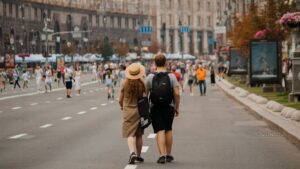
The average daily spending of foreign tourists in Ukraine in 2021 is fixed at $929, the average visit time is 7-9 days, the State Agency of Ukraine for Tourism Development told Interfax-Ukraine.
According to the agency study, among travelers, citizens of the United Arab Emirates had the highest average daily expenses, spending $2,220 daily. Citizens of Saudi Arabia and Oman spent $1,500 daily, Canada – $1,250 daily, the United States – $1,125.
“Last year, despite the pandemic, much more tourists came to Ukraine than in pre-COVID times. In terms of such indicators as the tourist tax for the nine months of 2021, we saw an increase of 20% compared to 2019. This became possible due to the fact that new tourism markets have opened up for us – the UAE and Saudi Arabia. The forecast for 2022 is even more positive. We expect repeated and first visits of tourists from countries that showed interest in 2021. New countries will join them,” head of the agency Maryana Oleskiv said.
According to her, in general, over 4 million foreigners visited Ukraine in 2021, which is almost 26% higher than in 2020.
The main purpose of visits by foreigners last year was vacation, leisure and recreation (29.5%). Some 25.9% of respondents came on a business trip, 22.4% of respondents visited relatives and friends, 11.7% of foreigners came for treatment and rehabilitation, only 4% for shopping. Another 1.2% of travelers visited Ukraine in search of their own roots.
At the same time, 36.5% of foreigners traveled in Ukraine with their families, 35.4% – alone, 21.8% of travelers – with friends. Some 5.1% and 1.2% of foreign tourists traveled with colleagues or as part of tourist groups, respectively.

Some countries of the European Union may temporarily restrict entry for citizens of Ukraine due to the increase in the incidence of coronavirus (COVID-19) and the exclusion of our country from the so-called “green zone,” but at the moment such a decision has not yet been made, Spokesperson of the Ministry of Foreign Affairs of Ukraine Oleh Nikolenko has said.
“The European Union has not yet made a formal decision. However, the Ministry of Foreign Affairs of Ukraine has previously reported that in the event of an increase in the incidence of COVID-19 in Ukraine, the EU may adopt a recommendation to exclude our state from the list of countries whose citizens can make non-essential trips to the European Union. Brussels reviews the list of countries every two weeks and adjusts it depending on the development of the epidemic situation,” he said on Facebook.
The Foreign Ministry spokesperson said the epidemic situation is worsening not only in Ukraine and in recent weeks the EU has already significantly reduced the list of countries in the “green zone,” and some EU countries have already started to strengthen quarantine measures for their citizens.
“It is important to understand that […] if a decision is made, the EU does not automatically establish new rules for crossing the border, but only provides recommendations to the EU member states. […] Up-to-date information on the conditions of entry of Ukrainian citizens to each individual country of the EU and other countries of the world is available on the interactive map of the Ministry of Foreign Affairs of Ukraine: https://tripadvisor.mfa.gov.ua. It is updated in real time,” Nikolenko said.
He said that one should not expect a complete closure of borders, as last year, and vaccination in the future will remain one of the key conditions for unhindered entry into most countries.
The Foreign Ministry spokesperson also said that if the EU decides to exclude Ukraine from the green zone, it does not cancel the visa-free travel, but only introduces temporary restrictions on tourist trips to counter the spread of COVID-19 infection. “The decision can also be later revised at the next update of the list in case the epidemic situation improves,” the representative of the foreign ministry said.
According to Nikolenko, the Ministry of Foreign Affairs of Ukraine and the embassies are actively working with foreign partners so that even in the difficult conditions of the COVID-19 pandemic, the circle of countries open to travel for Ukrainian citizens remains as wide as possible and further expands.

The Swedish government has allowed Ukrainian citizens to enter the country since July 26.
“On July 22, the government decided that residents of Ukraine will be exempted from the entry ban, and residents of Rwanda and Thailand will no longer be exempted from the entry ban. These amendments apply from July 26, 2021,” the Swedish government said on its website.
According to the tripadvisor.mfa.gov.ua website of the Ministry of Foreign Affairs of Ukraine, the requirement for a negative PCR test for COVID-19 or a vaccination certificate (COVID certificate) remains in force when foreigners enter the country, who are not covered by entry ban.
Currently, Sweden only recognizes vaccination certificates issued in the EU/EEA countries or in Andorra, Monaco, San Marino, Switzerland or the Vatican.
Entry into the country will be allowed if 14 days have passed since the date of the second dose of the COVID-19 vaccine.
It is also noted that Sweden recognizes vaccines approved under the EU regulation 726/2004, or approved by WHO for emergency use. In particular, Sweden approved vaccines such as Comirnaty (COVID-19 vaccine BioNtech Tozinameran,) Spikevax (COVID-19 vaccine Moderna), Vaxzevria (COVID-19 vaccine AstraZeneca), COVID-19 vaccine Janssen, COVID-19 vaccine AstraZeneca/SKBio, COVISHIELD (Serum Institute of India COVID-19 vaccine), COVID-19 vaccine BIBP/Sinopharm, CoronaVac (COVID-19 vaccin Sinovac).
The PCR test must be done 48 hours before entering Sweden (the time is counted from the moment of delivery of the biological material). The requirement applies to foreigners who are over 18 years old. A COVID-19 test can be done at Arlanda Airport (http://www.airportsky.se/). Citizens traveling from Denmark, Finland, Iceland and Norway are exempt from the requirement to have a negative test for COVID-19 upon entry into the country. Detailed information is available on the websites of the Swedish government and police.



