
Schwarz Group is entering the Ukrainian market and will develop the Lidl food retail chain, the German edition Lebensmittel Zeitung reported, citing an internal letter from the company.
As follows from the internal letter from Schwarz, 47-year-old Adam Miszczyszyn will deal with Lidl’s entering Ukraine. The document on his appointment as Country Manager for Lidl in Ukraine was signed by Lidl CEO Gerd Chrzanowski and Procurement Director Tim Bork.
Schwarz Group, with 500,000 employees, is one of the world’s leading retail companies.
The company is headquartered in Neckarsulm, Germany. The main food retail brands are Lidl and Kaufland. The group also includes food production Schwarz Produktion and waste disposal, sorting and recycling company PreZero.
According to the official website of the company, it operates 12,900 stores in 33 countries, with revenues in 2020 of EUR125.3 billion, which is 9.6% higher than in 2019. Kaufland increased store sales by 7.5%, to EUR 25.5 billion, Lidl increased sales by 9.9%, to EUR96.3 billion, PreZero grew by 33.7% in 2020 and brought in about EUR 700 million from waste treatment.
DEVELOP, FOOD, LIDL, RETAIL CHAIN, SCHWARZ, UKRAINIAN MARKET

Some 13 participants of the nonbank market were removed in August of this year from the registers: two financial companies, seven insurers (one insurance company left the market voluntarily, six – forcibly), one pawnshop, two credit unions and one leasing company, according to the website of the regulator.
Some 153 non-life insurers (there were 160) and 17 life insurers, 286 pawnshops (there were 287), 301 credit unions (there were 303), 138 leasing companies (there were 137), 977 financial companies (was 973) and 61 insurance brokers are operating on the nonbank market now.
The NBU said that in general, in August, the number of participants in the nonbank financial market decreased from 1,938 (as of July 31) to 1,933 (as of August 31). The number of banks decreased from 73 to 72, since in August OJSC Settlement Center ceased its banking activities.
The regulator also said that in August, the NBU registered eight new players in the nonbank financial market: six financial companies and two leasing companies.
Some 37 payment systems created by residents and 14 international payment systems created by nonresidents operate on the payment market. In August, the registration of the Khazri international payment system, created by nonresidents, was canceled.
The National Bank received 604 requests from market participants for registration and licensing actions in August. The largest number of inquiries related to financial companies, pawnshops and lessors – 490. The number of inquiries from credit institutions (banks and credit unions) was 32, insurers – 82.
During the reporting period, the National Bank continued to apply enforcement measures to participants in the nonbank financial market. In particular, the regulator, on its own initiative, canceled all licenses for 45 institutions: 28 financial companies, one insurance company, 13 pawnshops and three leasing companies. Also in August, the NBU temporarily suspended the licenses of six insurance companies for violations committed by them.
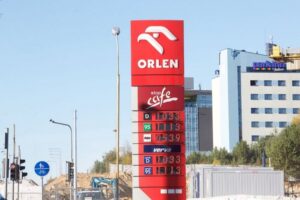
The Polish oil concern Orlen has an actual plan to enter the Ukrainian market of oil products, Energy Minister of Ukraine Herman Haluschenko has said.
“They visited [Ukraine] recently. Unfortunately, I could not meet with them. But I know from my colleagues that they came up with a real plan to enter the Ukrainian market. This is great!” Haluschenko said in an exclusive interview with Interfax-Ukraine.
According to him, the concern is considering the possibility of buying out the networks and entering several segments, in particular, oil refining and petrochemicals.
At the same time, the minister suggested that in this process, some problems may arise, related, in particular, to the shortage of crude oil made in Ukraine.
“They [Orlen] also understand that oil in Ukraine is not a subject of production. We have to get it somewhere… At most, we can buy oil instead of oil products, but what is the point then? And will there be investments in Ukraine if nearby Mazeikiai oil refinery in Lithuania, part of Orlen, and several other refineries are located?” the minister said.
Regarding the state policy on the oil products market as a whole, in his opinion, it consists in the need to change the geography of imports and to carry out import substitution.
“Today, we have a huge percentage of imports – 80% and even more: Russia and Belarus. This is not a completely normal story. Therefore, it is very important to look at partners from other countries and at how much we ourselves can increase refining,” the head Ministry of Energy said.
At the same time, he said that to increase internal processing, it is important to avoid another problem – the transition from an external monopolist to an internal one, which could become the Kremenchuk refinery.
“In fact, our key one is Kremenchuk [Refinery]. By the way, they declare the possibility of increasing processing capacity at least twice. And this [the transition from one monopolist – Russia – to another] can also potentially become a problem,” Haluschenko said.
According to him, to avoid monopoly on the part of anyone, it is necessary to promote increased competition in the market, and the ministry is ready for any steps that will help investors enter the Ukrainian market as soon as possible.
“Where we do not have our own production, we must very carefully build a policy of balance sheets and ensure supplies from different directions. There must be diversification,” the minister said, expressing his conviction and adding that communications are underway with many companies in the oil and gas industry.
At the same time, he said that the creation of minimum reserves of petroleum products will make it possible to balance in the market in case of contingencies.

Primary registrations of new passenger cars in Ukraine in January-July this year increased by 28% compared to the same period in 2020, to 58,100 units, the Ukrautoprom association reports.
According to the information on its website, in particular registrations in July increased by 16% compared to July 2020, to 9,768 units.
The best result was again demonstrated by Japanese-based Toyota with an increase in registrations by 34%, up to 1,535, followed by French-based Renault, whose registrations decreased by almost 10%, to 1,301 units.
The third line of the rating with an 87% increase (up to 800 cars) was confidently taken by Kia, the fourth was Skoda with the registration of 618 cars (35% more), and the top five monthly leaders with a 5% increase in sales were closed by Hyundai with 465 units.
The ten most popular brands in July also included: Volkswagen with 452 units (more by 25%), Nissan – 439 units (more by 32%), Chery – 412 units (more by 91%), Mitsubishi – 411 units (more by 70%), Suzuki – 384 units (more by 9%).
The bestseller of the month was the compact crossover Toyota RAV4 with 659 registrations.
According to the information and analytical group AUTO-Consulting, published on its website, July sales have traditionally become peak since the beginning of the year and in fact the Ukrainian car market has set a post-crisis sales record – according to the group, sales increased by 10% from July 2020, to 9,800.
“We have not sold so much since February 2014,” the experts say.
According to them, the three leaders in July coincide with the data of Ukrautoprom, but Renault, which took the second position, added 33% in sales, to 1,317 units, and the leader of the rating, Toyota, increased sales by 19%, to 1,552units.
Kia sales in July increased by 9.16%, to 810 units, Skoda raised them by 3%, to 632 cars, Hyundai – by 4%, to 469 units.

The U.S. engineering, construction and design company Bechtel Corporation is interested in entering the Ukrainian market for the construction of roads and other more complex infrastructure facilities, Ukrainian Ambassador to the United States Oksana Markarova said.
“I had the honor to speak at the Ukraine Invest round table on the importance of Ukraine’s active competition for investments, attracting U.S. investors to Ukraine and common American-Ukrainian projects in important industries for us, where out team immediately held a meeting with Stuart Jones, President of Regional and Corporate Relations of Bechtel Corporation, the U.S. engineering/construction/design company with revenues of $17.6 billion that implements infrastructure projects around the world and has an interest in entering the Ukrainian market for the construction of roads and other more complex infrastructure facilities,” Markarova wrote on Facebook on Friday.
She assured that the Ukrainian Embassy in the United States will actively work with Prime Minister of Ukraine Denys Shmyhal, President Volodymyr Zelensky’s Office, Ukravtodor and the Ministry of Infrastructure of Ukraine, as well as IFIs and U.S. financial institutions, in order to turn this interest into new projects, investments and jobs for Ukraine.
The decision of the National Security and Defense Council (NSDC) of Ukraine to return to state ownership of a part of the main oil product pipeline Samara-Western Direction will lead to a halt in supplies along it, but will not cause a deficit and a significant increase in prices for diesel fuel, A-95 Consulting Group said.
“We see no prerequisites for resource tension in the market. In the past three years, the loading of the oil product pipeline has decreased, the main reason was the introduction in the summer of 2019 of a special duty of 3.75% [now 4%] on pipeline supplies of Russian diesel fuel. As a result, if in 2018 imports through Prykarpatzakhidtrans amounted to 1.98 million tonnes [30.5%], then in 2019 it was 1.23 million tonnes [17.76%], and in 2020 – some 635,000 tonnes [8.57%],” the group said in a statement.
According to A-95 Group Director Serhiy Kuyun, the Ukrainian market is diversified to the maximum, and it will not be difficult to replace the 50,000 tonnes of pipeline supplies per month.
“This will happen both due to reorientation of pipeline volumes for shipment by railway, and due to reserves of domestic oil refining and imports by sea,” he said.
Kuyun, in particular, assumes that at least 20,000-30,000 tonnes can additionally be delivered to Ukraine from the Belarusian terminal in Gomel, where Russian diesel fuel is transshipped form the pipeline Samara-Western Direction to the railway transport. Also, from March, an increase in imports of Russian diesel fuel by railway across the eastern border is expected. A large margin of capacity for transshipping from the sea remains at the Ukrainian ports: they are used by less than 30%. We can also count on a slight increase in supplies from Belarus.
“The greatest potential has Ukrainian oil refineries, which are loaded with raw materials by less than 30%. The main reason is the disproportion in excise taxes on motor fuels. It stimulates the consumption of diesel fuel and liquefied gas, which Ukraine is forced to import by 70-80%. A solution to this problem could give an incentive to increase oil refining and, as a result, reduce import dependence on all fuel types,” Kuyun said.
A-95 Consulting Group does not exclude an insignificant (within 1-1.5%) increase in wholesale prices for diesel fuel in the central and western regions, where pipeline diesel fuel was mainly distributed.
As reported, Prykarpatzakhidtrans operates a section of the Samara-Western Direction oil product pipeline with a length of about 1,100 km, intended for pumping diesel fuel from Russia and Belarus, both for the internal needs of Ukraine and for transit to Europe, in particular, to Hungary. The design capacity of the pipeline is 3.5 million tonnes per year.
The Ukrainian section of the Samara-Western Direction oil product pipeline belongs to Prykarpatzakhidtrans LLC (Rivne). Until 2016, the company was a structural subdivision of Russia’s Transneft subsidiary Transnefteprodukt. In February 2016, Transneft sold Prykarpatzakhidtrans to the Swiss International Trading Partners AG. In March 2019, the Antimonopoly Committee of Ukraine (AMCU) allowed the unitary enterprise Oil Bitumen Plant, owned by the large private Belarusian oil trader Interservice, to acquire control over Prykarpatzakhidtrans.
At present, Prykarpatzakhidtrans with a charter capital of UAH 105.563 million belongs to the Oil Bitumen Plant (51%), International Trading Partners (48%) and Anatoliy Shefer (1%).
The pipeline was built during the Soviet era and after the proclamation of Ukraine’s independence was to become the property of the state on the basis of succession, as a main pipeline. At the same time, Russian Transnefteprodukt did not transfer this pipeline to the ownership of Ukraine. In 2011, the Economic Court of Rivne region recognized the Ukraines’s ownership of a part of the pipeline passing through the territory of Ukraine, and the Economic Court of Appeal and Supreme Economic Court in 2014-2015 upheld this decision.
However, in 2015, the Economic Court of Rivne region canceled the decision due to allegedly newly discovered circumstances. Later, in 2017, the same court ruled that the ownership of a part of the oil product pipeline belonged to Prykarpatzakhidtrans LLC. It was based on the conclusion of the forensic engineering and technical expertise of the experts of the Ukrainian Research and Design Institute of Nitrogen Industry and Organic Synthesis Products that this pipeline was not a main pipeline. The NABU considers such a conclusion to be deliberately false, therefore, together with the SBU in February 2021, it announced suspicions to the experts.
President of Ukraine Volodymyr Zelensky, by decree of February 19, 2021, put into effect the NSDC decision on taking measures to protect the property interests of the state, which, among other things, instructed the Cabinet of Ministers to determine the central executive body responsible for the preservation and operation of a part of the oil product pipeline passing through the territory of Ukraine.
According to NSDC Secretary Oleksiy Danilov, “an instruction has been given to all relevant bodies: to return the property of the Ukrainian people in a legal way and to find out why the state property ended up in private hands.”
DESTABILIZE, OIL PRODUCT, PIPELINE, PRYKARPATZAKHIDTRANS, UKRAINIAN MARKET



