
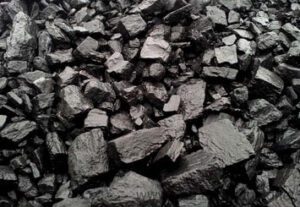
The majority of cement producers in Ukraine are forced to work with minimum margins due to the rise in coal prices by more than two times, the Ukrcement association has reported.
“The price swing for coal this year did not pass us by. The supply contracts were signed last year at an average price of $60 per tonne, and in August, suppliers agreed to ship coal at a price of at least $175 per tonne. This creates significant pressure on the pricing policy. It is impossible to make cheap goods out of expensive components,” Chairman of the Ukrcement association Pavlo Kachur said in an interview with Interfax-Ukraine.
According to him, the cost of energy is 52-55% of the cost of clinker required for cement production. At the same time, all Ukrainian cement plants have previously been modernized and switched to coal due to the high price of gas.
The situation with the rise in prices for cement in Ukraine due to the rise in prices for coal is not unique and is observed in the markets of other countries, Kachur said.
“For example, Turkish cement producers sharply raised cement prices in July due to the rise in the cost of coal. We proceeded from the fact that we must take into account the needs of consumers. Therefore, some companies significantly minimized margins in order to go through this difficult period with minimal costs for cement plants and the construction market as a whole,” he said.

Ukrcement proposes to exclude from the agreement on a free trade zone (FTA) with Turkey commodity items that are fully provided by its own manufacturer, head of the Ukrcement association Pavlo Kachur told the Interfax-Ukraine agency.
“The signing of an agreement on a free trade zone with Turkey for the cement industry poses a serious threat. We have transferred our position to the Ministry of Economy and the trade representative of Ukraine,” Kachur said.
The expert emphasized the need for a particularly balanced government policy in the context of the global economic crisis, so that under the slogans of free movement of goods not to lose their own manufacturer and not to leave tens of thousands of Ukrainians without work.
“The established production capacity for the production of cement in Turkey is 140 million tonnes of cement per year. In Ukraine, this figure is more than 10 times less. Turkey’s own cement consumption is about 60 million tonnes. This means that an importer with such capacities that Turkey has, playing with price policy, can easily destroy the production of cement in Ukraine,” said Kachur.
He emphasized the effectiveness and efficiency of the Big Construction program in the fight against the crisis.
“This program has become a lifeline for the entire construction industry during the global economic crisis. In the event of the signing of an FTA agreement with Turkey, the funds allocated from the budget of Ukraine, the funds of Ukrainian taxpayers, will support the producers of the neighboring state, instead of supporting their own,” he said.
He stated that the cement industry in Ukraine is able to fully provide consumers with high-quality cement that is competitive in the European market.
“The cement industry is developing and modernizing. Billions of dollars are invested to maintain high quality products, reduce emissions, reduce CO2 emissions. In March 2021, the cement plant in Balakliya resumed clinker firing, the kilns of which were shut down by the former Russian owners for ten long years. This will further strengthen the ability of the cement industry of Ukraine to provide its own market with cement,” Kachur summed up.
The head of the Ukrcement association expressed hope that the manufacturers’ arguments will be heard.
In September 2020, the Interdepartmental Commission on International Trade launched an investigation into the import of Portland cement and clinker cement from Turkey to Ukraine.
The import of these items in 2019 increased nine times, and according to the results of January-August 2020 – 13 times compared to the same period of the previous year.
According to the State Statistics Service of Ukraine, in 2020 the volume of exports to Turkey decreased slightly – to $2.436 billion (by 7% compared to 2019), imports increased slightly – 2.415 (by 2.5%).



