
Members of the “Ukrcement” association expect the newly formed Cabinet of Ministers to engage in an open dialogue with the industry regarding problematic issues and to prioritize the interests of domestic producers, Lyudmyla Kripka, executive director and head of the scientific and technical information department at the “Ukrcement” association, told the “Interfax-Ukraine” news agency.
“We expect the new government to engage in an open dialogue and be willing to listen to the industry’s position on problematic issues. We hope that protecting domestic producers will remain a priority of state policy, and that there will be a timely and state-oriented response to the challenges currently facing the cement industry,” she noted.
Among the achievements of the current government, Kripka highlighted the successful harmonization of national standards with European Union legislation as part of the implementation of Ukraine’s Law “On the Supply of Construction Products to the Market.” In addition, she emphasized the support provided to domestic producers, which has been a key factor in maintaining the competitiveness of Ukrainian industry.
At the same time, despite numerous appeals by the Association and its partners to the government, it has not been possible to protect Ukrainian cement producers from the discriminatory impact of the CBAM (Carbon Border Adjustment Mechanism), Kripka added.
“The default CO2 emission values set for Ukraine have effectively become a barrier to the export of Ukrainian cement products to European Union countries,” she explained.
For building materials manufacturers, it is important that issues related to infrastructure development, national reconstruction, and industrial policy remain among the government’s priorities regardless of the organizational model of central executive bodies, Kripka said in response to a question about the possible separation of a standalone Ministry of Infrastructure from the Ministry of Community and Territorial Development.
“We believe that the effectiveness of public administration is determined not so much by the number of ministries as by the quality of their work, the level of coordination, and the speed of decision-making. Furthermore, any structural changes should not lead to delays in the implementation of government programs, duplication of functions, or complications in business interactions with government agencies,” the executive director concluded.
The “Ukrcement” Association was established in January 2004 through the reorganization of the Ukrainian Concern of Cement Industry Enterprises and Organizations “Ukrcement.” The association comprises five groups of companies, including nine cement plants.
CABINET OF MINISTERS, CBAM, CEMENT, RECONSTRUCTION, UKRCEMENT
The “Ukrcement” Association advocates for a measured increase in rail freight rates, which, on the one hand, will help JSC “Ukrzaliznytsia” (UZ) maintain its capacity to transport cargo, and on the other hand, will not lead to the closure of operating enterprises.
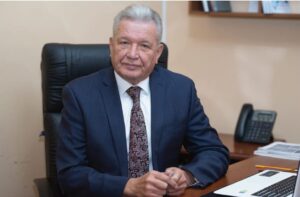
“As business representatives for whom rail transport accounts for more than half of all shipments, we have no interest in a scenario where transport collapses, just as we have no interest in the collapse of any industrial sector. Therefore, we are ready to cooperate to find a realistic solution to today’s complex situation. By agreeing to the tariff increase, we want to see where the additional payments from businesses will go and understand how delivery times to consumers and the turnaround time for empty railcars will be reduced,” said Pavlo Kachur, chairman of the “Ukrcement” Association.
He emphasized that UZ deserves respect and support for its work in transporting cargo for the front lines and national defense, but the situation with the freight transportation of products manufactured in Ukraine—both for the domestic market and for export—is becoming critical and requires joint, and possibly even emergency, measures and actions at the level of the Cabinet of Ministers. “This is not about a single industry or a specific plant, but about Ukraine’s economy as a whole. Therefore, it is the duty of manufacturers and Ukrainian Railways to work together to achieve a positive outcome,” noted the head of the cement manufacturers’ association.
The expert pointed out that, according to Ukrainian Railways, freight transportation remains profitable, businesses pay market rates for transportation, and an additional increase in tariffs is needed to cover losses from passenger transportation.
He highlighted the pressing problems facing the domestic railway: a lack of traction, an exodus of skilled personnel due to low wages, and the (chronic) unprofitability of passenger (especially commuter) transportation. In particular, the situation with traction is critical. According to Ukrzaliznytsia’s estimates, the current average speed of freight car transport is 37 km per day, compared to the standard of 200 km for single-car shipments and 300 km for scheduled services. The average daily number of scheduled locomotives not assigned to formed trains reaches 50.
“The top priority for improving transportation is to secure backup traction. The market expects Ukrzaliznytsia to present a program for modernizing its locomotive fleet as soon as possible. For our part, we see the most realistic and expedient solution to this problem as opening access for the transport of products using our own traction to the nearest marshalling yards. Ukrzaliznytsia’s experience with such transport operations, successfully tested by PJSC “Ivano-Frankivskcement,” has demonstrated its effectiveness and economic benefits for both the manufacturer and Ukrzaliznytsia, and could significantly free up Ukrzaliznytsia’s locomotives for more profitable operations,” Kachur believes.
He emphasized the staffing issue, noting that low wages are causing an exodus of skilled personnel (primarily locomotive engineers, assistant engineers, loaders, and station workers). “As a result of the tariff increase, competitive wages for employees involved in the transportation system—locomotive engineers, assistant engineers, train dispatchers, and station workers—must become a priority,” says the head of “Ukrcement.”
Regarding passenger transportation, he drew attention to the negative trend of increasing volumes of unprofitable passenger service against the backdrop of declining freight volumes. “The financial pressure on operating businesses due to the cross-subsidization mechanism is exceeding reasonable limits,” Kachur stated. In his view, before raising freight rates, Ukrainian Railways should propose a model for optimizing passenger transportation.
The business community expects Ukrainian Railways to take systematic and responsible steps—such as developing programs to modernize the locomotive and railcar fleets and establishing a model for commuter transportation. As soon as possible, the procedure for admitting private traction must finally be adopted (as provided for in regulatory documents), indicators for freight delivery and the circulation of empty railcars must be approved, and the issue of decommissioning railcars must be revised (based on technical condition rather than a calendar schedule).
“We need extraordinary measures, at least for the duration of the war, which will include a measured increase in freight rates, full transparency toward businesses and the public regarding the allocation of funds received from the rate increases—in particular, raising the salaries of locomotive engineers, assistant engineers, freight handlers, and station employees to market levels,” Kachur noted.
In his opinion, given the scale of the problems, the consideration and adoption of anti-crisis measures should take place at the level of the Cabinet of Ministers.
As previously reported, on Monday, the Ministry of Community and Territorial Development of Ukraine published a draft order providing for a 30% indexation of rail freight tariffs effective August 1, 2026, and the standardization of tariffs for the transportation of empty railcars. Ukrzaliznytsia plans to make a separate decision regarding the next stage of freight rate indexation, which could take effect on January 1, 2027.
According to the Ministry of Development, in 2025, freight volumes decreased by 12.5% compared to the previous year, and Ukrzaliznytsia’s net loss amounted to 7.6 billion UAH. In the first four months of 2026, the loss reached 9.3 billion UAH.
CEMENT, locomotive, TARIFF, UKRCEMENT, UKRZALIZNYTSIA, качур

Ukrainian cement exports to the EU are nearly blocked with the implementation of the second phase of the CBAM (Carbon Border Adjustment Mechanism); our country must take a proactive stance in supporting its own producers, emphasized Lyudmila Kripka, Executive Director of the “Ukrcement” Association.
“The conditions that the Ukrainian cement industry faced at the start of the second phase of the CBAM, that is, at the beginning of this year, can be more realistically described not as a ‘barrier’ but as an ‘embargo.’ We were assigned default CO2 emission values for cement from Ukraine at 1,518 kg/t of clinker, which is nearly double the actual figures, even using the wet production method,” Kripka said at the “Trade Wars: The Art of Defense” conference in Kyiv on Wednesday.
She also noted that there are currently no verifiers in the EU for the purposes of the CBAM, but even if there were, the arrival of European verifiers in Ukraine (a mandatory requirement in the first year) is unlikely due to the high level of security risks.
“Under such conditions, exports are impossible in principle! And we see the consequences: cement production has decreased, budget revenues have shrunk, and foreign exchange earnings have fallen, leading to an even greater imbalance in the country’s trade balance,” Kripka noted.
The “Ukrcement” Association, both on its own and together with partners whose products fall under the CBAM mechanism, appealed throughout 2025 to the government, the EC, and all stakeholders regarding the application of the declaratory principle for the duration of the war and reconstruction (this is possible under Part 7 of Article 30 of the CBAM Regulation on force majeure, which has devastating consequences for the economy and industrial infrastructure). However, according to Kripka, EC officials reassured them that the impact of the CBAM’s implementation on the Ukrainian economy would be minimal. First-quarter results showed that the impact is significant, effectively blocking exports.
“Currently, the EC acknowledges that the default value is incorrect; they also see a problem with the certification of verifiers, which concerns not only Ukraine but also EU countries. They promise to correct these issues within a month,” Kripka said.
According to her, these encouraging statements have prompted companies to resume exports, but the risk of catastrophic sanctions remains for companies and dealers that made these shipments.
At the same time, the cement industry is one of the leaders in domestic industry in terms of systematic preparation for the full launch of the CBAM.
“We have made significant progress in the use of alternative fuels, have concrete examples of launching our own ‘green’ power generation, conduct continuous emissions monitoring (CEM), and have verified these emissions using verifiers available in the country,” Kripka said.
Therefore, she emphasized, in response to the question “what is holding back the development of exports to EU countries,” one can point to “uneven competitive conditions.”
“We see that the world is shifting toward a model of economic pragmatism and the protection of domestic markets. Under these conditions, Ukraine has very limited time to adapt its economy to the new reality. “We must take a proactive stance in supporting our own producers,” Kripka explained.
She cited neighboring Poland as an example of healthy “aggressive pragmatism.” In 2024, Ukrainian cement exports to Poland totaled 854,000 tons. Poland produced 17.7 million tons of cement that year. In fact, exports from Ukraine accounted for 3.7% of Poland’s production. Meanwhile, front-page headlines in the press spoke of the “disappearance of Polish cement plants,” and an inter-factional parliamentary group called “Support for the Development of Poland’s Cement Industry” was established in the Polish Sejm.
Kripka emphasized that in order not to be left behind in industrial competitiveness, our country must take a proactive stance in supporting its own producers.
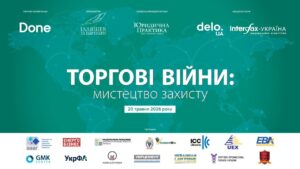
The path to the EU, border closures, changes in export structures, and new customs regulations—this is the reality in which “the art of defending” one’s own trade interests has become a key skill for business survival. How are the rules of the game changing for Ukrainian businesses in global markets? What can be expected from trade with the EU in the coming years? And how can one protect their interests amid ever-increasing competition and the emergence of new barriers?
The “Ukrcement” Association, in partnership with the law firm Ilyashev & Partners and the publishing house Yuridichna Praktika, invites you to discuss the most pressing issues in international trade at the conference “Trade Wars: The Art of Defense.”
Program and registration: https://tradewar2026.ticketforevent.com
Date: May 20, 2026.
Time: 10:00 a.m.–1:00 p.m. (registration begins at 9:30 a.m.).
Venue: Kyiv (the venue will be communicated to registered participants the day before the event)
Owners, top managers, heads of legal departments, and heads of foreign economic activity departments of major Ukrainian and international companies are invited to participate.
Participation in the event is free of charge, subject to additional confirmation of registration from the organizers. Space is limited. The organizers reserve the right to refuse registration if the capacity limit is reached.
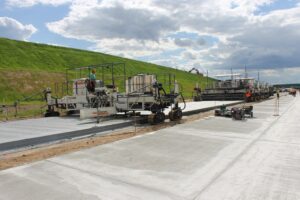
The Ukrcement Association advocates for the wider use of cement concrete technologies in road construction in Ukraine and calls on communities to prepare standard solutions and a package of regulatory documents for the rapid restoration of damaged sections, the association announced following the results of the scientific and practical seminar “Cement-concrete roads: technologies, standards, prospects,” which took place on February 11 in Kyiv.
In her report, Lyudmila Krypka, executive director of the Ukrcement association, emphasized the cement industry’s ability to fully supply the domestic market with cement. She also highlighted the transition to European standards in products and regulation, in particular GOST EN 197-1 and the requirements for declarations and the responsibility of participants in the construction product supply chain.
According to Ukrcement, in the context of infrastructure restoration, concrete technologies can be a practical tool for communities both for the construction of individual sections and for road repairs, and the immediate task is to develop standard designs, materials, and technologies that allow restoration work to be carried out in many cases without the involvement of large road companies.
“The most difficult times are times of change. It is important to use these changes for the benefit of the country’s development,” Krypka emphasized, stressing the importance of implementing best practices using domestic building materials that create added value for the economy.
As noted by the association, the development of cement-concrete roads is of strategic importance and could become one of the drivers of the country’s recovery and the formation of a sustainable European-level infrastructure.

Ukrainian cement producers require equal conditions with their European counterparts in the implementation of the Carbon Border Adjustment Mechanism (CBAM) from 2026.
“While EU companies have support and equal conditions for investments in decarbonization, Ukrainian companies do not have such support. During martial law, the cost of CBAM certificates puts Ukrainian exports at a disadvantage compared to EU producers and creates additional obstacles for Ukrainian enterprises, exacerbating the negative consequences of the war,” said Lyudmila Krypka, executive director of the Ukrcement Association, on Wednesday during the event “CBAM and the readiness of Ukrainian industry for decarbonization: from methodology to competitive advantage,” organized as part of the STEP IN 2 EU program.
She reminded that Ukraine does not have developed financial markets that would allow it to attract funding for decarbonization. Instead, there are challenges and barriers, one of which is the war and constant round-the-clock rocket and drone attacks, destroyed energy facilities, including generation, staffing problems due to mobilization and emigration, and much more.
As reported, on December 17, 2025, the European Commission (EC) took measures to strengthen the effectiveness of the Carbon Border Adjustment Mechanism (CBAM). From 2026, updated, stricter benchmarks will come into force and a surcharge will be applied to the default values: 10% (2026), 20% (2027), and 30% (from 2028).
According to the expert, to ensure transparency and meaningful participation of all relevant stakeholders, it is important to review the default values as early as 2026, as the values proposed for Ukraine range from 1,500 to 1,794, which are several times higher than the actual figures.
Thus, actual CO2 emissions in the 1990s amounted to 0.956 kg, provided that a larger number of enterprises in the industry (up to 15 enterprises) were operating and production amounted to 17-18 million tons; from 2017 to 2020, emissions decreased from 891 to 879 kg (production decreased from 6,333 to 7,419 thousand tons, the number of enterprises was 10). According to forecasts, in 2025, emissions will be around 0.700 kg, not 1,500.
“The production of 1 ton of cement clinker emits approximately 850 kg of CO2. When using alternative fuels, 90% of CO2 emissions will amount to 672 kg/1 ton of clinker,” Kripka gave an example.
Unfortunately, she added, the alternative fuel market in Ukraine is not working, and Ukrainian cement producers buy it in the EU. Over the past two years, cement companies have been using 20 to 30% alternative fuels, with the goal of increasing the share of alternative fuels to 40% by 2030.
Ukrcement has made a number of proposals to level the playing field for Ukrainian companies subject to the ETS. First of all, our producers should receive free quotas similar to those in the EU; the tax should be applied to actual emissions rather than default values; Ukrainian legislation needs to be harmonized with EU rules on biomass taxation. It is also necessary for producers to be able to use tax “environmental” payments to decarbonize their own enterprises. Cooperation with European verifiers and training courses on CBAM calculation are important.
The Ukrcement Association was established in January 2004 through the reorganisation of the Ukrainian Concern of Cement Industry Enterprises and Organisations “Ukrcement”. The association has four members, comprising eight enterprises that meet 100% of the domestic Ukrainian market’s cement needs.



