

Russian troops carried out about 1,200 combined strikes on Ukraine’s railway infrastructure in 2025, which is one of the three key problems of the season for agricultural exports, said Valery Tkachov, deputy director of the commercial department of Ukrzaliznytsia (UZ).
“The most painful thing for us is that our employees are dying under enemy fire. More than 1,000 railway workers have already been killed during the full-scale war. This is the most difficult challenge, which cannot be measured only by technical indicators,” he said at the Forbes Agro conference in Kyiv on Thursday.
Tkachov named security as the first systemic problem. Last year alone, the enemy carried out 1,200 attacks on railway energy facilities, rolling stock, and control centers in an attempt to completely stop the movement of export cargo.
Tkachov named the second critical problem as restrictions on the external power supply to the network due to strikes on the energy sector, which directly reduces the throughput capacity of key trunk lines. In particular, after the shelling of the Kolosivsky passage in the south and the Kamyanets-Podilsky junction in the west, Ukrzaliznytsia was forced to switch to the use of diesel locomotives on a massive scale.
This leads to a significant slowdown in train traffic, restrictions on train weight, and an increase in transportation costs due to the high cost of diesel fuel compared to electricity. The third set of problems in the work of Ukrzaliznytsia, according to Tkachov, covers economic and political barriers.
This particularly concerns restrictions on western land crossings from neighboring countries and low demand for Danube ports. Despite the availability of alternative routes through Reni and Izmail, agribusiness still prefers the ports of Greater Odessa, which creates an uneven load on the infrastructure.
The deputy director of the UZ department assured that the railway network remains stable, but its efficiency is still critically dependent on the stability of the power system and the security situation on the southern approaches to sea terminals.
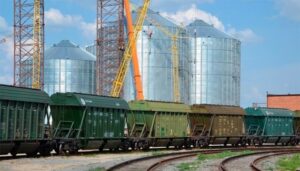
The Transport Logistics Center (TLC) branch of Ukrzaliznytsia (UZ) will hold regular auctions on February 20 in the Prozorro.Prozori system for the distribution of grain cars at the end of February – beginning of March 2026, the company’s press service reported.
According to the report, 300 grain cars will be put up for auction. The lots are formed as follows: 20 lots of 5 cars, 10 lots of 10 cars, and two large lots of 50 cars, which can be used for both route and carload shipments.
The auction will be held in the format of an English auction (price increase – IF-U). The initial rate for the use of a car is UAH 2,000/day (excluding VAT).
The period for providing cars for loading is from February 25 to March 5, 2026. The unloading area is not limited, but loading from stations where conventional prohibitions are in force is prohibited.
Ukrzaliznytsia emphasized that from the third decade of February, priority in providing cars will be given to applications purchased through Prozorro.Sales. Regular applications will be satisfied on a residual basis.
As reported, Ukrzaliznytsia has intensified auction sales due to increased demand for freight transportation in the agricultural sector.

Ukrzaliznytsia (UZ) has sent its first container train along the Lviv–Fenishlitke (Hungary) route, according to the company’s press service.
According to the report, the project was implemented by a subsidiary of UZ Cargo Poland, a branch of the Lisky Transport Service Center, and a private Hungarian logistics terminal.
Sun Smart Logistics technologies and equipment and modernized platforms of the Lisky Transport Service Center were used for loading on 1520 mm gauge tracks. At the terminal in Fenishlitke, semi-trailers will be reloaded using R2L technology onto T3000 platforms for further travel on 1435 mm gauge tracks. Thanks to the modernized platforms and special technologies, the semi-trailers were loaded without the use of tractors and cranes.
“This trip confirms the efficiency and versatility of containerized transportation of semi-trailers of any type between Ukraine and European Union countries using 1520 and 1435 mm gauges,” Ukrzaliznytsia concluded.

Ukrzaliznytsia received 2,000 tons of high-tech R-65 rails from Japanese manufacturer Nippon Steel, with another 1,000 tons expected to be delivered by the end of January, according to a press release from the Ministry of Community and Territorial Development on Thursday.
According to the release, this cooperation was made possible within the framework of the third phase of the emergency recovery program through the Japan International Cooperation Agency (JICA).
“This was the result of systematic interaction and successful agreements with Japanese partners on the part of the Ministry in early 2025. Ukraine currently does not have its own rail production, so attracting partner support is necessary and crucial for the functioning of the Ukrainian railway,” the ministry emphasized.
It is noted that the cooperation currently involves the transfer of 3,000 tons of rails for a total amount of about $4 million.
The ministry specified that railway workers use mobile complexes to weld rails directly on the tracks and thermally join joints, resulting in the creation of a so-called “velvet track” without joints, which increases its service life and ensures smooth train movement.
“We are sincerely grateful to the Government of Japan for its strategic support, which allows us not only to maintain the network, but also to carry out major repairs in accordance with the highest international standards, ensuring reliable connections even in the most difficult times,” said Marina Denisyuk, Deputy Minister of Community and Territorial Development, in a press release.
The Ministry of Development recalled that support from the Japanese government and JICA has continued since the beginning of the full-scale invasion by the Russian Federation. In particular, during this period, almost 25,000 tons of rails have been delivered, which has made it possible to renovate more than 193 km of tracks on strategic routes of the Lviv, South-Western, Dnipro, Southern, and Odesa railways.
In addition, railway workers also received 24 units of construction and loading/unloading equipment from Komatsu, Toyota, and Sonalika, 22 of which were track equipment, and the total cost of equipment and materials supplied during the first two phases of the program exceeded $42 million, the agency noted.
“The delivered equipment, namely wheel excavators, loaders, and bulldozers, has already worked more than 13,000 motor hours on emergency repair work,” the agency emphasized.

Ukrzaliznytsia JSC has announced changes to train schedules, including suburban trains, starting January 22, due to the need to minimize delays caused by increased traffic on the Fastiv section, which was damaged by Russia in December.
According to the company’s statement, changes have also been made to certain routes for safety reasons.
Ukrzaliznytsia specified that in total, more than 100 suburban train schedules throughout Ukraine have been revised, which should “unload” the most intense sections and reduce delays.
The company noted that trains will run according to the updated schedules starting on the night of January 21-22 and urged passengers to pay attention to the date of the schedule when choosing a flight – “дійсний з 22.01.2026” (valid from 22.01.2026).
Ukrzaliznytsia also warned that until the new schedules come into effect, delays of 1-2 hours are possible, depending on the intensity of traffic on the Fastiv section.
The company recommends checking the current suburban train schedules on the South-Western Railway website.
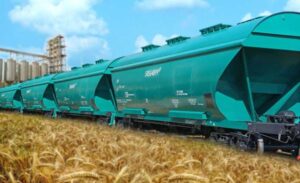
In January 2026, Ukrzaliznytsia will raise prices for most types of rolling stock, with only the cost of transportation by grain carriers and container platforms remaining unchanged, corresponding to the December rates of UAH 1,250/day and UAH 203/day (excluding VAT), respectively.
According to the tariffs published on the company’s website, in January 2026, compared to December 2025, the cost of tank cars for transporting food products will increase from UAH 738/day to UAH 938/day (excluding VAT), mineral carriers – from 203 UAH/day to 450 UAH/day (excluding VAT), and semi-cars – from 1350 UAH/day to 1450 UAH/day (excluding VAT).
Ballast and cement tankers will increase in price by 100 UAH/day, to 703 UAH/day and 1,300 UAH/day (excluding VAT), respectively.
The cost of fitting platforms will also change: 40-foot platforms will increase from 750 UAH/day to 900 UAH/day (excluding VAT), 60-foot platforms — from 850 to 900 UAH/day, and 80-foot platforms will increase from 1250 to 1450 UAH/day (excluding VAT).
The cost of tanks for transporting liquefied gas will increase by 400 UAH to 603 UAH/day (excluding VAT) in January.
Only flatbed timber trucks will become cheaper by 200 UAH, to 1360 UAH/day (excluding VAT).



