

Vegetable oils accounted for 23% of Ukrainian exports in 2024, 60.9% of which went to European countries, according to the Ukrainian Agribusiness Club (UAC).
Analysts noted that 15% of vegetable oil exports from Ukraine were delivered to the Middle East, 14.8% to Southeast Asia, 4.8% to Africa, 3.1% to Asia (other countries), and 1.4% to America.
At the same time, sunflower oil accounted for 89.0% of exports, soybean oil for 5.5%, rapeseed oil for 4.2%, and others for 1.3%.
The UACB noted that sunflower oil accounts for the lion’s share (89%) in this category, which confirms Ukraine’s status as a key player in the global market for this product, while the share of soybean and rapeseed oils is also gradually increasing.
After record revenues of $7.04 billion from oil exports in 2021, even in the context of full-scale war, export revenues consistently exceed $5.6 billion annually. The 2024 figure ($5.76 billion) confirmed that this sector has not only survived but also successfully adapted to the new realities, remaining a reliable pillar of the economy, the business association emphasized.
At the same time, unlike raw material groups, vegetable oils as a processed product have a more diversified geography. Although Europe remains the leader, the total share of Asian and Middle Eastern countries exceeds 30%, which indicates the demand for Ukrainian oil in distant markets. The global demand for Ukrainian oil is confirmed by the overall improvement in export logistics and the increase in the number of importing countries, which rose to 139 in 2024 (compared to 133 in 2023).
“Vegetable oils remain a significant driver of Ukraine’s foreign trade among value-added products. One of the critical factors for exports remains the issue of the availability of logistics routes,” the association emphasized.
The UACB recalled that in 2024, the deep-water ports of the Black Sea regained their dominant position, accounting for almost half of all exports (compared to less than 15% in 2023), but alternative export channels—the Danube ports and the “Solidarity Routes”—continue to play a significant role, accounting for over 45% of shipments.
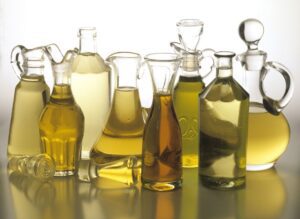
India, the world’s largest importer of edible vegetable oils, expects to receive the first batches of sunflower oil from Ukraine from September after a five-month break caused by the Russian invasion and the blockade of Ukrainian seaports.
According to Bloomberg’s website, citing Indian agricultural trader Sandip Bajoria, India may receive 50-60 thousand tons of sunflower oil in September, as Ukraine is going to open some corridors of the Black Sea for the export of agricultural products from the ports of Odessa and Chernomorsk.
“We have begun to receive offers for August deliveries, but everything will depend on the availability of ships. Ukraine has sufficient reserves of oilseeds for processing,” the trader is quoted as saying.
Sunflower oil imports to India from Ukraine have been suspended since April as the Russian invasion disrupted the country’s trade, he said.
“The Indian government’s decision to allow duty-free imports of 2 million tons of sunflower oil annually this fiscal year and next will support demand. India purchased 1.89 million tons of crude sunflower oil in the year ending October, with Ukraine supplying almost 74%, and Argentina and Russia – about 12%,” the publication clarified in the message.
As reported with reference to the Deputy Minister of Economy – Trade Representative of Ukraine Taras Kachka, in the 2021/2022 marketing year (MY, July-June), the country exported 61.52 million tons of grain and oilseeds worth $22.2 billion.
During this period, foreign markets were supplied, including 4.3 million tons of sunflower oil worth $5.8 billion, 3.4 million tons of sunflower meal worth $960 million, 421 thousand tons of soybean meal worth $230 million, 1.1 million tons of soybeans for $641 million, 2.7 million tons of rapeseed for $1.7 billion and 1.09 million tons of sunflower for $616 million.



