
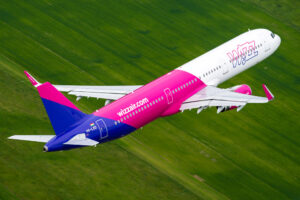
According to “Serbian Economist”, Wizz Air will open an operational base at Pristina International Airport in November 2026, stationing one Airbus A321neo aircraft with a capacity of 239 passengers there. The company plans to launch three new routes from Pristina.
Wizz Air has been operating flights from Pristina since 2017. The opening of a full-fledged base means that the aircraft and crew will be permanently based at the airport.
The Belgrade base is under threat
At the same time, Wizz Air continues its dispute with Serbian aviation authorities over changes to the rules governing foreign carriers.
In March 2026, the Serbian Civil Aviation Directorate adopted amendments to the regulations governing the issuance of permits to foreign airlines for international commercial operations.
According to Wizz Air’s interpretation, the new rules will not allow EU-registered carriers to maintain their current model of basing aircraft and crews in Belgrade, under which work shifts and flight rotations begin and end in Serbia.
Wizz Air Communications Director András Rado stated in June that unless the rules are changed, the company will be forced to close its base at Belgrade Airport in November. He emphasized, however, that the carrier does not want to leave.
Serbia’s Civil Aviation Directorate rejected the accusations, stating that no carrier is prohibited from operating flights between Serbia and EU countries. According to the regulator, the amendments do not restrict the right to operate flights but rather clarify the rules, which are the same for all foreign airlines.
As of mid-July, no final decision had been reached.
The closure of the Belgrade base would not necessarily mean a complete halt to Wizz Air’s flights to Serbia. The company could theoretically continue some flights using aircraft based in other countries. However, such a model typically results in fewer destinations, less convenient schedules, and limited opportunities to increase flight frequency.
Serbia does not recognize Kosovo’s independence, declared in 2008, and officially considers it an autonomous province of Kosovo and Metohija within the Republic of Serbia.
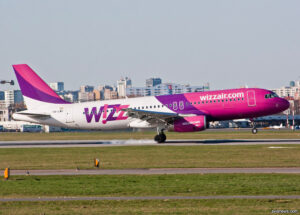
A revision of EU air passenger rights regulations could pose a serious challenge to the business model of Wizz Air and other ultra-low-cost carriers, which generate profits not only through base fares but also through a wide range of additional paid services.
European institutions are discussing updates to rules related to compensation for flight delays and cancellations, passengers’ rights to carry-on baggage, seating arrangements for families, transparency regarding additional fees, and the handling of complaints. For traditional airlines, this means an increased compliance burden, but for ultra-low-cost carriers, the potential impact could be greater, as a significant portion of their revenue comes from ancillary revenue—baggage fees, seat selection, priority boarding, rebooking, and other services.
Wizz Air is one of the most prominent examples of this model in Europe. The company’s base fare typically includes a minimal set of services, while many aspects of the trip are paid for separately. Wizz Air’s official website states that passengers may bring one carry-on bag measuring up to 40 x 30 x 20 cm on board free of charge, provided it fits under the seat. Larger carry-on bags, checked baggage, seat selection, and a range of other services are subject to additional fees.
It is this business model that allows low-cost carriers to offer low base fares while simultaneously increasing average revenue per passenger through additional services. If the EU introduces stricter requirements for free carry-on baggage, seating children next to accompanying adults, or limits certain fees, a portion of airlines’ revenue could come under pressure.
The key debate centers on the revision of Regulation (EC) No 261/2004, which governs compensation and assistance to passengers in the event of denied boarding, flight cancellations, and long delays. According to the European Parliament’s analytical service, the EU Council proposed in 2025 to change the compensation thresholds, specifically to set longer delay thresholds for payments, while the European Parliament advocates for maintaining stricter passenger protections and additional rights, including stricter rules on carry-on baggage and a ban on unfair ancillary charges.
For Wizz Air, the risk lies in the fact that the regulator could affect two pillars of the business model at once: revenue from ancillary services and operational discipline. Ultra-low-cost carriers operate with high fleet load factors, tight schedules, and rapid aircraft turnaround. Any new requirements regarding passenger service, compensation, connections, baggage, or seating could increase costs and reduce flexibility.
The issue of carry-on baggage could become particularly sensitive. Currently, many European low-cost carriers distinguish between a small bag stored under the seat and a full-sized cabin bag placed in the overhead compartment.
If the new version of the rules establishes passengers’ right to a larger allowance of free carry-on luggage, this will cut into one of the usual sources of additional revenue. Additionally, airlines may face an operational challenge: the cabins of narrow-body aircraft simply lack the physical space to accommodate full-sized carry-on luggage for all passengers.
The second sensitive issue is seating families together. If airlines are required to seat children next to their parents or accompanying adults for free, this will limit the monetization of seat selection. For passengers, this will be an improvement in service, but for low-cost carriers, it will mean a loss of revenue from seat selection.
The third area is compensation for delays and cancellations. The current EC261 regulation provides for payments ranging from 250 to 600 euros depending on the flight distance under certain conditions. Wizz Air explicitly lists these compensation amounts under EC261 on its website.
Airlines and industry associations warn that expanding passenger rights could significantly increase their costs. According to estimates cited in industry discussions, the current EC261 regime already costs European carriers approximately €8 billion per year, and expanding the requirements could increase this amount.
However, for passengers and consumer organizations, the argument is the opposite: the European air travel market has become more complex, and many fees and restrictions have become opaque. From this perspective, tightening the rules should not destroy the low-cost model, but rather make it more transparent—so that the final ticket price is clearer from the very beginning of the purchase.
For the markets of Central and Southeastern Europe, potential changes are particularly important. Wizz Air holds a strong position in Hungary, Romania, Poland, Serbia, North Macedonia, Albania, Bosnia and Herzegovina, and other countries in the region. For many airports and passengers, the company has become a key provider of affordable international flights. Any change in the low-cost carrier economy could affect flight frequency, prices, and route availability.
On the other hand, pressure on Wizz Air does not necessarily mean abandoning the current model. The company can adapt by raising base fares, introducing new package deals, optimizing schedules, revising baggage policies, digitizing claims processing, and increasing the share of direct sales. Low-cost carriers have already gone through similar regulatory cycles and typically responded not by exiting the market, but by adjusting their fare structures.
The key question for Wizz Air and other ultra-low-cost carriers is how far the EU will go. If the reforms are limited to clarifying compensation and procedures, the impact will be manageable. However, if the rules affect free baggage, family seating, and additional fees, the pressure on ancillary revenue could become significant.
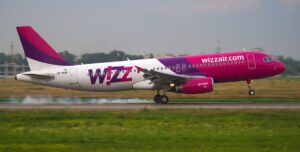
Low-cost airline Wizz Air has officially resumed operations at Suceava “Ștefan cel Mare” International Airport in north-eastern Romania, which is the closest international airport to Ukraine.
According to the airline’s statement, two Airbus A321neo aircraft are based in Suceava, and more than 130,000 seats have been added for the 2025/26 winter season. Starting this week, Wizz Air is launching seven new routes from Suceava to Bologna, Milan-Bergamo, Venice, Karlsruhe/Baden-Baden, Birmingham, Larnaca and Brussels-Charleroi, and from January 2026, it will increase the frequency of flights to Dortmund to four times a week.
With the new destinations, Wizz Air now offers 13 routes from Suceava to six European countries – in addition to the cities mentioned above, there are flights to Vienna, Rome, London, Memmingen and Milan Malpensa.
The airline positions Suceava as the closest international airport for Ukrainian passengers: the airport is located near the border, and there are numerous bus services from Chernivtsi, with the journey usually taking 2-3 hours, sometimes up to 1.5 hours with minimal queues at the Porubne-Siret checkpoint. Ticket prices start at around 400 UAH.
According to industry experts, the development of the base in Suceava expands the range of cheap flights to EU countries for Ukrainian residents while Ukrainian airports remain closed to regular flights due to the full-scale war.
The Hungarian low-cost airline Wizz Air has canceled all flights to Ukraine until March 27, the relevant information is contained in the airline’s booking system. According to it, the first flights available for sale to the company’s destinations from/to Ukraine are on Sunday, March 27.
Ticket holders before this date received an offer from the company to exchange them for flights with a later date, return the money or put them on an annual deposit for the purchase of tickets in the future with a 20% surcharge.
As reported, Wizz Air has suspended flights to Ukraine since February 24, when a full-scale Russian invasion of the country began. In addition, until March 4, the airline also refrains from flights to the capital of Moldova, Chisinau, instead performing them to the Romanian airport Iasi.
Wizz Air also said that it is working on the evacuation of its aircraft and employees with families from Ukraine.
According to Interfax-Ukraine, about three aircraft of the company remained at the Kyiv airport, which did not have time to take off from Kyiv on the morning of February 24.
Hungarian low-cost airline Wizz Air has canceled 20 destinations from Ukraine in the winter schedule due to existing demand for them.
“Some flights to/from Ukraine have been canceled due to existing demand, the company’s capacity will be directed to other routes of the network,” the company told Interfax-Ukraine on Wednesday.
Wizz Air also added that passengers whose reservations have undergone changes will receive a notification with options for a full refund of the ticket price or receiving a 120% refund of the original fare credited as WIZZ credit.
Earlier, the media reported that Wizz Air canceled some flights from all cities of Ukraine, where it operates flights – Kyiv, Lviv, Odesa, Kharkiv and Zaporizhia.
From Kyiv, from mid-January to March, Wizz Air will stop operating flights to Thessaloniki (from January 10 to March 9), Venice (from January 9 to March 11), Naples (from January 11 to March 27), Nuremberg (from January 9 to March 11) and Katowice (from 10 January to March 10). Flights from Lviv canceled to Milan (from January 14 to March 5), Naples (from January 10 to March 5), Rome (from January 10 to March 8), Vilnius (from January 10 to March 8), Memmingen (from January 10 to February 26), Bratislava (from January 11 to March 27) and Budapest (from January 17 to March 12). From Kharkiv – Rome (from January 13 to March 12), Vienna (from January 10 to March 8), and Dortmund (from January 4 to February 24). From Odesa – Abu Dhabi (from January 10 to February 9), and Budapest (from January 9 to March 26). From Zaporizhia – Wroclaw (from January 14 to March 27), Katowice (from January 15 to March 6), and Budapest (from January 11 to March 27).
Hungarian low-cost airline Wizz Air plans to hire more than 140 flight attendants in Ukraine over the next six months to operate at its bases in Lviv and Kyiv.
According to the company’s press service on Thursday, from November 5 to December 20, as part of the selection process for flight attendants, Wizz Air plans to organize Open Days in Kyiv, Lviv, Odesa, Kharkiv, Zaporizhia, Dnipro and Mykolaiv.
Earlier, Wizz Air signed an agreement of intent to cooperate with the National Aviation University of Ukraine in order to provide students with the opportunity to start a professional career after graduation.
As reported, Wizz Air plans to deploy seven more aircraft in Ukraine, increasing their total number to 11. Five new aircraft will be deployed in Kyiv (in addition to the three already based in the Ukrainian capital), two more aircraft will be supplied to a base in Lviv (in addition to one aircraft).
Wizz Air also announced the launch in 2021-2022 of twelve new destinations from Kyiv, nine from Lviv, three from Odesa and two from Kharkiv.



