
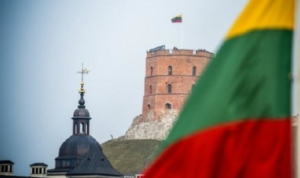
The Lithuanian government has approved a draft law providing for additional restrictions on the acquisition of real estate by citizens of Russia and Belarus near strategically important facilities, Open4Business reports, citing data from the Lithuanian authorities.
According to a proposal by the Lithuanian Ministry of Foreign Affairs, the restrictions should apply to real estate located near military training grounds and other facilities of importance to national security. The draft law materials refer to areas within a radius of up to 10 km from the relevant facilities.
A significant change is that the restrictions are proposed to be extended, among others, to citizens of Russia and Belarus who have a residence permit in Lithuania.
Currently, the country already restricts the right to acquire real estate for Russian citizens who do not have a temporary or permanent residence permit, as well as for legal entities whose beneficial owners are Russian citizens. An exception is provided for receiving real estate through inheritance.
The new draft law should expand the existing restrictions. Similar rules are proposed to be established for citizens of Belarus and legal entities associated with them, while Russians and Belarusians with a residence permit would additionally be restricted from acquiring real estate near facilities important to national security.
The Lithuanian authorities explain the initiative by the risks of hybrid threats, intelligence activities and possible surveillance of strategic infrastructure and military facilities.
The problem is of a fairly significant scale. According to data from Lithuania’s Centre of Registers published in February 2026, Russian citizens owned about 8.7 thousand real estate properties in which they controlled at least 50% of the ownership. Belarusian citizens owned another approximately 4 thousand properties.
Thus, taken together, citizens of the two countries own approximately 12.7 thousand real estate properties in Lithuania.
The highest concentration of such property is in major cities and their suburbs, as well as in border municipalities, including Visaginas and Šalčininkai.
The authorities are paying particular attention to real estate near strategic infrastructure. According to data cited by Lithuanian media with reference to the Centre of Registers, after the start of the full-scale war, 1,845 Russian citizens acquired real estate near airports, as well as within 10 km of military training grounds and power plants, of whom 364 had temporary residence permits.
At the same time, this does not mean a complete closure of the Lithuanian real estate market to all citizens of Russia and Belarus. The new additional restrictions are primarily tied to territories near facilities of interest to national security.
The draft law still has to be considered by the Seimas of Lithuania. If finally approved, the new rules are planned to apply from January 1, 2027.

According to Relocation, the Estonian government has approved a bill prohibiting citizens of Russia and Belarus from purchasing real estate if they do not have long-term resident status or the right of permanent residence in the country. If the bill is passed by parliament (the Riigikogu), the new rules will take effect on January 1, 2027.
The ban will apply throughout Estonia and will affect not only individuals but also companies from Russia and Belarus, as well as legal entities from other countries if their ultimate beneficial owner falls under the restrictions. The ban will cover apartments, land plots, building rights, and shares in real estate properties.
Tallinn cites national security concerns as the rationale for this initiative. The goal of the bill is to reduce the risks of real estate being used for intelligence activities, preparing sabotage operations, exerting influence, or establishing strongholds near strategic facilities. Interior Minister Igor Taro stated that the ban must not remain merely “on paper” and must not allow the restrictions to be circumvented through companies in Estonia or other EU countries.
However, the law will not be retroactive. Russians and Belarusians who already own real estate in Estonia will retain their property rights. Renting residential and commercial properties will also remain permitted. In certain cases, the government may issue a special permit for a purchase if the transaction does not conflict with the law’s objectives.
According to data from the Estonian Ministry of the Interior, as of January 9, 2026, there were 7,797 Russian citizens and 1,476 Belarusian citizens in the country with temporary residence permits—a total of 9,273 people. It is this group, if they do not have long-term resident status or permanent residence rights, that may be directly affected by the ban. At the same time, 70,237 Russian citizens and 1,190 Belarusian citizens held long-term residence permits and are to be exempt from the restrictions.
There is another aspect to consider—existing property owners. As of April 2025, there were 36,952 Russian citizens and 896 Belarusian citizens among real estate owners in Estonia. However, their current properties will not be seized, so the ban primarily concerns new transactions.

Switzerland has expanded its sanctions lists targeting Russia and Belarus, partially aligning itself with the European Union’s 20th sanctions package, adopted in response to Russia’s ongoing war against Ukraine.
According to the Swiss government, the Federal Department of Economic Affairs, Education, and Research expanded the sanctions lists against Russia and Belarus on May 22.
An additional 115 individuals and entities have been subject to the new restrictions. Asset freezes and a ban on the provision of funds are being imposed on them. Individuals are also prohibited from entering Switzerland and transiting through its territory.
The Swiss government specified that the new sanctions apply, in particular, to individuals and organizations linked to the Russian military-industrial complex and the energy sector.
In the trade sector, Switzerland is imposing stricter export controls on an additional 60 companies, including entities in third countries. The aim of this measure is to prevent the supply of critically important goods to the Russian military-industrial complex.
Bern has also adopted some of the EU measures targeting Russia’s “shadow fleet.” The restrictions have been extended to 46 additional vessels, with bans on their purchase, sale, and the provision of services to them. At the same time, in accordance with the EU decision, previously imposed bans on 11 vessels have been lifted.
In addition, Switzerland has imposed a ban on transactions involving two Russian ports and one port in a third country that are used for the transport of Russian petroleum products.
At the same time, Switzerland has not yet included seven companies from a third country, which were mentioned in the EU decisions, on its sanctions list. Bern stated that operational measures are being applied to prevent the circumvention of sanctions.

The Estonian Ministry of Internal Affairs has announced its readiness to review and, if necessary, tighten procedures for issuing temporary residence permits to citizens of Russia and Belarus. This was announced by Estonian Interior Minister Igor Taro in response to a parliamentary question about how individuals with an “unclear past” could obtain temporary residence in the country.
According to the Estonian Ministry of Internal Affairs, as of January 9, 2026, there were 7,797 Russian citizens and 1,476 Belarusian citizens with temporary residence permits living in the country (a total of 9,273 people).
Taro stressed that temporary residence permits are issued “in strict accordance with the law” and include verification of compliance with the conditions and the absence of grounds for refusal, but the process remains subject to assessment “in each specific case.” The minister added that the ministry will conduct an additional assessment of the criteria and practice of issuing temporary residence permits to citizens of the Russian Federation and Belarus and, if necessary, will tighten them.
At the same time, at the end of January, the Estonian Ministry of Internal Affairs announced that it was preparing a bill that would prohibit Russian and Belarusian citizens without permanent/long-term resident status from purchasing real estate in Estonia, as well as restrict transactions through companies acting on their behalf, citing security concerns. The minister said he expects the law to be passed by the summer.

As part of its 19th package of sanctions, the European Union will impose a ban on transactions with five Russian credit institutions from November 12: Alfa Bank, MTS Bank, Absolut Bank, Zemsky Bank, and NKO Istina, according to an EU statement.
In addition, Belarusian Alfa Bank, Sberbank, VTB, Belgazprombank, BelVEB, as well as VTB’s subsidiary in Kazakhstan and VTB’s branch in Shanghai have been added to the EU sanctions list.
BAN, BANK, BELARUS, EUROPEAN UNION, RUSSIAN FEDERATION, SANCTION, TRANSACTION
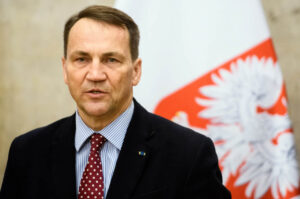
The Polish Ministry of Foreign Affairs has called on the country’s citizens to leave Belarus as soon as possible and refrain from any travel there. The ministry recommends that those already in Belarus leave “by available commercial or private means,” warning that if the situation worsens, evacuation may be difficult or impossible. This was announced at a briefing on September 5 by Polish Foreign Ministry spokesman Paweł Wroński; the relevant statements were reported by the Polish media.
According to Wronski, the Foreign Ministry “strongly discourages” travel to Belarus, “which is not a democratic country and is not friendly to the Republic of Poland,” and asks that the warning be taken very seriously. Polish media outlets indicate that citizens in Belarus are advised to leave immediately.
As noted by a number of publications, the heightened warning is related to the detention in Belarus of a Polish citizen, a Catholic monk whom Minsk accuses of espionage; the Polish side called this a “provocation” and announced consular support for the detainee. Against this backdrop, the Foreign Ministry issued a separate warning about the risks and reminded citizens of the need to strictly comply with local laws.
Earlier, Polish media outlets had already drawn attention to the restrictions and risks for Poles in Belarus, including the Foreign Ministry’s recommendation to leave the country by any means available and a warning that evacuation may not be possible in the event of a crisis.



