
In July–March of the 2025–2026 marketing year (MY), Ukraine exported 48,300 tons of wheat flour, which is 3% less than in the same period of the previous season, when shipments totaled 49,800 tons, the Ukrainian Flour Millers Association reported on Facebook.
The industry association noted that EU countries accounted for about 35% of exports, although in the previous season the European market’s share was significantly higher, reaching 44%.
The top five consumers of Ukrainian flour for the first nine months of the 2025/26 marketing year included Moldova, which imported 14,900 tons, Palestine – 9.2 thousand tons, the Czech Republic – 7.4 thousand tons, Israel – 4.4 thousand tons, and Spain – 4.2 thousand tons.
“Flour Millers of Ukraine” also pointed to an increase in wheat flour imports to Ukraine. Thus, during the reporting period, nearly 2.3 thousand tons of the product were purchased on foreign markets, which is 21% higher than the figure for the same period last year, when 1.9 thousand tons were imported.
CZECH REPUBLIC, FLOUR, ISRAEL, MOLDOVA, PALESTINE, SPAIN, Ukrainian Flour Millers
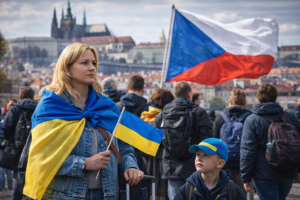
As of December 31, 2025, 1,131,197 foreigners were registered in the Czech Republic – 37,108 more than the previous year (+3.4%), according to data from the Ministry of the Interior and the statistical unit of the Czech Statistical Office, as cited by the information and analytical center Experts Club.
According to the Ministry of the Interior’s estimate, foreigners account for 10.38% of the country’s population (the calculation used a population figure of 10,897,178 as of September 30, 2025). This means that the “native population” (residents without foreign citizenship) amounts to about 9.766 million people (an estimate based on the difference between the figures).
The structure of legal residence at the end of 2025 included 343,876 people with temporary residence, 394,265 with permanent residence, and 393,056 registered under the temporary protection regime. The highest concentration of foreigners is recorded in Prague (32.4% of all registered foreigners) and in the Central Bohemian Region (14.5%).
Ranking: Top 10 nationalities among foreigners in the Czech Republic (31.12.2025)
| Rank | Country | Number of people |
|---|---|---|
| 1 | Ukraine | 612,953 |
| 2 | Slovakia | 125,280 |
| 3 | Vietnam | 69,685 |
| 4 | Russia | 37,524 |
| 5 | Romania | 21,287 |
| 6 | Poland | 17,631 |
| 7 | Bulgaria | 17,562 |
| 8 | Mongolia | 14,908 |
| 9 | Philippines | 14,530 |
| 10 | Hungary | 12,111 |

On January 16, 2026, the current President of the Czech Republic, Petr Pavel, visited the NGO “Feel” together with the Ambassador of the Czech Republic to Ukraine, Luboš Veselý, and with the participation of Vasyl Zvarych, Ambassador of Ukraine to the Czech Republic. The visit was aimed at familiarizing them with the practical results of supporting hearing rehabilitation programs for veterans in Ukraine.
The meeting took place in the format of informal communication with veterans — participants in the project “Can you hear? Plus. Plus.”, which is implemented by the NGO “Feel” with the financial support of the Czech Embassy. The project is a systematic program of comprehensive support for veterans and covers hearing aids, rehabilitation, and further support.
During the visit, the President of the Czech Republic spoke with two veterans, Vadym and his son Danylo Goncharenko, who received comprehensive support from the NGO “Vidchuy” as part of the project “Hear? Plus. Plus.” The meeting provided an opportunity to hear directly about their experiences and discuss the importance of hearing rehabilitation as a key factor in returning to a full and active life.
During the visit, special attention was paid to the approach of the public organization “Vidchuy” to comprehensive support for veterans, which combines hearing rehabilitation, individual selection of hearing solutions, and work with families.
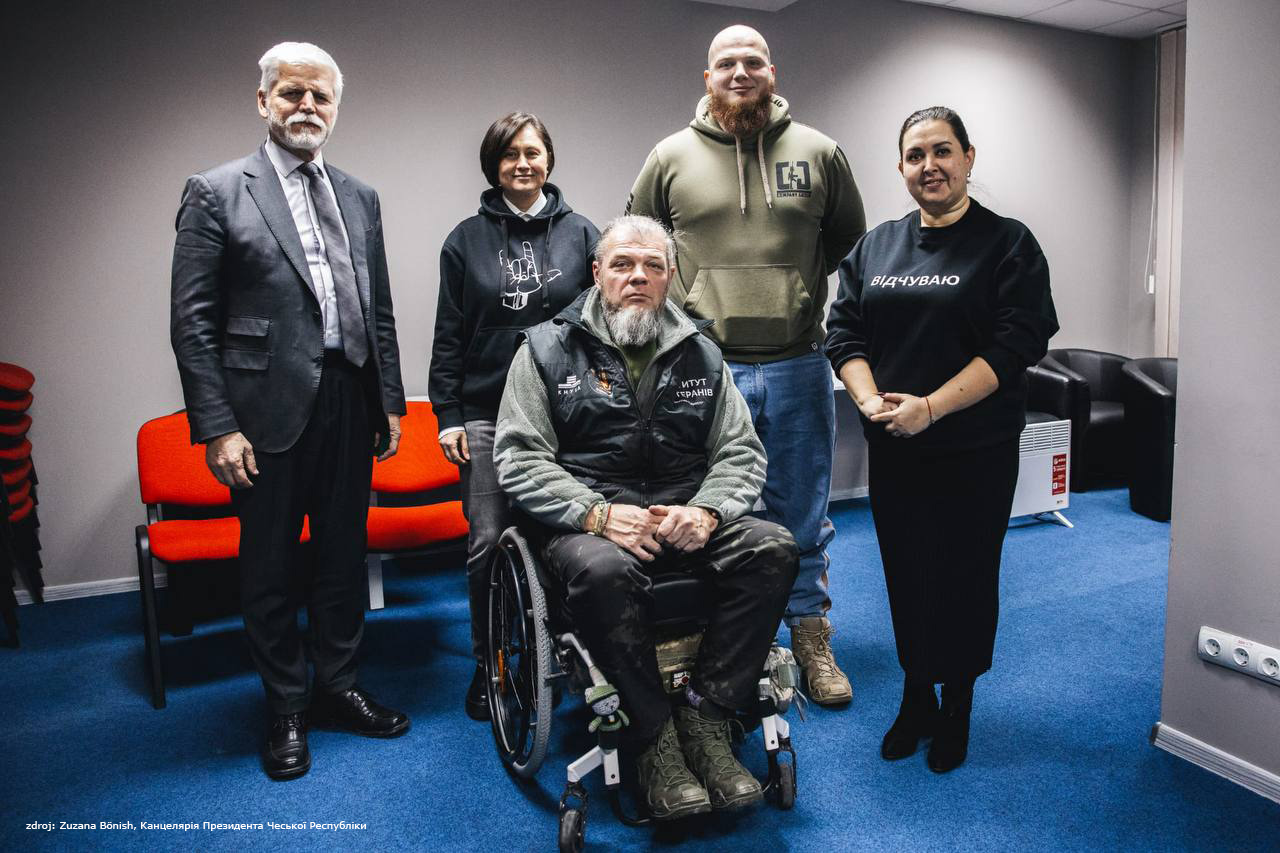
The founder of the NGO “Vidchuy,” Lyudmila Pyshna, and the CEO of the organization, Daria Gerasymchuk, thanked the Czech side for its consistent support of the “Chuyeš? Plus. Plus.” project and noted the importance of international partnership in the development of hearing rehabilitation and recovery programs in Ukraine.
The visit of the President of the Czech Republic confirmed solidarity with Ukraine and a shared vision of the need for long-term support for initiatives aimed at improving the quality of life of veterans.
The public organization “Vidchuy” is a Ukrainian non-profit organization that has been working systematically since 2011 in the field of hearing rehabilitation, support, and socialization of children and adults with hearing impairments, as well as their families.
The organization implements early intervention, hearing rehabilitation, hearing aid fitting, psychosocial support, and educational initiatives aimed at overcoming barriers and stigma against people with hearing impairments. A separate area of work is supporting veterans, in particular, restoring their hearing and accompanying them in the process of returning to active life.
The NGO “Vidchuy” cooperates with state institutions, international organizations, and donors to implement sustainable solutions in the field of rehabilitation and inclusion in Ukraine.
The project “Chuyeš? Plus. Plus.” was implemented by the NGO “Vidchuy” with the support of the Embassy of the Czech Republic in Ukraine.
The new Czech government intends to prepare guarantee and insurance programmes for companies planning to operate in the Ukrainian market in order to reduce the risks associated with project implementation and deliveries, said First Deputy Prime Minister and Minister of Industry and Trade of the Czech Republic Karel Havlíček.
Havlíček noted that Ukraine was previously among the Czech Republic’s five largest trading partners outside the EU, and, in his estimation, mutual trade is showing signs of recovery after a decline during the war. He stressed that the state can play a practical role in helping businesses participate in projects in the energy sector, transport infrastructure and, in particular, the construction of hospitals.
According to the official, teams from both countries are already working on economic contacts, initially online, followed by face-to-face meetings between business representatives and relevant government agencies.
As reported, the new Czech government headed by Andrej Babiš was sworn in on 15 December 2025.
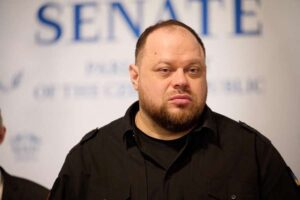
The Chairman of the Verkhovna Rada, Ruslan Stefanchuk, considers the statements made by the Speaker of the Chamber of Deputies of the Czech Parliament, Tomio Okamura, against providing weapons to Ukraine to be an example of ignorance and cynicism.
“Tomio Okamura’s New Year’s address is a striking example of ignorance, manipulation, and cynicism. By once again insulting Ukraine and Ukrainians, he is actually harming and discrediting the Czech Republic and the Czech people, who remain on the side of dignity and justice, on the side of Ukraine,” Stefanchuk wrote on Facebook on Friday.
According to him, Ukraine is grateful to the great Czech people and their worthy representatives for all their help and support in difficult times.
In Stefanchuk’s opinion, the statements of the Czech speaker are exclusively his personal position, not the position of the Czech parliament and the Czech people.
“I am convinced that the harshest assessment of Okamura’s words will be given by the Czechs themselves — and, of course, by history, in which his name is unlikely to be preserved. And we will definitely find out whether he was a useful idiot or an FSB agent,” the speaker of the Ukrainian parliament emphasized.
According to Česke noviny (CTK), Speaker of the Chamber of Deputies Tomio Okamura (SDP) “once again spoke out on social media against providing weapons to Ukraine.”
“I believe that our republic will jump off the Brussels train, which, despite warnings from the US government, is heading towards World War III… I understand that it is profitable for the West when we pay Western arms companies for ineffective weapons that the Russians will neutralize before they even reach the front,“ CTK quotes the Speaker of the Chamber of Deputies as saying.
”Money is flowing in all directions, and everyone is getting something out of this business. Western companies and governments, as well as Ukrainian thieves around Zelensky’s junta, who are building toilets out of gold… Let them steal, but not from us, and let there be no such country in the European Union,” CTK quotes a fragment of Okamura’s speech.
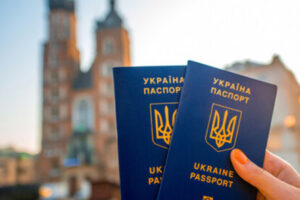
In September 2025, there was an annual peak in the granting of temporary status to Ukrainian citizens in European Union countries, according to Eurostat.
“In October 2025, EU countries issued 74,175 new decisions on granting temporary protection. This is the second highest monthly figure in 2025 after the peak recorded in September (79,525). These high figures are the result of a decree by the Ukrainian government, adopted at the end of August 2025, which grants men aged 18 to 22 inclusive the right to leave Ukraine without hindrance,” the report says.
As of October 31, 2025, Ukrainian citizens accounted for more than 98.4% of those who received temporary protection in the EU. Adult women accounted for 43.8% of those who received temporary protection. Minors accounted for almost a third (30.8%), and adult men for just over a quarter (25.5%) of the total number
. As of October 31, 2025, a total of 4.3 million non-EU citizens who fled Ukraine had temporary protection status in the EU. Compared to the end of September 2025, the total number of persons from Ukraine under temporary protection decreased by 6,170 (-0.1%).
The EU countries that received the largest number of persons from Ukraine under temporary protection were Germany (1,229,960 persons; 28.6% of the total number in the EU), Poland (965,005; 22.5%), and the Czech Republic (393,005; 9.1%).
CZECH REPUBLIC, GERMANY, POLAND, TEMPORARY PROTECTION, UKRAINIANS



