
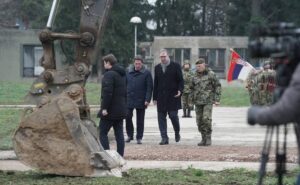
According to the Serbian business publication Parametar, construction of the first phase of a new plant to manufacture electric motors for drones is nearing completion in the village of Kotraža near Lučani. The equipment has already been delivered, some employees have been hired and are undergoing training, and production is expected to begin in early October.
In the first phase, the plant is expected to employ about 50 people; after the completion of all three phases, the workforce will grow to 60–70 employees. Earlier reports mentioned the possibility of expanding the workforce to 150 employees. The plant’s projected production capacity is up to 40,000 motors per month.
Businessman Milenko Kostić stated that the idea to establish the production facility came from Želko Mitrović. For the small town of Dragacheva, the project is significant not only from a technological standpoint: the plant is effectively being created as a new industrial employment hub in a rural area.
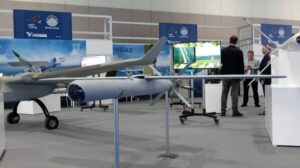
According to the “Serbian Economist,” a new plant for assembling Israeli-designed military drones has been built in Serbia. According to Aleksandar Vučić, the plant will employ about 100 people, and its products are intended for both the Serbian Armed Forces and the armed forces of other countries.
Journalists were not allowed inside the plant.
Vucic attributed this to the confidentiality of the production process. Some of the models being produced were shown only in a video he released.
At the same time, the current plant is intended to be only the first phase of cooperation with Israel. Vucic stated that he expects to open at least three more similar plants in Serbia. He named areas near the Lajevci and Niš airports as potential locations for the new production facilities.
Earlier, an investigation by BIRN and Haaretz reported that Serbia’s partner in the project is Elbit Systems, Israel’s largest defense company. According to the journalists, Elbit is set to hold a 51% stake in the joint venture, while the Serbian state-owned company Yugoimport-SDPR will hold 49%.
The plan is to produce both drones for close-range missions and more sophisticated aircraft for long-range flights. Elbit and SDPR have not publicly disclosed details of the project.
Serbia is gradually building its own drone manufacturing cluster by bringing together local defense companies with the technologies of foreign partners. Vučić stated that the project’s goal is to strengthen the capabilities of the Serbian army while also expanding exports of military products.
Ekipazh, a window manufacturer that currently ranks among the top three largest producers of PVC and aluminum windows and doors in Ukraine, plans to build a fourth plant in Odesa and increase its market share from 9–10% to 16% as part of its 2026–2031 development strategy, the company’s CEO and co-owner, Sergey Teplitsky, told the “Interfax-Ukraine” news agency.
“We have set ourselves an ambitious goal: to become the No. 1 manufacturer in Ukraine and confidently enter the European Union markets. We plan to achieve this through annual investments of 150 million UAH in production development and innovation—including our own tempering furnace and the production of tempered and triplex insulated glass units, seamless welding of laminated profiles, sliding systems, and new aluminum profile systems,” Teplitsky noted.
Currently, the company owns three plants: one in Zlatopol (Kharkiv Oblast) with an area of 21,000 square meters, one in Khmelnytskyi with an area of 42,000 square meters, and one in Brovary with an area of 9,000 square meters, as well as a separate facility for manufacturing double-pane windows. The total area of production facilities is 72,000 square meters. The main products are metal-plastic windows and doors, all-glass structures (tempered glass, triplex for interior partitioning and large facade glazing), as well as aluminum structures. Across its 21 production lines, the company is capable of manufacturing up to 4,000 units per day. By the end of 2025, 365,000 units had been manufactured, which is 4.3% more than in 2024.
Capital investments from 2013 to 2026 in low-value non-current tangible assets totaled approximately 27 million UAH, while investments in fixed assets amounted to 874 million UAH.
According to Teplitsky, all of the company’s profits are reinvested in development; given the security situation, a smaller portion of the funds is directed to the Kharkiv facilities, while the majority goes to Brovary and Khmelnytskyi. This involves not only new equipment but also, for example, energy independence. Specifically, solar power systems with a total capacity of about 1 MW have been installed on the roofs of the buildings, and the company plans to install an equal amount. The company also considered the possibility of installing a cogeneration plant—they prepared technical specifications, selected a plot of land, and assessed the conditions together with gas suppliers.
“If we decide to go ahead, we can install it in two to three months. The estimated investment is over $1 million, with a payback period of about six years,” Teplitsky said.
The strategy through 2031 calls for the construction of a fourth plant in the south of the country; the company is currently in the process of selecting a site. According to Teplitsky, the company is looking for sites in the Odesa region with an area of at least 5 hectares and a capacity of at least 1 MW of electricity; the future plant will be able to produce about 25,000 windows per month, with the potential for expansion. The estimated investment ranges from 600 to 700 million UAH, funded through a combination of the company’s own resources and loans. The company has had positive experience participating in the government’s “5-7-9” program and is basing its plans in part on that experience.
In recent years, overall window sales in Ukraine have declined significantly (from 5.2 million windows in 2021 to approximately 3.5 million last year), which is attributed to a decrease in the number of active real estate development projects. Despite this trend, the company reported a 28% increase in sales in 2026. This was achieved through investments in new technologies, a shift toward more affluent customers (middle-class and above), and the expansion of exports—measures that will help diversify risks and ensure stability and sustainability during wartime.
The company began its export operations in 2023, and by 2025, export revenue had reached approximately EUR2 million across more than 20 countries. Weekly shipments have already been established to four countries (Italy, Spain, the U.S., and Lithuania), and exports are also being made to Moldova, Poland, the Czech Republic, Slovakia, Hungary, Romania, Latvia, Estonia, Germany, the Netherlands, Austria, Switzerland, France, Slovenia, Croatia, and the UAE. The focus of export development over the next five years will be on EU countries. The company’s future plans include increasing the share of exports so that it exceeds domestic sales, developing its own brand, expanding production of tempered and laminated insulated glass units and sliding systems, and developing its aluminum division with new Procural profile systems and its own EKIPAZH AluLight line.
According to YouControl, Ekipazh PE was founded in 2000, with a registered capital of 101,251,145 UAH. At the end of the first quarter of 2026, net revenue from product sales amounted to 405,732,000 UAH, which is 3% more than during the same period last year, while net profit was 3,847,000 UAH (up 2%).
The ultimate beneficiaries are Sergey and Mikhail Teplitsky.
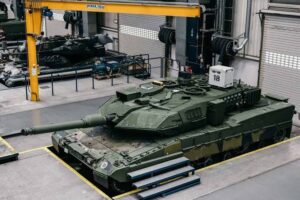
The Lithuanian defense contractor UAB Lithuania Defence Services has signed a contract with the construction company YIT Lietuva for the construction of a tank assembly and repair plant within the Kaunas Free Economic Zone, Lithuanian media reported on Monday.
“Construction is scheduled to begin in August of this year and be completed in November 2027,” the report states.
The first tank assembled in Lithuania is expected to roll off the plant’s assembly line in late 2028.
“The 13,000-square-meter plant will become one of the most important elements of Lithuania’s defense industry infrastructure—in the future, the state-of-the-art Leopard 2A8 tanks and other heavy equipment of the Lithuanian Armed Forces will be assembled and maintained here. The total cost of the project is approximately EUR29 million,” the statement added.
As previously reported, at the end of 2025, the Lithuanian Ministry of Defense and the republic’s state-owned energy holding company EPSO-G, on the one hand, and the German companies KNDS Deutschland and Rheinmetall Landsysteme, on the other, signed a memorandum of understanding on industrial cooperation in the development of infrastructure for the assembly and maintenance of Leopard 2A8 tanks.

South Korean President Lee Jae-myung announced a plan to develop the country’s semiconductor manufacturing operations and expand its AI infrastructure through large-scale investments.
Samsung Electronics and SK Hynix will each build two chip manufacturing plants in the southwestern part of the country as part of a national project to create a semiconductor industry ecosystem with a total investment of 800 trillion won ($518 billion), the government said. Regional authorities will invest between 5 and 20 trillion won in these projects, the president said.
Samsung and SK Group will allocate 81 trillion won to create a chip packaging cluster near Seoul.
SK Group also plans to invest 1 trillion won in the construction of data centers and 1.1 trillion won in semiconductor facilities. The company did not specify the planned timeline for these investments.
In addition, SK Group, GS Group, and Naver Corp. will allocate 550 trillion won to build data center facilities with a total capacity of 8.4 GW in the coming years as part of the plan announced by the government.
South Korea aims to increase data center capacity to 18.4 GW by 2035 and plans to allocate $19.4 billion to expand production capacity for next-generation memory chips over the next 15 years.
Shares of Samsung Electronics fell 4.8% at the close of trading in Seoul on Monday, while SK Hynix shares fell 1.7% and Naver Corp. shares rose 3.9%.

According to Fixygen, PJSC “Kharkiv Biscuit Factory” will hold a remote shareholders’ meeting on April 29, 2026. The agenda includes financial results, financial statements, and management decisions.
The factory is part of the Biscuit-Chocolate Corporation, one of Ukraine’s largest confectionery holdings. The group’s key beneficiaries are Alla Kovalenko and entities associated with her.
Control of the company is concentrated among private shareholders, with the major shareholders holding more than 50%.



