
In the first half of 2026, Nestlé in Ukraine increased its sales in the country by 19.3% in value (in hryvnia) and by 10% in volume, to 56,000 metric tons, while the entire Ukrainian FMCG market in the categories where the company operates grew by 15% in value and 6% in volume during this period, according to Roman Yanovich, CEO of Nestlé in Ukraine and Moldova.
“This is a signal to invest,” he said, commenting on these results at a briefing in Kyiv on Thursday, and explained that overall, the Nestlé Group increased its global sales by 3.6% in the first half of this year, meaning that Ukraine is a growth driver for the company.
According to him, in the first half of 2026, the company invested 5 billion UAH in its operations in Ukraine, of which 200 million UAH went toward developing factories in Ukraine and 4.8 billion UAH toward developing product categories.
“Having invested 5 billion hryvnia in the first half of the year, we plan to invest an amount comparable to last year’s—10 billion hryvnia—by the end of 2026 to ramp up production and maintain the growth momentum we’ve achieved,” said the CEO.
He clarified that investments in factory development are expected to total 1 billion hryvnia based on this year’s results.
According to the CEO, in the confectionery category, sales growth for all players in the Ukrainian market in January–June of this year was 18% in hryvnia and 6% in volume; for prepared foods, 12% and 2%, respectively; for instant coffee, 16% and 4%; infant formula—20% and 7%, other children’s foods—20% and 10%, and animal feed—20% and 10%.
According to him, the market for coffee capsules is growing particularly rapidly—by 30% in value and 16% in volume. This market is small but has the potential to double or triple in size, Yanovich noted.
The CEO noted that Nestlé currently holds approximately half of the Ukrainian ketchup market under the “Torchin” brand and the cocoa market under the Nesquik brand, as well as one-third of the sauce market under the “Torchin” brand.
He added that as part of global campaigns, products under the Felix and ProPlan brands in the pet food category and KitKat in the confectionery category are currently being actively promoted in Ukraine, while local campaigns focus on the “Svitloch,” “Torchin,” and “Mivina” brands, as well as Dolce Gusto coffee capsules and Nesquik.
In addition, during the briefing, company representatives announced plans to expand this year’s culinary product line—which already includes more than 100 items—by approximately 20%. The “Asian line” is growing at the fastest rate—20–25%—while the category of instant noodles in cups is seeing triple-digit growth.
According to Yanovich, there is potential for improvement in the “Svitloch” brand and the coffee business, where the company aims to move up from second place to first, a position currently held by Jacobs.
The CEO stated that due to the increase in enemy shelling of warehouses, logistics is currently the top priority; therefore, the company has developed a plan to deliver goods directly to the supermarket chain without involving its distribution centers in the event of a critical situation.
He cited a labor shortage as another problem, which forced one of the company’s facilities to raise salaries by 30%. At the same time, Yanovych noted that although the company had considered options for hiring foreign workers, it is still trying to recruit staff specifically from among Ukrainians.
Yanovich also reported that in the first half of 2026, charitable donations totaled over 120 million hryvnia, and since the start of the full-scale war, the company has provided charitable aid totaling over 2 billion hryvnia.
Nestlé began operations in Ukraine in 1994 with the opening of a representative office. In 1998, it acquired a controlling stake in CJSC “Lviv Confectionery Factory ‘Svitloch,’” and since 2018, it has owned 100% of the company’s shares. In May 2003, Nestlé Ukraine LLC was founded in Kyiv, and by the end of that year, Nestlé had acquired 100% of the shares in Volyn Holding.
In 2010, Nestlé SA acquired Technocom LLC in Kharkiv, a manufacturer of instant foods under the “Mivina” brand. In 2012, Nestlé Business Service (NBS Europe) was established in Lviv; it is one of Nestlé’s seven service centers worldwide and provides support services to Nestlé divisions in more than 40 countries.
During the war, Nestlé invested EUR43 million in the construction of its fourth factory in Ukraine—in Smolygiv, Volyn Oblast—for the production of pasta, which opened in April 2025, and plans to increase its investment in the facility to EUR70 million by the end of 2027.
Nestlé’s business in Ukraine encompasses the following segments: coffee and beverages, confectionery, prepared foods (cold sauces, seasonings, soups, instant foods), infant and specialized nutrition, ready-to-eat breakfasts, and pet food.
FMCG, INVESTMENT, NESTLE, SALES, UKRAINE
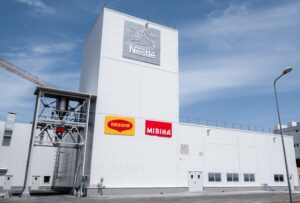
In 2025, Nestlé fully implemented its investment plan in Ukraine in the amount of UAH 9.5 billion and intends to increase capital investments in its new production site in Smoligov (Volyn region) to EUR70 million by the end of 2027, said Alessandro Zanelli, CEO of Nestlé in Ukraine and Southeast Europe, in a column for NV.
“At the beginning of the year, I announced that we planned to invest about UAH 9.5 billion in Ukraine, and we have fulfilled this forecast. In 2025, we achieved approximately double growth,” he wrote.
Zanelli named the launch of a new factory in Smoligov in April 2025 as a key industrial project of previous years. The initial investment in the facility amounted to EUR 43 million, but the company plans to expand its capacity. By the end of 2027, the total investment in this site is expected to reach EUR 70 million. The factory’s design capacity will allow it to produce 40,000 tons of vermicelli per year, which will be exported to Europe, the US, and Mexico.
Zanelli specified that production in Smoligov is highly automated, which allows for twice as few staff, but requires more highly skilled workers. To this end, the company has opened its own production academy.
In addition to industrial and commercial investments, Nestlé has allocated nearly $18 million to the Ukraine, WeCare program, which focuses on the safety, physical, and mental health of employees (excluding the cost of setting up shelters). The company also invests around EUR10 million annually in modernizing and improving the quality of its existing production facilities.
The CEO of Nestlé in Ukraine also announced that he will be moving to the position of head of the company’s Eastern European division in 2026 and leaving the Ukrainian office.
Nestlé began operations in Ukraine in 1994 with the opening of a representative office. In 1998, it acquired a controlling stake in ZAO Lviv Confectionery Factory Svitloch, and since 2018, it has owned 100% of the company’s shares. In May 2003, Nestlé Ukraine LLC was founded in Kyiv, and at the end of the same year, Nestlé became the owner of 100% of the shares of Volynholding.
In 2010, Nestlé SA acquired Technocom LLC in Kharkiv, a manufacturer of instant products under the Mivina trademark. In 2012, Nestlé Business Service (NBS Europe) was established in Lviv, which is one of seven Nestlé service centers in the world and provides support services to Nestlé divisions in more than 40 countries around the world.
Nestlé’s business in Ukraine is represented by the following areas: coffee and beverages, confectionery, culinary products (cold sauces, seasonings, soups, instant foods), baby and special nutrition, ready-made breakfasts, and pet food.
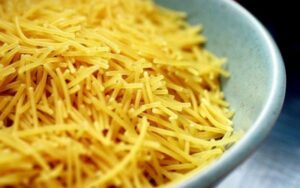
Swiss company Nestlé has launched the first production line at its new vermicelli factory in Smolyhiv (Torchynska settlement community, Lutsk district, Volyn region), which is the result of a CHF40 million ($50 million at the current exchange rate) investment announced 30 months ago, according to a press release issued by the company on Monday. according to a company press release on Monday.
“The production capacity of the first line will enable the company to produce 5,000 tons of vermicelli by the end of 2025, with a planned increase in production with the opening of additional lines in the next two years,” the release said.
Nestlé notes that the Smolyhiv factory is the fourth factory opened in the company’s 30 years of operation in Ukraine.
“With the opening of the new factory, the company has created a European hub for food production in Ukraine in Volyn, combining the new factory in Smolyhiv with the one already operating in neighboring Torchyn,” the statement said.
According to the statement, the company is expanding its vermicelli production to meet growing demand in both Europe and Ukraine under the Maggi and Mivina brands. The new factory is an export-oriented enterprise: 75% of its products will be supplied to EU markets under the Maggi brand, which will increase foreign currency inflows to Ukraine. At the same time, 75% of the raw materials for production come from local suppliers in Ukraine, with wheat and sunflower oil being the key ingredients.
“The factory’s advantageous geographical location in western Ukraine creates ideal conditions for Nestlé to produce in Ukraine for both the local market and for export,” said Alessandro Zanelli, CEO of Nestlé in Ukraine and Southeast Europe, in a press release.
He added that the factory is a modern, digital, and fully automated production facility.
Ivan Rudnytskyi, head of the Volyn Regional State Administration, recalled that a factory producing ketchups and sauces under the Torchyn brand and a Nestlé distribution center are already operating in the region, and the launch of the new factory has created more than 300 new jobs, and that this number will increase in the near future to more than 1,500 people in the newly created production hub in Volyn.
Nestlé is one of the world’s largest food and beverage companies, operating in 187 countries. It offers a wide range of products and services for families and pets.
It has over 2,000 brands. Nestlé began operations in Ukraine in 1994 with the opening of a representative office, acquired a controlling stake in ZAT Lvivska Kondyterska Fabryka Svitloch in 1998, and has owned 100% of the company since 2018.
In May 2003, Nestlé Ukraine LLC was established in Kyiv, and at the end of that year, Nestlé became the owner of 100% of the shares of Volynholding.
In 2010, Nestlé SA acquired Technocom LLC in Kharkiv, a manufacturer of instant products under the Mivina brand. In 2012, Nestlé Business Service (NBS Europe) was established in Lviv, which is one of seven Nestlé service centers in the world and provides support services to Nestlé divisions in more than 40 countries.
Nestlé’s business in Ukraine includes the following areas: coffee and beverages, confectionery, culinary products (cold sauces, seasonings, soups, instant products), baby and special nutrition, ready-to-eat breakfasts, and pet food.
At the end of last year, Dzanelli reported that Nestlé in Ukraine had increased production by 7-8% in 2024 and expects 10% growth in 2025.
In 2024, Nestlé in Ukraine invested more than UAH 900 million in three of its factories, which allowed the company to increase production efficiency and increase exports by 76%, according to a release.
“In 2024, the company invested more than UAH 900 million in the development of its three factories in Ukraine. The investments were focused on employee safety solutions, automation and digitalization of production processes and production lines, employee training and development, improvement of working conditions and infrastructure of production facilities, and technological solutions to reduce the carbon footprint,” the statement said.
The company noted that last year, thanks to investments, while maintaining supplies to 28 countries, it was able to significantly increase its exports: by 76% in volume and 128% in hryvnia equivalent.
“In 2024, the FMCG market in Ukraine grew by slightly less than 10%, including due to volumes. Nestlé also plays a role in this growth. We have similar growth with a focus on volume growth, which can be estimated at 7-8%, which is a consequence of our strategy. We have completely redesigned our portfolio, following consumer trends, and adjusted our promotional activities in line with the market situation,” emphasized Alessandro Zanelli, CEO of Nestlé in Ukraine and South-Eastern Europe.
The company cited the launch of a new line of Street Food sauces under the Torchyn brand as an example of its adaptability to consumer needs in times of war, when there is a lack of outdoor activities. This product category was created with an emphasis on the development of street food dishes, the company said in a statement.
In addition, Nestlé in Ukraine continues to produce products to help Ukrainians affected by the war. Since the beginning of the full-scale war, as of the end of 2024, the company has donated more than UAH 1.3 billion in aid, including food donated through charitable foundations for civilians and the military, as well as cash contributions to support, among others, the UNBROKEN and Superhumans rehabilitation centers.
Nestlé is one of the world’s largest food and beverage companies with operations in 187 countries. It offers a wide range of products and services for families and pets. It has more than 2000 trademarks.
Nestlé started its operations in Ukraine in 1994 with the opening of a representative office, acquired a controlling stake in CJSC Lviv Confectionery Factory Svitoch in 1998, and since 2018 has owned 100% of the company’s shares.
In 2010, Nestlé SA acquired Technocom LLC in Kharkiv, a manufacturer of fast food products under the Mivina brand. In 2012, Nestlé Business Service (NBS Europe) was established in Lviv, which is one of seven Nestlé service centers in the world and provides support services to Nestlé divisions in more than 40 countries.
Nestlé’s business in Ukraine is represented by the following areas: coffee and beverages, confectionery, cooking (cold sauces, condiments, soups, convenience foods), baby and specialty foods, breakfast cereals, and pet food.
In 2025, the company plans to open a new factory in Smolyhiv, Volyn region, which is currently in the final stages of construction. It is expected that 80% of the products manufactured at the new factory will be exported to the EU.
In 2025, Nestlé intends to invest UAH 8 billion in commercial activities in Ukraine, in particular, in the promotion of goods in retail chains, as well as UAH 1.5 billion in the modernization of factories to improve products, said Alessandro Zanelli, CEO of the company in Ukraine and South-Eastern Europe.
“The consumer goods category will continue to grow until 2025. But in 2025, everyone will feel a lot of pressure on margins. You can’t put everything on consumers alone, because inflation is already high in the country. We will have to work hard to create the right narrative about our business model,” he said at the ‘Global Outlook Enduring Change!’ organized by the European Business Association.
Zanelli advised entrepreneurs to identify the driving forces of their business, understand what creates consumer power and work to improve efficiency.
Speaking about Nestlé in Ukraine, he noted that the company intends to increase its presence in Ukraine in 2025, for which it plans to invest about UAH 8 billion in commercial activities, in particular, in the promotion of consumer goods in retail chains. In addition, about UAH 1.5 billion will be invested in improving the condition of the company’s plants.
The CEO of Nestlé in Ukraine added that the company has been delaying the launch of a new plant in Volyn region for six months due to constant air hazards, lack of builders and labor, but intends to launch in March 2025.
Nestlé’s business in Ukraine is represented by the following areas: coffee and beverages, confectionery, cooking (cold sauces, condiments, soups, convenience foods), baby and specialty foods, breakfast cereals, and pet food.

Nestlé in Ukraine increased its production by 10% in 2024 and intends to repeat this growth next year, said Alessandro Zanelli, CEO of the company in Ukraine and Southeast Europe.
“Ukraine’s FMCG grew by just under 10% this year and demonstrated a strong focus on volume growth. This is a very clear sign of the resilience of the Ukrainian macroeconomy, which is hardly at war. Overall, the country’s GDP is quite resilient. We do not see the local currency, the hryvnia, collapsing. It is a steady controlled devaluation. At the same time, inflation is also relatively stable and under control,” he said at the NV conference ‘Ukraine and the World Ahead 2025’.
Zanelli noted that Nestle’s growth in Ukraine was at a similar level – just under 10% with an emphasis on volume growth, which can be estimated at 7-8%. The company’s CEO explained such indicators during the war as the result of the implemented strategy aimed at maintaining sustainability. The company’s team joined forces to protect its people, which allowed Nestle’s factories in Ukraine to continue operating even in Kharkiv. Being under constant shelling, this company also found an opportunity to increase productivity, the CEO explained. He noted that Nestle’s strategy in Ukraine also focuses on adaptability at all levels: from responding to changing consumer trends and adjusting the product portfolio and their locations to changing the timing of promotional activities and transforming communications to bring more hope and make products relevant to consumers.
Zanelli assessed the results of Nestle’s work in Ukraine as satisfactory and expressed confidence that in 2025, even taking into account possible difficulties, production growth will be similar – at least 10% per year.
The company’s CEO predicts that in the second quarter of 2025, Ukrainians and the FMGG segment will face rising inflation, which will lead to a significant rise in food prices. In addition, the shortage of skilled labor will increase. He also sees the cost of electricity as a challenge for the coming year. Zanelli said that the probability of the war ending, which the whole society is waiting for, is a possible “white swan”.
“In general, we remain optimistic, as I said, and expect about 10% growth,” Zanelli stated.
He also explained the postponement of the launch of the new plant in Volyn region from December 2024 to January 2025 by various elements of disruption, including the increase in air raids and the availability of people. At the same time, the top manager assured that the launch will take place, for which the company, along with recruiting specialists living in the region of the plant’s construction, is relocating staff from Kharkiv.
Zanelli emphasized that the location of the new plant next to another plant (Torchyn, Volyn region – IF-U) is the intention to create a food production center near the border with the European Union. The products produced by the new plant will be exported by 80%. In the domestic market, the company will increase its presence and market share through supplies from other companies.
“Usually, to make a business attractive, we first improve its efficiency and then immediately reinvest back into efficiency to grow and increase market share. It is extremely important for us to have an additional plant in Ukraine (…) We as Nestle understand that the war will end. It is too easy to come and invest on the first day after the war ends. For us, the moment of investment has come now, so we are planning for the future,” summarized the CEO of Nestlé in Ukraine.
Nestlé started its operations in Ukraine in 1994 with the opening of a representative office, acquired a controlling stake in Lviv Confectionery Factory Svitoch in 1998, and has owned 100% of the company’s shares since 2018. Nestlé’s business in Ukraine is represented by the following areas: coffee and beverages, confectionery, cooking (cold sauces, condiments, soups, fast food), baby and specialty food, breakfast cereals, and pet food.



