

According to Relocation, it is important for Ukrainian families living in EU countries to be aware of local child protection regulations: social services may initiate an investigation into living conditions if they receive reports of a potential threat to a child, and in serious cases, may temporarily remove the child from the family until the circumstances are clarified or a court decision is made.
As reported by Ukrainian media, citing materials for families abroad, social services do not intervene automatically due to a single domestic conflict, a bruise from a fall, or being late for school. However, repeated reports, complaints from the school, or concerns raised by neighbors, doctors, or the police can serve as grounds for an investigation into the family.
In different countries, these services have different names: Jugendamt in Germany, Aide Sociale à l’Enfance in France, and child protection services in Poland, the Czech Republic, Italy, the Netherlands, and other countries. Their underlying logic is similar: the state is obligated to intervene if it believes a child may be in danger or that the child’s interests are being violated.
Reasons for an investigation may include suspicions of physical or psychological abuse, systematic neglect of the child’s needs, lack of medical care, leaving a young child unsupervised, inadequate living conditions, truancy, aggressive behavior by the child, family conflicts, or parental failure to fulfill their duties.
For Ukrainian families, differences in legal systems remain a particular risk. What might be perceived in Ukraine as a domestic conflict or a “parenting method” may be considered unacceptable behavior in EU countries. Physical punishment, shouting, threats, leaving children home alone, or lack of contact with the school can lead to intervention by social services.
According to the 2023 annual report of the Ukrainian Parliament Commissioner for Human Rights, as of December 31, 2023, the competent authorities of host countries had removed 255 Ukrainian children from their parents or legal guardians abroad. Of these, 64 were orphans or children deprived of parental care, and 191 were children with parents.
The highest number of such cases was recorded in Germany—71 children—followed by Poland—33, Italy—25, the Czech Republic—24, and Sweden—17. Cases were also recorded in the Netherlands, France, Norway, Denmark, Spain, Switzerland, Finland, Austria, Lithuania, Luxembourg, Greece, Portugal, Slovakia, and other countries.
Among the most common reasons for the removal of Ukrainian children abroad, the Ukrainian ombudsman cited the failure of local authorities to recognize Ukrainian documents issued to guardians and adoptive parents, inadequate fulfillment of parental responsibilities, low levels of material and living standards, truancy, aggressive behavior by children, as well as the consequences of psychological trauma suffered by parents and children due to the war.
European statistics show that intervention by social services is a widespread and systematic practice, but reporting methods vary by country. In Germany in 2024, youth welfare authorities temporarily took approximately 69,500 children and adolescents into protective custody. Of these, 44% of such measures were related to the arrival of unaccompanied minors from abroad, 42% to an immediate threat to the child’s well-being, and 13% to children seeking help on their own.
In Poland, as of the end of 2024, 77,300 children were in the foster care system, of whom 59,800 were in family-based care and 17,500 were in institutional care. In Italy, as of the end of 2023, 42,000 children were in alternative care: 15,992 in foster care and 26,010 in residential care. In Sweden, according to Socialstyrelsen, 3,486 children were placed in compulsory care under the LVU Act in 2020.
These figures cannot be directly compared with one another as “removed children” because countries use different categories: temporary removal, foster care, institutional care, emergency protection, voluntary placement, compulsory placement, and care for unaccompanied minors. Nevertheless, they demonstrate the scale of the work carried out by European child protection systems.
There are no separate pan-European statistics available in an open, comparable format on how many children are removed specifically from families based on the parents’ “ethnic origin.” Some countries publish data on citizenship, migration status, ethnicity, or unaccompanied children, but these indicators vary in methodology and often do not allow for distinguishing family cases from migration and guardianship cases.
For Ukrainians, the most specific publicly available statistics are data from the Ukrainian Ombudsman’s Office on 255 children removed abroad as of the end of 2023. More recent comparable data for all EU countries is currently limited in open access.
Lawyers and human rights advocates advise Ukrainian parents abroad to carefully study the rules of their country of residence, not to ignore requests from schools, doctors, and social services, keep documents regarding the child’s legal representation, have translations of custody or adoption decisions, contact the Ukrainian consulate in a timely manner, and not attempt to “resolve” the conflict with child protection authorities on their own without legal assistance.
If social services initiate an investigation, it is important to cooperate, provide explanations, submit documents, engage an interpreter, and document all communications in writing. In most countries, the goal of initial intervention is not the automatic removal of the child, but rather a risk assessment and the search for a solution that will be considered safe for the child.

Omnichannel retailer of appliances and electronics Eldorado.ua donated a modular house to a family in Chernihiv region within the framework of the “Zeglina for moles” charitable project together with Tera Monada, the retailer’s press service reported.
According to the report, the modular house is connected to all communications and equipped with furniture, appliances and a generator.
“The main goal at Eldorado.ua is to take care of Ukrainian families. That is why we organized this project to help families who have lost their own homes. I very much appreciate the trust of our customers and am grateful for their desire to help those in need. Many of the donations are not one but several “bricks”, there are 50 and 100 each. So this house in Chernihiv region is the “first swallow”, then we are preparing the next ones”, – Mikhail Kozlov, director of the retail department of Eldorado.ua, was quoted in the press release.
Half of the cost of modular home paid the retailer and the other half was collected thanks to customers’ donations. The charity project will last until the end of 2023. According to the company, today collected almost 40 thousand “bricks”, which amounts to about 900 thousand UAH (at the rate of 1 “brick” – 23 UAH).
Eldorado.ua – network of stores of home appliances and electronics in Ukraine, represented in offline and online environment. It was founded in 1999 as a division of the network of the same name. In 2013, the company becomes 100% Ukrainian. At the same time, it merges with the Tekhnopolis network. The beneficiary is Viktor Volischuk.
Today the chain has 95 stores in Ukraine. The staff consists of 3.2 thousand people. Since the beginning of the full-scale invasion, the company has transferred equipment and electronics worth 10 million hryvnias to the Armed Forces and terrorist defense.
Tera Monada is a social startup launched in June 2022 that creates modular, quickly-mounted houses for Ukrainians who lost their homes because of the war.

Some 44% of Ukrainians were forced to temporarily separate from their families during Russia’s further invasion of Ukraine, according to the results of a nationwide survey “Adaptation of Ukrainians to the Conditions of War,” conducted by the Rating sociological group on March 19.
Most of these are in the east of the country (54%), the least – in the west (39%). Among young people, 50% is the largest indicator by age.
Some 72% of citizens now constantly communicate with relatives and friends, 48% with friends, 38% with neighbors and 28% with work colleagues.
In addition to separation from the family, 19% of citizens left their city/village for the duration of the war (most of them left from the east). At the same time, the vast majority (93%) of them plan to return home after the war. Only 58% of those who left know that everything is in order with their housing, 10% know that their housing is damaged, and 9% are destroyed. The rest do not know what their housing is.
In the course of the study, 1,000 respondents over the age of 18 were interviewed using the CATI (Computer Assisted Telephone Interviews) method in all regions, except for the temporarily occupied territories of Crimea and Donbas. The sample is representative in terms of age, gender, and type of settlement. The margin of error of the representativeness of the study with a confidence probability of 0.95 does not exceeding 3.1%.

U.S. Secretary of State Antony Blinken has announced sanctions against oligarch and former Ukrainian official Ihor Kolomoisky due to his involvement in major corruption.
“This designation is made under Section 7031(c) of the Department of State, Foreign Operations, and Related Programs Appropriations Act, 2020. In addition to Ihor Kolomoisky, I am publicly designating the following members of Ihor Kolomoisky’s immediate family: his wife, Iryna Kolomoiska, his daughter, Andzelika Kolomoiska, and his son, Israel Zvi Kolomoisky. This action renders Ihor Kolomoisky and each of these members of his immediate family ineligible for entry into the United States,” Blinken said in a statement released by on the website of the U.S. Department of State on Friday.
Blinken said that in his official status as the head of Dnipropetrovsk region of Ukraine from 2014 to 2015, Kolomoisky was involved in corrupt acts that undermined rule of law and the Ukrainian public’s faith in their government’s democratic institutions and public processes, including using his political influence and official power for his personal benefit.
“While this designation is based on acts during his time in office, I also want to express concern about Kolomoisky’s current and ongoing efforts to undermine Ukraine’s democratic processes and institutions, which pose a serious threat to its future,” the secretary of state said.
“This designation reaffirms the U.S. commitment to supporting political, economic, and justice sector reforms that are key to Ukraine’s Euro-Atlantic path. The United States continues to stand with all Ukrainians whose work drives reforms forward. The Department will continue to use authorities like this to promote accountability for corrupt actors in this region and globally,” Blinken said.
Aforementioned Section 7031 of the Department of state, Foreign Operations and Related Programs Appropriations Act gives the Secretary of State the power to deny entry to the United States of foreign government officials and their immediate family members, in respect of whom there is reliable information that they are involved in significant corruption (including related to the extraction of natural resources) or in gross violation of human rights.
An exception may be entry into the United States if it will contribute to the achievement of important goals of the U.S. law enforcement agencies or occurs within the UN Headquarters Agreement.
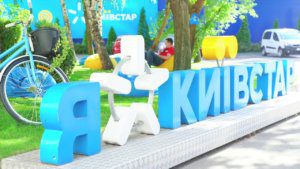
The Kyivstar mobile communications operator has launched the family tariff for contract subscribers with a possibility of connecting up to four numbers to one account for UAH 75 a month. The press service of the company reported on Wednesday that under the terms of the tariff, in addition to unlimited calls in the Kyivstar network, subscribers will receive 50 minutes for calls to other networks in Ukraine, as well as to Italy, Poland and Russia, 5,000 MB of Internet and free use of the Kyivstar Go TV application.
The connection is available for Kyivstar subscribers who use the services of the operator for at least three months, if they visited the company’s branch with a passport.
Connection is possible only to an existing personal account, where a number/ numbers with Kyivstar 4G, Kyivstar 4G Extra, Kyivstar 4G Ultra, Kyivstar 4G Business, Kyivstar 4G Business VIP, Kyivstar 4G Extra + and Kyivstar 4G Business Premium are already registered, while one personal account can have no more than four numbers from Kyivstar Family registered.
At the same time, the company said in the press release that if at least one of the conditions for using the tariff is not met, the subscription fee at the Kyivstar Family tariff will be UAH 150 a month.



