

According to Relocation, it is important for Ukrainian families living in EU countries to be aware of local child protection regulations: social services may initiate an investigation into living conditions if they receive reports of a potential threat to a child, and in serious cases, may temporarily remove the child from the family until the circumstances are clarified or a court decision is made.
As reported by Ukrainian media, citing materials for families abroad, social services do not intervene automatically due to a single domestic conflict, a bruise from a fall, or being late for school. However, repeated reports, complaints from the school, or concerns raised by neighbors, doctors, or the police can serve as grounds for an investigation into the family.
In different countries, these services have different names: Jugendamt in Germany, Aide Sociale à l’Enfance in France, and child protection services in Poland, the Czech Republic, Italy, the Netherlands, and other countries. Their underlying logic is similar: the state is obligated to intervene if it believes a child may be in danger or that the child’s interests are being violated.
Reasons for an investigation may include suspicions of physical or psychological abuse, systematic neglect of the child’s needs, lack of medical care, leaving a young child unsupervised, inadequate living conditions, truancy, aggressive behavior by the child, family conflicts, or parental failure to fulfill their duties.
For Ukrainian families, differences in legal systems remain a particular risk. What might be perceived in Ukraine as a domestic conflict or a “parenting method” may be considered unacceptable behavior in EU countries. Physical punishment, shouting, threats, leaving children home alone, or lack of contact with the school can lead to intervention by social services.
According to the 2023 annual report of the Ukrainian Parliament Commissioner for Human Rights, as of December 31, 2023, the competent authorities of host countries had removed 255 Ukrainian children from their parents or legal guardians abroad. Of these, 64 were orphans or children deprived of parental care, and 191 were children with parents.
The highest number of such cases was recorded in Germany—71 children—followed by Poland—33, Italy—25, the Czech Republic—24, and Sweden—17. Cases were also recorded in the Netherlands, France, Norway, Denmark, Spain, Switzerland, Finland, Austria, Lithuania, Luxembourg, Greece, Portugal, Slovakia, and other countries.
Among the most common reasons for the removal of Ukrainian children abroad, the Ukrainian ombudsman cited the failure of local authorities to recognize Ukrainian documents issued to guardians and adoptive parents, inadequate fulfillment of parental responsibilities, low levels of material and living standards, truancy, aggressive behavior by children, as well as the consequences of psychological trauma suffered by parents and children due to the war.
European statistics show that intervention by social services is a widespread and systematic practice, but reporting methods vary by country. In Germany in 2024, youth welfare authorities temporarily took approximately 69,500 children and adolescents into protective custody. Of these, 44% of such measures were related to the arrival of unaccompanied minors from abroad, 42% to an immediate threat to the child’s well-being, and 13% to children seeking help on their own.
In Poland, as of the end of 2024, 77,300 children were in the foster care system, of whom 59,800 were in family-based care and 17,500 were in institutional care. In Italy, as of the end of 2023, 42,000 children were in alternative care: 15,992 in foster care and 26,010 in residential care. In Sweden, according to Socialstyrelsen, 3,486 children were placed in compulsory care under the LVU Act in 2020.
These figures cannot be directly compared with one another as “removed children” because countries use different categories: temporary removal, foster care, institutional care, emergency protection, voluntary placement, compulsory placement, and care for unaccompanied minors. Nevertheless, they demonstrate the scale of the work carried out by European child protection systems.
There are no separate pan-European statistics available in an open, comparable format on how many children are removed specifically from families based on the parents’ “ethnic origin.” Some countries publish data on citizenship, migration status, ethnicity, or unaccompanied children, but these indicators vary in methodology and often do not allow for distinguishing family cases from migration and guardianship cases.
For Ukrainians, the most specific publicly available statistics are data from the Ukrainian Ombudsman’s Office on 255 children removed abroad as of the end of 2023. More recent comparable data for all EU countries is currently limited in open access.
Lawyers and human rights advocates advise Ukrainian parents abroad to carefully study the rules of their country of residence, not to ignore requests from schools, doctors, and social services, keep documents regarding the child’s legal representation, have translations of custody or adoption decisions, contact the Ukrainian consulate in a timely manner, and not attempt to “resolve” the conflict with child protection authorities on their own without legal assistance.
If social services initiate an investigation, it is important to cooperate, provide explanations, submit documents, engage an interpreter, and document all communications in writing. In most countries, the goal of initial intervention is not the automatic removal of the child, but rather a risk assessment and the search for a solution that will be considered safe for the child.

Ukraine and Moldova agreed to deepen cooperation in the field of food safety, as well as expand the list of permitted commodity items for export to Moldova, in particular, for pigs and composite products.
Relevant agreements were reached during a meeting between the head of the State Service of Ukraine on Food Safety and Consumer Protection, Anatoliy Vovniuk, and Ambassador of the Republic of Moldova to Ukraine Valeriu Chiveri, according to the website of the Ukrainian department.
According to the Food Safety and Consumer Protection Service, as of today, 18 forms of veterinary certificates for export from Ukraine to Moldova have been agreed between the countries.
“During the Russian military aggression against the Ukrainian people, the support of friendly countries is extremely important for our state,” Vovniuk said.

IAEA Director General Rafael Mariano Grossi called Wednesday meetings with high-ranking representatives of the Ukrainian government at the South Ukrainian NPP (SUNPP) very productive and announced the imminent arrival of experts at Ukrainian nuclear facilities.
“Teams of experts and additional safety equipment will arrive at Ukraine’s nuclear facilities very soon,” he tweeted at the end of the day.
The daily report of the organization indicates that at meetings with the Minister of Energy of Ukraine German Galushchenko, the heads of the nuclear regulator of Ukraine SNRIU Oleg Korikov and NNEGC “Energoatom” Petr Kotin, as well as the director of the South Ukraine NPP Igor Polovich, specific steps were considered to provide urgent assistance to Ukraine in protecting its nuclear facilities.
As reported, on March 30, Grossi visited South Ukraine NPP, where he met with representatives of the Ukrainian side. At a meeting with plant workers, he noted that the issue of the withdrawal of Russian troops from the Chernobyl and Zaporizhzhya NPPs “needs to be considered at different levels,” and it depends on the ceasefire agreements.

Candidate for the post of the head of the Ministry of Internal Affairs of Ukraine Denys Monastyrsky assures that as the minister he will focus on the safety of citizens and strengthening the level of trust in law enforcement agencies.
Speaking from the rostrum of the Verkhovna Rada on Friday, he thanked President of Ukraine Volodymyr Zelensky for his trust. “The main priority will be the safety of citizens, society, strengthening the level of trust in law enforcement agencies,” he added.
As reported, Arsen Avakov on Tuesday submitted a letter of resignation from the post of Minister of Internal Affairs of Ukraine, which the Verkhovna Rada supported on July 15.

The Verkhovna Rada has ratified a financial agreement between Ukraine and the European Investment Bank (EIB) to improve road safety. Some 334 deputies voted on Thursday for corresponding draft law No. 0014 of December 13, 2019, the parliament’s website said.
According to the text of the explanatory note, the agreement stipulates the provision by Ukraine of the EIB state guarantee to ensure the implementation of the project “Improving Road Safety in Ukrainian Cities.”
It is expected that the project will reduce the number of accidents and the severity of their consequences; increase the share of travel by bicycle, on foot or by public transport in the total volume of traffic and, accordingly, reduce the number of trips by private transport. In addition, the project will reduce the time spent by passengers at public transport stops, as well as the operating costs of road transport owners and emissions of harmful substances into the air.
According to Minister of Infrastructure Vladyslav Krykliy, the estimated cost of the project is EUR 177 million, of which an IEB loan is EUR 75 million (the agreement was signed on July 9, 2018), a loan from the European Bank for Reconstruction and Development (EBRD) is estimated at EUR 75 million (it is planned to sign the agreement in 2020 year), and own funds of cities and technical assistance totaling EUR 27 million.
“Improving safety for the cities of Lviv, Odesa, Dnipro, Kharkiv, Kyiv, Kamenetz-Podilsky includes improving the infrastructure of road intersections, infrastructure for cyclists and public transport, arranging facilities to reduce speed in settlements and near schools, etc.,” he said on his Facebook page on Thursday evening.
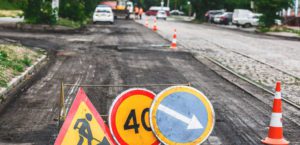
The law amending the law on automobile roads regarding the audit of road safety will open access to better financing of road construction by international financial institution (IFIs) for Ukraine, Senior Sector Engineer of the European Investment Bank (EIB) Per Mathiasen said at a press conference devoted to the results of the EIB Implementation Support to the Ukraine Urban Road Safety Project in Kyiv on Tuesday.
The European Investment Bank, the World Bank, the European Bank for Reconstruction and Development, all of them stress the importance of road safety, he said.
Mathiasen said that Ukraine needed to change the construction of roads for the safety of road users.
The new law will ensure that safety will become an integral part of the design and planning of new roads, he said.
In addition, according to Mathiasen, the law will make new roads safe and accessible for everyone: cars, cyclists and public transport.
In turn, Deputy Infrastructure Minister of Ukraine Natalia Forsiuk recalled that the government has set two key goals in the field of road infrastructure: “reducing travel time by 10% and reducing the number of traffic accidents by 30%.”
“That is, traffic safety is the only immediate priority of the government [in this area],” she said.
The main priority of the EIB Implementation Support to the Ukraine Urban Road Safety Project, which is funded by the Eastern Partnership Technical Assistance Trust Fund and implemented by Egis Ukraine, is the development of the law of Ukraine on automobile roads regarding the audit of road safety, preparation of technical documentation and boosting the capacity necessary to implement the road infrastructure safety management procedures and to promote the adoption of the law and its enforcement.
In order to implement this project, on October 17, 2019, the Verkhovna Rada of Ukraine adopted the law amending certain legislative acts of Ukraine on road safety management. The law contains most of the provisions of EU Directive 2008/96/EC on road infrastructure safety management, which is a version of the EU law on road infrastructure safety management procedures.
As reported, acting head of the State Automobile Roads Authority of Ukraine (Ukravtodor) Slawomir Nowak said that EBRD and EIB are ready to provide Ukraine with a targeted loan in the amount of EUR 900 million for the development of the road industry in 2020.
The level of road accidents in Ukraine is much higher than in EU countries.



