

The Ukrainian flour milling company “DykankaMlyn” has completed the latest phase of its production modernization in partnership with the Swiss technology company Bühler, installing an automated system for micro-dosing ingredients into flour.
The new equipment allows for the automatic addition of dry gluten, vitamins, and other micro-components based on the actual flow of flour. This enables the company to produce products with specified characteristics and expands its capacity to fulfill export orders.
The system consists of flow scales, two micro-dosing units, and an integrated control system. The flow scales continuously measure the volume of flour, after which the automated system calculates the required amount of ingredients. The operator sets the desired addition percentage, and the subsequent dosing is adjusted automatically.
The equipment was installed without shutting down the mill. The mechanical work took about two to three days, while the electrical connection and commissioning took about a week.
“Our collaboration with Bühler began many years ago with roller sharpening and technical consulting. Then came the optical sorter, followed by two inline whiteness meters and an automatic moistening system. When the question of the next stage of modernization arose, we already had our own experience working with Bühler equipment and understood what results we expected,” noted Volodymyr Lenets, head of “DykankaMlyn.”
A unique feature of the project was that the Bühler equipment was integrated into an existing mill from another manufacturer. This approach allows the company to modernize individual process units in stages, without having to completely overhaul production, and to spread capital expenditures across several phases.
According to Andriy Sharan, CEO of Bühler Ukraine, the “DykankaMlyn” project demonstrates the ability to integrate modern technological solutions into existing production lines and gradually increase the company’s level of automation.
One of the practical applications of the new system will be adjusting the gluten content in flour to meet the requirements of specific customers. For the baking and confectionery industries, stable protein and gluten levels are key characteristics of raw materials, as they directly affect the dough’s processing properties.
Another area of application is the production of fortified flour with added vitamin and mineral complexes. Such products may be in demand in foreign markets, as in a number of countries, the fortification of flour with certain vitamins and minerals is mandated by national legislation or food program standards.
Automated dosing allows manufacturers to control the accuracy of ingredient addition and their uniform distribution in the finished product, which is important for confirming compliance with export requirements.
“Microdosing can solve a production challenge while also serving as a commercial tool. If a company can demonstrate the accuracy and uniformity of its product, this strengthens its position in negotiations with buyers and opens up more opportunities to operate in export markets,” Sharan noted.
“DykankaMlyn” specializes in the production of wheat flour and semolina. The company’s products are sold in Ukraine and exported. The production facility operates its own laboratory to monitor the quality of grain and finished products.
Bühler is a Swiss technology group and one of the world’s leading manufacturers of equipment and integrated solutions for the grain processing and food industries. In Ukraine, the company collaborates with flour mills, grain processing plants, and food manufacturers.
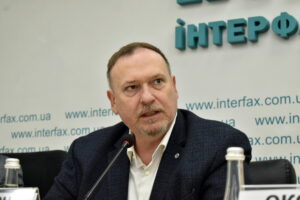
The entry of Ukrainian wheat flour into the Chinese market is a strategically important step, but one should not expect mass shipments to begin immediately, said Rodion Rybchynskyi, director of the Ukrainian Flour Millers Association.
“Opening the market at the intergovernmental level means the establishment of a legal and technical framework, but it is not a signal for an immediate start to exports. There will be no rapid commercial shipments for the time being. Signing the protocol is only the first step, which defines production and control requirements, setting the conditions for future operations,” the association’s press service quoted him as saying on Facebook.
One of Beijing’s strictest requirements remains full product traceability. This involves monitoring the entire chain: from the specific field where the wheat was grown to the final batch of flour.
According to the association’s head, building such a control system is a systematic effort that cannot be completed in a few weeks. In addition to technical barriers, exporters face complex logistics and economic challenges.
As Rybchynskyi noted, the Chinese market remains unique due to high import duties and VAT. The situation is further complicated by security risks to Ukraine’s port infrastructure, which drive up the cost of maritime transport and make assembling large shipments a difficult task.
The “Flour Millers of Ukraine” association is confident that the very fact of the protocol’s approval is a mark of quality for the domestic control system. This confirms that the flour meets the standards of one of the world’s most demanding markets, which in the long term will enable the diversification of sales of high-value-added products.
In July–March of the 2025–2026 marketing year (MY), Ukraine exported 48,300 tons of wheat flour, which is 3% less than in the same period of the previous season, when shipments totaled 49,800 tons, the Ukrainian Flour Millers Association reported on Facebook.
The industry association noted that EU countries accounted for about 35% of exports, although in the previous season the European market’s share was significantly higher, reaching 44%.
The top five consumers of Ukrainian flour for the first nine months of the 2025/26 marketing year included Moldova, which imported 14,900 tons, Palestine – 9.2 thousand tons, the Czech Republic – 7.4 thousand tons, Israel – 4.4 thousand tons, and Spain – 4.2 thousand tons.
“Flour Millers of Ukraine” also pointed to an increase in wheat flour imports to Ukraine. Thus, during the reporting period, nearly 2.3 thousand tons of the product were purchased on foreign markets, which is 21% higher than the figure for the same period last year, when 1.9 thousand tons were imported.
CZECH REPUBLIC, FLOUR, ISRAEL, MOLDOVA, PALESTINE, SPAIN, Ukrainian Flour Millers
The public association “Flour Millers of Ukraine” plans to create a “brokerage house” for the formation of large export consignments of flour and grain processing products, their marketing and promotion of products on world markets, the press service of the association reported following a meeting of the union’s Board of Directors.
“The goal of this project is to market and promote products on global markets, increase annual export volumes, and provide logistics. The main task is to process importers’ requests and form appropriate product batches, as there are requests for large batches that one company cannot fulfill on its own,” explained Rodion Rybchinsky, director of the association, whose words are quoted in the report.
He emphasized that by the end of 2025, the industry had achieved a strategic result: after lengthy negotiations involving Ukrainian Trade Representative Taras Kachka, the European Union decided to allocate a separate tariff quota for the export of Ukrainian flour in the amount of 30,000 tons.
Currently, the union, with the support of SIPPO, is conducting a comprehensive study of the quality of Ukrainian wheat and flour. Doctor of Technical Sciences Dmytro Zhigunov presented the results of the analysis of 14,000 wheat samples and 200 flour samples in terms of physical, chemical, functional, and technological indicators. According to Rybchynsky, these data will strengthen communication on global markets regarding the quality and safety of Ukrainian products.

Rising costs of raw materials and energy resources have led to an average 40% increase in the price of bread and flour in Ukraine over the past two years, according to the Ukrainian Flour Millers Association.
According to the association’s analytical report, published on the APK-Inform website, the price growth rate has been consistently high: in 2024, bread rose in price by 20-22%, and in 2025 — by another 19-23%. A similar 40% increase over a two-year period was also recorded for wheat flour.
According to the association, the price of premium wheat bread rose by 44% over the year to UAH 63.5/kg, rye bread by 45% to UAH 50.6/kg, and loaves by 34% to UAH 30.9/kg.
“Currently, the actual selling prices of flour are 10-15% lower than the declared prices and are practically equal to the cost price. With the average cost of grade 2 wheat at 10,300 UAH/ton and processing costs of no less than 2,500 UAH/ton, a 3% profit margin is a great achievement for flour millers,” the report notes.
Experts note that unlike bakers, who can compensate for the low profitability of social varieties with premium and small-piece products, millers are deprived of this opportunity due to the small sales volumes of packaged flour.
At the same time, “Flour Millers of Ukraine” noted a growing trend in Ukraine toward home baking.
“The population is increasingly turning to home baking. It is much cheaper, tastier, and becoming fashionable,” the industry association noted, adding that premium bread under the Tsar Bread and Kulynichi brands, which is distinguished by its excellent taste, costs more than UAH 100 per 1 kg and is unaffordable for many residents of Ukraine.
Flour exports from Ukraine fell to 66,800 tons in 2025, the lowest level since 2006, according to a report by the Ukrainian Flour Millers Association published by APK-Inform.
According to the data, this figure is 36.6% lower than the pre-war level in 2021 (105,300 tons) and 15.3% lower than the volume in 2022 (78,900 tons).
“The war has practically blocked the opportunity for our flour millers to earn extra money on the international market. Problems with logistics have led to the loss of almost all our usual markets. Only Moldova remains, and there is now an opportunity to export to the European Union, which accounts for more than half of the total volume,” the document notes.
The association emphasized that deliveries are currently carried out exclusively by rail and road transport. At the same time, experts stressed that until Ukrainian ports are opened, there will be no opportunity to compete with other exporters on the world market, nor any hope for growth in foreign trade volumes.
According to the Ukrainian Flour Millers Association, the recorded volume of flour exports of 66.8 thousand tons is the lowest since 2006, when only about 10.5 thousand tons of this product were supplied to foreign markets.



