
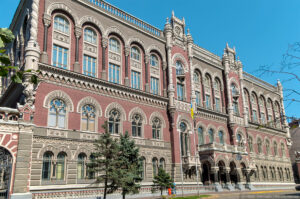
The National Bank of Ukraine (NBU) has approved Andriy Artyukhov, chairman of the board of VUSO Insurance Company (VUSO Kyiv), to acquire a significant stake by holding 10.10% of the insurer’s shares.
According to the NBU’s website, the decision was made on November 2, 2026.
Andriy Artyukhov began working at VUSO Insurance Company in 2003, rising from entry-level and mid-level positions to executive roles. He previously served as deputy chairman of the board for sales. Since 2018, he has served as chairman of the board of VUSO Insurance Company.
VUSO Insurance Company was founded in 2001. On April 23, 2024, the National Bank of Ukraine renewed the company’s licenses to conduct insurance activities (33 for voluntary insurance and 17 for mandatory insurance). The company has 34 representative offices, two branches, and more than 20 agency sales centers throughout the country.
According to the NBU, VUSO Insurance Company ranked sixth in terms of premiums collected among Ukraine’s property and casualty insurers for January–June 2026. During this period, the company collected 2.689 billion UAH and paid out 1.297 billion UAH in claims.

The National Bank of Ukraine (NBU) has approved David Rostomyan’s acquisition of a significant 74.9% stake in Velta PJSC. According to the NBU’s website, the decision was made on October 26, 2026.
As noted on the company’s website, as of January 1, 2026, Valentina Latysheva was the owner of this stake.
Velta Insurance Company has been operating in the Ukrainian insurance market since 1993. It began its operations by insuring banking risks, as one of its founders was Aval Private Commercial Bank. In 2000, the company began providing insurance services for clinical trials of pharmaceuticals, which enabled it to expand internationally and collaborate with numerous pharmaceutical companies and contract research organizations in the United States, Germany, England, France, Italy, and Japan—including through international brokers such as Howden, Marsh, AON, Willis, and JLT.
In 2003, the company obtained a license to conduct insurance activities in the form of mandatory civil liability insurance for nuclear facility operators covering damage that may result from a nuclear incident, and became a member of the “Nuclear Insurance Pool of Ukraine.”
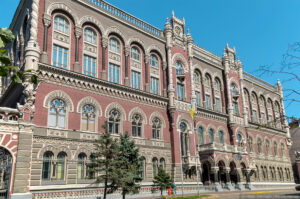
In the third quarter of 2026, businesses significantly downgraded their expectations regarding business activity for the next 12 months: the Business Expectations Index (BEI) fell to 100.8% from 107.0% in the second quarter, according to the National Bank of Ukraine (NBU).
“Respondents expected a decline in the volume of goods and services produced in Ukraine and noted unfavorable prospects for the financial and economic development of their enterprises,” the regulator said.
Enterprises in 11 of the surveyed regions and in most sectors maintained positive expectations regarding business activity. Businesses view future investment expenditures on machinery, equipment, and inventory; total sales of their own products; and investments in construction work positively, while their assessments of their financial and economic condition and future workforce size are negative.
Military operations and their consequences remain the main factor holding back companies’ efforts to ramp up production; a shortage of skilled workers is also a significant constraint.
Businesses have revised downward their expectations regarding the volume of goods and services produced in Ukraine over the next 12 months: the balance of responses stood at -11.9%, compared to 7.6% in the second quarter. Negative expectations were reported by enterprises in all surveyed economic sectors, except for energy and water supply, where no changes are expected.
Inflation expectations remained virtually unchanged: expected annual inflation over the next 12 months stands at 11.5%, compared to 11.6% in the previous quarter. Military operations and their consequences were cited as the main inflationary factor by 85.5% of respondents, which is 4.9 percentage points higher than in the second quarter.
Exchange rate expectations strengthened somewhat: the average projected hryvnia exchange rate is 46.90 UAH/$1 and 54.85 UAH/EUR1, compared to 46.12 UAH/$1 and 54.42 UAH/EUR1 in the previous quarter.
Assessments of enterprises’ current financial and economic condition deteriorated: the balance of responses stood at -7.0%, compared with -5.1% in the previous quarter. Expectations regarding the financial and economic condition for the next 12 months also worsened—to -4.3% from 2.4%.
Enterprises continue to expect growth in sales volumes, particularly in the foreign market, but at significantly slower rates: the net balance of responses stood at 4.0% and 2.0%, respectively, compared to 18.4% and 17.0% in the second quarter. Energy and water supply companies expect the strongest sales growth in the domestic market, while construction companies expect it in the foreign market.
Expectations regarding investment spending on machinery, equipment, and inventory remain positive but have weakened: the balance of responses stood at 10.4%, compared to 15.5% in the second quarter. Assessments of investment in construction work also remained positive—0.5% compared to 2.1%.
Companies attracting foreign investment continue to expect growth in investment volumes, albeit at a slower pace: the balance of responses stood at 7.8% compared to 8.9%. The share of those planning to attract such investments rose to 21.4% from 20.3%.
Assessments regarding the number of employees deteriorated: the balance of responses stood at -6.7%. Companies in all surveyed sectors, except for the “other” category, expect staff reductions, with the mining industry seeing the largest declines.
The need for borrowed funds in the near term has weakened slightly compared to the second quarter—32.6% versus 35.3%—while the share of those planning to take out bank loans remained virtually unchanged—35.6% versus 36.0%.
The share of companies planning to take out loans in the national currency rose to 86.9% from 80.8%. High interest rates and the availability of other sources of financing remain the main reasons for postponing borrowing—45.5% and 42.0% of responses, respectively.
According to the survey results, the share of companies planning to raise funds abroad rose to 7.9% from 6.5%. Assessments of the strictness of conditions for accessing bank loans improved: the balance of responses stood at 11.6% compared to 13.9% in the previous quarter.
The survey was conducted from July 30 to August 28, 2026, among 664 enterprises from 21 regions of the country.
The sample included 21.2% of enterprises in trade, 18.8% in manufacturing, 14.5% in agriculture, 13.7% in transportation and communications, 5.9% in the extractive industry, 5.0% in energy and water supply, 3.3% in construction, and 17.6% in other sectors. Among the respondents, 29.5% were large enterprises, 37.7% were medium-sized enterprises, and 32.8% were small enterprises.

The National Bank of Ukraine (NBU) revoked the license of LLC “FC ”Artificial Finance Intelligence“” to operate as a financial company providing financial services such as lending funds and precious metals.
According to the NBU’s website, the reason for this decision was the company’s refusal to provide documents and information requested by the inspection team, which made it impossible to conduct the unscheduled inspection that began on June 30, 2026.
The Committee on Supervision and Regulation of Non-Bank Financial Services Markets adopted the corresponding decision on September 28, 2026.
Artificial Finance Intelligence LLC (Dnipro) was registered on February 3, 2020. Its authorized capital amounts to 21 million UAH.

On September 10, the National Bank of Ukraine (NBU) announced its intention to enter into a contract with insurance company “VUSO” (Kyiv) for employee health insurance, according to the Prozorro electronic procurement system.
With an expected cost of the service at 144.389 million UAH, the company’s bid amounted to 129.174 million UAH.
Insurance Company “Kraina” also participated in the tender—its bid was 2 UAH lower, but it was rejected.
Other participants in the tender included Insurance Company “Universalna” (UAH 129.826 million), “Arsenal Insurance” (UAH 144.159 million), and “INGO” (UAH 144.252 million).
As previously reported, on August 11, 2025, the NBU awarded the contract for employee health insurance to VUSO Insurance Company; on June 4, 2024, Universala Insurance Company was the winner of the tender.
VUSO Insurance Company was founded in 2001. It is a member of the Motor Transport Insurance Bureau of Ukraine (MTIBU) and the Ukrainian Insurance Federation (UIF), a participant in the Direct Claims Settlement Agreement, and a member of the Nuclear Insurance Pool.
According to the NBU, the company ranked third in premiums written among Ukraine’s non-life insurers as of the end of 2025.
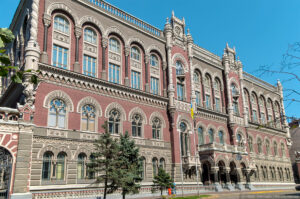
The National Bank of Ukraine (NBU) raised its estimate of international reserves at the end of 2026 to $69.7 billion from $64.8 billion, and for 2027 to $73.7 billion from $66.5 billion.
“The transfer of a portion of the foreign currency received into international reserves will lead to their growth to nearly $70 billion by the end of the year. This forecast takes into account increased demand for imports of components for arms production and, accordingly, an expansion in structural demand for foreign currency, which will require the NBU to step up its interventions to meet the economy’s needs while maintaining the stability of the foreign exchange market. “In other words, the NBU’s intermediary role in the foreign exchange market will strengthen,” the National Bank noted in a press release on Thursday.
As previously reported, $11.3 billion was deposited into the government’s foreign exchange accounts at the National Bank in June, including $6.8 billion from the EU and nearly $4.5 billion through World Bank accounts. In addition, Ukraine received $4.4 billion from the European Union as part of the first disbursement of the first defense tranche under the Ukraine Support Loan program; however, these funds were not credited to the country’s international reserves due to their restricted (earmarked) use. In July, Ukraine received another tranche of EUR 3.47 billion from the EU under the Ukraine Support Loan program and a second tranche of approximately $690 million from the IMF. The NBU expects that the total amount of direct budgetary support from partners in 2026 could reach about $54 billion, which will be sufficient to cover the budget deficit.



