

The Romanian government has approved an emergency decree declaring a state of emergency in the oil and petroleum products market for the period from April 1 to June 30, 2026, and has introduced a package of measures to protect the economy and the population. The key measure involves price controls through restrictions on commercial markups. The maximum aggregate markup across the supply chain for gasoline, diesel, and certain raw materials used in their production is capped at 50%, and penalties ranging from 0.5% to 1% of a company’s annual turnover are imposed for exceeding these limits.
Romanian authorities explain that the emergency measures are being introduced amid rising global oil prices, increased insurance and logistics risks, and the country’s high dependence on imports.
As of March 27, fuel prices in Bucharest were:
gasoline: 9.19–9.23 lei per liter (about 1.85–1.86 euros);
diesel fuel: 10.26–10.36 lei per liter (about 2.06–2.08 euros).
Economist Adrian Negrescu warned that if external pressure persists, prices for premium diesel could rise to 12–13 lei per liter (about 2.4–2.6 euros).

The Moldovan government will propose to parliament that a state of emergency be declared in the energy sector for a period of 60 days, starting March 25, 2026, following the disconnection of the main Vulcănești–Isaccea power line as a result of Russian strikes on Ukraine’s civilian energy infrastructure. This was reported on the Moldovan government’s official website.
The Vulcănești–Isaccea line is the main artery for electricity imports and supplies 60–70% of the consumption on the right bank of Moldova. Authorities estimate a potential power deficit during peak hours at up to 350–400 MW starting March 25.
The Moldovan government stated that the state of emergency will allow for the rapid procurement of energy resources and emergency equipment, faster distribution of necessary resources, and, if necessary, the implementation of measures to restrict consumption and special operating rules for economic operators to protect critical infrastructure and social institutions.
At the same time, officials in Chisinau emphasize that consumers are currently being supplied with electricity from domestic sources and imports via alternative routes, including four 110 kV interconnection lines with Romania. These schemes have been used before, notably during the blackouts on January 31, 2026.
According to the Moldovan state agency Moldpres, citing the National Crisis Management Center, downed drones were discovered near the Isaccea-Vulcănești line, limiting access for technical crews and requiring demining before repair work can begin. Inspections are being conducted in coordination with transmission system operators from Moldova, Romania, and Ukraine.

In Romania, social support for Ukrainian refugees under temporary protection is provided, in particular, through the minimum inclusion income system; when determining eligibility for such assistance, the applicant’s total income is taken into account, including their Ukrainian state pension. This is stated in the explanations provided by the Dopomoha.ro portal.
According to the published information, Ukrainians under temporary protection in Romania are eligible for various social benefits under Law No. 196/2016 on the minimum inclusive income, as well as other support programs. The platform’s materials note that assistance depends on the applicant’s individual circumstances and legal status.
As indicated by publications on this topic, when transitioning to this support model, the authorities assess the household’s total income, and the Ukrainian pension is included in this calculation as income. This means that the amount of the Romanian social benefit may be reduced to account for the pension already received from Ukraine.
At the same time, other forms of assistance remain available to Ukrainians in Romania, including child benefits, support for mothers of newborns, unemployment benefits, and access to social services for people with disabilities. The amount and type of support depend on the specific category of the applicant and the documents submitted.
Thus, the key change for some Ukrainian refugees in Romania is that the pension from Ukraine is considered part of their total income and affects the amount of targeted social assistance they can receive under the Romanian system. According to Eurostat, as of the end of January 2026, there were over 193,000 people under temporary protection in Romania who had left Ukraine.

According to Serbian Economist, Romania has prepared a strategic study on the creation of a 781.9-km railway corridor from Constanța to the Hungarian border, which will combine modernized sections with speeds of 160–200 km/h and new double-track sections designed for speeds of up to 250 km/h. This is reported by Romanian business publications.
According to the study, the most suitable route is the Constanta–Bucharest–Brasov–Sighisoara–Târgu Mureș–Cluj-Napoca–Zaleu–Oradea–Hungarian border corridor. The project is estimated at €14.93 billion, with an average investment cost of approximately €19 million per kilometer.
The first phase involves the construction of a new double-track line between Bucharest and Cimpina with a design speed of 250 km/h, while the Cimpina–Brasov section is proposed to be upgraded to 200 km/h. The second phase covers the new Brasov–Cluj-Napoca line via Targu Mures, the third—Cluj-Napoca–Oradea via Zalau, and both of these new lines are also designed for 250 km/h. The fourth phase includes upgrading the Bucharest–Fetești section to 200 km/h and constructing a new double-track section between Fetești and Constanța for speeds of 250 km/h.
The document examines the technical, investment, operational, and institutional parameters of the project and recommends phased financing after 2027 through European funds, the state budget, and, potentially, public-private partnership mechanisms.
https://t.me/relocationrs/2476
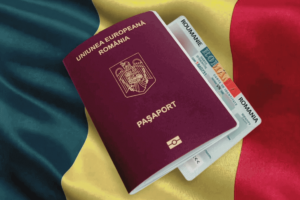
The Romanian authorities have extended the transition period for submitting applications to regain Romanian citizenship without the mandatory B1-level Romanian language certificate by one more year.
The transition period itself has been moved from March 15, 2026, to March 15, 2027. Thus, over the next 12 months, applicants under this procedure will still be able to begin the process without providing a language certificate at the application stage.
The requirement to demonstrate proficiency in Romanian at the B1 level was introduced by Law No. 14 of March 12, 2025, and the agency’s leadership initiated steps to postpone its practical implementation.
This does not mean the cancellation of the language requirement itself, but rather an extension of the transition period for another year.
Source: https://relocation.com.ua

A Ukrainian citizen illegally crossed the border with Romania in a light aircraft and was detained in Suceava County after a call to the 112 emergency service, according to the Romanian Border Police. The official statement was published on the website of the Sighetu Marmației Territorial Inspectorate of the Border Police.
According to the Romanian side, the incident occurred on March 8 at around 10:30 a.m. near the village of Frătăuții Vechi in Suceava County. After receiving the signal, police and border guards arrived at the scene and identified the man by his Ukrainian biometric passport. Romanian authorities also found the aircraft in the garden behind one of the houses in the village.
According to the Border Police report, the man requested temporary protection in Romania due to the war in Ukraine. At the same time, Ukrainian border authorities were notified of the incident through the Porubne contact point.
Criminal proceedings have been opened against the Ukrainian citizen under two articles: for illegally crossing the state border and for operating an aircraft without the necessary certification documents.
According to the UNHCR and the Romanian government, there were 201,860 refugees from Ukraine in the country at the end of December 2025.



