
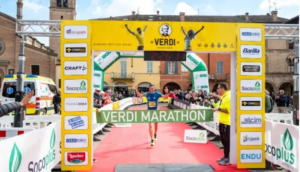
Swiss ultramarathon runner Frédéric Splendore plans to complete the Beyond Borders charity run—a journey of approximately 4,200 kilometers that he began in Monaco on July 24—in Ukraine on September 21, International Day of Peace.
As the athlete told the Open4Business editorial team, he expects to arrive in Lviv early in the morning on September 21, completing the walking portion of his journey across Europe. After that, Splendore and his support team plan to travel by camper van to Kyiv and visit Maidan Nezalezhnosti in the afternoon. Their departure from Ukraine is scheduled for September 22.
The main goal of the Beyond Borders project—known as “Courir pour Unir” (“Run to Unite”) in its French-language version—goes beyond mere athletic achievement. Splendor is using the run to draw attention to the consequences of the war in Ukraine and to raise funds to help Ukrainians affected by the conflict.
“This project isn’t just about sports or a record. It’s about using endurance to raise awareness, collect funds, and convey a universal message of peace and solidarity all the way to Ukraine,” said Splendor.
In total, the route spans approximately 4,200 km and passes through 13 European countries. On some days, the athlete covers 70–100 km. The project’s official website confirms that the goal of the journey is to arrive in Ukraine on September 21—International Day of Peace.
The first and most challenging stage of the route followed the Via Alpina through the Alps. Splendor covered about 2,000 km of the Alpine route and set a new men’s record for completing the route with team support—23 days, 11 hours, and 42 minutes. The result was recorded on August 16.
After completing the Alpine section, the athlete continued on for another approximately 2,200 km through Central and Eastern Europe toward Ukraine.
“When things got tough, I reminded myself that everything I’m going through is temporary and voluntary, whereas millions of Ukrainians have had no choice for many years and live with the consequences of war every day,” the athlete noted.
The charitable component of the project is being carried out through the Swiss association Au-delà de l’Effort. The funds raised are being directed to the Chaîne du Bonheur (Swiss Solidarity) fund to support Ukrainians affected by the war. The money is planned to be used, in particular, to rebuild destroyed buildings, assist internally displaced persons, and ensure access to education and medical care. According to the project, at least 95% of the funds raised will go directly to the fund for aid to Ukraine.
The campaign’s goal is to raise approximately EUR 140,000.
Frederick Splendor, 33, previously worked as a professional firefighter and a chemistry lab technician. He is the 2023 Swiss champion in the 100-km race and the 2024 national runner-up. His personal best in the marathon is approximately 2 hours and 22 minutes. In 2018, the athlete ran approximately 4,300 km on his own along the Pacific Crest Trail in the United States.
According to Splendor, arriving in Ukraine on International Day of Peace is meant to be a symbolic conclusion to his nearly two-month-long journey.
“I want to use running as a way to mobilize people, to remind Europeans that we must not turn a blind eye, and to show solidarity with a population that has been living with war for many years,” he noted.
Photo: ibelieveinyou.ch, Embassy of Ukraine in Hungary
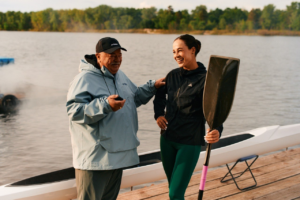
Ukrainian canoeist Liudmyla Luzan has won the “Athlete of the Year” nomination as part of the 30th anniversary season of the nationwide “Person of the Year 2025” programme.
Liudmyla Luzan is an Honoured Master of Sport of Ukraine, a three-time Olympic medallist, a multiple world and European canoeing champion, and one of the most decorated Ukrainian athletes of the modern era.
She was born on 27 January 1997 in Ivano-Frankivsk. She began her sporting career in artistic gymnastics, to which she devoted ten years and earned the title of Master of Sport of Ukraine. It was gymnastics that instilled in her the discipline, endurance and diligence that later became the foundation of her success in canoeing.
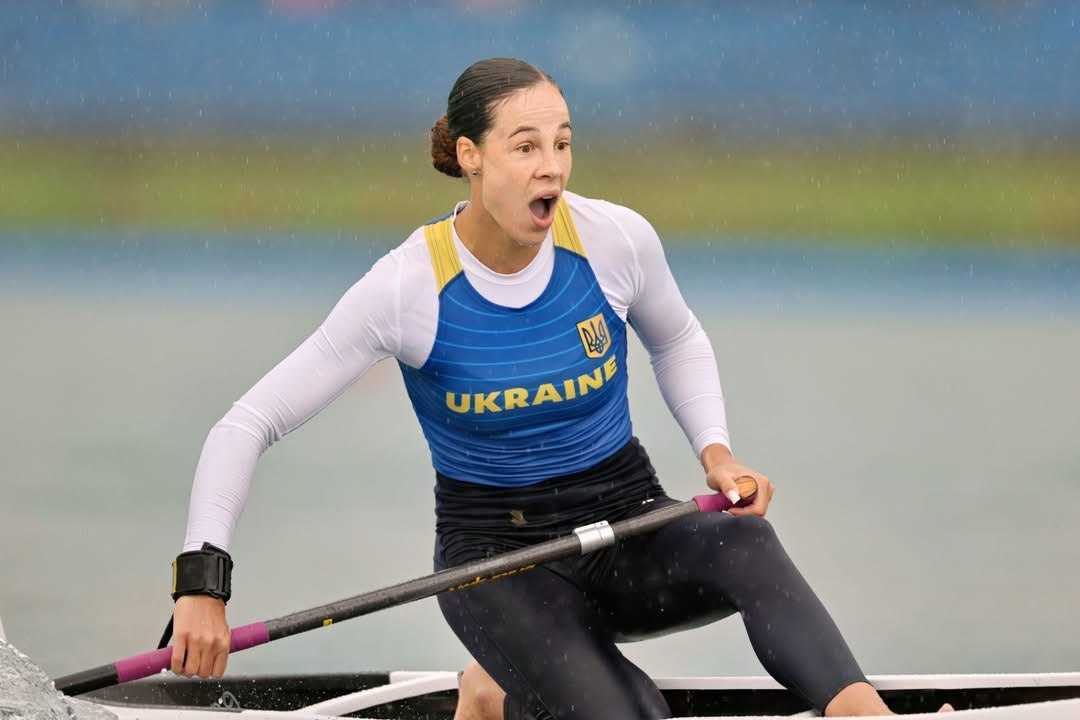
After switching to canoeing, Liudmyla’s first coach was Serhii Batomunkoiev, who recognised the athlete’s considerable potential. She later continued training under Mykola Matsapura, an Honoured Coach of Ukraine. Liudmyla represents Poltava Region and the city of Horishni Plavni.
One of the major milestones in her sporting career was the Tokyo Olympic Games, where Luzan won a silver medal in the women’s canoe double 500 metres and a bronze medal in the women’s canoe single 200 metres. At the 2024 Olympic Games in Paris, she won another Olympic medal, confirming her status as one of the world’s leading canoeists.
Liudmyla Luzan remains one of the leaders of Ukraine’s national team and competes successfully in both individual and team events.
For her outstanding sporting achievements and contribution to the development of Ukrainian sport, she has received state honours. Luzan is a full bearer of the Order of Princess Olga and has also been awarded the Order of Merit.
Since the beginning of the full-scale war, the athlete has continued to represent Ukraine at the world’s largest international competitions. Her performances and victories make it possible to raise the Ukrainian flag regularly at the world’s leading sporting arenas.
In addition to her professional career, Liudmyla promotes canoeing, motivates young people to participate in sport, takes part in social and charitable initiatives, and supports the development of Ukrainian sport.
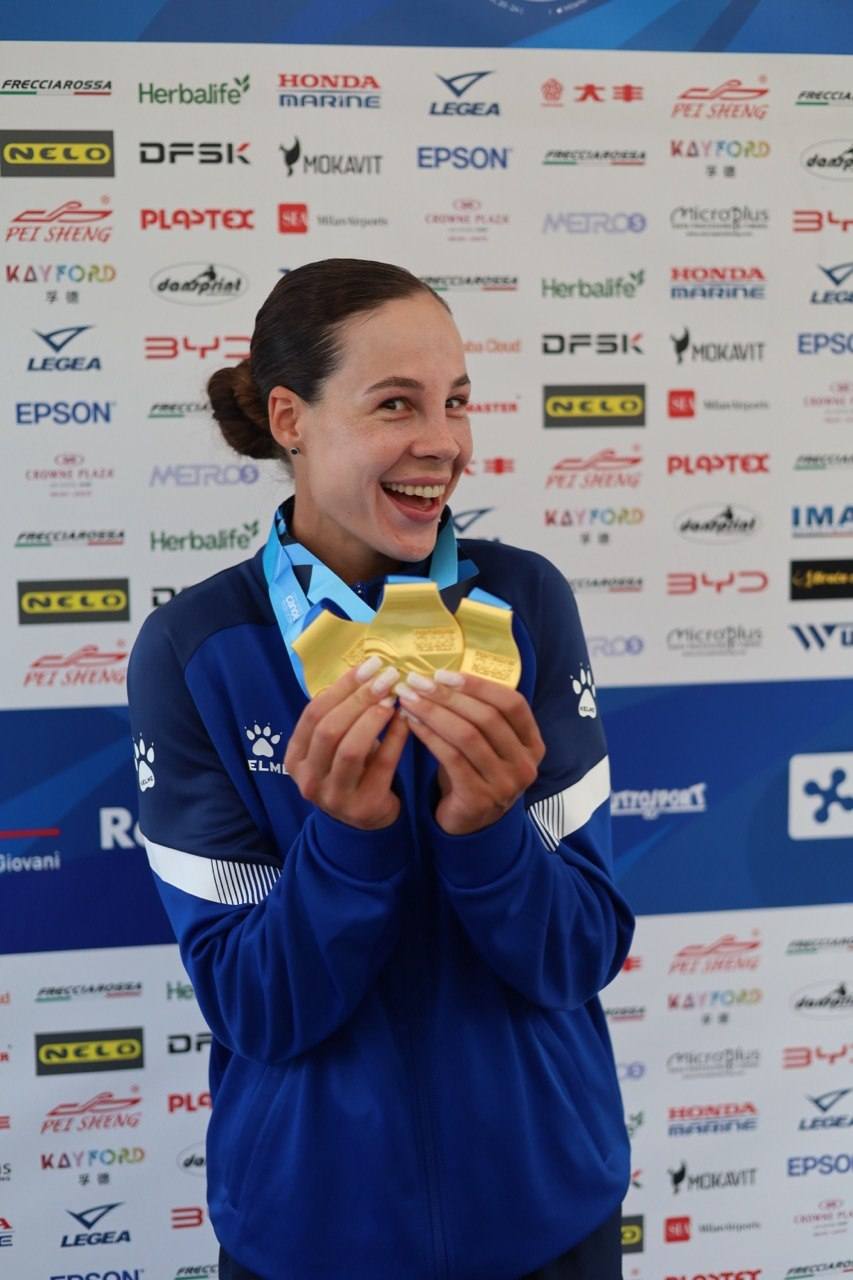
Luzan is currently preparing for her third Olympic Games. She names winning Olympic gold for Ukraine as her main sporting goal.
The awarding of the “Athlete of the Year” title to Liudmyla Luzan took place as part of the 30th anniversary season of the “Person of the Year” programme, which annually honours Ukrainians for their professional achievements, civic stance and contribution to the development of the state.
I would like to draw attention to one detail before publication: there is a discrepancy in the source text you provided — in the introduction, Luzan is described as a four-time world champion, while later she is described as an eight-time world champion. Therefore, in this version, I deliberately wrote “multiple world champion” so as not to perpetuate a potentially incorrect figure. If you wish, I can separately verify the current number of her titles following the 2025 season and provide the exact figure.
Open4Business is an information partner of the nationwide “Person of the Year 2025” programme.
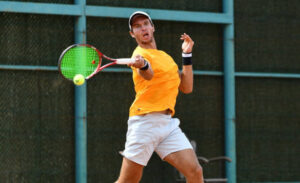
According to The Serbian Economist, Ukrainian tennis player Oleg Prykhodko has decided to change his sporting citizenship and will henceforth compete under the flag of North Macedonia.
The athlete is renouncing the flag under which he previously competed in international tournaments. Details of the transition process, as well as the reasons behind his decision, have not yet been officially disclosed.
Oleg Prykhodko is currently ranked 296th in the ATP rankings, which will make him one of North Macedonia’s leading tennis players once the change in sporting citizenship is complete.
The 27-year-old tennis player primarily competes in ATP Challenger and ITF tournaments. Over the course of his career, he has won several titles in both singles and doubles.
https://t.me/relocationrs/3211

The Adidas sports brand has returned to Kharkiv after a four-year hiatus; a discount store has opened at 199 Heroiv Kharkiva Street, according to a post on LinkedIn by Igor Marinich, CEO of Adidas Ukraine.
“After four years in a ‘frozen’ state since the start of the full-scale war, we are once again opening our doors to all our customers and athletes in our wonderful, athletic, incredibly brave, and Ukrainian city of heroes—Kharkiv!” he wrote.
Marinich also emphasized that the safety of employees and customers remains a key priority for the company.
As reported, in February 2024, Adidas closed all its retail locations in Ukraine due to the security situation, but began restoring the network’s operations as early as July 2022. In Kharkiv, the brand’s stores had previously also operated in the “Karavan” and “Dafi” shopping centers.
In Ukraine, the chain is managed by the state-owned enterprise “Adidas-Ukraine,” which is owned by Adidas AG. According to OpenDataBot, by the end of 2025, the company increased its revenue by 28% to 2,996,893,000 UAH, while net profit halved to 43.310 million UAH in 2025 compared to 94.205 million UAH in 2024.
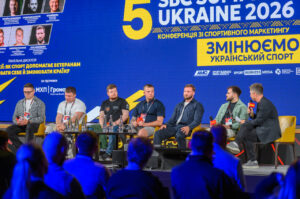
On Wednesday, May 27, the capital’s Parkovy Exhibition and Convention Center hosted the SBC Summit Ukraine, the All-Ukrainian conference on sports marketing, for the first time. This year’s summit marked the fifth anniversary of the event and was the largest in the history of the Sport&Business Club. It brought together nearly 1,500 participants from across the country, including athletes, presidents of federations and clubs, brand representatives, media professionals, entrepreneurs, marketers, investors, and managers. Throughout the day, guests networked, discussed future projects, exchanged experiences, and agreed on collaborations that are sure to continue after the summit.
The summit was co-organized by the Ukrainian Mass Sports Agency, the Kyiv City State Administration’s Department of Youth and Sports, the Sports Committee of Ukraine, and the Donetsk Regional Branch of the National Olympic Committee of Ukraine.
The event was hosted by Maria Skiba, a journalist for the “We Are Ukraine” TV channel, and Dmytro Yegorov, a radio host for “Autoradio.”
In a festive atmosphere, Alexei Braga, CEO of the Sport&Business Club, presented a certificate for 100,000 hryvnias to Artem Goncharenko, head of the “Architecture of Resilience” Institute for Veterans at KNUBA. The funds were raised through donations from participants in the Club’s events and will be used to purchase necessary rehabilitation equipment.
The summit took place simultaneously on two stages, featuring over 60 leading experts in the fields of sports, business, and media who are driving the industry forward today. The event served as a platform for candid dialogue on reforms, major investments, the survival of sports during wartime, attracting sponsors, integrating new technologies, rehabilitating veterans, and building athletes’ personal brands off the field.
Speakers on the main stage included: Matvii Bidnyi, Minister of Youth and Sports of Ukraine; Vadym Guttsait, President of the National Olympic Committee of Ukraine; Olga Saladukha, President of the Ukrainian Athletics Federation; Yulia Khan, Director of the Department of Youth and Sports at the Kyiv City State Administration; Ukrainian soccer legend Oleksandr Shovkovskyi; Ihor Marynych, Director of Adidas Ukraine; sports blogger and founder of Trendets Camp Dmytro Povooznyuk, CEO of Lenovo in Ukraine Taras Dzhamalov, President of the Ukrainian Premier League Yevhen Dykyi, Ukrainian and Turkish soccer champion and creator of a YouTube project Denys Boiko, MEGOGO journalist Oleksandra Kucherenko, Vice President of the NOC of Ukraine and President of the Ukrainian Padel Federation Oleksiy Dniprov, Olympic fencing champion Olena Kravatska, 6-time Ukrainian track and field champion and Biopell ambassador Daria Stavnycha, FC Shakhtar goalkeeper coach Andriy Pyatov, Olympic judo medalist Daria Bilodid, founder of the rhythmic gymnastics academy and Olympic bronze medalist Anna Rizatdinova, WowBody App owner Anita Lutsenko, three-time Olympic canoeing medalist Lyudmila Luzan, and others.
At the same time, practical discussions on the development of sports projects, audience engagement, and modern communication tools took place on the Best Practices Stage for three hours. Speakers included: European fencing champion Roman Svichkar, DuelDuck founder Stanislav Horuna, Spartan Ukraine director Oleksiy Vovk, X-Park founder Yuriy Zozulia, Red Foxes director Olena Rozhkova, and others.
“Holding the summit at the Parkovy Exhibition and Convention Center was our big dream, and I am truly proud that we managed to make it happen, even amid the war. This event has become the largest in our history, as we have broken absolutely all of our own records for the number of speakers, guests, and partners. When you see how this powerful synergy of sports, business, and media is working at full capacity on such a platform, you realize that nothing is impossible for our industry.
Our goal remains unchanged—to create a space for open dialogue, major investments, the emergence of new technological use cases, and collaborations that drive the industry forward. In today’s environment, maintaining this momentum and uniting sports and business is of the utmost importance. But, of course, we wouldn’t have achieved such an impressive scale without our reliable partners, the Club’s large community, and our strong team. Thank you to everyone who has been a part of this story—and see you soon!” – Alexey Braga, CEO of Sport&Business Club.
KYIV, MARKETING, SBC Summit Ukraine, Sport&Business Club, SPORTS
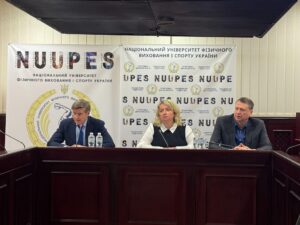
From Injury to Victory: Is Ukraine Ready for Systematic Veteran Rehabilitation Through Sports
On April 16, 2026, an open expert meeting was held at the National University of Physical Education and Sports of Ukraine
“From Injury to Victory: Is Ukraine Ready for a New Rehabilitation System?”, which served not only as a discussion platform but also as an attempt to form a shared vision of the future model of adaptive sports and rehabilitation in Ukraine.
The event brought together representatives of government institutions, relevant ministries, the scientific and educational community, the National Olympic University, civil society organizations, the sports community, rehabilitation centers, and the veterans themselves—those for whom this system is intended to work first and foremost.
Full-scale war has radically changed the social structure of Ukrainian society. Thousands of soldiers are returning to civilian life with injuries—both physical and psychological. In this context, rehabilitation ceases to be a narrowly defined medical issue and becomes a matter of national resilience.
Adaptive sports play a much broader role in this process than mere physical activity. It is a tool for physical recovery, psycho-emotional stabilization, social integration, and the formation of a new identity after trauma.
However, the main challenge, which was repeatedly raised during the meeting, is the lack of a systematic approach.
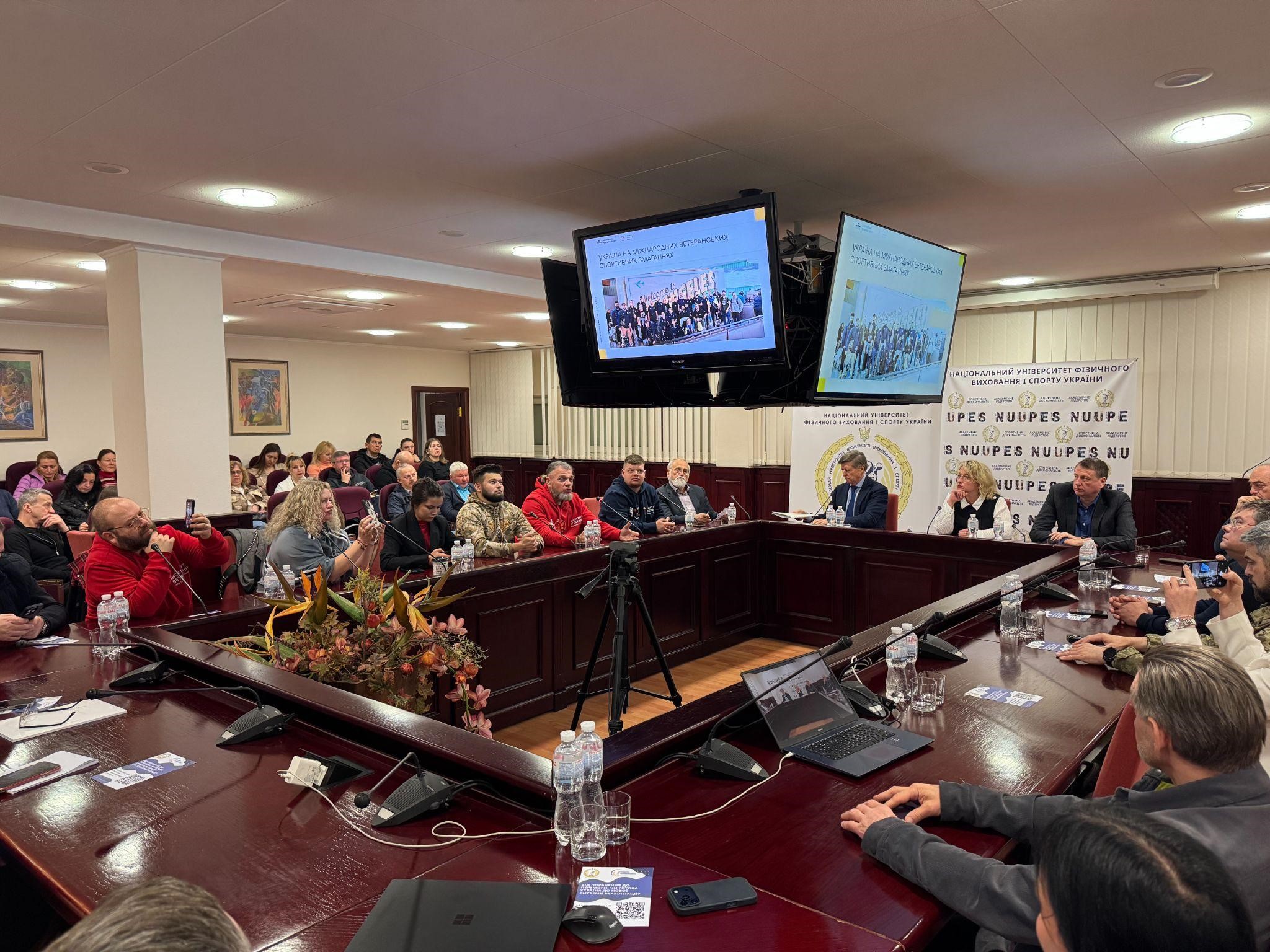
Opening the event, Viktor Korzh, director of the NUPSU Training and Rehabilitation Center, immediately identified the key problem: there are already many initiatives in Ukraine, but they remain fragmented.
“Physical education and sports rehabilitation, as well as adaptive sports, are an extremely important social component that should serve the recovery and social integration of our wounded veterans.
This requires an individualized approach, professional medical supervision, and consideration of each person’s health condition.
Only then will these tools truly be beneficial and not cause harm.
“Sports and physical rehabilitation are powerful tools that must be based on deep knowledge and responsibility, and only then will they truly be beneficial and not cause harm.”
His statement set the tone for the entire discussion: the focus is not on creating new separate projects, but on building a comprehensive ecosystem.
Special attention was paid to the role of education in shaping this system.
Olga Borisova, Acting Rector of the National University of Physical Education and Sports of Ukraine, emphasized the strategic importance of training specialists.
“Today, universities must go beyond traditional education and become centers for shaping a new rehabilitation system.
We are talking about training specialists who will work at the intersection of sports, medicine, and psychology.
It is precisely such professionals who will ensure the quality and safety of the veterans’ recovery process.”
This approach underscores that the challenge of adaptive sports is not merely organizational but also a staffing issue. Without systematic training of specialists, even the best programs cannot function effectively.
A key focus of the discussion was an analysis of the experiences of the United States and Israel—countries with long-standing experience working with veterans.
Artem Goncharenko, head of the “Architecture of Resilience” Institute for Rehabilitation, Reintegration, and Professional Development at KNUBA, emphasized that the key difference between these systems is their integration.
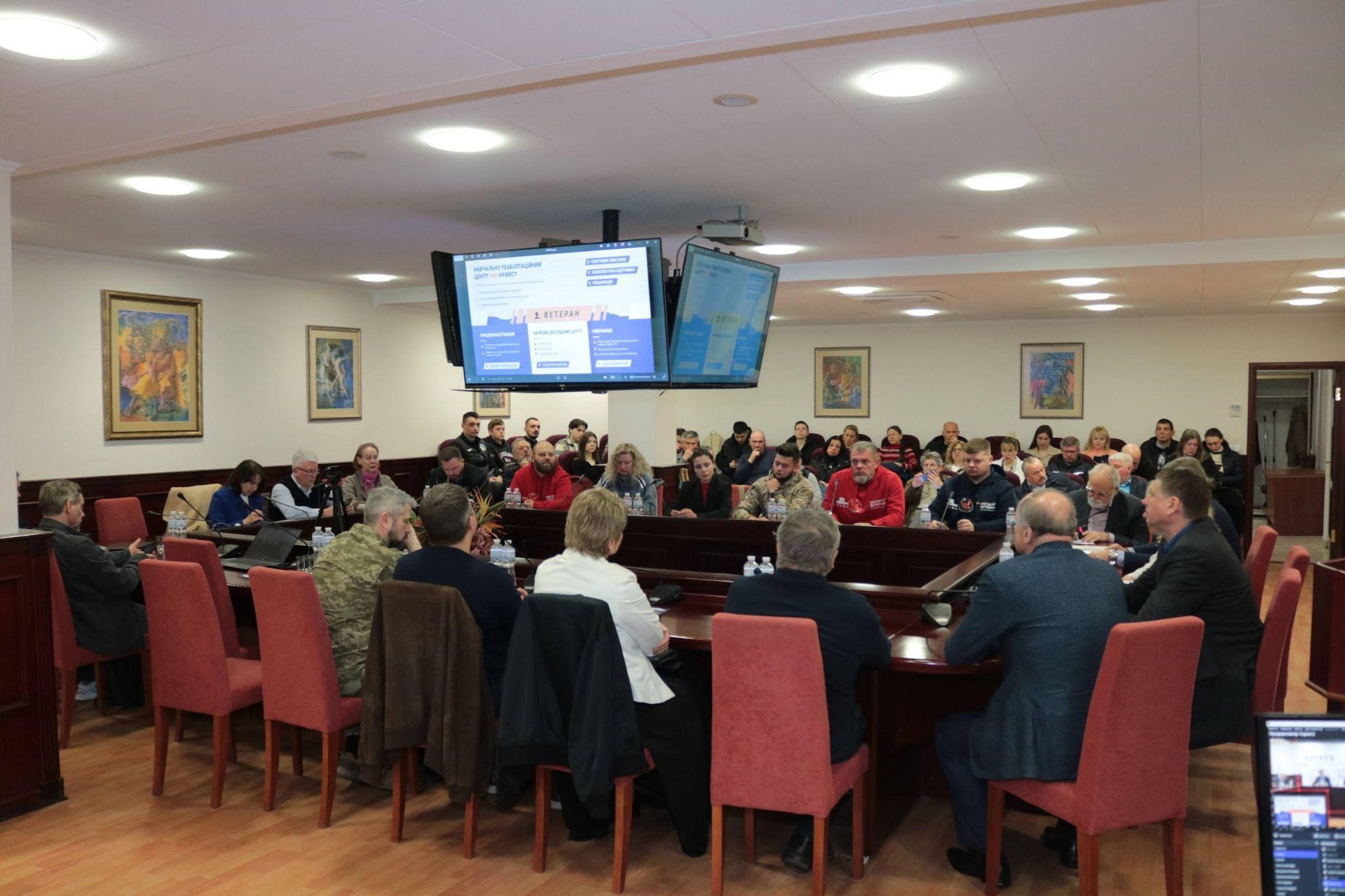
“In the U.S. and Israel, adaptive sports do not exist in isolation—they are integrated into state rehabilitation policy.
This is part of a continuous process: from the hospital to a full return to society.
It is important for Ukraine not simply to adopt this experience, but to properly integrate it into its own system.”
In fact, this involves a shift from “post-injury assistance” to a model of “supporting the individual at every stage of recovery.”
One of the most powerful moments of the meeting was the speech by veteran Vadym Honcharenko, who shared his own experience of participating in international competitions.
“Adaptive sports are not just about physical recovery.
It’s about regaining self-confidence, about the opportunity to feel in control of your life again.
It was through sports that I was able to find new motivation and return to an active life.”
His words effectively confirmed what the experts had been saying: the effectiveness of the system is measured not by the number of programs, but by the changes in the lives of specific people.
Also among the meeting participants were: the head of the Sports Committee of Ukraine, Illia Shevlyak; the head of the Department of Physical and Mental Health at the Ministry of Veterans Affairs of Ukraine, Vyacheslav Chernenko; and other guests who actively participated in the discussion.
One of the main conclusions of the meeting was the need for genuine cooperation between the state, educational institutions, the business sector, and civil society organizations. Without such collaboration, the adaptive sports system will remain fragmented and unable to ensure long-term impact.
The meeting at the National University of Physical Education and Sports of Ukraine demonstrated that an understanding of the problem has already been established in Ukraine and that all key players are in place to address it. However, the next step is to consolidate efforts to ensure veterans’ full return to a meaningful life.
Adaptive sports today is not just about physical activity. It is about a new social policy, about bringing people back to life, about the state’s ability to respond to the challenges of war.
And the main question that remained after the event:
Will Ukraine be able to unite all these efforts into a single system that works not on a case-by-case basis, but for every veteran?
The answer to this question depends not on words, but on the decisions that will be made in the near future.



