
Over 210,000 tourists used the services of “Join Up! Ukraine” during the summer season of 2026 (from May through September), and the average cost of an international package tour increased by 8.6% to EUR620, the tour operator’s press service told Interfax-Ukraine.
“This summer, a lot depended on our ability to adapt quickly. Airfare prices rose—tourists began waiting for discounts and booking at the last minute. There was a risk of missing flights due to train delays—demand for our bus transfers and bus tours in general increased. We were constantly adjusting our programs to meet these needs,” said Iryna Mosulezna, director of “Join Up! Ukraine.”
As previously reported, nearly 415,000 Ukrainians used the services of “Join Up! Ukraine” last year.
This summer, July was the busiest month in terms of tourist numbers, with over 50,000 Ukrainians going on vacation.
Turkey became the leader in terms of the number of bookings at “Join Up! Ukraine,” displacing Egypt, which topped the ranking last year. Other popular destinations included Greece, Bulgaria, Spain, Montenegro, Tunisia, Cyprus, and Albania. In 2025, the top five were Egypt, Turkey, Greece, Bulgaria, and Montenegro. This year, Spain replaced Montenegro in the top five most popular destinations.
The average cost of an international package tour during the 2026 season was 29,800 UAH (620 EUR) per tourist, which is 8.6% higher in euros than last year.
The most affordable starting prices per tourist, based on double occupancy, were in Turkey (starting at 14,750 UAH). Tours to Egypt started at 19,950 UAH, to Greece at 20,120 UAH, to Montenegro at 21,400 UAH, and to Spain at 34,450 UAH.
In terms of travel logistics, Chisinau Airport remains a key hub for Ukrainian tourists, with 58.1% of departures originating from the Moldovan capital’s airport, compared to 55% in 2025. This season, the popularity of Polish airports has noticeably declined compared to last year. While Rzeszów accounted for 12% of departures last year, this year it accounted for only 6.7%. Warsaw’s share also fell—to 2.3% from 5%.
The main logistical challenge at the end of the summer was widespread train delays due to security risks. The situation escalated in August, and the likelihood of missing a flight increased significantly. As a result, demand for organized bus transfers—both from the tour operator “Join Up! Ukraine” and across the market in general—rose sharply toward the end of the season. In total, more than 26,000 tourists took advantage of the tour operator’s bus tours, with Kyiv, Lviv, Zaporizhzhia, Kharkiv, and Uzhhorod serving as the main departure cities for bus trips.
As for domestic tourism, due to the security situation, the western regions of Ukraine were the undisputed leaders. Most trips this season lasted two to three days, with the exception of health resorts (7 to 14 days). The average cost per person for a tour during this year’s summer season was approximately 14,000 UAH. The main criterion for choosing a hotel was having as many amenities as possible in one place. Tourists sought resorts with spas, swimming pools, meals, and children’s entertainment so they wouldn’t have to spend time organizing their leisure activities. There was also a noticeable increase in bookings for hotels that allow pets.
Egypt remains the leader for the upcoming winter season, currently accounting for the most bookings, while interest in trips to exotic destinations—particularly Vietnam and Zanzibar—is on the rise.
The company reported that it has already opened early booking for the summer season of 2027; among the new destinations being prepared is Croatia.
The travel company Join UP! LLC was founded in 2013. The ultimate beneficiaries are Yuriy and Oleksandr Albi. The company’s authorized capital is 72.671 million UAH.
The company currently operates in Poland, the Czech Republic, Estonia, Latvia, Lithuania, Romania, Ukraine, Kazakhstan, and Moldova. Since its inception, the brand has served more than 8 million tourists across all markets and expanded its partner network to nearly 10,000 travel agencies, according to internal data.
According to an analysis by the Serbian business portal Parametar, starting November 1, 2026, Montenegro will introduce a visa requirement for citizens of Russia, Belarus, and Turkey, which could significantly impact the country’s tourism, labor market, rental sector, and real estate market.
On September 24, the Montenegrin government confirmed the initiation of the procedure to terminate the existing visa-free travel agreements with these three countries. The decision was made as part of efforts to bring the country’s visa policy into line with European Union regulations. As early as July 23, the government approved changes to the visa regime, which are set to take effect on November 1.
Until October 31, citizens of Russia and Belarus may enter Montenegro without a visa and stay there for up to 30 days. A similar visa-free regime applies to Turkish citizens. Once the new rules take effect, holders of ordinary passports will need a Montenegrin visa. Regarding Turkey, Podgorica plans to conclude a separate agreement, maintaining visa-free entry for holders of diplomatic, service, and special passports.
However, there are significant exceptions. Citizens of these countries who hold a valid Schengen, U.S., British, or Irish visa or a corresponding residence permit will, as before, be able to enter Montenegro without a separate Montenegrin visa for up to 30 days.
The new regime also does not require a tourist visa for foreigners who already hold a valid temporary or permanent residence permit in Montenegro or a permit for temporary residence and work.
According to data from the Montenegrin Ministry of the Interior cited by Parametar, as of the end of 2025, 20,793 Russian citizens and 13,506 Turkish citizens held temporary or permanent residence permits. Together, these two communities account for approximately 5.5% of the country’s population, which totals about 624,000 people.
The Belarusian community is significantly smaller. According to the latest census, as of late October 2023, 738 Belarusian citizens had permanent residence in Montenegro; more recent data on Belarusians is not currently available.
Tourism could become one of the most vulnerable sectors. In 2025, Russian tourists accounted for 16.4% of all overnight stays by foreign visitors in Montenegro, while tourists from Turkey accounted for another 4.3%. In the private accommodation segment, the Russian market’s share reached 22.1%, while the Turkish market’s share was 4.9%. Thus, these two countries accounted for more than a quarter of all foreign overnight stays in apartments, villas, and other private accommodations.
According to Parametar’s assessment, the most noticeable impact may not be among Russians and Turks who already legally reside in Montenegro, but rather among new tourists, real estate buyers, renters, and those considering the country as a place to relocate. This is particularly important for Budva, Bar, Tivat, Kotor, and Herceg Novi, where foreign demand plays a significant role in the rental, real estate, hospitality, and service markets.
The changes may also affect the labor market. In 2025, 10,346 temporary residence and work permits were issued to Turkish citizens, and 7,429 to Russian citizens. Turkey has become the largest source of foreign labor in Montenegro. The introduction of an additional visa procedure for new workers could potentially delay their recruitment in the construction, hospitality, and other sectors.
The visa reform is linked to Montenegro’s EU accession process. The country’s government notes that full alignment of visa policy is one of the conditions for closing Negotiation Chapter 24, “Justice, Freedom, and Security.” Fulfilling this condition also paved the way for receiving approximately 4 million euros under the EU Growth Plan for the Western Balkans.
As part of a broader reform of Montenegro’s visa regime, visa requirements will also apply to citizens of China and Saudi Arabia starting November 1, since Podgorica’s previous policy toward these countries was also not in line with EU regulations. However, the government’s September 24 decision to suspend international agreements directly concerns Russia, Belarus, and Turkey.
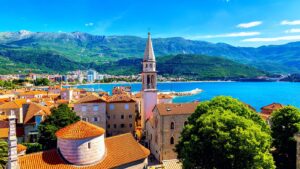
According to Serbian Economist, 815,916 tourists visited the Budva Riviera in Montenegro from January through August 2026, a 17% increase compared to the same period last year, with Ukrainians remaining one of the most prominent groups of foreign visitors to the resort.
This was reported by Milan Tičić, director of the Budva Tourism Organization, in an interview with the Montenegrin publication Vijesti, published on September 18. According to him, tourists from 205 countries visited Budva over the course of eight months.
Serbia and Russia remain the resort’s largest traditional markets. The number of tourists from Serbia has increased by approximately 19% since the beginning of the year, while the flow of Russian tourists has grown by as much as 34%.
Some Western European markets are growing even faster in 2026. The number of visitors from Poland increased by 83%, from Italy by 59%, from the Netherlands by 51%, from Spain by 46%, from the United Kingdom by 25%, and from Germany and France by approximately 15%. Thus, the geography of foreign tourism in Budva is gradually diversifying, although Serbian and Russian tourists still hold the leading positions.
Ukrainians are also among the key tourist groups. According to data from the Budva Tourism Organization, during the peak season on August 7, 2026, Ukrainian citizens were among the top ten largest groups of guests in group accommodations, alongside tourists from Serbia, Russia, Israel, the United Kingdom, Germany, Bosnia and Herzegovina, and Poland.
In the private sector, Ukrainians’ presence is even stronger. In early August, they were the fourth-largest group after tourists from Serbia, Russia, and Bosnia and Herzegovina. In hotels and group accommodations, Ukrainians also consistently ranked among Budva’s top ten source markets.
By the end of August, the pattern remained similar. Among the most numerous guests at hotels and other collective accommodations, the Tourism Organization listed tourists from Serbia, Russia, Israel, the United Kingdom, Bosnia and Herzegovina, Ukraine, Germany, Poland, Turkey, and China.
The importance of the Ukrainian market is also confirmed by Montenegro’s national statistics. According to MONSTAT, in 2025, Ukrainians accounted for 4.3% of all overnight stays by foreign tourists in the country, tying with tourists from Turkey in this regard. The largest shares of overnight stays were accounted for by visitors from Serbia (23.4%), Russia (16.4%), Bosnia and Herzegovina (8.1%), and Germany (4.6%).
In the segment of private apartments and other private accommodations, the share of Ukrainians was even higher—4.7% of all overnight stays by foreign visitors. Serbian tourists accounted for 25.6%, Russian tourists—22.1%, citizens of Bosnia and Herzegovina—9.4%, and Turkish tourists—4.9%. At the same time, 94.8% of all overnight stays in Montenegro’s private sector occurred specifically at seaside resorts.
In 2025, a total of 2.729 million tourists visited Montenegro, accounting for 15.367 million overnight stays. Foreign visitors accounted for 95.8% of all overnight stays, and coastal resorts accounted for 92.6%, underscoring the critical importance of Budva and other coastal cities to the country’s tourism economy.
The growth in tourist traffic is already having an impact on Budva’s revenues. From January through August 2026, revenue from the tourist tax collected by the city’s tourism organization reached a record 2.477 million euros, which is 6% more than the previous year. In July, revenue increased by 16%, and in August, by 13%.
Budva remains one of Montenegro’s main tourist centers and is particularly popular among citizens of Serbia, Russia, Ukraine, and countries in Central and Western Europe. At the same time, the rapid growth in tourist arrivals from Poland, Italy, the Netherlands, and the United Kingdom indicates a gradual reduction in the resort’s dependence on a few traditional markets.
The Ukrainian Corporation for Viticulture and Winemaking “Ukrvinprom” and the state-owned “Ukrgasbank” have signed a cooperation agreement aimed at supporting the development of the Ukrainian wine industry, implementing joint projects, developing wine tourism, and introducing modern financial instruments for companies in the industry, the corporation reported.
As Ukrvinprom CEO Volodymyr Kucherenko stated in a comment to Interfax-Ukraine, the goal of the agreement is to create opportunities for further cooperation and provide winemakers with access to the bank’s financial instruments.
The agreement does not specify a fixed amount of funding. Industry enterprises will have access to the bank’s financial instruments as needed and within the framework of specific projects, in accordance with the terms of the bank’s programs.
“It is important to us that this particular agreement opens up an additional tool to support our winemakers and industry enterprises. You will see concrete results in certain areas of this cooperation, I think, in the very near future—even before the end of this year,” he said.
According to Kucherenko, the collaboration will also encompass the development of wine tourism and the preservation of Ukraine’s winemaking cultural heritage.
“We see the need to revive, preserve, study, and restore the so-called Mazepa Wine Cellar. We also see other areas that we are currently exploring. We hope that with the help of ‘Ukrgasbank’ and other patrons, we will be able to revive our Ukrainian winemaking heritage. And not only revive and preserve it, but also build upon the achievements of our winemakers,” Kucherenko noted.
He added that “Ukrvinprom” is open to cooperation with all market participants. In the first phase, the corporation plans to help its members gain access to special programs developed jointly with the bank, as well as to inform market participants about available opportunities.
The agreement was signed on September 18 during the 5th International Forum “Ukrainian Wine—Part of the World’s Cultural Heritage: From Trypillia to the Present Day” in Kyiv. One of the forum’s topics was financing opportunities for investments in winemaking and wine tourism.
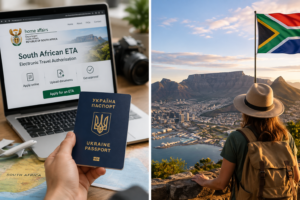
The Republic of South Africa has included Ukraine in the list of countries whose citizens can apply for an Electronic Travel Authorisation (ETA) to enter the country, the Embassy of Ukraine in the Republic of Mozambique reported.
The innovation allows Ukrainian citizens to submit an application remotely without personally visiting the South African embassy or a visa center. The applicant must register in the electronic system, complete the application form, upload the necessary documents and a photograph.
According to the Ukrainian diplomatic mission, after submission of a complete package of documents, the application should be processed within no more than 24 hours.
At the current stage, ETA is available to Ukrainians for trips to South Africa for tourism or private purposes. The maximum duration of stay under such an authorisation is up to 90 days.
The issued electronic entry authorisation can be used within 180 days from the date of issuance.
An application can be submitted on the official website of the Department of Home Affairs of the Republic of South Africa: South African ETA. The official system confirms the possibility of applying for an Electronic Travel Authorisation online.
At the same time, at the initial stage, ETA cannot be used at all border crossing points. Entry with an electronic authorisation is available through four international airports in the country: O. R. Tambo International Airport in Johannesburg, Cape Town International Airport, Lanseria International Airport and King Shaka International Airport in Durban.
These airports are equipped with the necessary systems for checking electronic authorisations and passengers’ biometric data.
The embassy recommends that Ukrainians additionally check the current ETA requirements and the conditions for entry into South Africa before traveling, as the procedure for using the electronic system may change as it is further implemented.
The introduction of ETA significantly simplifies the organization of tourist and private trips by Ukrainians to South Africa, since previously obtaining permission required going through the traditional visa procedure.
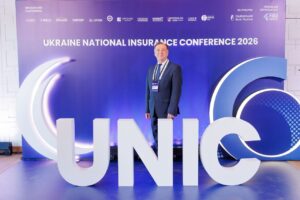
Miroslav Bojchin, Chairman of the Board of PJSC “European Travel Insurance,” was named the winner in the “Insurance Market Leader of the Year” category as part of the 30th anniversary nationwide “Person of the Year 2025” program.
Boychin has been working in the international insurance business for over 20 years. He holds three advanced degrees, including in foreign languages, finance, and management. He began his professional career in government agencies and has worked in the insurance industry since 1996.
Since 2005, Boychin has worked for the international insurance groups Generali, Munich Re, and EIG. In 2006, he became the head of “European Travel Insurance,” which specializes in travel insurance. Since 2021, he has also served as chairman of the supervisory board of the insurance company “Euroins Ukraine.”
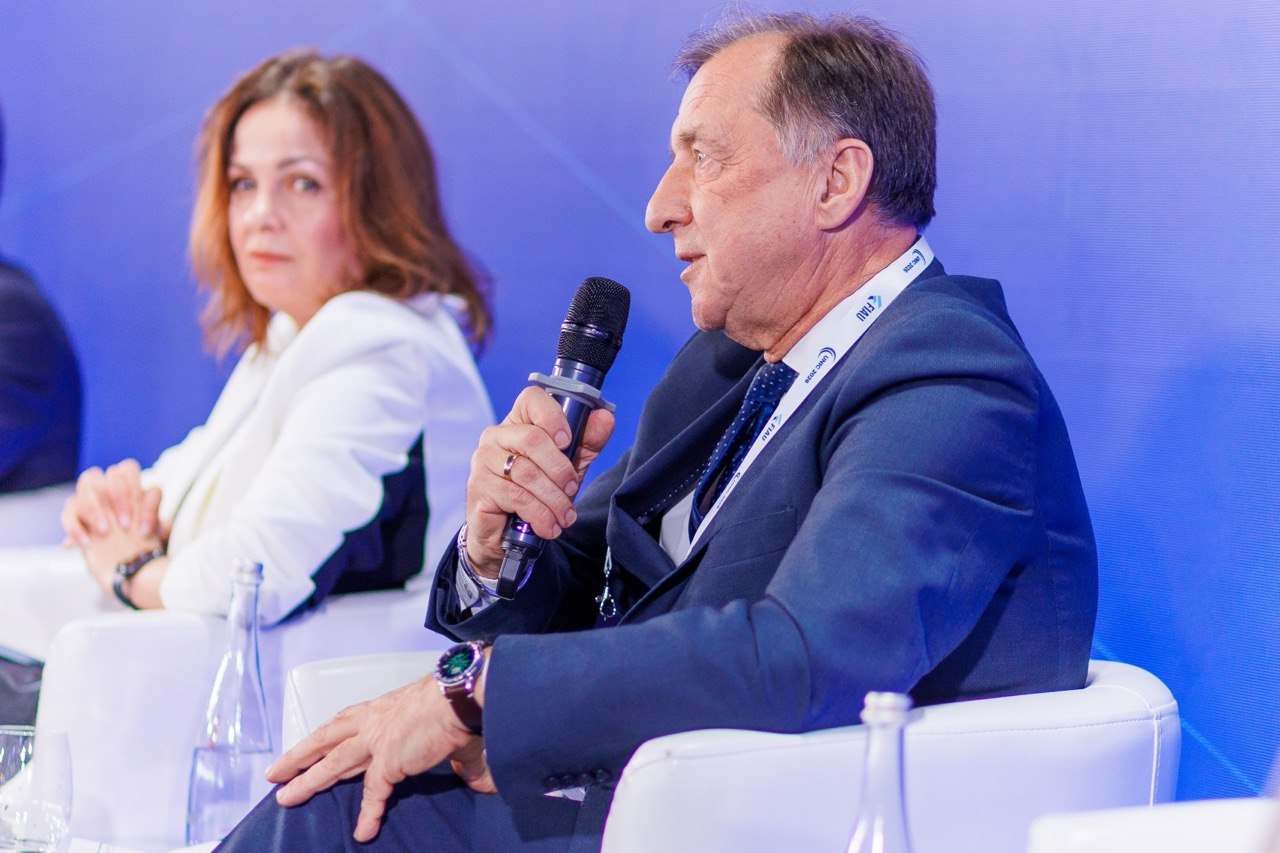
Under Boychin’s leadership, “European Travel Insurance” has strengthened its position in the Ukrainian travel insurance market and expanded its customer base. According to the company, the number of its insured customers exceeded 1 million in 2025.
The company specializes in insurance for travelers going abroad, medical and travel insurance, as well as travel-related insurance products. “European Travel Insurance” is a member of ITIA, an international group of specialized travel insurers that brings together companies from several countries.
The company notes that in recent years, one of its key priorities has been adapting its insurance products to changes in the travel patterns of Ukrainians, growing demand for medical care abroad, and new risks associated with martial law.
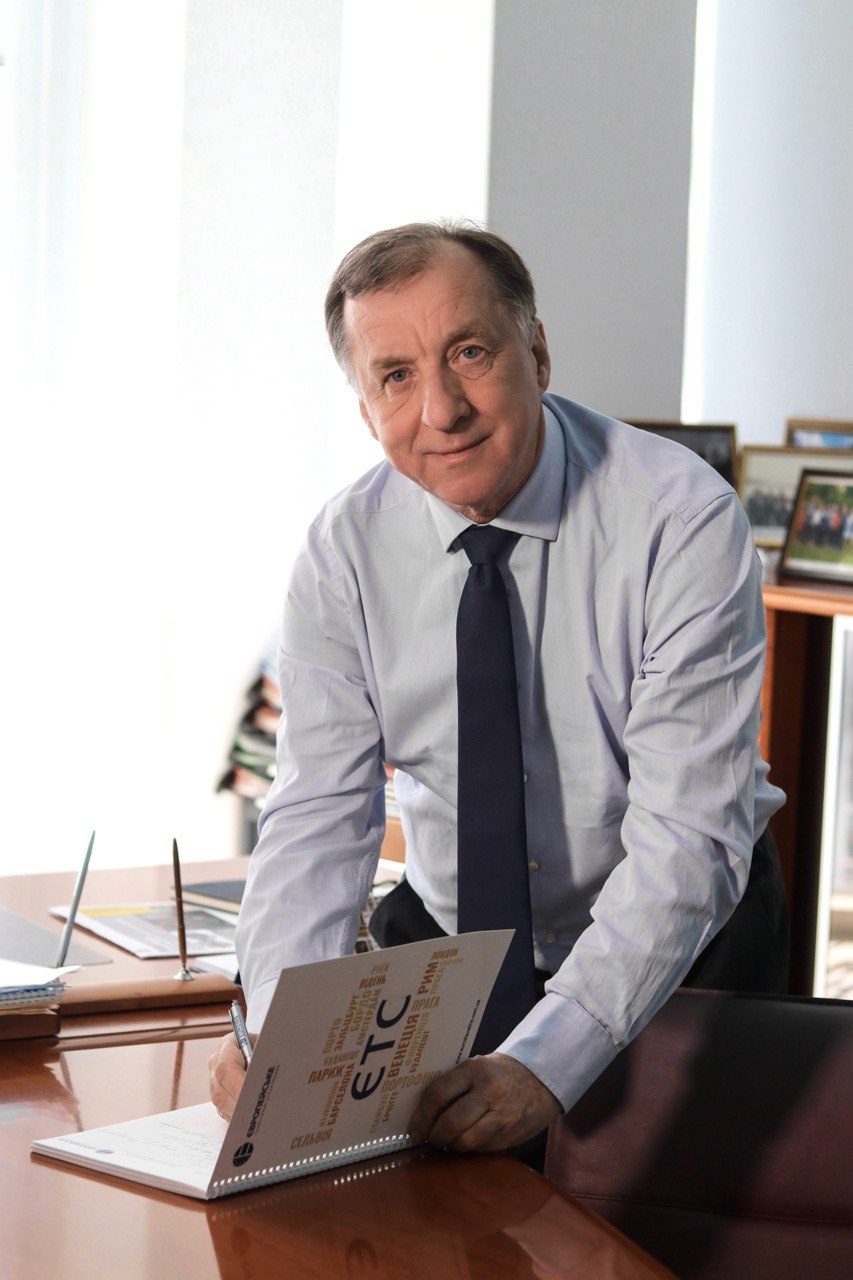
In addition to its insurance activities, “European Travel Insurance” participates in social and charitable initiatives, including providing funds to support Ukrainian military personnel.
The nationwide “Person of the Year” program has been held in Ukraine since the 1990s and annually honors representatives from business, government, culture, sports, and other fields. In 2025, the program was held for the 30th time.
Open4business is the program’s information partner.



