

According to Serbian Economist, Montenegro will become a party to the Convention on a Common Transit Procedure and the Convention on the Simplification of Formalities in Trade in Goods from November 1, 2025, reports the State Customs Service of Ukraine.
The decision was made by the European Commission’s Directorate-General for Taxation and Customs Union (DG TAXUD). Once the convention enters into force, Montenegrin customs authorities will be able to perform the functions of customs offices of departure and destination for international shipments under the NCTS procedure.
The State Customs Service of Ukraine emphasized that the expansion of the network of countries participating in the Convention contributes to the development of uniform digital standards and reduces customs clearance time at borders.
The Common Transit Convention and the Convention on the Simplification of Formalities in Trade in Goods are international agreements aimed at simplifying the movement of goods between countries through uniform customs procedures and the NCTS (New Computerized Transit System) electronic system.
Convention participants can file a transit declaration once for the entire route chain, which reduces administrative costs and speeds up the delivery of goods. For countries seeking integration with the EU, participation in the NCTS system opens up access to a single digital customs space and increases attractiveness for businesses, especially logistics and export-import companies.
Serbia officially acceded to the Convention on February 1, 2016. On that day, the country began practical application of the NCTS system.
https://t.me/relocationrs/1614

Ukraine continues to strengthen its position in the European transit space. Thus, in the second quarter of 2025, the State Customs Service of Ukraine issued almost 34 thousand transit declarations under the common transit procedure (NCTS). This is 8 thousand more than in the previous quarter and 9 thousand more than in the second quarter of 2024.
This is the highest quarterly increase since Ukraine joined the Convention on a Common Transit Procedure.
More than 23 thousand movements initiated by Ukrainian customs have been successfully completed in the countries party to the Convention. In turn, 10.7 thousand transit movements initiated in other countries were completed in Ukraine, which is almost 50% more than in the previous quarter.
In total, since the start of the international application of the joint transit procedure on October 1, 2022, the State Customs Service has issued almost 196 thousand declarations, of which 149 thousand were issued as a customs office of departure and 47 thousand as a customs office of destination.
In addition, domestic companies are actively using Ukrainian general guarantees in T1 declarations to move transit goods in other countries party to the Convention. For example, in the second quarter of 2025, general guarantees were used in almost 106 thousand T1 declarations transported through the customs territory of the European Union (since January 1, 2025 – more than 183 thousand such declarations).
Regarding guarantees under the common transit procedure, in the second quarter of 2025, the State Customs Service registered 28 general guarantees in the NCTS guarantee management system. As of the beginning of July 2025, 94 general guarantees totaling more than EUR 320 million and 4,947 individual guarantees totaling EUR 218.45 million were in force.
Such dynamics confirms the growth of business confidence in the common transit procedure and demonstrates an increase in the number of foreign economic operators seeking to work in accordance with EU standards.
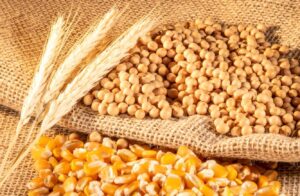
After the full-scale invasion and blocking of seaports in 2022, Ukraine began to actively use land routes for exporting agricultural products, which significantly reduced the transit of agricultural products through the EU, according to the Ukrainian Agribusiness Club (UCAB).
Analysts noted that the maximum volume exported across the borders of neighboring countries was 3.7 million tons of grains, oilseeds and their products in August 2023, when the “grain corridor” had already stopped working and Ukraine’s own sea route had not yet started working.
Experts stated that the structure of exports by country was as follows: Romania – 73% of the total exported volume (thanks to the seaport of Constanta), Poland – 14%, Hungary – 9%, Moldova – 2%, and Slovakia – 2%.
“Establishing its own export route has allowed Ukraine to reduce transit through neighboring countries. Over the past 6 months of 2024, the average monthly volume of exports through neighboring countries decreased by 3.7 times compared to the peak figure and averaged 1.0 million tons of grains, oilseeds and processed products,” the UCAB emphasized.
At the same time, in December 2024, compared to the peak, exports through the Romanian border decreased by 8.2 times to 0.3 million tons, Polish – by 1.9 times to 0.3 million tons, Hungarian – by 1.9 times to 0.2 million tons, Moldovan – by 8.9 times to 0.01 million tons and Slovak – by 12.0 times to 0.01 million tons.
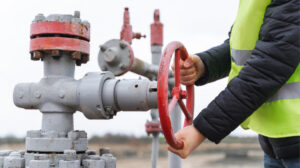
In 2024, Ukraine transported about 11.36 million tons of Russian oil through the southern branch of the Druzhba pipeline, reducing transit by 16% compared to last year.
“This is the lowest value at least since 2014, and probably in the entire history of Ukraine’s independence since 1991,” former Energy Minister Olha Buslavets posted on Facebook late last week.
According to her, most of the Russian oil in 2024 was supplied to Hungary – more than 4.7 million tons, which is almost the same as in 2023. In addition, 3.9 million tons of oil were transported to Slovakia (-15%) and 2.7 million tons (-35%) to the Czech Republic.
As reported, in July 2024, Ukraine tightened sanctions against Russia’s LUKOIL, effectively banning the transit of oil to Central Europe through the Ukrainian section of the Druzhba pipeline. The company was a major supplier of raw materials to both Hungary (about a third of the country’s imports) and Slovakia (40-45%).
At the same time, in September, the Hungarian MOL Group announced an agreement with Russian oil suppliers and pipeline operators to ensure its transportation via the Druzhba pipeline through Belarus and Ukraine to Hungary and Slovakia. According to MOL Group, the company has taken over ownership of the relevant volumes of crude oil on the border of Belarus and Ukraine.
Also in September, EC spokesman Olof Gill said that after Ukraine banned LUKOIL’s oil transit to Hungary and Slovakia, the European Commission (EC) quickly took all necessary steps to resolve the issue. He noted that LUKOIL is not the only oil supplier to Hungary and Slovakia.

President Volodymyr Zelenskyy says Ukraine will not continue to transit Russian gas.
“We will not continue the transit of Russian gas, we will not allow them to earn additional billions on our blood. Any country in the world that can get something cheap from Russia will eventually become dependent on the Russian Federation, whether tomorrow or in a month or a year. This is their policy. Therefore, we will not transit Russian gas,” Zelenskyy said at a press conference in Brussels on Thursday.
Zelenskyy noted that in a conversation with the Prime Minister of Slovakia, he said that if there is not Russian gas, but gas from another country, and there is no payment to Russia until the end of the war, Ukraine is ready to consider this option.
At the same time, Zelenskyy emphasized that Ukraine would not allow additional earnings for Russia.

Slovakia will hold a series of talks starting next week to secure gas supplies from Russia after its current transit contract, which involves Ukraine, expires at the end of this year, Reuters reported on Friday, citing government officials.
“In the coming days, in particular during the Christmas holidays, you can witness extremely intense negotiations at different levels and in different countries, which will begin next week,” Slovak Prime Minister Robert Fico said at a press conference.
Denisa Sakova, Deputy Prime Minister and Minister of Economy of Slovakia, said that the talks would involve the European Commission, Ukraine and EU member states.
Fico said that he sought to ensure the continuation of supplies from the east to avoid additional fees for gas transit from other directions. “We see no reason to pay more for gas than necessary for geopolitical reasons… I believe that even if there is a short-term interruption of supplies from the east, we have enough reserves to find a common solution for several EU countries, and we will keep gas transit through Slovakia, as well as gas transit through Ukraine,” he said.
Reuters notes that Slovak officials have been looking for alternative gas transit schemes through Ukraine that would not require a direct agreement between Ukraine and Russia, but have not reached any agreement.
Slovakia reportedly has a long-term contract with Russia’s Gazprom and would like to keep importing Russian gas through Ukraine, but it will end at the end of 2024, as Ukraine does not plan to extend the transit contract with Gazprom.
Earlier, Hungarian Foreign Minister Péter Szijjártó said that Hungary and Bulgaria had found a legal and financial solution acceptable to the parties to continue the transit of Russian gas through their countries in the face of US sanctions against Gazprombank.
Hungary receives Russian gas through the Turkish Stream pipeline from Russia to Turkey and then transits through Bulgaria to Hungary. Hungary has received the bulk of its gas consumption through this route – this year, more than 7 billion cubic meters.
At the same time, Bloomberg, citing the Bulgarian Ministry of Energy, reports that “only a ‘solution’ to the problem was discussed, which would include Hungary and allow Bulgaria to continue receiving transit fees after the arrival of Russian gas.” Bulgaria has previously warned that it may stop transiting Russian gas to Central Europe if Gazprom does not find a payment solution, the agency reminds.



