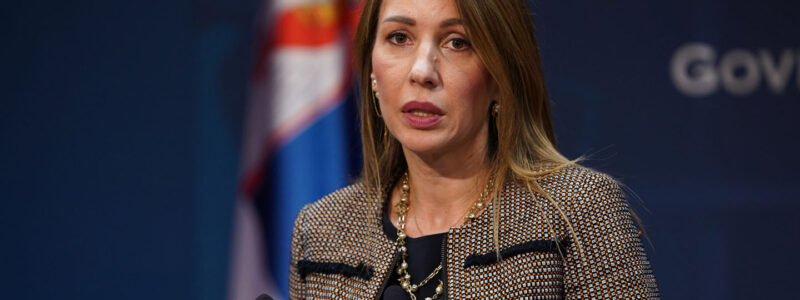
According to Serbian Economist, Serbian Minister of Mining and Energy Dubravka Jedović-Handanović stated that following meetings between the operational and legal teams of the Serbian government and Hungary’s MOL regarding the future of NIS, the parties expect to reach agreement on approximately 90% of the issues by the end of the week. According to her, some issues have already been resolved, while the rest will likely be escalated to a higher level of negotiations.
The negotiations are proceeding along two parallel tracks: MOL is in dialogue with the Russian majority owner regarding the purchase of its stake in NIS, while separately discussing with the Serbian government the rights and obligations of shareholders following a potential change in ownership structure.
Belgrade aims to use the negotiations to improve its position compared to the configuration that emerged after the 2008 agreements. Among Serbia’s priorities, the minister cited increasing the state’s stake in NIS by 5%, maintaining the company’s dominant role in the domestic market, and a commitment to sustaining a certain refining capacity at the Pančevo refinery.
For Serbia, this issue is of not only corporate but also strategic importance. The minister directly linked the stable operation of NIS and the Pančevo refinery to GDP, employment, and security of supply, emphasizing that against the backdrop of the current energy crisis, it is particularly important to have an independent refining base on which the country can rely.
A separate set of discussions focuses on NIS’s past financial obligations and how a potential new owner views their future fulfillment or possible replacement with other investments.
The minister also linked the negotiations regarding NIS to broader Serbian-Hungarian energy cooperation. She stated that Belgrade is counting on the continuation of construction of the joint Serbia-Hungary oil pipeline, which is set to become an important alternative supply route, particularly for the Pančevo refinery. Additionally, Jedović-Handanović noted that Hungary receives gas via Serbia, and part of Serbia’s gas reserves is stored on Hungarian territory.
If the agreement with MOL does indeed reach 90% finalization in the coming days, Belgrade will have a clearer framework for protecting its interests in the country’s largest oil company.
https://t.me/relocationrs/2688