Ukraine’s major industrial associations and groups oppose Ukrzaliznytsia’s significant and unjustified increase in freight rates, which would deal yet another blow to Ukraine’s economy.
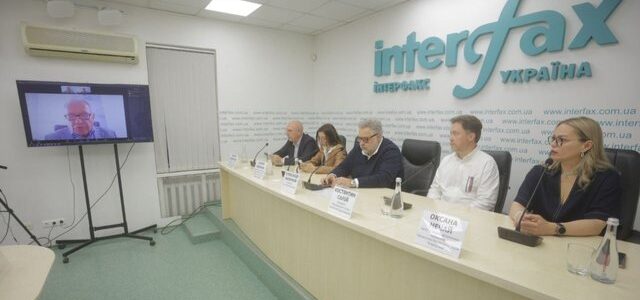
Business representatives expressed this position at a press conference titled “A Tariff Blow to the Ukrainian Economy: Leading Industries Oppose Ukrzaliznytsia’s Unfair Increase in Freight Rates” at the Interfax-Ukraine news agency on Tuesday.
Oleksandr Kalenkov, president of the “Ukrmetallurgprom” Association, noted that while the draft order on raising tariffs has not yet been made public, the issue is being actively discussed. He emphasized that “Ukrzaliznytsia” is a state monopoly and that corruption is present in its operations. The company must operate transparently, and its activities should be overseen by an independent body—the National Commission for State Regulation in the Transport Sector—the creation of which has been under discussion in Ukraine for 17 years.
“We hope that the decision to raise tariffs will be made objectively. Moreover, freight transportation has always been profitable. Specifically, Ukrzaliznytsia’s operating profit in 2024 amounted to 20 billion hryvnias; profitability remained steady in 2025, and we also expect Ukrzaliznytsia to operate profitably this year. However, the volume of freight is decreasing: from 315 million metric tons in 2021 to 160 million metric tons in 2025,” said Kalenkov.
He added that the business community is trying to engage in a constructive dialogue with the company. In particular, there is the issue of subsidizing passenger transportation, but passenger transportation cannot be subsidized at the expense of private businesses; it must be funded through the budget. However, the business community can invest its own funds to provide support.
“Ukrzaliznytsia has opportunities to improve efficiency through its operational activities. Furthermore, it has the ability to secure external financing, whereas the private sector currently lacks such opportunities. So let’s resolve these issues together, rather than making decisions behind closed doors,” urged the head of Ukrmetallurgprom.
Kalenkov added that following the press conference, a joint appeal to the government would be drafted.
“We are prepared to accept a fare increase of up to 10%. And Ukrzaliznytsia itself must improve its efficiency. We need a normal, open discussion about the transportation situation,” he concluded.
Pavlo Kachur, head of the Association of Cement Producers of Ukraine (Ukrcement), noted that the transportation situation is becoming critical, and this threatens not only a specific industry but the Ukrainian economy as a whole.
“We support raising tariffs, but we advocate for an objective increase. Balanced rates must be adopted. No one has any interest in the collapse of any industry!” Kachur emphasized.
The head of “Ukrcement” proposed a set of solutions, including allowing private rail operators to participate in freight transportation, since, according to his data, up to 50 trains are unable to find locomotives for transport. Kachur also highlighted the need to raise salaries for train drivers and “Ukrzaliznytsia” employees, as well as the need to address the issue of passenger transportation, particularly commuter services.
He also spoke in favor of adopting anti-crisis measures and the need for “Ukrzaliznytsia” to publicly disclose its plans regarding where the funds generated by the tariff increases will be allocated.
“We support Ukrzaliznytsia presenting a program to modernize its rolling stock. We support the adoption of performance indicators for freight delivery so that the railway can report on this,” Kachur explained.
Serhiy Kudryavtsev, Executive Director of the Ukrainian Association of Ferroalloy Producers (UkrFA), supported the proposal regarding fares and resolving the issue of cross-subsidization. At the same time, for enterprises in the ferroalloy industry located in areas of active hostilities, the cost of freight delivery is a critical issue.
“The cost of transporting manganese to Nikopol has increased fivefold. And this is a matter of survival for our companies,” said Kudryavtsev.
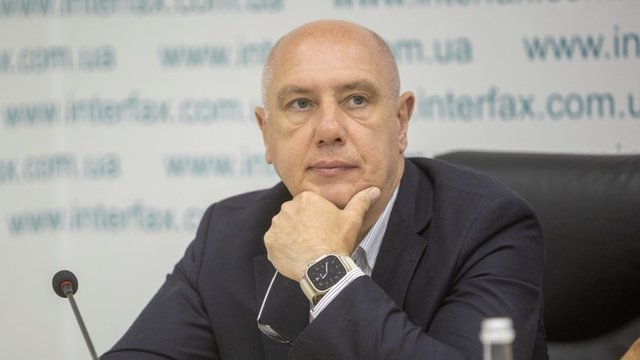
Vladimir Gusak, CEO of the Federation of Transport Employers of Ukraine, expressed surprise at Ukrzaliznytsia’s plans to raise tariffs.
“This is yet another attempt by Ukrzaliznytsia to raise freight tariffs: by 30% starting in August 2026 and by another 15% starting in January 2027. That is, by nearly 50%. This shows a complete lack of understanding of the realities,” Gusak said, adding that the main problem is the chronic losses in passenger transportation. At the same time, the volume of freight transportation is declining: now, with every fare increase, companies are forced to either reduce shipments or switch to other modes of transport just to stay afloat.
“In the current situation, we believe a moratorium on railway fare increases should be implemented until the war ends,” Gusak emphasized.
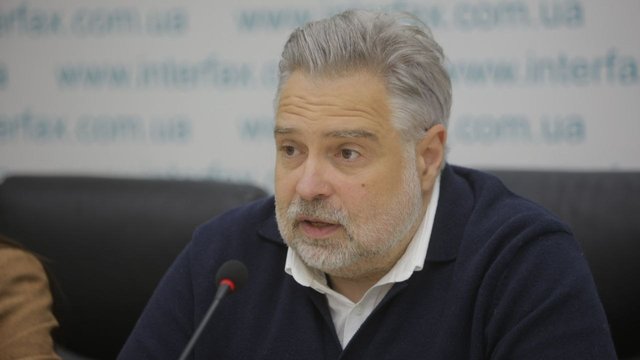
Konstantin Saliy, president of the All-Ukrainian Union of Building Materials Manufacturers, noted that in developed countries, fare increases are approved only after consultations, and this issue always receives close attention.
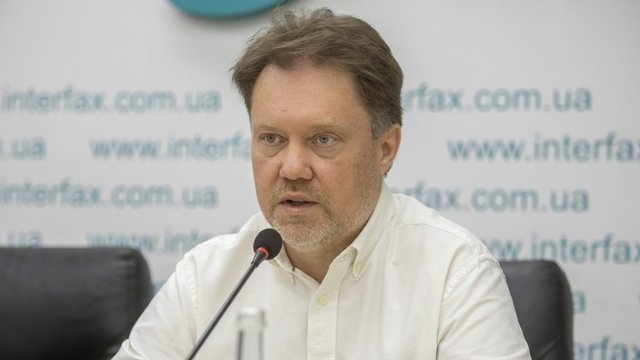
“A 2–3% price increase in the EU causes significant public discontent. Here, however, it’s 30% right off the bat. And this will trigger a chain reaction of price increases—we’ll feel it first, and then consumers will,” Saliy predicted, adding that “Ukrzaliznytsia” could secure funding through land taxes, the development of retail trade at train stations, and other areas, rather than by raising fares. The company should streamline its administrative staff and optimize its expenses. And shifting its problems onto Ukrainians and Ukrainian businesses is the wrong approach, Saliy concluded.
Oksana Nechay, a logistics specialist for rail transport at the Kovalska Industrial and Construction Group, noted that every increase in production costs is practically catastrophic for their company.
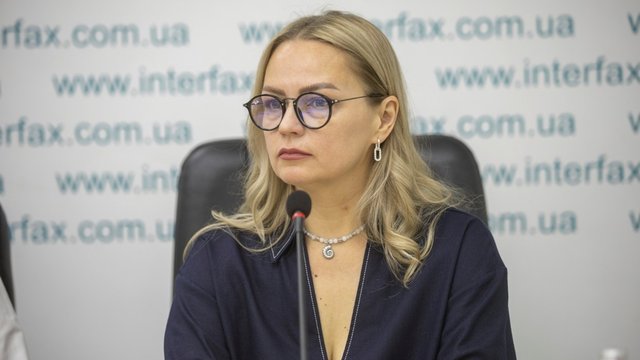
“It will lead to a loss of customers, and we operate in the domestic market. And this will result in a drop in tax revenues. The next increase could also take a toll on part of the industry. Both we and Ukrzaliznytsia stand to lose. We are not opposed to an increase, but it must be justified, because we are interdependent,” Nechay said.
Ksenia Orynchak, Executive Director of the National Association of the Mining Industry of Ukraine (NADPU), reported on a “casual meeting” of mining industry representatives last week, as well as an appeal to the Prime Minister, the Ministry of Development, and the State Regulatory Service to prevent an increase in railway tariffs.
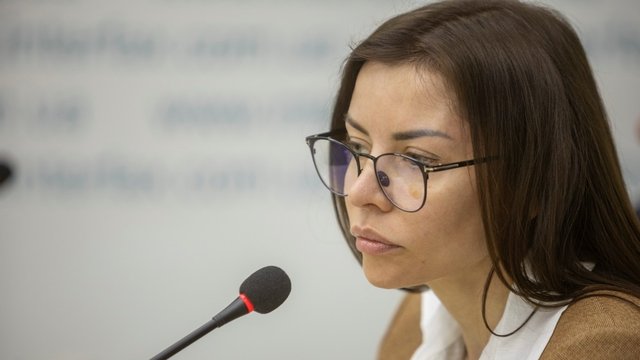
“We outlined the negative consequences. Meanwhile, the EU is currently focusing on environmental issues. But Ukraine is moving in the opposite direction, shifting from rail to road transport due to Ukrzaliznytsia’s stance,” Orynchak noted, proposing that a joint appeal following the press conference highlight the need to pursue an environmentally friendly approach in line with the SVA.
Source: https://interfax.com.ua/news/press-conference/1177028.html
BUSINESS, freight rates, INDUSTRY, KUDRYAVTSEV, Nechay, Saliy, TRANSPORTATION, UKRZALIZNYTSIA, КАЛЕНКОВ, Оринчак

Related: