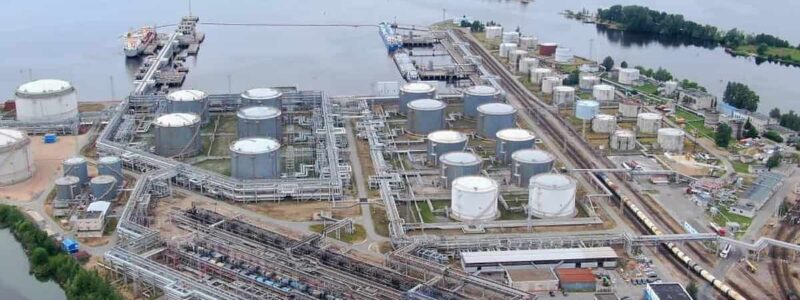
According to “Serbian Economist,” the Romanian company JT Grup Oil has received approval to build a new oil products terminal on the Danube near the port of Tisovica-Dubova, not far from Orșova in Mehedinți County, the company reported in a filing published on the Bucharest Stock Exchange.
The project involves the construction of four above-ground storage tanks for liquid fuel, as well as the engineering and logistics infrastructure necessary for the receipt, storage, and transshipment of petroleum products.
JT Grup Oil views the new facility as part of a larger regional logistics system. The Danube terminal is planned to be integrated with the company’s new terminal in the port of Constanța on the Black Sea.
According to the company, the platform being developed is intended to serve the markets of Romania, Hungary, Serbia, Austria, and Ukraine, leveraging both Black Sea logistics capabilities and the international transport corridor along the Danube.
Thus, fuel will be able to arrive via Constanta by sea and then be distributed throughout Central and Southeastern Europe using river, rail, and road transport.
For Serbia, the new facility is of particular interest due to its location on the Danube, relatively close to the Serbian border. Additional storage and transshipment capacity for petroleum products could expand fuel supply options to the Serbian market and enhance the Danube’s role in regional energy logistics.
For Ukraine, the project also creates an additional route for importing petroleum products via Romania. Since 2022, Romanian ports—primarily Constanța—have significantly increased their importance for Ukrainian trade and fuel supplies.
At the same time, JT Grup Oil is completing another major infrastructure project—the JT Terminal in the port of Constanța.
The terminal has already passed technical trials, and its commercial operation is scheduled to begin in October 2026, following the completion of all necessary procedures and the receipt of permits.
JT Grup Oil’s strategy effectively involves creating a Constanta–Danube–Central Europe logistics corridor.
The Black Sea terminal is intended to handle imported petroleum products arriving by sea, while the new facility near Orșova will bring fuel supplies closer to the markets of Serbia, Hungary, and Austria and utilize the Danube for further transportation.
“By developing the terminal in Constanta and the terminal in the Orsova area, the company aims to create an integrated logistics platform capable of effectively serving the markets of Central and Eastern Europe,” according to a statement from JT Grup Oil cited by Romanian media.
The project takes on added significance against the backdrop of the restructuring of European petroleum product supply routes and the region’s countries’ efforts to diversify their transportation infrastructure.
JT Grup Oil operates in the Romanian wholesale fuel trade and distribution market. The company’s shares are traded on the AeRO market of the Bucharest Stock Exchange under the ticker symbol JTG.