Business news from Ukraine

Business news from Ukraine

Analysis of Ukraine’s Land Market

The number of large landowners among companies has decreased by one third since the opening of the land market in Ukraine. This was reported by the information and analytical center Experts Club with reference to a study conducted by OpenDataBot on the basis of data from the State Land Cadastre. Thus, 91 companies reduced their land banks to a level of less than 100 hectares over two years. 31% of all land plots owned by businesses are held by 10 landowning companies. Currently, 192 companies own land banks of more than 100 hectares.

There are currently 192 companies in Ukraine whose ownership includes more than 100 hectares of land. For comparison, at the time the land market opened in 2024, there were 283 such companies. During 2024, the list of large landowners decreased by 51 companies, and last year by another 40 companies.

Under conditions of uncertainty, destruction of infrastructure, the difficulty of demining territories, and problems with logistics, large companies are in no hurry to increase their land banks, which explains the reduction in the number of large landowners, Denis Marchuk explains.

“For big business, buying land is an investment for decades and billion-scale вложення. Under the current conditions of war, these funds are more often directed to supporting working capital, covering logistical and export risks, and restoring damaged infrastructure (elevators, warehouses, machinery, etc.). Currently, business chooses a mobility model—leasing instead of ownership. This makes it possible to respond faster to risks and change regions of presence. Land is bought mainly by those players who clearly plan long-term work and choose regions with lower risks, which explains the significant difference in prices between western and southern Ukraine,” — Denis Marchuk, Deputy Head of the All-Ukrainian Agrarian Council.

Almost one third of Ukrainian land owned by business is held by only 10 companies. In total, this top ten owns 18,344.98 hectares. However, even within the list of leaders there is a large gap: the largest landowning company, the agricultural firm Svitanok, has 10 times more land than the company Kuialnyk, which closes the top ten.

“For Ukraine, this is a historically normal structure of the agricultural sector, when 20–25% of the market falls to big business. The key problem is not concentration as such, but access of small and medium-sized businesses to financial resources. With the availability of affordable lending, they can compete fully, in particular through auctions of state land,” Denis Marchuk believes.

The leader in reducing its land bank was the company Zemletrade: from 3,161.47 hectares to 733.57 hectares, that is, almost four times. The company Agroforest reduced its areas by 8.6 times—from 1,803.09 hectares to 210.44 hectares. At the same time, 103 companies did not change the area of their land holdings at all.

38 companies from the list of large landowners are registered in Kyiv Oblast. Another 28 companies are registered in Kirovohrad Oblast, and the same number—directly in Kyiv. At the same time, in Ivano-Frankivsk, Rivne, and Chernivtsi oblasts, large landowners among companies are absent.

It is worth noting that some of the companies from the list of the largest landowners are registered in territories affected by the war. Thus, 16 companies are registered in temporarily occupied territories. 4 companies are registered in zones of active hostilities where state electronic information resources continue to function. And 14 companies are located in territories of possible hostilities.

67% of large landowners operate in the field of agriculture—129 companies. Another 33 companies, or 17%, are associated with real estate operations. In the field of public administration and defense, 11 companies operate; in wholesale trade—4; in the financial sector—3 companies. Among large landowners there are also two companies included in the OpenDataBot Index for 2025. These are Ukreximbank and Oschadbank, which own land plots with an area of more than 100 hectares.

, ,

Schneider Electric Launches Schneider StarCharge Fast 720 — High-Power EV Charging

Schneider Electric, a global leader in energy technologies, has introduced Schneider StarCharge Fast 720— a next-generation charging solution for electric vehicles (EVs) designed for commercial and industrial sites, as well as fleet operators. The system delivers up to 720 kW of power and enables simultaneous charging of up to 12 vehicles, meeting the growing demand for electric vehicles in Europe.

With 97% efficiency, Schneider StarCharge Fast 720 sets a new standard for performance and sustainability for EV charging infrastructure. Dynamic load management ensures optimal charging for different types of vehicles—from electric trucks and buses to passenger cars—helping drivers get back on the road quickly.

The solution’s decentralized architecture provides unparalleled flexibility: operators can place up to six dispenser modules within an 80-meter radius of the power cabinet equipment, creating scalable configurations for any site. This design minimizes grid connection requirements, simplifies installation, and reduces noise levels, providing a better user experience.

Schneider StarCharge Fast 720 also includes full lifecycle support, from installation to customized maintenance plans, with 24/7 support and remote monitoring via EcoStruxure Energy Asset Portal by Schneider Electric. This ensures maximum availability and cost-effectiveness for operators.

As Europe accelerates its transition toward a ban on gasoline and diesel engines from 2035—while electric vehicles already account for 16% of new car registrations—StarCharge Fast 720 offers a reliable, high-performance solution for charging station operators and businesses seeking future-ready infrastructure.

Related resources:

About Schneider Electric

Schneider Electric is a global leader in energy technologies that increases efficiency and supports sustainability by electrifying, automating, and digitalizing industry, business, and residential spaces. The company’s technologies enable buildings, data centers, factories, infrastructure, and power grids to operate as open, interconnected ecosystems, improving productivity, resilience, and environmental performance. Its solutions portfolio includes intelligent devices, software-driven architectures, AI-based systems, digital services, and expert consulting.

With 160,000 employees and 1 million partners in more than 100 countries, Schneider Electric consistently ranks among the world’s most sustainable companies.

www.se.com

Discover new perspectives on energy technologies on Schneider Electric Insights.

Motivair by Schneider Electric Announces New Coolant Distribution Unit Scalable to 10 MW and Beyond for Next-Generation AI Factories

Motivair by Schneider Electric Announces New Coolant Distribution Unit Scalable to 10 MW and Beyond for Next-Generation AI Factories

Motivair by Schneider Electric, a leading innovator in liquid-cooling technologies for digital infrastructure, today introduced a new, industry-leading 2.5 MW Coolant Distribution Unit (CDU) designed to reliably cool high-density data centers.

The MCDU-70 model is the highest-capacity coolant distribution unit of any Motivair solution, offering a revolutionary, flexible, and scalable solution to meet the stringent requirements of next-generation graphics processing units (GPUs) and gigawatt-scale artificial intelligence factories.

Using Schneider Electric’s EcoStruxure software, Motivair CDUs operate as a centralized system—meeting today’s cooling needs with the ability to scale to 10 MW+ for next-generation high-performance computing (HPC), AI, and accelerated computing workloads.

Compact and efficient, the MCDU-70 is the latest addition to Motivair’s CDU lineup, delivering powerful cooling without compromise—fully maintaining system flow and pressure performance even at gigawatt scale. Its performance is ideally suited to the needs of large facilities such as the NVIDIA Omniverse DSX Blueprint, where deployments are designed for 10 MW to reach gigawatt scale. At 2.5 MW each, six MCDU-70 units can support a 4+2 configuration with redundancy, and the unit’s capacity aligns with NVIDIA’s GPU roadmap for the near term.

“AI is not slowing down. Our solutions are built to keep pace with the evolution of chips and silicon technologies—delivering next-generation performance exactly when it matters most,” said Rich Whitmore, CEO and President of Motivair by Schneider Electric.

“The success of data centers today depends on the ability to provide scalable, reliable, and energy-efficient infrastructure solutions that meet the requirements of next-generation AI factories. We are meeting this challenge with proven liquid-cooling solutions that scale along with our customers’ needs.”

With the addition of the MCDU-70, Schneider Electric’s full liquid-cooling solutions portfolio now offers CDUs with a power range from 105 kW to 2.5 MW, meeting both current and future performance requirements.

Each CDU is scalable and seamlessly integrates with other Schneider Electric devices and software, delivering a precise and reliable cooling system for data center operators.

The MCDU-70 is now available to order worldwide through Schneider Electric’s advanced manufacturing hubs in North America, Europe, and Asia.

To learn more, visit the website.

Related resources:

About Motivair by Schneider Electric

Motivair by Schneider Electric is a leading global provider of advanced liquid-cooling solutions built to overcome the most complex thermal challenges of modern computing systems.

As a trusted partner to silicon chip manufacturers and server OEM companies, Motivair delivers technologies that enable breakthroughs in artificial intelligence and high-performance computing (HPC), improving data center performance and reliability—both colocation and hyperscale.

From chip to chiller, Motivair offers a comprehensive portfolio of products, systems, and services that support innovators shaping the digital world of the future.

www.motivaircorp.com/

About Schneider Electric

Schneider Electric is a global leader in energy technologies, delivering efficiency and sustainability through the electrification, automation, and digitalization of industry, business, and homes.

Its technologies enable buildings, data centers, factories, infrastructure, and power grids to operate as open, interconnected ecosystems, improving their productivity, resilience, and environmental performance.

The company’s portfolio includes intelligent devices, software-oriented architectures, AI-based systems, digital services, and expert consulting.

With 160,000 employees and 1 million partners in more than 100 countries, Schneider Electric consistently ranks among the world’s most sustainable companies.

www.se.com

Discover the latest perspectives and trends in energy technologies on Schneider Electric Insights.

, , ,

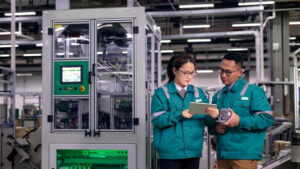
Schneider Electric plant in Wuhan recognized as one of three global “Talent Lighthouses” by World Economic Forum

Schneider Electric, the global leader in energy technologies, today announced that its plant in Wuhan (China) has been recognized by the World Economic Forum (WEF) as a Global Lighthouse for Talent—one of only three sites worldwide to receive this designation.

The Global Lighthouse Network is a World Economic Forum initiative that recognizes advanced manufacturing sites and value chains that have achieved exceptional results in productivity, supply chain resilience, customer centricity, sustainability, and talent development. The initiative was co-founded with McKinsey & Company and is supported by an advisory board of industry leaders who collectively shape the future of global manufacturing.

A new award category—Talent Lighthouse—identifies manufacturing sites that achieve a transformational impact on the workforce through advanced solutions in work process and safety design, talent planning, engagement and onboarding, development, and workforce effectiveness.

The Wuhan plant became Schneider Electric’s ninth Lighthouse site globally and the first recognized for talent development, complementing the company’s eight other Lighthouse factories and distribution centers, including five Sustainability Lighthouses.

As Schneider Electric’s strategic supply chain hub in China and a model of digital manufacturing transformation, the Wuhan plant faced significant workforce challenges driven by rapid automation and a 239% expansion of its product portfolio. Initially, only 20% of employees had automation skills, onboarding new employees took 75 days, and technical staff turnover reached 48%.

Over the past five years, the plant increased its automation level by 55% and expanded its product portfolio by 239%, creating a critical shortage of qualified personnel. To address these challenges, Schneider Electric implemented a people-centered “workforce of the future” model that combines technology, partnerships, and continuous learning.

  • Training future talent: in partnership with 11 vocational and technical institutions, the company introduced digital internship programs, AI labs, and scholarships, creating a sustainable talent pipeline with the required skills.
  • AI-based competency management: AI identified and tracked skills gaps, assigning personalized learning programs complemented by career pathways based on a “pay for skills” principle. Workforce readiness increased from 20% to 76%, and 56% of employees upskilled.
  • Human-centered planning: optimized task allocation reduced overtime and improved order-fulfillment performance.
  • GenAI-assisted maintenance: intelligent prompts and a mentoring system reduced repair time and lowered technical staff turnover from 48% to 6%.
  • Accelerating new product introduction with AI: automating routine tasks freed engineers for higher value-added work and reduced the new product launch cycle by 66.7%—from 36 to 12 months.

“The Fourth Industrial Revolution is as much about people as it is about technology,” said Mourad Tamoud, Chief Supply Chain Officer at Schneider Electric. “With our Wuhan plant, we have demonstrated that when AI and human potential work together, organizations can build resilient, agile, and future-ready teams—while ensuring that technology serves its ultimate purpose: delivering more value to customers.”

“Today, competitiveness is no longer determined solely by efficiency, but by the ability to sense, adapt, and respond quickly,” said Kiva Allgood, Managing Director at the World Economic Forum. “This year’s industrial transformation examples show how intelligently driven operations scale, placing resilience and sustainability at the heart of manufacturing companies’ activities.”

This achievement underscores Schneider Electric’s commitment to developing future-ready talent, building an agile organization, and fostering a culture that unlocks people’s potential and drives innovation.

Related resources:

About Schneider Electric
Schneider Electric is a global leader in energy technologies that delivers efficiency and sustainability through electrification, automation, and digitalization of industry, business, and homes. The company’s technologies enable buildings, data centers, factories, infrastructure, and power grids to operate as open, interconnected ecosystems, improving productivity, resilience, and environmental performance. Schneider Electric’s portfolio includes smart devices, software-oriented architectures, AI-based systems, digital services, and expert consulting. With 160,000 employees and 1 million partners in more than 100 countries, Schneider Electric consistently ranks among the world’s most sustainable companies.

www.se.com

Discover the latest energy technology insights on Schneider Electric Insights

Border crossing points with Moldova have resumed operations

As of 3:50 PM, border crossings between Ukraine and the Republic of Moldova were operating normally, according to the State Border Service of Ukraine’s Telegram channel.

Border crossing restrictions for trucks have also been lifted.

Auto and goods clearance temporarily halted at the Ukraine–Moldova border

The clearance of vehicles and goods at the Ukraine–Moldova border is temporarily not being carried out due to a failure of the central databases of the customs authorities of the Republic of Moldova, Ukraine’s State Customs Service has reported.

“Please take this information into account when planning to cross the border! The resumption of clearance operations will be announced additionally,” the message posted on the Telegram channel on Saturday said.

As reported, according to First Vice Prime Minister and Minister of Energy of Ukraine Denys Shmyhal, on January 31 at 10:42 a technological incident occurred, involving the simultaneous disconnection of the 400 kV line between the power systems of Romania and Moldova and the 750 kV line between the western and central parts of Ukraine.

, , ,