
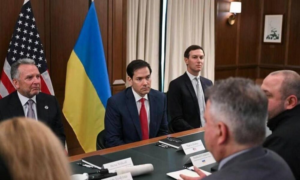
The United States and Ukraine discussed during talks an “ambitious goal” of agreeing on a draft peace agreement with Russia by March 2026, although the timeline could shift due to the lack of agreements on key issues, Reuters reported, citing sources familiar with the course of the consultations.
According to the agency, the framework under discussion envisages putting a possible agreement to a nationwide referendum in Ukraine and holding nationwide elections on the same day. Two Reuters sources said May was discussed as a benchmark, however several interlocutors called such a schedule “fantastic.”
Reuters separately points to practical and legal constraints: holding nationwide elections in Ukraine is prohibited during martial law, and election organizers previously assessed that preparing a vote under current conditions would require about six months and legislative changes. In addition, Kyiv, according to the agency’s sources, insists that a ceasefire regime is needed for the campaign in order to ensure the integrity of the vote.
In parallel, Ukrainian President Volodymyr Zelenskyy said the United States would like to find a solution to end the war “by summer,” and Foreign Minister Andrii Sybiha told Reuters that Kyiv seeks to speed up the negotiation process, calling the U.S. role key to reaching a final agreement.

Ukraine’s construction market in 2025, in monetary terms, increased by 24% compared to 2024 – to about UAH 248 billion (approximately EUR 5.3 billion), Rauta Director Andrii Ozeichuk reported in an overview of industry trends. At the same time, the market volume remains 34% below the 2021 level, when it was estimated at around EUR 8 billion.
According to the company’s assessment, the key segments of commercial investment in 2025 remained warehouse, industrial and retail real estate, while Kyiv, Lviv and Ivano-Frankivsk regions were named the most attractive for new construction. The segment of restoration and protection of critical infrastructure facilities is singled out separately – about 20% of the market.
Demand from businesses and households shifted toward energy independence: sales of generators rose by 130%, inverters and batteries by 50%, and solar power plants by 100%. In the commercial construction market, the agricultural buildings segment grew most dynamically (+48%), while demand for new housing overall remained at the 2024 level.
Price growth in the industry, according to Rauta, slowed: the cost of construction works and materials in 2025 increased by about 15% versus 24% a year earlier, and housing prices added 5–10%. At the same time, the labor shortage intensified – the lack of specialists is estimated at about 30%, which accelerated wage growth in construction to 25–30% in 2025; among the leaders in increases were monolithic structure workers (+50%), surveyors (+44%) and concrete workers (+38%).
The overview also notes deeper digitalization and regulatory updates: in 2025, the Unified State Electronic System in the Construction Sector (USESCS) became fully operational and its functionality was expanded, the urban planning cadastre geoportal and the “Transparent Construction” application started working, and amendments to the State Building Codes (DBN) on inclusivity enter into force on April 1, 2026.

Ukraine has received 300 generators as part of support from the Southeast European Cooperative Initiative (SECI), Deputy Prime Minister for Recovery and Minister for Communities and Territories Development Oleksii Kuleba reported.
“The total capacity of the batch is 1.6 MW, the cost is more than EUR 417 thousand,” Kuleba wrote on Telegram.
According to him, the generators will be delivered to Kyiv, Odesa, Sumy, Kherson, Mykolaiv, and Lviv. Priority will be given to hospitals, maternity hospitals, schools, kindergartens, and other social infrastructure facilities.
SECI (Southeast European Cooperative Initiative) is a regional cooperation format of Southeast European countries; in 1999, a relevant SECI cooperation agreement was signed on the prevention of and fight against transborder crime.
The operational center created within SECI (the SECI Center) has, since October 7, 2011, operated as SELEC (Southeast European Law Enforcement Center) — an international treaty-based organization that pools police and customs resources to counter transborder organized crime.
Participating countries (SELEC member states): Albania, Bosnia and Herzegovina, Bulgaria, Greece, Hungary, Moldova, Montenegro, North Macedonia, Romania, Serbia, and Turkey.
SELEC’s headquarters is located in Bucharest (the Palace of the Parliament of Romania).
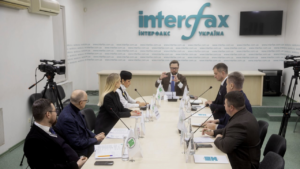
The Interfax-Ukraine press center hosted the first working meeting of the organizing committee of the nationwide competition, which aims to select talented young people to prepare a draft security agreement for Ukraine. This was announced by Oleksiy Shevchuk, spokesperson for the National Association of Advocates of Ukraine (NAAU), who also heads the Center for Economic Research at the Vadym Hetman Kyiv National Economic University (KNEU).
According to the lawyer, the competition was initiated by the UNAA and KNEU, and a preliminary presentation of the initiative was held several months ago.

“If a decision is made to present the results to NATO, we consider this appropriate, as this format will ensure adequate publicity for the work. The possibility of presenting the results to the Office of the President of Ukraine is also being considered; I have had working communication on this issue with Ms. Iryna Mudra, who is awaiting the results of the competition. I do not rule out that she may join the final meeting of the competition commission. The relevant institutions have been informed, and expectations regarding the competition have been confirmed,” Shevchuk emphasized.
He stressed that the competition is intended to be annual, as the topics of security and international order are changing, and the main task of the current season is to identify talented young people in Ukraine who are capable of formulating the legal conditions of a future security agreement for the state.
“We have come to the conclusion that today even experienced diplomats cannot determine the list of conditions that should be spelled out for our country,” Shevchuk added.
The commission’s work was joined by, in particular, Ukrainian MP and former head of the Security Service of Ukraine Valentin Nalyvaichenko, head of the Diplomatic Academy Ihor Ostash, and international relations scholar Volodymyr Nakonechny.
The meeting participants agreed on the leadership of the competition commission: Lyudmila Kozhura, director of the KNEU Law Institute, was elected chair, with Ihor Ostash and Valentin Nalyvaichenko as deputies. The role of commission secretary was discussed separately, with Eva Hoffman and Volodymyr Nakonechny among the candidates proposed.
During the discussion, human rights activist and founder of the Project Sunflowers Foundation Eva Gofmanska noted that she would prefer to remain a member of the committee, supporting the initiative “in a spirit of respect and solidarity,” and to give the key role in substantive work to Ukrainian experts who know the language and legal system from the inside.
“Thank you for inviting me to join the competition committee. I greatly appreciate the trust and openness that this invitation demonstrates. At the same time, I consider it necessary to clearly define the nature of my participation: I do not speak Ukrainian and I realize that this limits my ability to fully work with the legal, cultural, and social context on which the competition is focused. That is why my participation in the committee is mainly representative and symbolic in nature, aimed at supporting the initiative. In my opinion, the key substantive role should belong to Ukrainian experts,” said Hofmanska.
The chair of the commission, Lyudmila Kozhura, reported that as of the day of the meeting, 26 contestants from nine law schools in Ukraine had registered for the competition. The largest number of participants—eight each—represent Taras Shevchenko National University of Kyiv and Yaroslav Mudryi National Law University, and three more are registered from KNEU. In terms of level of education, third-year students predominate.

“I think it is important to note that the involvement of young lawyers in discussing issues of state security is evidence of their responsibility and professional readiness to work on the future of Ukraine. I congratulate the participants, colleagues, and partners and thank them for their presence and support of this initiative. Participation in the competition is already a sign of professional maturity, a responsible attitude, and confidence in the effectiveness of legal mechanisms. I am counting on meaningful, practical, and well-prepared proposals,” Kozhura said.
According to the rules, entries will be accepted until March 1, after which they will be published and checked for academic integrity, including plagiarism. It is expected that after evaluation by the commission, the winners will be determined by mid-March. The meeting also discussed the selection of entries, taking into account the risks of using artificial intelligence and borrowing. The organizers announced that the competition will award three prizes and a separate special cash prize from the organizer.

A separate part of the discussion concerned the future presentation of the best works. Shevchuk said that among the possible venues being considered are the NATO representative office, the Office of the President, and communication with the education sector. In addition, the possibility of supporting participants in further international programs was mentioned.
People’s Deputy and public figure Valentin Nalyvaichenko, for his part, expressed his readiness to facilitate public presentations of the works and support the winners.

I confirm my readiness to provide organizational and communication support for the initiative, both in terms of content and format of its further presentation. I consider it appropriate to provide the winners and participants with the opportunity to publicly present their work, in particular in parliament, in relevant committees, and at the Hennadiy Udovenko Diplomatic Academy of Ukraine under the Ministry of Foreign Affairs. We can organize an appropriate platform for the presentation of works and professional self-presentation of authors. I also confirm my readiness to provide recommendations and facilitate further support for the winners in their interaction with European and NATO partners,” he stressed, adding that he is ready to provide recommendations to European and NATO partners.
Igor Ostash, Head of the Hennadiy Udovenko Diplomatic Academy of Ukraine under the Ministry of Foreign Affairs, in turn, stressed the importance of choosing a very prestigious platform for publishing the results and further presentation.
In addition, the discussion also included proposals to prepare a special issue of a specialized publication with the winners’ works in several languages and to organize a series of presentations at Ukrainian universities and international venues.
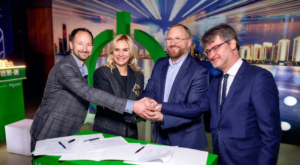
Mikhail Bubnov, CEO of Schneider Electric in Ukraine, has joined the Board of Directors of the Franco-Ukrainian Chamber of Commerce and Industry (CCIFU).
“Thank you for your trust and the opportunity to join the CCIFU Board of Directors. The Chamber plays an important role in strengthening cooperation between French and Ukrainian businesses. I hope that its activities will continue to promote dialogue between business and the state and attract international partners to the reconstruction of Ukraine,” said Mikhail Bubnov.

Among the key areas of development of the Chamber that Mykhailo Bubnov plans to focus on are strengthening cooperation with government authorities and developing a systematic public dialogue, facilitating the attraction of international financing for Chamber members, and increasing the visibility of French businesses in Ukraine.
He plans to pay particular attention to strengthening the CCIFU’s sectoral committees, which bring together representatives from the energy, agricultural, IT, construction, and other sectors. According to Bubnov, these committees should become a platform for exchanging experience, preparing proposals for government authorities, and coordinating business initiatives within the framework of Ukraine’s recovery.

The Chamber’s priorities also include developing energy resilience and sustainability, promoting the reconstruction of critical infrastructure, supporting digital and technological innovation, and integrating Ukraine into the European economic and energy space.
“I am convinced that through joint efforts we will be able to contribute to a sustainable, modern, and energy-efficient future for Ukraine,” emphasized Mykhailo Bubnov.
Mykhailo Bubnov has headed Schneider Electric in Ukraine since 2016. Prior to that, he held management positions at Primetals Ukraine and Siemens Ukraine. He graduated from the Kyiv Polytechnic Institute and holds an Executive MBA from Heriot Watt University Edinburgh Business School.
The Franco-Ukrainian Chamber of Commerce and Industry (CCIFU) brings together more than 200 companies representing French and Ukrainian businesses. Its mission is to promote bilateral cooperation, attract investment, restore the Ukrainian economy, and integrate Ukraine into the European market.
About Schneider Electric
Schneider Electric is a global leader in energy technology, delivering efficiency and sustainability through electrification, automation, and digitalization of industry, business, and homes. Its technologies enable buildings, data centers, factories, infrastructure, and energy networks to operate as open, interconnected ecosystems, increasing productivity, sustainability, and environmental performance. The company’s portfolio includes smart devices, software-driven architectures, artificial intelligence-based systems, digital services, and expert consulting. With 160,000 employees and 1 million partners in more than 100 countries, Schneider Electric is consistently ranked among the world’s most sustainable companies.
Personnel reshuffles initiated by the President of Ukraine at the start of 2026 are perceived by society with restraint: amid high awareness, Ukrainians more often speak of cautious hope than of a feeling of real renewal of power, according to the results of a nationwide survey by the research company Active Group.
According to the published data, 79.2% of respondents reported that they had heard about the personnel changes, and another 14.8% noted that they “had heard something but are not sure about the details.” 6.0% of those surveyed learned about these decisions for the first time – thus, the overall level of awareness exceeds 94%.
At the same time, assessments of the consequences of the personnel changes remain uncertain: 43.6% of respondents believe that these decisions brought more benefit to the country, 18.3% – more harm, and almost 38.0% were unable to give an unambiguous answer.
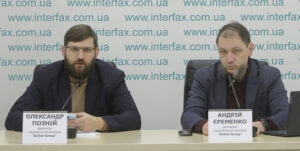
The founder of the sociological company Active Group, Andrii Yeremenko, commenting on the survey results, noted that the recorded high awareness of the personnel decisions did not transform into a formed assessment of their consequences.

“We see a situation where more than 94% of respondents have at least heard about these appointments, but almost 38% cannot say whether this is more benefit or harm. This means that society currently does not have sufficiently clear markers of effectiveness – people expect practical results, not signals of a ‘reset’ at the level of personalities. The distribution of answers regarding the ‘renewal of power’ almost equally additionally confirms that there is a demand for change, but it is tied to governance logic and the implementation of decisions, not to the very fact of personnel replacements,” Yeremenko emphasized.
When asked whether the decisions of recent weeks can be considered a renewal of power, 42.5% answered in the affirmative, while 46.7% answered negatively. In the emotional dimension, 52.1% of respondents stated that the personnel reshuffles give more hope, while 29.1% said that disillusionment prevails; at the same time, 10.2% feel “only hope.”
Among the areas of state policy that, in respondents’ opinion, may be strengthened as a result of the appointments, foreign policy, diplomacy and the negotiating track were most often named: 41.5% expect strengthening, 13.2% – weakening. Regarding the defense of the state, 39.0% forecast strengthening, 20.5% – weakening. For a number of domestic areas – social policy, the economy, the work of law enforcement agencies and the fight against corruption – restrained or negative expectations prevail, while a significant share of “hard to say” answers remains.
Assessing the impact of personnel decisions on trust in key officials, most respondents report no changes. In particular, regarding President Volodymyr Zelensky, 63.8% noted that the level of trust did not change, 17.5% speak of an increase in trust, and 13.5% – of a decrease. Regarding Kyrylo Budanov, 54.5% did not feel changes, 24.0% record an increase in trust, and 13.4% – a decrease; regarding Mykhailo Fedorov, respectively 55.3%, 18.6% and 15.8%. The most critical indicators are for Denys Shmyhal: 57.5% stated no change, 24.9% – a decrease, and 8.2% – an increase in trust.
The director of the sociological company Active Group, Oleksandr Poznyi, emphasized that the emotional background around the reshuffles remains restrained, and the impact on trust in key figures is limited.

“More than half of respondents say that personnel decisions give more hope, but only about 10% feel this hope unconditionally. At the same time, for most of those involved in the appointments, the dominant answer is ‘trust has not changed,’ which indicates the absence of an effect of rapid restoration of trust. In such a situation, society will assess these decisions through concrete results – primarily in the external contour and the security sphere, where the balance of expectations is more positive, while in domestic areas, in particular the economy, the law enforcement system and anti-corruption policy, significant skepticism remains,” Poznyi added.
The distribution of trust in well-known public figures, according to the survey data, indicates fragmentation: the highest level of trust is held by Kyrylo Budanov (43.2%), followed by Valerii Zaluzhnyi (37.7%) and Volodymyr Zelensky (27.4%). Also on the list are: Andrii Biletskyi (15.6%), Petro Poroshenko (13.1%), Denys Prokopenko (13.0%), Serhii Prytula (12.0%), Dmytro Razumkov (11.6%), and Vitalii Klychko (10.1%). Separately, 21.3% of respondents stated that they do not trust any of those listed.
The highest indicators of distrust, according to the study, are recorded for Oleksii Arestovych (68.5%), Yuliia Tymoshenko (60.7%) and Yurii Boiko (54.5%); Petro Poroshenko (46.7%) and Vitalii Klychko (36.5%) also have high levels of distrust. At the same time, distrust is also expressed toward Volodymyr Zelensky (33.1%), Valerii Zaluzhnyi (16.6%) and Kyrylo Budanov (15.6%).
More than half of Ukrainians already feel the start of the election campaign: 54.2% answered “yes” (including 17.3% – “definitely yes”), 32.6% – “no,” and 13.2% were undecided.
In February 2026, the highest support among potential presidential candidates is held by Volodymyr Zelensky – 22.3% (compared to 17.8% in December 2025 and 21.7% in January 2026). Support for Valerii Zaluzhnyi, according to the survey, decreased to 10.8% (from 16.6% in December and 14.9% in January). Kyrylo Budanov’s rating increased to 9.4% (after 6.3% in January), Petro Poroshenko has 7.4%, and other candidates do not exceed 4%. The share of those ready to vote “against all” or spoil the ballot increased to 10.6% (from 7.5% in December), 7.2% do not plan to take part in the elections, and 14.5% were undecided. In the negative ratings, the greatest rejection is toward Oleksii Arestovych (56.5%) and Yuliia Tymoshenko (52.2%), followed by Yurii Boiko (45.3%) and Petro Poroshenko (42.5%).
Electoral attitudes regarding possible elections to the Verkhovna Rada also do not form a dominant force. Valerii Zaluzhnyi’s party has 11.9% in February (against 14.2% in December), Kyrylo Budanov’s party – 10.1% (after 8.8% in January), Volodymyr Zelensky’s party fluctuates within 9.9–10.7%, and European Solidarity – 10.3% in February (after 11.0% in January). The Azov party decreased to 6.1% (from 7.6% in December). The share of those ready to vote “against all” increased to 10.1% (from 6.3% in December), 7.7% do not plan to participate in the elections, and 13.1% were undecided.
The survey was conducted by Active Group using the SunFlower Sociology online panel методом self-completion of questionnaires among citizens of Ukraine aged 18+. The sample size is 2,000 respondents; the sample is representative by age, gender and regions of Ukraine. The data collection period was January 31 – February 1, 2026. The theoretical margin of error at a confidence probability of 0.95 does not exceed 2.2%.



