

You’ve found your dream job on LinkedIn. The company is top-notch, the salary is in euros, and the location is somewhere warm (or at least stable). You open your resume file, hover your fingers over the keyboard to write a cover letter… and freeze.
What to write? “Dear Sir/Madam”? Is that too formal? How can I say that I am “stress-resistant” without making HR roll their eyes? And most importantly: is my online English good enough to complete this quest?
Today, we won’t just talk about theory. We’ll break down the process of finding a job abroad into its constituent parts: from a readiness checklist to real letter templates that work in 2026.
Before we move on to writing magical texts, let’s make sure your foundation is solid. The European and American job markets are ruthless when it comes to details.
Your “Pre-flight” checklist:
Forget about school essays. A cover letter is a commercial proposal where you are the product. The modern style is concise (maximum 3-4 paragraphs) and personalized.
Instead of a boring “I am writing to apply for…,” start with energy or enthusiasm for the company.
● Bad: “I want to apply for the manager position.”
● Good: “I have been following [Company Name]’s products for three years, and your latest campaign [Name] inspired me…”
There is no need to retell your resume here. Use the formula: Company problem -> Your solution -> Result.
● Example: “I know that you are currently expanding into the Asian market. At my previous job, I increased sales in this region by 30% in six months…”
Western companies hire people who are pleasant to work with. Show that you share their values.
Don’t wait for the tide to turn. Suggest the next step.
Using the right action verbs makes your speech powerful. Avoid passive voice and words like “did,” “made,” and “worked.”
Instead of “I was responsible for…,” try:
● Spearheaded – for leadership stories.
○ Example: “Spearheaded the migration to a new CRM system.”
● Streamlined – when you made a process more efficient.
○ Example: “Streamlined the internal reporting process, saving 10 hours per week.”
● Facilitated – for teamwork.
● Revitalized – if you saved a sinking project.
Phrases for “softening” (Soft Skills):
● “I thrive in fast-paced environments…”
● “Eager to leverage my skills in…”
● “Proven track record of…”
Let’s look at two scenarios. You can adapt these templates to suit your needs.
Context: You have 5+ years of experience in Ukraine and want to work for an international company in Berlin or London.
Subject: Application for Marketing Manager – [Your Name] – “Huge fan of [Product Name]”
Dear [Hiring Manager’s Name – always try to find it!],
When I saw that [Company Name] is looking for a Marketing Manager to lead the upcoming rebranding, I knew I had to apply. As a long-time user of your app, I’ve always admired your user-centric approach.
In my current role at [Current Company], I spearheaded a similar rebranding initiative that resulted in a 25% increase in user engagement within three months. I specialize in turning complex data into actionable marketing strategies. I noticed you are focusing on Gen Z audiences; my recent project specifically targeted this demographic, achieving a ROI of 150%.
I am eager to leverage my experience in digital strategy to help [Company Name] achieve its Q3 goals. I would love to discuss how my background aligns with your team’s needs.
Best regards, [Your Name] [LinkedIn Profile Link]
Context: You have little relevant experience, but strong motivation and good English.
Subject: Customer Support Specialist Application – [Your Name]
Dear Hiring Team,
I am writing to express my strong interest in the Customer Support role at [Company Name]. Having followed your growth in the FinTech sector, I am impressed by your commitment to transparency and customer education.
Although my background is in teaching, I have honed my communication and problem-solving skills daily. I am adept at de-escalating conflicts and explaining complex concepts in simple terms — skills that are directly transferable to supporting your users. In my previous role, I maintained a 98% satisfaction rate based on student feedback.
I am a quick learner, tech-savvy, and ready to bring my positive attitude to your team. Online English lessons with a Ukrainian-speaking teacher helped me polish my business communication, so I am confident in handling international queries effectively.
Thank you for considering my application. I look forward to the possibility of an interview.
Sincerely, [Your Name]
You sent a letter. What next? We decipher the standard responses of Western recruiters.
Situation 1: Silence.
● Reality: If 2 weeks have passed, it’s usually a ‘No’, but sometimes the process is delayed. However, don’t put your life on hold while you wait.
● Action: Write one polite follow-up letter (reminder letter).
○ Phrase: “I’m writing to follow up on my application… I remain very interested in the role.”
Situation 2: “We will keep your CV on file.”
● Translation: “Not now, but you are suitable. Maybe someday.“
● Reality: In 90% of cases, they won’t call. But it’s a polite rejection without burning bridges.
Situation 3: ”We decided to move forward with another candidate who matches our needs more closely.“
● Translation: ”Someone else had more experience in the specific niche we need.”
● Action: Don’t take it personally. Thank them and ask for feedback (although they may not give it).
○ Phrase: “Thank you for the update. If possible, I would appreciate any brief feedback to help me improve future applications.”
Situation 4: Invitation to screening.
● Reality: Congratulations! But this is only the beginning. The first call is usually made by a recruiter to check your suitability and level of English.
Let’s be honest: you may have the perfect letter template, but if you can’t string two words together in an interview, the magic disappears.
Many Ukrainians make the same mistake: they study grammar but are afraid to speak. Or they use overly complex, “bookish” constructions that sound unnatural in real conversation.
To feel confident, you need practice. And not just “watching TV series,” but simulating interview situations. Online English lessons with a Ukrainian-speaking teacher are ideal for this. Why is that? Because at the preparation stage, it is important that someone can explain the subtleties of the mentality and correct your mistakes in your native language before you go “into battle” with native speakers. This removes the psychological block.
You need to know how to answer “Tell me about yourself” in 2 minutes, not 10. You need to know how small talk about the weather sounds so that it doesn’t look like an interrogation.
Looking for a job abroad is a job in itself. It requires consistency, patience, and, of course, good communication skills. Don’t be afraid of rejection — it’s part of the sales funnel where you sell your talent. Every “rejected” brings you closer to the coveted “You are hired!”.
Remember: your experience is valuable. Your expertise is needed by the world. The only thing standing between you and the offer is the right words in the right order.
Do you feel that English is the glass ceiling that is preventing you from advancing your career? Does the fear of “forgetting a word” during an interview paralyze you? We know how to fix that.
Our school specializes in turning your passive knowledge into an active career tool. We don’t just teach rules — we prepare you for real life. An individual approach, business case studies, interview preparation, and a flexible schedule are exactly what modern people need.
Want to go through an interview without stress? Sign up with us today. We will tailor a program specifically to your goals, whether it’s IT, marketing, or medicine. Let’s make your English your strongest competitive advantage!
Ready for change? Then see you in class!
Cover Letter, HR secrets, Phrases, Searching for a job abroad

Slovakia, Poland, and a number of European countries have agreed on a position to strengthen controls on imports of Ukrainian agricultural products entering the European market, Slovak Agriculture Minister Richard Takáč told reporters after a meeting of European Union agriculture ministers (Agrifish) in Brussels on Monday.
“I can say that at an informal joint lunch, we discussed strengthening controls on imports from third countries, which is a key issue for the Slovak Republic with regard to Ukraine. Of course, for many other countries, this is partly MERCOSUR, but we also have other agreements with third countries,” he said.
Takács noted that during the informal talks, the parties agreed on a common position on the introduction of regular monitoring, in particular audits “in these third countries,” and support for strengthening controls in terms of food safety.
“We have a big problem, for example, on the border with Ukraine, where we need to strengthen these checks in terms of food safety when importing from these third countries,” he added.
According to Takach, the Polish representative presented materials that clearly demonstrate the need to strengthen such measures.
“I am glad that his materials also mentioned that Poland will propose the creation of a special fund for compensation for imports from third countries if farmers or food producers suffer. I am very pleased that they have adopted this rhetoric and the idea that we have been talking about for almost two years – that it is necessary to create such a compensation fund,” the Slovak minister emphasized.
He noted that the import of agricultural products from third countries is a topical issue for many European countries, which are convinced of the need to increase the protection of their consumers and raise the standards of third countries and their products to meet European Union standards.
“When a farmer in Europe has to comply with certain standards—how much he can spray (agricultural crops), how much he can fertilize, what the production process should be—we must demand the same when importing from third countries. And the creation of a special compensation fund and regular monitoring (of agricultural products) on a monthly basis, rather than once every six months,” summarized the Slovak Minister of Agriculture.
As reported, on January 26, the EU Council on Agriculture was to consider the request of Poland, Hungary, Slovakia, and Austria to strengthen the protection of the European market from agricultural imports from Ukraine. The initiating countries argue that the existing mechanisms of the free trade agreement are not sufficient to protect their farmers, especially in sectors such as sugar, meat, grain, and dairy production.
The main demands are the unification of production standards so that Ukrainian products comply with strict EU standards on pesticides and animal welfare, as well as the creation of a special compensation fund for farmers. Until these measures are implemented and stricter border controls are in place, these countries are calling on the European Union to refrain from further tariff liberalization for Ukraine.

The gold market entered a phase of rapid acceleration in January 2026, with prices repeatedly hitting historic highs during the month and, for the first time ever, firmly settling above $5,000 per troy ounce. On January 26, the spot price rose to $5,110.50, with growth since the beginning of 2026 estimated at approximately 18%.
A key feature of the current movement is that it formed in “stages” on the wave of news triggers and demand for defensive assets. In the middle of the month, gold hit a record high of around $4,641 amid a combination of geopolitical uncertainty and expectations of a softening of Fed policy. Then, on January 19, gold and silver rewrote their highs after a surge in the flight to safety amid discussions about Greenland and tariff signals from the US. By January 23, gold had risen to around $4,988, and on January 26, the market crossed the psychological threshold of $5,000 and accelerated to $5,110.
The fundamental drivers of the January rally are as follows:
1) Politics and geopolitics. Investors are paying a higher risk premium due to foreign policy and trade signals from the US administration, as well as general market nervousness. Reuters directly links the surge in gold to growing demand for a “safe haven” amid volatility and geopolitical factors.
2) Currencies and interest rates. The weakening of the dollar and expectations of lower interest rates supported gold as a non-yielding asset (an alternative to bonds), especially against the backdrop of expectations of the Fed’s decisions at the end of January.
3) Central banks. Purchases by regulators remain high: the World Gold Council estimated net purchases by central banks at 45 tons in November, with total purchases for January-November at 297 tons.
4) Investment flows and “new” large buyers. Demand from atypical players is emerging in the market: for example, Tether reported purchasing about 27 tons of gold in the fourth quarter of 2025.
Possible scenarios for the near future look diverse.
The market is focused on US macro statistics and the trajectory of Fed policy: any signals of tighter rates could trigger a correction after rapid growth. At the same time, the “rally continues” scenario remains in place if the risk premium remains high and demand from central banks remains stable. Against this backdrop, investment houses are already raising their targets: Reuters reported that Goldman Sachs has raised its gold price forecast for the end of 2026 to $5,400 per ounce and expects central banks to continue making significant purchases.
The baseline scenario for the market in the near future is high volatility with a continuing upward trend: January’s rapid growth increases the likelihood of pullbacks “on the news” and profit-taking, but structural factors (diversification of reserves, geopolitical risks, demand for hedging) still appear to be stronger.
Earlier, the Experts Club analytical center released a video on gold production by the world’s leading economies from 1975 to 2024 – https://youtube.com/shorts/DWbzJ1e2tJc?si=BT8LW70pzdJThvqN
https://expertsclub.eu/rynok-zolota-v-sichni-2026-uvijshov-u-fazu-rizkogo-pryskorennya-experts-club/

Uzbekistan has eliminated customs duties on imports of 82 types of raw materials and semi-finished products until January 1, 2027.
Zero rates for these types of products were first introduced in October 2021 and were valid until January 1, 2024.
The list includes, in particular: castor oil, asbestos, sodium hydroxide (caustic soda), dyes, artificial fur, artificial wax, ready-made adhesives, photo emulsion for textile printing, paper and cardboard, cotton fabrics, linen fabrics, fabrics made of artificial and synthetic fibers, glass fiber, glass fiber fabrics, loudspeakers, and others.
Measures to reduce customs duties were applied in order to support domestic manufacturing enterprises and increase exports of value-added products.
As a reminder, Uzbekistan previously extended zero customs duties for a number of food products and children’s clothing until January 1, 2027.
In addition, until January 1, 2031, special equipment, spare parts and components, raw materials and materials that are not produced in the country and are used in the technological processes of enterprises for the disposal of household, construction and medical waste, as well as the production of biodegradable polymer materials, are also exempt from customs duties.
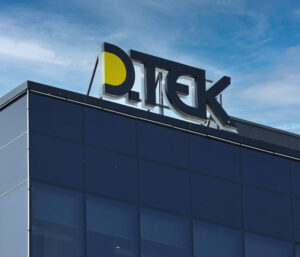
The DTEK energy holding company has returned to hourly power cuts (HPC) for consumers in the Kyiv region, the company said on its Telegram channel on Monday.
“Energy companies have managed to stabilize the power supply situation in the Kyiv region. At the same time, it remains difficult and may change,” the company said.
According to the schedules provided in DTEK’s statement, the current HOPS in the Kyiv region provide for intervals of 7 hours without electricity during the daytime.
“In case of changes, we will inform you on our Telegram channel,” DTEK warned consumers.
At the same time, as of January 24, emergency power outage schedules (GAO) continued to operate in Kyiv and several regions of Ukraine.

Imagine: you booked a “cozy apartment in the center of Rome.” The photos show stylish minimalism, and the description promises an unforgettable vacation. You arrive, and “cozy” means 10 square meters without a window, and “center” means a noisy train station behind the wall. Why did this happen? Because you and the host spoke different languages, even if you both used English.
Airbnb is not just a booking service, it is a space for intercultural communication, where one misunderstood word can cost you comfort, nerves, or money and be like a real online English test for you.
In this article, we will analyze real cases, learn to read between the lines, and edit your messages so that the host sees you as the perfect guest.
1. Code “Euphemism”: What is the host really writing?
Airbnb hosts are marketing masters. They rarely lie outright, but often use “vague” phrases. If your online English doesn’t allow you to see these nuances yet, here is a short dictionary-translator:
● “Charming / Cosy” — In reality: A very small room. You may bump your elbows on the walls.
● “Lively neighborhood” — In reality: Three bars under the windows that are open until 4 a.m.
● “Original features” — In reality: Old plumbing, creaky floors, and no elevator.
● “Minimalist design” — Reality: The apartment only has a bed and a table. There may not even be a towel hook.
● “Eco-friendly heating” — Reality: The apartment will be cold because the owner saves on heating.
Case #1: The story of a “truly authentic experience”
A guest booked accommodation in Morocco. The description said: “Authentic traditional house with natural ventilation.”
Reality: The house had no air conditioning, and “natural ventilation” meant holes in the walls and no windowpanes in some windows.
Tip: Always clarify the technical details. For example: “Does ‘natural ventilation’ mean there are open spaces without glass, or is there an AC unit?”
2. The art of the first message: How not to get rejected
Many people make the mistake of simply clicking “Book.” But experienced travelers know that a short personal message increases your chances of the host being more loyal to you (and possibly allowing early check-in).
Bad example (Too robotic):
“I want to book your flat from 10 to 15. Is it free? Give me a discount.”
Why it’s bad: It sounds rude. The host doesn’t know who you are and sees you as nothing more than a source of trouble.
Good example (Modern & Friendly):
“Hi Marco! My name is Alex, and I’m visiting Rome for a short work-and-travel trip. Your place looks stunning, especially that terrace! I’m a quiet guest and I’ll be out most of the day exploring. Looking forward to staying at your place!”
3. Language traps in dialogues: Real correspondence
Let’s see how one inaccurate phrase can cause chaos.
Situation: Question about breakfast
Guest writes: “Do you have breakfast?”
Host replies: “There is a cafe nearby.”
Guest’s expectation: Breakfast is included, just need to go to the nearby cafe.
Reality: The guest arrives and finds out that they have to pay for the cafe themselves.
How to ask:
“Is breakfast included in the price, or do you just mean there are cafes in the area?”
Situation: Check-in
Guest: “Can I come early?”
Host: “The previous guest leaves at 11, then we clean. You can drop your bags.”
Mistake: The guest arrived at 11:30 and got angry that the apartment was not ready.
Analysis: “Drop your bags” means only to leave your suitcases in the hallway, not to check in.
How to clarify:
“Just to clarify, can I stay in the room from 11:30, or should I wait until the cleaning is finished?”
4. Editing your messages: Making English polite
In English, politeness is conveyed through modal verbs (could, would, might) and softening phrases. Direct requests often sound like commands.

5. Practical cases: Getting out of awkward situations
Case #2: Problem with neighbors
You’ve checked in, and there’s construction going on next door. You don’t want to argue, but it’s impossible to work.
Your strategy: Don’t blame the host right away. Use the phrase “I was wondering if…”
“Hi Sarah! I noticed there’s some construction noise next door. I was wondering if you know how long it usually lasts? I have a few online meetings today, so I’d appreciate any info.”
Case #3: Change of plans
You need to leave a day early and want a partial refund (even though the rules don’t allow it).
Your strategy: Ask for a favor, don’t demand it.
“I’ve had an emergency and need to leave a day early. I know the cancellation policy is strict, but would you consider a partial refund for the last night? No worries if not, just thought I’d ask!”
6. Checklist before clicking “Send”
Why is language your key to better apartments?
When you are fluent in the language, you are no longer just “customer No. 452.” You become an interesting conversation partner, a guest who wants to recommend the best restaurant “for their own” or get a free room upgrade.
Knowing the nuances of communication helps not only to avoid pitfalls, but also to build relationships. And confidence comes with practice. Today, English online allows you to practice exactly these kinds of real-life situations: from corresponding with a host in London to resolving conflicts in New York. Don’t wait until your next vacation to find out that you don’t understand something.
Our English courses are based on live communication and real-life situations. We don’t just teach grammar — we teach you to be confident, polite, and protected in any country in the world. You will master the art of small talk, learn to write flawless letters, and understand the hidden meaning in the words of foreigners. Your next Airbnb trip can be perfect thanks to your confident language skills. Ready to speak like a Superhost? Join us!
Prepared by ENGLISH.KH.UA



