

48.8 thousand criminal cases of fraud were registered in Ukraine last year, according to the Prosecutor General’s Office of Ukraine. This is a quarter less than in 2024. One in five cases was served with a notice of suspicion. Only 18% of proceedings went to court. Most cases are in the capital, Dnipro and Kharkiv regions.
48,871 criminal proceedings under Article 190 of the Criminal Code of Ukraine “Fraud” were recorded in Ukraine in 2025. This is a quarter less than in 2024, when law enforcement registered almost 65,000 cases.
Overall, the figures have actually returned to the level of 2016. Back then, there were just over 46 thousand fraud proceedings in Ukraine. After 2017 and before the full-scale invasion, the number of new proceedings steadily decreased from year to year. The peak occurred in 2023: 82,609 criminal cases – an average of almost 7,000 per month. However, for the second year in a row, the statistics have been on the decline again. Last year, on average, about 4,000 cases were registered per month.
However, suspicion was served in every fifth case – 10,456 proceedings. And 18% of cases went to court: 8,758 criminal proceedings. In 2024, this figure was 24%.
Kyiv remains the leader in the number of fraud cases – 6,825. It is followed by Dnipropetrovs’k region with 4,844 cases and Kharkiv region with 3,677 proceedings.
At the same time, the number of new proceedings decreased almost across the country. The only region that recorded an increase was Khmelnytskyi: +2.7% over the year. The most significant improvement is observed in Mykolaiv region, where the number of new cases has almost halved, as well as in Chernivtsi region: -39%.
https://opendatabot.ua/analytics/fraud-2025-12


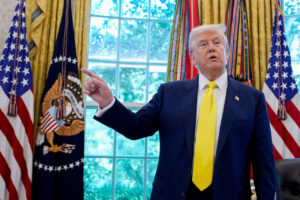
US President Donald Trump signed an executive order declaring a national state of emergency over the actions of the Cuban government, calling the situation an “unusual and extraordinary threat” to US national security and foreign policy.
According to the White House, the executive order also launches a procedure to impose additional duties on goods from countries that sell or otherwise supply oil to Cuba.
According to Reuters, the specific levels of tariffs and the list of countries in the document are not fixed – the decision involves further evaluation by specialized agencies of the United States.
Cuban authorities have publicly condemned Washington’s moves, saying that such measures could hit energy supplies and critical services on the island.
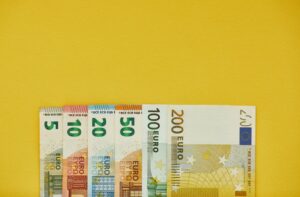
Issue #2 – January 2026
The purpose of this review is to provide an analysis of the current situation on the Ukrainian currency market and a forecast of the hryvnia exchange rate against key currencies based on the latest data. We analyze current conditions, market dynamics, key influencing factors, and likely scenarios.
Analysis of the current situation on the currency market
International context
The main event of the second half of January 2026 was the expected meeting of the Federal Reserve Committee, which considered the level of the key policy rate. As a result, as expected by the markets, the Fed left the benchmark interest rate unchanged, and the federal funds rate remains in the current range of 3.5% to 3.75%. The last meeting of the Fed Committee actually marked the beginning of a pause after three consecutive rate cuts in 2025. Currently, the situation in the US economy does not look pessimistic, as GDP growth in the third quarter reached 4.4%, which significantly exceeded forecasts. Nevertheless, the Fed needs to keep the situation under control, as worrisome trends could become “black swans” for the US economy in 2026. We are talking about a weakening labor market and an inflation rate that exceeds the 2% target.
As for the EUR/USD pair, the dollar continued to fall against the euro in January and even reached the level of 1.2038 by the end of the month, although later there was a slight pullback to 1.1930. Thus, analysts noted that the US dollar fell to its lowest level in four years at the end of January 2026, and this happened after US President Donald Trump dismissed fears of a fall in the US currency. When asked by journalists whether he was concerned about the currency’s decline, he replied: “I think the value of the dollar – look at the business we do. The dollar is doing great.” This statement sent the dollar tumbling, as it caused investors to rush toward traditional investment havens that include gold and the Swiss franc.
While the dollar is losing, the euro is strengthening. The single European currency has strengthened by 15% over the past year. Among the reasons are the instability of Donald Trump’s policies, the Trump administration’s economic decisions on tariffs, and threats to further US economic growth. Of course, Donald Trump’s latest statements on Greenland also add fuel to the fire of the dollar’s decline.
The EU itself is not too happy about the strong euro, as it makes European exports less competitive. Thus, the current trend of strengthening the euro is unlikely to be beneficial for the development of the EU economy. Some experts even predict that the eurozone’s GDP will be about 0.2% lower by the end of the year if the euro/dollar exchange rate remains at the current level, rather than at about $1.16, which has been the benchmark since the EU-US trade agreement in late July. As for whether the European Central Bank will take any action, no one is sure yet. The next ECB meeting in early February should provide some guidance and show whether Europe is ready to change the vector of monetary policy.
Domestic Ukrainian context
In January, the Ukrainian currency market was really stormy, and devaluation processes accelerated, with a particular surge in the middle of the month, when the official exchange rate reached UAH 43.39 per dollar. However, the NBU’s interventions played an important role in reversing the fluctuations, and as of January 30, the official exchange rate was set at UAH 42.84 per dollar.
In January, the NBU continued its policy of exchange rate flexibility, but increased interventions to cool down the high demand for foreign currency. In the first three weeks of January, the NBU sold USD 2.678 billion on the market, with the largest amount (over USD 1.06 billion) in the third week of the month. However, the peak level of demand observed in December, when the NBU sold more than $4.65 billion on the market, was not observed in January.
An important decision in January was to cut the NBU’s key policy rate. The Board of the National Bank of Ukraine decided to start a cycle of interest rate easing, and the rate was cut from 15.5% to 15% starting January 30, 2026. According to the NBU, this is consistent with bringing inflation to the 5% target on the policy horizon and will support the economy at the same time. In addition, the NBU informed that in December, both consumer and core inflation slowed to 8% year-on-year. They say that the annual growth rate of consumer prices also declined in January, but inflation expectations remained relatively high. According to the NBU’s forecast, inflation will decline to 6% at the end of 2027, and to the target of 5% in 2028.
As for foreign aid, the NBU says that the expected amount of foreign aid will be enough to finance the budget deficit without issuing new debt and to keep international reserves at a sufficient level to maintain the stability of the foreign exchange market. The NBU said in a statement that the EU Council has decided to allocate EUR 90 billion to Ukraine in 2026 and 2027, and that support for Ukraine will continue under the current ERA Loans mechanism. The NBU’s updated forecast suggests that international reserves will amount to USD 65 billion by the end of 2016. At the end of 2026, international reserves will amount to USD 65 billion.
Despite the NBU’s “reassurance” in the form of a rate cut and reminders from the regulator’s top officials about the upcoming multibillion-dollar financial support from partners, the FX market is still trying to follow the devaluation trend. There are many reasons for this: large-scale shelling of cities, which has significantly worsened the situation in the energy sector, the difficult situation at the front, and the lack of clear signals from the IMF regarding the approval of a new program worth $8.1 billion.
US dollar exchange rate: dynamics and analysis
General characteristics of market behavior
In the Ukrainian foreign exchange market in January, the dollar initially gained ground, but lost ground in the second half of the month as the hryvnia strengthened. At the beginning of the month, the interbank exchange rate was at UAH 42.3 per dollar, while on January 15 it was at UAH 43.55 per dollar, and on January 29 it was at UAH 42.9 per dollar.
The cash market experienced accelerated devaluation waves, and in mid-January the purchase rate reached 43-43.2 UAH/USD, while the sale rate was in the range of 43.6-43.7 UAH/USD, but at the end of the month, the strengthening of the hryvnia on the interbank market also affected the cash segment, where the purchase rate was 42.5-42.3 UAH/USD, and the sale rate was 43-43.15 UAH/USD.
Meanwhile, the spread between the buying and selling rates at bank cash desks and exchange offices increased to UAH 0.55-0.65 per dollar compared to December.
The cash market saw a surge in demand in January: according to the NBU, between January 1 and January 27, households purchased USD 1.64 billion (in equivalent), while sales of cash currency by households during this period amounted to USD 0.97 billion.
Key factors of influence
– International context. The dollar began to strengthen very actively against the euro as a result of the expected pause in the Fed’s interest rate cuts, as well as pessimistic expectations about the development of the US economy in 2026, including inflation and the labor market. Investor sentiment was also affected by President Donald Trump’s statements on the dollar’s strength and on Greenland.
– The National Bank of Ukraine cut its key policy rate to 15%, thus starting to ease monetary policy to bring inflation in Ukraine to the 5% target.
– The NBU increased interventions in the interbank market as part of its managed exchange rate flexibility strategy, which brought the dollar back below the psychological level of UAH 43/USD at the end of January.
Forecast.
– In the short term (1-2 weeks): the basic range of 42.9-43.4 UAH/$ with possible fluctuations towards a weaker hryvnia.
– Medium-term (2-3 months): UAH 43.50-44.00/$. In the international market, the weak dollar trend may change in the short term to return to last year’s exchange rate levels of approximately 1.17 EUR/USD. However, the inconsistent policies of President Donald Trump and the situation around the upcoming change of the Fed chairman and expectations of a new stage of easing in the US will send signals to investors about the long-term trajectory of the weak dollar. In Ukraine, the national currency will be influenced by the situation with the receipt of aid from partners, as well as the level of the energy crisis and the speed of its resolution. Demand on the interbank market will remain high.
– Longer term (6+ months): The scenario of gradual devaluation remains in place, and the NBU will periodically enter the market with more foreign currency supply to level out demand. The benchmark for the first half of 2026 is UAH 43.5-44.9/$.
Euro exchange rate: dynamics and analysis
General characteristics of market behavior
In January, the euro strengthened on the Ukrainian market: the official euro exchange rate stood at UAH 49.79/€ in early January and reached UAH 51.24/€ at the end of the month. In the cash segment, the euro also strengthened quite significantly in January: at the beginning of the month, the average buying rate was 49.5 UAH/€, and the selling rate was 50.17 UAH/€. By the end of the month, the euro was buying at 51 UAH/€ and selling at 51.95 UAH/€ in banks and exchange offices.
Key observations
– Exchange rate geometry: At the end of January, the selling rate for cash euros was at the level of 51.6-51.95 UAH/€. The dynamics of the euro exchange rate was influenced by the general devaluation trend, which intensified in the first two weeks of January 2026, as well as by the rapid and steady strengthening of the euro on the global market.
– Supply and demand: Demand for euros in early 2026 is at a high level as importers are actively purchasing energy equipment, the need for which has increased sharply after several massive Russian attacks targeting thermal power plants in large cities. On the cash market, demand for both dollars and euros grew during the month.
Key influencing factors
– Global context: the euro is strengthening against the dollar amid unstable forecasts for the US economy and political statements by Donald Trump, which affect investors’ desire to exit the dollar into safe-haven assets such as the euro, Swiss franc, and gold.
– Domestic market: On January 27, the euro crossed the psychological mark of 51 UAH/euro (official exchange rate), and in the cash segment is rapidly approaching the level of 52 UAH/euro, which stimulates demand for the European currency.
– Behavioral factor: In Ukraine, there has been an increase in both the volume of purchases of dollars and euros and the volume of currency sales, and the activity of currency exchange operations traditionally increases in difficult crisis periods. In January 2026, net purchases of foreign currency by households are likely to exceed December’s figures: the balance for January 1-27 is USD 693 million (December: USD 739 million).
Forecast.
– In the short term (1-2 weeks): the euro will be in the range of 51.5-51.9 UAH/€ with a tendency to move to the upper limit.
– Medium-term (2-3 months): the trend for a strong euro and, accordingly, a weak dollar may continue for some time in the international market. In Ukraine, in addition to the global trend of a stronger euro, the exchange rate will be affected by general devaluation sentiment due to high volumes of imports in euros, which will accelerate the euro’s growth. The exchange rate target is 51.8-53.5 UAH/€.
– Longer-term (6+ months): the euro may rise to 53.5-55.5 UAH/€ in the first half of 2026.
Recommendations: dollar or euro – buy, sell, or wait?
USD/UAH
The dollar’s weakening trend, caused by investors’ doubts about the prospects for the US economy and skeptical assessments of the labor market, is further reinforced by negative expectations about geopolitical risks (in particular, in the case of Greenland), a change in the Fed’s leadership, and concerns about the Fed’s independence.
Investors see the future policy of the Fed as another risk, as investors fear inconsistent steps and a lack of predictability as Donald Trump continues to put pressure on the Fed. This means that the dollar is unlikely to strengthen to 1.1650 in the near future, and large investors are looking for ways to redirect their investments from the dollar to other currencies and liquid assets.
Ukraine is currently experiencing a clear devaluation trend, which means that dollar-denominated savings will remain the main basis for investors’ medium- and long-term strategies. The next stages of hryvnia devaluation will only lead to some options for generating speculative income on currency exchange. However, the dollar remains the main savings currency for various investment plans.
EUR/UAH
In recent months, the euro has shown a strengthening trend, which allows investors planning to enter the dollar to do so profitably. Investors will also continue to buy euros to form part of their savings in this currency as part of a long-term strategy. As the liquidity of the euro is only improving, investors can expect to keep about 40% of their foreign currency savings in this currency.
Overall strategy
In January 2026, the Fed Committee meeting ended with the expected “nothing” – the rate was left at the current level. Pessimism about the future development of the US economy and uncertainty about clear and adequate steps by the Fed contribute to the dollar’s decline. But there are no “black swans” in the EU: the economy is growing, inflation risks are minimal, and in February the ECB may consider the situation in more detail and announce whether it is preparing to change rates.
In Ukraine, frosts, blackouts and devaluation sentiment prevail, and investors continue to formulate their savings plans with a view to the upcoming weakening of the hryvnia. The National Bank of Ukraine is closely monitoring the market and is ready to intervene in case of peak demand, while the managed exchange rate flexibility strategy will allow us to remain cautiously optimistic about the pace of further devaluation movements. Basic rules for investors: no sudden decisions, especially when there is panic on the interbank market. We analyze the general global trend together with the internal Ukrainian realities and only then decide whether to exit the currency or move from the dollar to other assets. It is important to regularly review your own savings programs in order to respond to trends in time and increase the level of return on investments in foreign currencies.
This material was prepared by analysts of the international multiservice FinTech product platform KYT Group and reflects their expert, analytical professional judgment. The information presented in this review is for informational purposes only and cannot be considered as a recommendation for action.
The Company and its analysts make no representations and assume no liability for any consequences arising from the use of this information. All information is provided “as is” without any additional warranties of completeness, obligations of timeliness or to update or supplement.
Users of this material should make their own risk assessment and informed decisions based on their own evaluation and analysis of the situation from various available sources that they consider to be sufficiently qualified. We recommend that you consult an independent financial advisor before making any investment decisions.
REFERENCE
KYT Group is an international multi-service marketplace FinTech product platform that provides financial companies with access to services for promoting their services, as well as advertising and consulting services.

According to Srpski Ekonomist, several top international brands – InterContinental, Swissotel and Ritz-Carlton – are entering the Belgrade hotel market, amid expectations of increased demand in connection with preparations for EXPO 2027 and plans to expand the room stock in the capital.
According to estimates cited by market participants, in 2027, during the EXPO period, Belgrade could receive about 4 million guests in just three months, while Serbia as a whole had about 4 million tourists in 11 months of 2025. In this logic, the acceleration of hotel projects is perceived as an infrastructural necessity, but there is already a question whether the market after the EXPO will be able to sustainably “digest” the growth of supply, especially in the segment of high categories.
InterContinental returns to Serbia in partnership with Delta Holding: IHG reported that InterContinental Belgrade is planned to open by the end of 2026. The project is part of the Delta District mixed-use complex in Belgrade’s business and financial center; 203 rooms are announced, and features include a sky pool, rooftop restaurant and bar, spa and conference infrastructure.
Swissotel is planned in the EXPO zone in Surcin. Euro KB Rent will receive state aid in the amount of EUR 15.986 million, which will be paid in two tranches in 2026 and 2027. The minimum investment for the project is estimated at EUR 79.9 million; the materials also indicate that the hotel will include a congress center and spa/wellness with two swimming pools, and a room stock of 378 rooms.
The Ritz-Carlton in Belgrade is planned as part of the redevelopment of the former Hotel Jugoslavija site on the Danube waterfront. Marriott International reported that the property is envisioned with 193 rooms and more than 1,700 square meters of event space, while the project itself also includes residential and office towers, a conference center, a marina and a promenade area. Millennium Team, associated with the project through Danube Riverside, estimates the total investment in the complex at almost 500 million euros, with the hotel opening announced for 2027.
EXPO-2027 in Belgrade will take place from May 15 to August 15, 2027, with more than 130 countries having already officially confirmed their participation, according to the organizing committee’s data
https://t.me/relocationrs/2178

Starting from February 1, due to the intrusion of cold Arctic air from the north of Europe and additional cooling in the high pressure field, in Ukraine, except for Transcarpathia and southern part, at night, the temperature is expected to drop to 20-27º frost, in the northern and eastern regions in some places up to emergency frost -30º, reports Ukrhydrometcenter.
“Due to the intrusion of cold arctic air from the north of Europe and additional cooling in the high pressure field with clear weather at night on February 1-3 in Ukraine, except for Transcarpathia and the southern part, the temperature drop to 20-27º frost, in Rivne, Zhitomir, Kyiv, Chernihiv, Sumy, Poltava and Kharkiv regions in places to extreme frost – minus 30º (III level of danger, red). The temperature in the afternoon 15-22º frost”, – stated in the message.
Forecasters expect a gradual weakening of frost on February 4-5, starting from the west and south-west.
Weather conditions will lead to complications in the work of energy, utility companies and vital activities of the population; to the disruption of road, rail and electric transport. Information will be clarified by daily weather forecasts.

The average pension in Ukraine is currently UAH 6,544, according to the Pension Fund of Ukraine. The payment increased by 13% over the year. Every fifth Ukrainian pensioner receives an average pension of about 4,500 UAH. 63,000 pensioners receive payments below the subsistence level, and 261,000 receive payments at the level of UAH 2,361. In total, there are more than 10.1 million pensioners in Ukraine this year, and almost 73% of them receive an old-age pension.
There are currently 10.17 million pensioners in Ukraine. The vast majority – 73% of pensioners – receive old-age payments: 7.4 million Ukrainians. Another 1.5 million citizens (15%) live on a disability pension, about 700,000 or 7% receive a survivor’s benefit, and 5% or 500,000 have a long service pension. Social pensions and lifetime pensions for judges make up less than 1%.
The average pension in Ukraine is currently UAH 6,544. The payment increased by 13% over the year. However, not everyone has such pensions: more than a third of pensioners receive about UAH 3,250. It is worth noting that the share of such pensioners decreased from 44% to 35% over the year.
Another 15% of pensioners – more than 1.5 million people – receive payments of more than UAH 10,000, and the average pension in this group reaches UAH 16,000. Another 30% of Ukrainians on pensions live on an average of UAH 6,860, and one in five receives about UAH 4.5 thousand per month.
At the same time, 63 thousand pensioners receive a pension below the subsistence level, and 261 thousand Ukrainians live on this minimum: UAH 2,361.
Most pensioners live in Dnipropetrovs’k region – 867 thousand, followed by Kyiv (746 thousand), Kharkiv (687 thousand) and Lviv (665 thousand) regions. The lowest number of pensioners is registered in Kherson (202 thousand) and Chernivtsi (203 thousand) regions.
The amount of payments also differs: the highest average pensions are traditionally in the capital – almost UAH 9 thousand, the lowest – in Ternopil region: about UAH 5 thousand. Although pensions grew by 13% across the country, in some regions the growth was much more significant, such as Rivne (+24%) and Volyn (+20%).
The majority of pensioners – over 82% – receive payments through banks, most often through PrivatBank and Oschadbank. At the same time, pensions are not the only source of income for many: one in four pensioners in Ukraine continues to work.
There are 2.8 million such people, and their average pension is UAH 7,160. As of January 28, UAH 3,250 is about 63 euros at the NBU exchange rate.
https://opendatabot.ua/analytics/pensions-2025-12





