

Law enforcement officials have uncovered a large-scale scheme involving the illegal production and distribution in Ukraine of the counterfeit weight-loss drug “Biopatid,” in connection with which 27 individuals have been notified of their status as suspects, according to a Sunday announcement by the press service of the Office of the Prosecutor General on its Telegram channel.
According to the investigation, the suspects include the scheme’s organizer and owner of the underground laboratory, the owner of a well-known Kyiv clinic, a customs broker, laboratory workers, packagers, sales and advertising managers, as well as other participants in the criminal activity.
The cost of the main ingredients was about $17, while the finished product was sold for up to $1,200. According to preliminary data, products totaling more than $5 million have been manufactured since the beginning of this year.
“The mastermind behind the scheme, aware of the high demand for weight-loss drugs and the high cost of medications containing the active ingredient tirzepatide, decided to set up his own illegal ‘pharmaceutical business.’ To this end, he set up an underground laboratory where a generic version of the drug was manufactured without any permits or quality control,” according to a statement released by the press service.
The raw materials were subsequently used in the underground laboratory. The participants in the scheme created a website and social media pages, recruited sales managers, and actively advertised the drug.
They offered it to beauty salons, clinics, and healthcare professionals in various regions of Ukraine. Bloggers, actors, and other public figures were also enlisted to promote the product.
As part of the criminal investigation, law enforcement officers conducted more than 250 authorized searches at locations where the counterfeit drug was manufactured, stored, sold, and distributed, as well as at hospitals and cosmetic clinics.
Investigative actions were carried out in Kyiv and the Kyiv region, Dnipro, Zaporizhzhia, Odesa, Poltava, Vinnytsia, Zhytomyr, Mykolaiv, Rivne, Kharkiv, Khmelnytskyi, and Chernihiv.
During the searches, investigators seized the counterfeit drug and raw materials used in its production, equipment from an underground laboratory, packaging materials and finished printed materials, documentation and drafts, as well as cell phones and computer equipment.
Law enforcement officers also seized cash in various currencies totaling nearly 15 million hryvnias, luxury cars, and other property.
The issue of imposing preventive measures on all suspects is currently being resolved.
The investigations were conducted by prosecutors in collaboration with SBU officers.
In accordance with Article 62 of the Constitution of Ukraine, a person is presumed innocent of a crime and may not be subjected to criminal punishment until their guilt has been proven in accordance with the law and established by a court conviction.

Ukraine’s Cyber Police have urged citizens not to use the services of dubious intermediaries who offer, via the internet, to exchange old paper driver’s licenses for modern documents without visiting Ministry of Internal Affairs service centers.
According to law enforcement officials, scammers post offers on social media and messaging apps, promising to issue a new license entirely online. To do this, they may demand an advance payment, as well as photos of the passport, driver’s license, and other documents.
As a result, citizens risk not only losing money but also receiving a counterfeit license, the details of which are not recorded in government registries, the Driver’s Cabinet, or the “Diya” app. Furthermore, copies of documents provided to scammers may later be used for other illegal activities.

The Cyber Police remind the public that paper-booklet-style driver’s licenses issued in Ukraine before 1991 remain valid within the country. There is no mandatory requirement to replace them. If you wish to obtain a modern-style license, you must contact a Ministry of Internal Affairs service center and complete the official procedure.
Law enforcement officials list the following as signs of potential fraud: communication exclusively via messaging apps; promises to issue a license entirely online; offers to “enter data into the database” without following the official procedure; demands to transfer an advance payment to a private bank card; and requests to send photos of a passport or other documents.
You should exercise particular caution if the person you’re communicating with claims to be an employee of the Ministry of Internal Affairs service center but suggests conducting all procedures via social media or a private chat.

Official government services are not provided through random social media pages and do not require you to share personal documents with unknown individuals, the Cyber Police emphasize.
If a citizen discovers a suspicious post or has already sent money or personal information to scammers, law enforcement recommends saving the correspondence, links, phone numbers, and other evidence, and then contacting the police or submitting an online report via the Cyber Police website.
Additional information on common scams is available on the “Kyber Brama” portal, and official information on driver’s license exchanges can be found on the website of the Ministry of Internal Affairs’ Main Service Center.
Source: Cyber Police of Ukraine.
CYBER POLICE, Driver, fraud, Ministry of Internal Affairs, UKRAINE
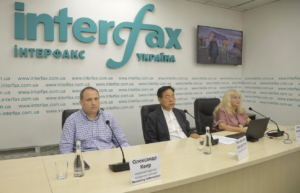
American missionary and philanthropist Kim Kio Yok, who has been working in Ukraine for more than 30 years, said that probable fraud occurred during the purchase of a house in Kyiv for the activities of the charitable foundation and Grace church, as a result of which the organization lost the ability to fully provide assistance to internally displaced persons, pensioners and other vulnerable categories of the population.
As Oleksandr Keer, managing partner of the law firm Revealing Information, said during a press conference at the Interfax-Ukraine agency, in 2022 Kim Kio Yok agreed to purchase a building in Kyiv’s Darnytskyi district, but instead of the main sale and purchase agreement, an agreement on the intention to conclude such an agreement was signed. According to the lawyer, at the time the agreement was concluded, the real estate was pledged due to debts of the previous owner’s family, and the initial payment amounted to $30,000.
“In 2022, $30,000 was transferred as a deposit and confirmation of the genuine intention to purchase this property. From 2022 until today, the amount of funds received increased from $30,000 to $400,000; in fact, 21 agreements were concluded to postpone the deadlines for concluding the main sale and purchase agreement. The last two additional agreements were concluded when the party no longer even had the ability to sell the property because it did not own it,” Keer said at a press conference at the Interfax-Ukraine agency on Wednesday.
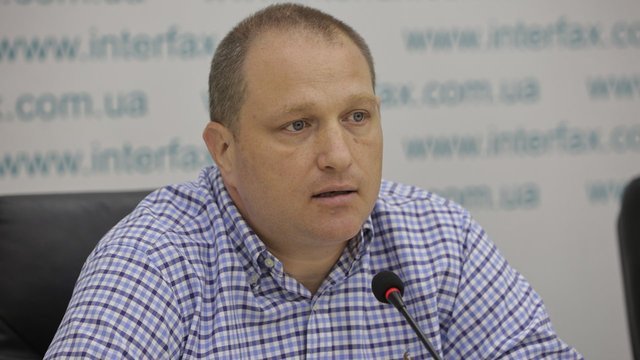
According to him, because of the outstanding previous obligations of the person who was supposed to sell the house, ownership of the real estate passed to creditors, making it impossible to fulfill the original agreements. At the same time, the lawyer claims that Kim Kio Yok effectively transferred almost the entire agreed value of the property but did not receive ownership of it.
Keer said that after the philanthropist approached them, the lawyers initially tried to resolve the situation through negotiations and mediation, but they were unable to reach an agreement with the other party. After that, submissions to the police and prosecutor’s office were prepared, as well as civil lawsuits concerning the disputed agreements and the return of the funds.
“When Mr. Kim approached us, the first thing we proposed was to hold negotiations and mediation in order to clarify the circumstances and try to reach an agreement. In response to repeated attempts to hold such a meeting, we were told that there were no grounds or purpose for it. After that, we prepared statements to the police and prosecutor’s office, as well as civil lawsuits regarding the return of the funds,” he added.
Keer noted that, according to the assessment of the injured party, the case has prospects in court because the transfer of funds and changes to the agreements were documented by signed agreements. He also said that for some time the philanthropist actually used the building, invested funds in improving it and purchased equipment, but now, according to his representatives, does not have access to this property.
He noted that the prosecutor’s office of the Darnytskyi district had opened criminal proceedings and that a pre-trial investigation was ongoing. The lawyer also positively assessed the court’s prompt response to the appeal by representatives of the injured party, but noted that since May the case has not yet resulted in a notice of suspicion or the submission of an indictment to the court.
For his part, Kim Kio Yok said that he came to Ukraine from California 33 years ago and during that time was engaged in religious, educational and charitable projects. After the start of the full-scale war, together with like-minded people, he helped people whose homes had been damaged, distributed food packages and firewood, and also organized free meals for internally displaced persons in Kyiv.
“We helped Ukrainians who suffered greatly during the full-scale war: we found damaged houses, helped rebuild them, provided people with food packages and firewood so that they could survive the winter. In the building in the Darnytskyi district, we served hot lunches to between 150 and 200 internally displaced persons. Because of this situation, in recent months people have been unable to receive the assistance that we provided before,” Kim Kio Yok said.
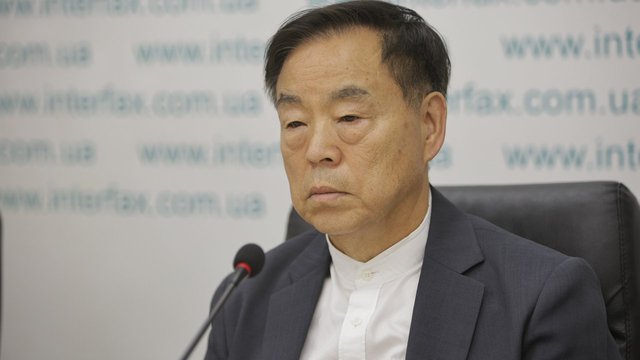
Kim Kio Yok, American missionary and philanthropist, injured party in the criminal proceedings
The missionary said that, as a U.S. citizen, he sent an official letter to the U.S. Embassy in Ukraine and contacted the U.S. consul.
“We sent an official letter to the U.S. Embassy. They responded and are showing interest in this case because I am a U.S. citizen. I also contacted the U.S. consul with a request to help me in this situation,” Kim Kio Yok said.
According to him, people who previously regularly received assistance continue to call representatives of the organization and ask when the free lunches and other programs will be resumed. The missionary stressed that he intends to remain in Ukraine and continue his charitable activities.
Kim Kio Yok noted that the organization operates not only in Kyiv. Over 33 years of its activities, centers have been established in various cities of Ukraine, including rehabilitation programs for people with drug and alcohol addiction. The Grace gymnasium, which includes a kindergarten and education through the 11th grade, also operates, while the building purchased in Kyiv was planned to be used, among other things, for educational projects.
“I am now 75 years old, and even during the war I want to help Ukrainians and serve them with love. We appeal to law enforcement agencies, the police and the prosecutor’s office: help us so that we can work again on the territory of Ukraine. We have dedicated our lives to serving Ukraine and the Ukrainian people,” he said.
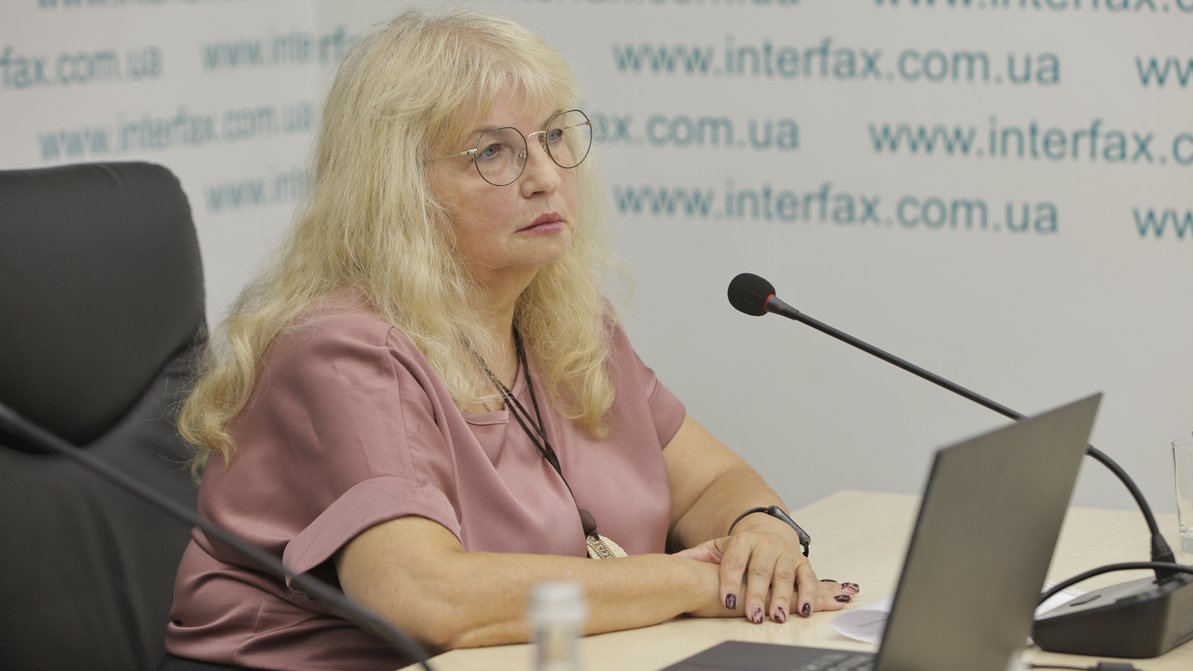
For her part, Viktoriia Khliebnikova, a volunteer with the charitable foundation, noted that the consequences of the conflict surrounding the building concern not only the foundation itself, since professional kitchen equipment purchased specifically to provide free meals to people remained inside the premises.
“For us, this story is very painful because this is not a question of the house, the equipment or the money. The most painful thing is that we cannot help people to the full extent, as we did before. The professional equipment was purchased not for business and not to make a profit – it was purchased for charitable activities, to feed people,” Khliebnikova said.
She noted that during widespread electricity outages, such meals were of particular importance to people who were unable to cook food at home. At present, according to her, the team is seeking to regain access to its property and resume its work.
“People are waiting, they meet me on the street and every time ask when we will start helping again. We want to return to normal work, prepare lunches, help elderly people, children and families who have lost their defenders at the front,” the volunteer added.
For his part, Pastor Kim Shine, vice president of the international Grace mission, who joined the press conference from the United States, said that the American organization financially supported the activities of Kim Kio Yok and his family in Ukraine and helped with the purchase of the premises. According to him, after the start of the full-scale war, the mission offered the missionaries the opportunity to return to the United States for security reasons, but they decided to stay.
“When they said that they had found a building where they could support elderly people and prepare food for displaced persons, we decided to provide financial assistance for its purchase. Now we are appealing to the Ukrainian authorities so that this case is resolved in accordance with the law and the activities can continue,” Kim Shine emphasized.
CHARITY, fraud, INTERFAX-UKRAINE, KYIV, MISSIONARY, UNITED STATES

Ukrainian President Volodymyr Zelenskyy has submitted two bills to the Verkhovna Rada for consideration aimed at tightening penalties for organizing fraudulent call centers and participating in their activities, as well as providing additional, substantial protection for people against illegal actions involving payment instruments and bank accounts.
“Penalties for fraudulent call centers must be clear and severe—not only for those who carry out the work at these call centers, but also for those who organize them, profit from them, and own them. The first bill provides for exactly that,” Zelenskyy emphasized, commenting on the bills on his Telegram channel.
According to the president, the bills also provide for the introduction of stricter liability for organizing fraudulent schemes involving banking instruments, in particular so-called “drops.”
“At the level of internal regulation of the banking system, there must be appropriate steps and changes to algorithms that will give banks more opportunities to protect the rights and legitimate interests of individuals and businesses and prevent the use of accounts for tax evasion or the laundering of funds from illegal activities. At the legislative level, we will create the necessary framework to counter the organizers of fraudulent schemes involving bank accounts and payment instruments,” Zelenskyy explained.
He added that this same bill aims to implement European Union legal standards in Ukraine, as provided for in agreements with partners.
BANK, BILL, call center, fraud, UKRAINE

Law enforcement officials have uncovered a fraudulent network of crypto exchanges operating in seven regions of Ukraine and, during searches, seized cash in various currencies totaling more than 20 million hryvnia, according to Ukraine’s Prosecutor General Ruslan Kravchenko.
According to him, under the guise of a currency and crypto-asset exchange service, the scheme’s participants defrauded citizens of their funds. To do so, they used a website, Telegram, an order system, confirmation codes, and a network of exchange locations, creating the impression of a legitimate financial service.
As Kravchenko explained, after a request was submitted, a manager would contact the client to provide the request number, a unique confirmation code, the address of the exchange location, and other details. After handing over the cash, clients received neither crypto assets nor a refund; instead, they were given vague explanations, and the process was dragged out indefinitely.
According to the Prosecutor General, while the crime was being documented, members of the network used a similar scheme to embezzle 50,000 UAH as part of an undercover purchase, which, in his opinion, indicates that a well-established mechanism was in operation.
“If a person transfers money and receives nothing in return, that is not a business model but a subject of criminal proceedings,” Kravchenko noted.
He also reported that notices of suspicion are being prepared for the scheme’s participants regarding the fraudulent misappropriation of another’s property, committed by a group of individuals acting in concert, and that the investigation is ongoing to identify all those involved in the platform’s operation—from the organizers to the individuals who accepted funds from the victims.
For its part, the National Police of Ukraine reported that investigators and cyber police, as part of the criminal investigation into the fraud, are conducting more than 40 urgent searches at the residences of those implicated and at currency exchange offices.
“The currency exchange network was conducting business activities without the appropriate licenses. Furthermore, under the guise of providing currency exchange services and purchasing cryptoassets, its members embezzled citizens’ funds. After transferring the money, the victims did not receive the promised cryptoassets, and contact with the suspects was severed,” reads a statement released on the National Police’s Telegram channel by its press service.
The police also reported that, as part of the investigation, documents, vehicles, and cash are being seized to facilitate the subsequent compensation of losses to the victims. One member of the criminal group has been detained in accordance with Article 208 of the Criminal Procedure Code of Ukraine. He is to be notified of the charges against him and served with a motion for the imposition of a preventive measure.

48.8 thousand criminal cases of fraud were registered in Ukraine last year, according to the Prosecutor General’s Office of Ukraine. This is a quarter less than in 2024. One in five cases was served with a notice of suspicion. Only 18% of proceedings went to court. Most cases are in the capital, Dnipro and Kharkiv regions.
48,871 criminal proceedings under Article 190 of the Criminal Code of Ukraine “Fraud” were recorded in Ukraine in 2025. This is a quarter less than in 2024, when law enforcement registered almost 65,000 cases.
Overall, the figures have actually returned to the level of 2016. Back then, there were just over 46 thousand fraud proceedings in Ukraine. After 2017 and before the full-scale invasion, the number of new proceedings steadily decreased from year to year. The peak occurred in 2023: 82,609 criminal cases – an average of almost 7,000 per month. However, for the second year in a row, the statistics have been on the decline again. Last year, on average, about 4,000 cases were registered per month.
However, suspicion was served in every fifth case – 10,456 proceedings. And 18% of cases went to court: 8,758 criminal proceedings. In 2024, this figure was 24%.
Kyiv remains the leader in the number of fraud cases – 6,825. It is followed by Dnipropetrovs’k region with 4,844 cases and Kharkiv region with 3,677 proceedings.
At the same time, the number of new proceedings decreased almost across the country. The only region that recorded an increase was Khmelnytskyi: +2.7% over the year. The most significant improvement is observed in Mykolaiv region, where the number of new cases has almost halved, as well as in Chernivtsi region: -39%.
https://opendatabot.ua/analytics/fraud-2025-12





