

According to “Serbian Economist”, on July 30, the Montenegrin government approved a proposal to establish a mechanism for screening foreign investments that could affect the country’s security and the functioning of critical infrastructure.
The new rules have not yet taken effect. A separate law must be passed for them to be implemented.
Prior approval will be required from investors from countries outside the EU who acquire control or at least 10% of the capital or voting rights in companies operating in strategic sectors.
The review may cover the energy sector, ports, airports, railways, banks, payment systems, telecommunications, media, digital infrastructure, technology, food production, and critical raw materials.
Real estate will be subject to review only if it is associated with strategic facilities or located near critical, military, or government infrastructure. This initiative does not directly apply to ordinary apartment purchases by foreigners.
The government will have the authority to approve a transaction, impose additional conditions, or prohibit it entirely. Potential requirements include restrictions on access to confidential data, disclosure of information about ultimate owners, and sources of funding.
The preliminary review is expected to take up to 45 days. Concluding a transaction without authorization may result in a fine, restrictions on voting rights, or the mandatory sale of the acquired stake.
The initiative is part of Montenegro’s efforts to align its legislation with EU rules. The final terms will be determined after the law is drafted and adopted.
Formally, specific countries are not named in the initiative. However, in practice, the mechanism will be particularly important for investors from Russia, Serbia, and China. All three countries are outside the EU, and their capital is significantly represented in Montenegro’s economy.
The possible adoption of this law will, in one way or another, also affect Ukrainian investors. Ukraine ranks high in terms of the number of companies in Montenegro. According to the latest data from MONSTAT, in 2024 there were 1,069 enterprises with Ukrainian owners operating in the country, accounting for 3.6% of all active companies with foreign capital. This places Ukraine fourth, behind Russia, Turkey, and Serbia.
At the same time, Ukrainian investments are concentrated primarily in real estate and small companies. In 2023, the inflow of such investments amounted to 19.1 million euros, of which 15.2 million euros went toward real estate purchases.
Therefore, the impact of the new rules on Ukrainian businesses is likely to be limited. Routine purchases of apartments and the establishment of small companies should not automatically be subject to review. Permission will be required for investments in strategic sectors or projects related to critical infrastructure.
Source: Government of Montenegro

According to Serbian Economist, Montenegro has significantly tightened payment rules for real estate transactions: deals worth more than EUR 10,000 must now be processed through the country’s banking system. The new requirements are aimed at strengthening control over the origin of funds, combating money laundering, and increasing transparency in the real estate market.
The law applies to real estate transactions worth more than EUR10,000.
The key requirement is that payment for the transaction must be made from or to a bank account opened in Montenegro. At least one of the parties to the transaction must have an account with a Montenegrin bank. This means that the buyer can transfer funds from a foreign bank directly to the seller’s account in Montenegro, provided the seller has such an account.
If payment was made before the contract was signed, the notary will have to request a bank statement confirming the transfer. A simple statement by the parties that the payment has already been made will not be sufficient. This strengthens the role of notaries and banks as participants in ensuring the integrity of the transaction.
In effect, Montenegro is closing the door on informal payments in the real estate market, which has actively attracted foreign buyers in recent years. Violations are subject to fines ranging from EUR 3,000 to EUR 20,000.
For foreign buyers, the new rules mean they must verify the banking aspects of the transaction in advance. If the seller is a resident of Montenegro and has a local bank account, the buyer will generally be able to pay for the property via a SWIFT transfer from their foreign account. However, in more complex cases—for example, if the seller is a non-resident, the transaction involves a legal entity, or the parties wish to manage payments through the buyer’s account—it may be necessary to open an account at a Montenegrin bank.
In such cases, banks may request documents regarding the source of funds: proof of income, sale of assets, investment documents, or other sources of capital. This aligns with the general logic of European financial compliance, although Montenegro is not yet an EU member.
For the Montenegrin real estate market, the effect will be twofold. On the one hand, the new rules may complicate and slow down transactions, especially for non-residents who are accustomed to more flexible payment schemes. On the other hand, increased transparency may strengthen the confidence of banks, notaries, and foreign investors in the market, particularly against the backdrop of expectations regarding Montenegro’s accession to the EU.
Montenegro remains one of the most popular real estate markets on the Adriatic for foreign buyers. Demand is driven by buyers from Europe, Turkey, Russia, Ukraine, Israel, and the Balkans.
https://t.me/relocationrs/2843
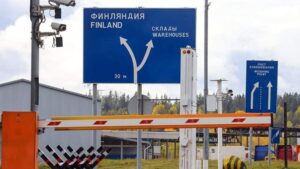
At the end of January 2026, a working group under the Finnish Ministry of Defense proposed changing the mechanism for expropriating (compulsory purchase) real estate for national security purposes and transferring the authority to issue permits for such expropriation exclusively to the Ministry of Defense. The government press release notes that the current procedure has been difficult to apply, as permits are formally the responsibility of different agencies.
The working group’s proposals include expanding the possibilities for rapid response in urgent cases, including earlier introduction of a ban on actions with the property, temporary takeover of real estate, as well as unification of the approach to compensation for expropriation and planning of financing for such procedures in the budget.
The context for such steps remains the Finnish authorities’ concerns about the risks of “hostile influence” through real estate transactions. Previously, the government and the Ministry of Defense had consistently tightened the rules for buyers from countries outside the EU and the EEA, and also promoted restrictions that were in fact primarily aimed at Russian citizens. In April 2025, the Finnish parliament approved a law restricting the purchase of real estate by citizens of countries waging “aggressive war,” which was publicly interpreted as a ban on Russians who are not permanent residents.
Defense Minister Antti Hykkänen previously stated that Finland had made “too naive decisions” on real estate control in the 2000s and was now “systematically correcting the identified problems.”
Thus, at the moment, we are not talking about a declared campaign of “mass seizure” of property from citizens of all countries outside the EU, but about strengthening the state’s legal instruments to intervene in cases where specific real estate objects are considered a potential threat to national security, as well as continuing the policy of restricting new transactions for certain categories of foreign buyers.

The Greek tax authority AADE is tightening control over short-term rentals through Airbnb, Booking.com, and Vrbo: owners and managers of properties must verify and finalize their 2025 income data in the short-term accommodation registry by February 28, 2026, including the distribution of income among beneficiaries, amounts, and the correctness of the property registration number (AMA).
According to AADE, 2.2 million initial declarations were submitted for 2025, and the total declared income amounted to EUR 870 million (+16% y/y). At the same time, tax authorities warn that if the data is not confirmed and corrected on time, it is possible that tax will be levied on 100% of the income specified in previous declarations, even if part of the amounts was not actually received (for example, due to cancellation of reservations).
From the beginning of March 2026, AADE will launch cross-checks based on data provided directly by the platforms. If unregistered properties or properties without AMA in the listings are found, sanctions will be imposed: fines ranging from EUR 5,000 to EUR 20,000, as well as removal of listings from platforms until the violations are rectified.
Against the backdrop of the segment’s growth, the authorities are tightening requirements for correct registration and compliance with the rules for maintaining a presence in the register.

Slovakia, Poland, and a number of European countries have agreed on a position to strengthen controls on imports of Ukrainian agricultural products entering the European market, Slovak Agriculture Minister Richard Takáč told reporters after a meeting of European Union agriculture ministers (Agrifish) in Brussels on Monday.
“I can say that at an informal joint lunch, we discussed strengthening controls on imports from third countries, which is a key issue for the Slovak Republic with regard to Ukraine. Of course, for many other countries, this is partly MERCOSUR, but we also have other agreements with third countries,” he said.
Takács noted that during the informal talks, the parties agreed on a common position on the introduction of regular monitoring, in particular audits “in these third countries,” and support for strengthening controls in terms of food safety.
“We have a big problem, for example, on the border with Ukraine, where we need to strengthen these checks in terms of food safety when importing from these third countries,” he added.
According to Takach, the Polish representative presented materials that clearly demonstrate the need to strengthen such measures.
“I am glad that his materials also mentioned that Poland will propose the creation of a special fund for compensation for imports from third countries if farmers or food producers suffer. I am very pleased that they have adopted this rhetoric and the idea that we have been talking about for almost two years – that it is necessary to create such a compensation fund,” the Slovak minister emphasized.
He noted that the import of agricultural products from third countries is a topical issue for many European countries, which are convinced of the need to increase the protection of their consumers and raise the standards of third countries and their products to meet European Union standards.
“When a farmer in Europe has to comply with certain standards—how much he can spray (agricultural crops), how much he can fertilize, what the production process should be—we must demand the same when importing from third countries. And the creation of a special compensation fund and regular monitoring (of agricultural products) on a monthly basis, rather than once every six months,” summarized the Slovak Minister of Agriculture.
As reported, on January 26, the EU Council on Agriculture was to consider the request of Poland, Hungary, Slovakia, and Austria to strengthen the protection of the European market from agricultural imports from Ukraine. The initiating countries argue that the existing mechanisms of the free trade agreement are not sufficient to protect their farmers, especially in sectors such as sugar, meat, grain, and dairy production.
The main demands are the unification of production standards so that Ukrainian products comply with strict EU standards on pesticides and animal welfare, as well as the creation of a special compensation fund for farmers. Until these measures are implemented and stricter border controls are in place, these countries are calling on the European Union to refrain from further tariff liberalization for Ukraine.
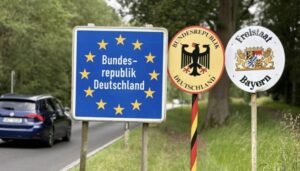
German authorities on Monday announced a decision to introduce temporary control at all land borders of the country starting September 16 to reduce the flow of illegal migrants, the Associated Press reports citing the German Interior Ministry.
“The ministry has informed the European Union of the decision to introduce border controls on the land borders with France, Luxembourg, the Netherlands, Belgium and Denmark for six months,” the agency reports.
“We are strengthening our internal security by taking concrete measures and continue to take a tough stance against illegal migration,” German Interior Minister Nancy Feser said.
Earlier, Germany also introduced controls at the borders with Poland, the Czech Republic, Austria and Switzerland.
Germany is a member of the Schengen zone, whose members abolish border controls on internal borders. However, in case of emergency, this control is allowed to be restored for a certain period of time.



