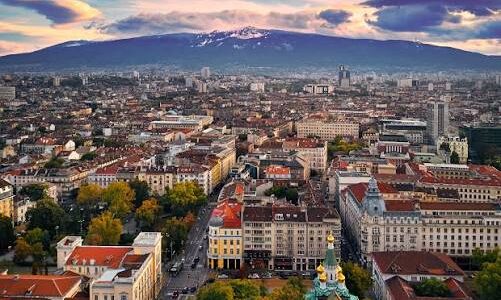
The British newspaper Metro has named Sofia the most underrated capital in Europe, highlighting the city’s combination of relatively affordable prices, historical heritage, modern cultural life, and proximity to natural attractions.
According to the British publication, the Bulgarian capital remains significantly less popular among mass tourists than traditional destinations in Western and Southern Europe, despite its potential for short city breaks.
Metro cites the British market as one example. In 2025, approximately 343,000 travelers from the United Kingdom visited Bulgaria, whereas Spain welcomes around 18 million British tourists annually. Thus, even with growing interest, the gap between Bulgaria and one of Europe’s largest tourist destinations remains vast.
At the same time, tourism in Sofia itself is growing. According to the city’s tourism authorities, the capital welcomed more than 1 million tourists from January through September 2025, and the number of arrivals increased by approximately 10% year-over-year. Foreigners accounted for about 63% of visitors.
Metro highlights Sofia’s historic center as one of its main attractions, where monuments from different eras are concentrated within a small area.
St. Alexander Nevsky Cathedral remains one of the city’s main attractions. The British publication also draws attention to the archaeological complex of ancient Serdica, a significant portion of which can be seen right in the center of modern Sofia.
The city’s proximity to Vitosha Mountain is cited as a distinct advantage. As a result, a trip to Sofia allows visitors to combine exploring the capital with hiking trails and outdoor recreation without having to travel long distances to another region of the country.
British journalists also highlight the capital’s burgeoning cultural scene. Among the events mentioned is the A to JazZ music festival, and among the cultural venues are the Sofia City Art Gallery and other museums in the city.
Another factor contributing to the city’s appeal is the relatively low cost of food, public transportation, and entertainment compared to other European capitals. Metro considers Sofia’s affordability to be one of its advantages amid rising travel costs to the most-visited cities in Western Europe.
Overall, Bulgaria welcomed approximately 13.6 million foreign visitors in 2025, a 2.7% increase from the previous year, according to data from the country’s National Statistical Institute. More than 9.5 million tourists were registered at lodging facilities, a 5.8% increase over the year.
Thus, the British Metro’s focus on Sofia aligns with a broader trend of growing interest in Bulgaria as a destination in its own right for city tourism, rather than merely as a country of summer resorts and winter getaways.